We remain fully operational. Our teams are working around the clock to ensure your deliveries continue safely.

قم بتنزيل التطبيق


معلومات عنا
حقوق الطبع والنشر © 2024 Desertcart Holdings Limited
قم بتنزيل التطبيق
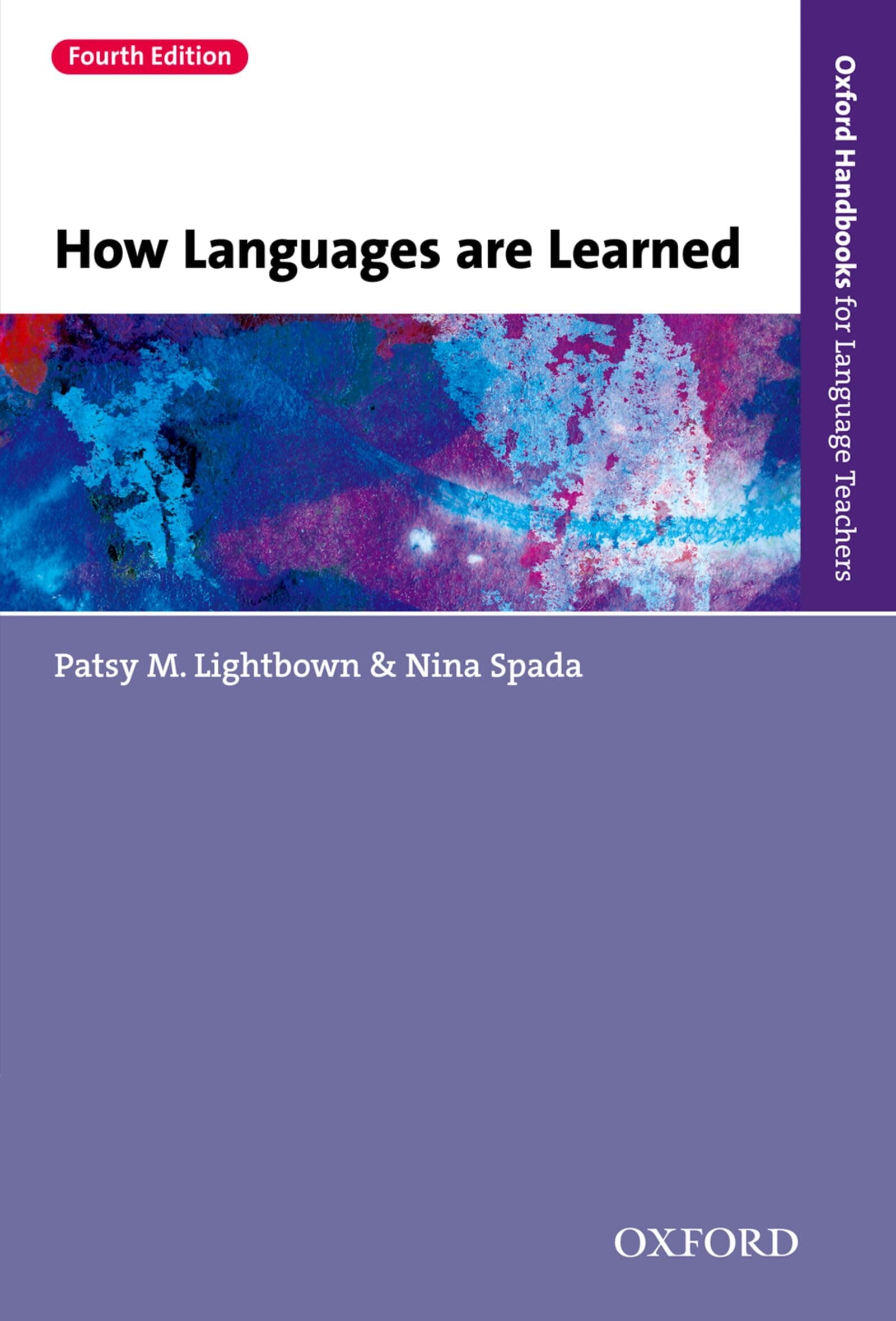
desertcart.com: How Languages are Learned 4e (Oxford Handbooks for Language Teachers): 0000194541266: Lightbown, Patsy, Spada, Nina: Books Review: Good resource - Good study on languages for a resource Review: Good background for ESL teachers - I bought this updated edition after losing the older edition, which I really liked. I'm just over half way through the new edition. I bought it because I'm a retired psychologist who volunteers as a tutor for Spanish speakers learning English. I like having the sense that I understand some of the theory and empirical work behind what I'm trying to do with people. The book is aimed at teachers who want some background in the research and theory behind second language learning but aren't likely to be doing original research themselves. I think it succeeds well in giving some sense of what may be going on in students as they struggle to achieve competence in a new language. It certainly is not a "how to" book, but it should give some ideas about how to structure lessons in new ways, as well as why students struggle with certain aspects of language at different stages, and why they sometimes seem to "backslide." It should be accessible to teachers who want a deeper understanding of the current state of thinking and research about language learning, with emphasis on second languages.
| Best Sellers Rank | #189,686 in Books ( See Top 100 in Books ) #374 in English as a Second Language Instruction #553 in Foreign Language Instruction (Books) |
| Customer Reviews | 4.6 4.6 out of 5 stars (829) |
| Dimensions | 9.76 x 0.58 x 6.63 inches |
| Edition | 4th |
| ISBN-10 | 0194541266 |
| ISBN-13 | 978-0194541268 |
| Item Weight | 1 pounds |
| Language | English |
| Part of series | Oxford Handbooks for Language Teachers |
| Print length | 272 pages |
| Publication date | March 21, 2013 |
| Publisher | Oxford University Press |
J**N
Good resource
Good study on languages for a resource
R**T
Good background for ESL teachers
I bought this updated edition after losing the older edition, which I really liked. I'm just over half way through the new edition. I bought it because I'm a retired psychologist who volunteers as a tutor for Spanish speakers learning English. I like having the sense that I understand some of the theory and empirical work behind what I'm trying to do with people. The book is aimed at teachers who want some background in the research and theory behind second language learning but aren't likely to be doing original research themselves. I think it succeeds well in giving some sense of what may be going on in students as they struggle to achieve competence in a new language. It certainly is not a "how to" book, but it should give some ideas about how to structure lessons in new ways, as well as why students struggle with certain aspects of language at different stages, and why they sometimes seem to "backslide." It should be accessible to teachers who want a deeper understanding of the current state of thinking and research about language learning, with emphasis on second languages.
E**.
Clear, easy to understand
Overall very accessible textbook for my linguistics course.
M**O
Thematic and well written
This is a thoughtfully written book with helpful theory and good themes for classroom practice. Well written.
L**A
Insightful
Great reference book for future linguists!
S**N
Succinct, very readable and full of valuable research findings
This is an excellent introduction to the field of SLA, it is relatively short for such a broad field but little space is wasted. The book introduces topics such as the differences between L1 and L2 learning, the effects of individual differences on language learning (including age, personality, motivation, intelligence and identity), second language acquisition theories (including behaviorist, cognitive and social perspectives as well as the usual input vs output debates), and research on the differences between natural and classroom based learning environments as well as the usefulness of grammar instruction. The authors finish the book by looking at what research has to say about certain widely held language learning beliefs such as 'the younger the better' and so on. I found this book both interesting and full of insights from research that can be applied practically as a language learner and teacher. Highly recommended.
A**T
Great for Students or Language enthusiasts
Bought this for a class and it was interesting. It shipped fast which is super convenient for students. Highly recommend buying from this vendor instead of overpriced school bookstores. They also left a cute note in the packaging! Thank you!
Y**N
a very good beginner's book in SLA
This is one my favorite coursebooks in SLA. The book is helpful for those who begin to feel interested in SLA or for teachers who intend to teach a course in language learning. It's very comprehensive and easy to understand. Different opinions from studies on a same topic are offered. Most importantly, it offers fair comments on different theories. This 4th edition also offers good online resources for teachers to conduct discussions on relative topics.
K**N
The volume is the presentation of a wide range of approaches to SL and SLL. It drwas from a series of research from the two authors (Lighbown and Spada) and allows the (expert) reader to follow the development and the techiniques. Particularly interesting are the chapters on Language learning in early childhood and Second language learning. In addition Observing learning and teaching in the SL classroom, SLL in the classroom, and Popular ideas about language learning revisited. These last chapters are very useful to those trainees who are studying for DELTA (in particular for the last task of Module 1). A very serious book not to be confused with TEFL textbooks. The book was delivered earlier than expected.
K**Z
I used this book for one of my classes at uni and I was amazed. Really great.
A**H
This is one of my favourite books on ELT. It is not so much a handbook on how to teach, but more a summary of the research and practice about what makes teaching effective and why. For those who want to get beyond the craft model of teaching (learning to teach by imitating an expert practitioner), and who want to deepen their understanding of what approaches are most effective and why, this book will help you deepen your reflective practice. It deals with the differences between first and second language learning, learning theories (and research), learner characteristics and motivation, and classroom practice. It addresses some popular ideas about language learning, asking the reader to engage with the ideas and the research which support them or not, and comes back to these ideas at the end of the text to readdress them, and in doing so, gives useful summaries of the main ideas. This may not be the easiest book for novice teachers but it is certainly insightful, and worth reading and re-reading.
P**5
Wir mussten uns dieses Buch für die Uni anschaffen und ich kann im Nachhinein nur zustimmen. Das Buch enthält alles wichtiges zu Second Language Learning und einige Informationen zum Erwerb von Linguistikthemen. Das Buch ist super aufgebaut und man kann verschiedenste Sachen dank Index immer ganz schnell nachlesen. Auch werden zwischendrinnen immer wieder Verweise auf andere Literatur gegeben. Mir hat das die Klausurvorbereitung extrem erleichtert. Danke
L**L
I have received the book in good condition. Thank you.
ترست بايلوت
منذ يوم واحد
منذ شهر