We remain fully operational. Our teams are working around the clock to ensure your deliveries continue safely.

قم بتنزيل التطبيق


معلومات عنا
حقوق الطبع والنشر © 2024 Desertcart Holdings Limited
قم بتنزيل التطبيق
Buy anything from 5,000+ international stores. One checkout price. No surprise fees. Join 2M+ shoppers on Desertcart.
Desertcart purchases this item on your behalf and handles shipping, customs, and support to KUWAIT.
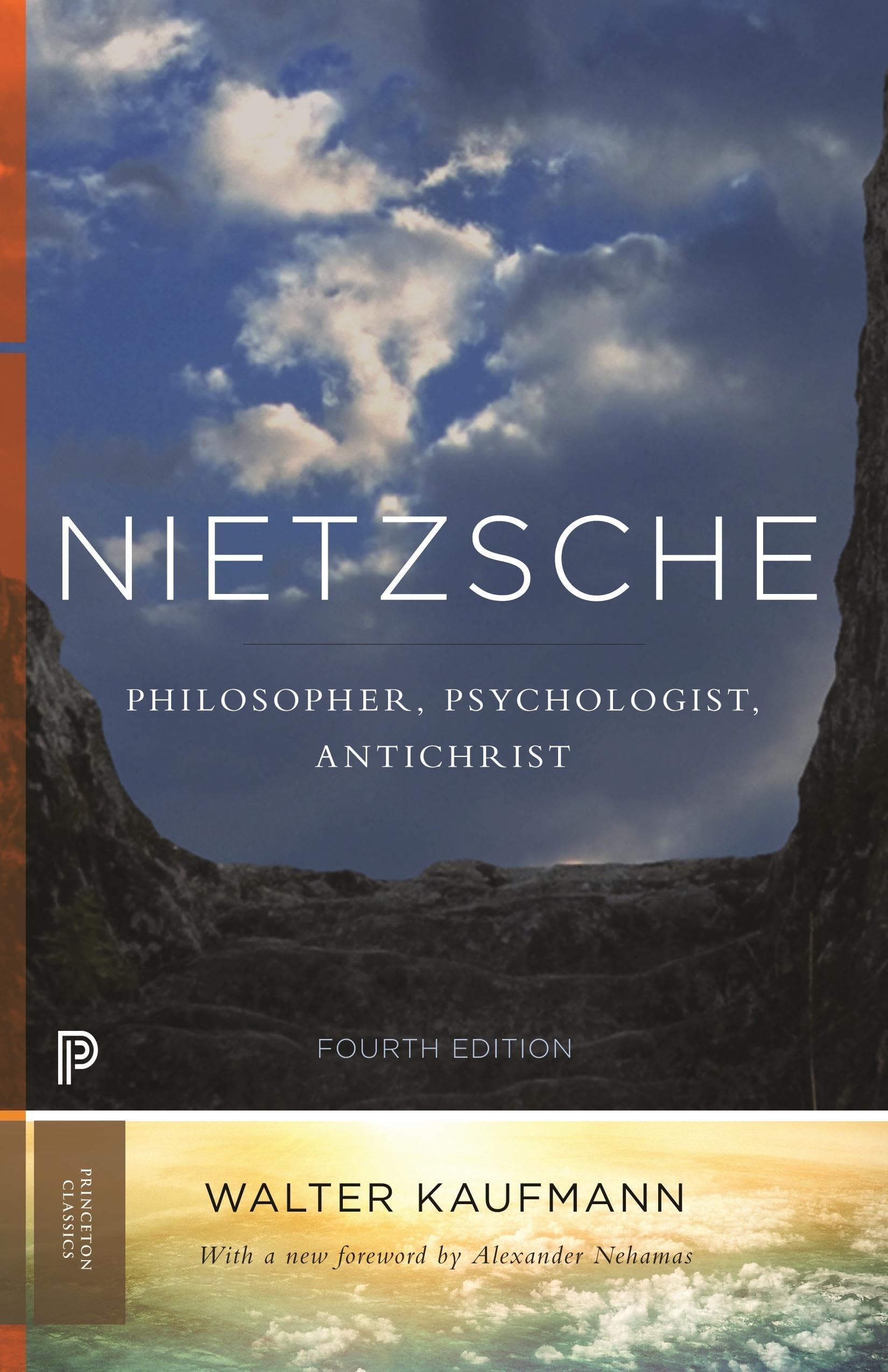
Nietzsche: Philosopher, Psychologist, Antichrist (Princeton Classics) [Kaufmann, Walter A., Nehamas, Alexander] on desertcart.com. *FREE* shipping on qualifying offers. Nietzsche: Philosopher, Psychologist, Antichrist (Princeton Classics) Review: Outstanding Introduction to an Important but Misunderstood Thinker - The author, a philosopher at Princeton, presents a thorough and readable discussion of the thought of Friedrich Nietzsche. Nietzsche is simultaneously one of the most well-known, most influential, and most misunderstood thinkers of all time. His philosophy was grossly misappropriated by the Nazis, and he still has an unfortunate association with fascism in much of the public mind. In reality, Nietzsche was a passionate and lifelong anti-racist, anti-militarist opponent of German nationalism. Further, he was single-mindedly devoted to the pursuit of truth, even where the truth was painful or when against one wished to be true. It was this pursuit of truth at all costs that led Nietzsche to be an anti-systemic thinker: he worried that trying to fit the world into a pre-made system would result in a distorted picture and that a systemic thinker would be forced to rely on unchallenged a priori assumptions. Nietzsche viewed himself as a philosopher at the dawn of a new age. With the decline in traditional religious beliefs in the face of science, man was thrust into a nihilistic predicament. However, Nietzsche believed that great, creative individuals -- Socrates, Shakespeare, Goethe, Beethoven, etc. -- would create their own value systems, which would be truly authentic because they came from the individual rather than being imposed from the outside. Actions taken in adherence to an externally imposed moral code were distasteful to Nietzsche, even if they were the same actions taken by the great, creative individual. Thus, Nietzsche's writings frequently deprecate "Christian" values such as kindness, humility, etc. -- not because Nietzsche opposed those values in and of themselves, but because he argued that most people professed such values because they hoped to gain power through doing so by adhering to an external moral code that sat above them. Instead, to Nietzsche the truly great individual is naturally kind, humble etc., and is not seeking power over others when following these virtues. The above relates to three important Nietzsche concepts. First, the "will to power". Nietzsche sees the will to power as the supreme motivator of humanity -- and perhaps, all life. People will sacrifice pleasure in the pursuit of power. And Nietzsche views power as manifesting itself in multifold ways, not just (and in fact, particularly not just) military or physical ways. The main goal of the will to power, however, should be self-overcoming. This relates to the second concept -- self-overcoming and sublimating. To Nietzsche, while asceticism does reflect power and self-overcoming to an extent, the truly powerful individual does not extirpate his passions but controls them and sublimates them. Third, is the concept of the Ubermensch or "Superman" or "Overman" -- the individual who has self-overcome and created their own system of values. One of Nietzsche's more interesting ideas is the eternal recurrence, which has both a scientific and a philosophical element. Nietzsche -- writing decades before the Big Bang theory was developed -- believed that the universe had no beginning or end. Consequently, there was infinite time but not finite matter, which meant that matter would eventually recombine in the exact way that it is right, again and again eternally into the future. Nietzsche mistakenly believed this to be true as a scientific matter. However, as a philosophical matter it sheds light on Nietzsche's life-affirming philosophy. A person should live their life in such a way that if the eternal recurrence were true and one would have to relive every moment, that one would react to this with great joy and consider it a blessing. "Amor fati" -- love of fate -- is a central concept for Nietzsche. One should not want the past, present or future to be different, but should instead love and embrace it all. Review: Must Read on Nietzsche - Profound, well-written book at the affordable price. Delivered fast.

| Best Sellers Rank | #91,196 in Books ( See Top 100 in Books ) #34 in Philosopher Biographies #68 in Modern Western Philosophy #111 in Religion & Philosophy (Books) |
| Customer Reviews | 4.5 4.5 out of 5 stars (201) |
| Dimensions | 5.4 x 1.7 x 8.5 inches |
| Edition | Revised |
| ISBN-10 | 0691160260 |
| ISBN-13 | 978-0691160269 |
| Item Weight | 1.12 pounds |
| Language | English |
| Part of series | Princeton Classics |
| Print length | 560 pages |
| Publication date | October 20, 2013 |
| Publisher | Princeton University Press |
C**S
Outstanding Introduction to an Important but Misunderstood Thinker
The author, a philosopher at Princeton, presents a thorough and readable discussion of the thought of Friedrich Nietzsche. Nietzsche is simultaneously one of the most well-known, most influential, and most misunderstood thinkers of all time. His philosophy was grossly misappropriated by the Nazis, and he still has an unfortunate association with fascism in much of the public mind. In reality, Nietzsche was a passionate and lifelong anti-racist, anti-militarist opponent of German nationalism. Further, he was single-mindedly devoted to the pursuit of truth, even where the truth was painful or when against one wished to be true. It was this pursuit of truth at all costs that led Nietzsche to be an anti-systemic thinker: he worried that trying to fit the world into a pre-made system would result in a distorted picture and that a systemic thinker would be forced to rely on unchallenged a priori assumptions. Nietzsche viewed himself as a philosopher at the dawn of a new age. With the decline in traditional religious beliefs in the face of science, man was thrust into a nihilistic predicament. However, Nietzsche believed that great, creative individuals -- Socrates, Shakespeare, Goethe, Beethoven, etc. -- would create their own value systems, which would be truly authentic because they came from the individual rather than being imposed from the outside. Actions taken in adherence to an externally imposed moral code were distasteful to Nietzsche, even if they were the same actions taken by the great, creative individual. Thus, Nietzsche's writings frequently deprecate "Christian" values such as kindness, humility, etc. -- not because Nietzsche opposed those values in and of themselves, but because he argued that most people professed such values because they hoped to gain power through doing so by adhering to an external moral code that sat above them. Instead, to Nietzsche the truly great individual is naturally kind, humble etc., and is not seeking power over others when following these virtues. The above relates to three important Nietzsche concepts. First, the "will to power". Nietzsche sees the will to power as the supreme motivator of humanity -- and perhaps, all life. People will sacrifice pleasure in the pursuit of power. And Nietzsche views power as manifesting itself in multifold ways, not just (and in fact, particularly not just) military or physical ways. The main goal of the will to power, however, should be self-overcoming. This relates to the second concept -- self-overcoming and sublimating. To Nietzsche, while asceticism does reflect power and self-overcoming to an extent, the truly powerful individual does not extirpate his passions but controls them and sublimates them. Third, is the concept of the Ubermensch or "Superman" or "Overman" -- the individual who has self-overcome and created their own system of values. One of Nietzsche's more interesting ideas is the eternal recurrence, which has both a scientific and a philosophical element. Nietzsche -- writing decades before the Big Bang theory was developed -- believed that the universe had no beginning or end. Consequently, there was infinite time but not finite matter, which meant that matter would eventually recombine in the exact way that it is right, again and again eternally into the future. Nietzsche mistakenly believed this to be true as a scientific matter. However, as a philosophical matter it sheds light on Nietzsche's life-affirming philosophy. A person should live their life in such a way that if the eternal recurrence were true and one would have to relive every moment, that one would react to this with great joy and consider it a blessing. "Amor fati" -- love of fate -- is a central concept for Nietzsche. One should not want the past, present or future to be different, but should instead love and embrace it all.
A**R
Must Read on Nietzsche
Profound, well-written book at the affordable price. Delivered fast.
B**E
A God dances through me
What else can I say about this man that hasn't been said over a million times? Want to learn more about this man? Pick up this book. It's the gold standard biography on him for a reason.
D**Z
Worth owning
Kaufmann's erudition and grasp is impressive. I think he may have been the first to correct the damaging misinformation seeded by Nietzsche's creepy Nazi of a sister. Sometimes he seems too much of an apologist, even though the Nietzsche legend needed rehab. Worth owning as a reference for anyone tackling Nietzsche's brilliant, but often bewildering works.
T**.
A great aid to understanding Nietzsche
Kaufmann delivers a great book to help understand some of Nietzsche's obscure works. I have read Nietzsche multiple times and Kaufmann is a tremendous help in understanding some of the most misinterpreted issues Nietzsche presents such as the Death of God, the Overman, Eternal Recurrence, and his great Zarathustra. This book is fantastic for anybody who wants to appreciate Nietzsche's work more.
K**N
Deep and Interesting
A point of view from yet another writer. Took what resonated and left the rest.
A**N
Not as Presented in Amazon Marketplace
Honestly speaking, the book was not as good as it was presented in Amazon Marketplace. Still, it is ok and readable. But not as good as I expected.
H**E
Very satisfying
This was vastly satisfying to me, because I have long been both fascinated and puzzled by Nietzsche. I feel that I understand his perspective much better now.
A**L
Kaufmann's book is the best explanation of Nietzsche's ideas that I've ever read.
D**A
There was a damage in the back cover.There was a tear on the back cover.
F**O
El inicio de la revalorización de Nietzsche.
M**N
An even handeded well written analysis of Nietzsche's work and thought which is a must read for anyone interested in the subject. This book is still the benchmark that all others on the subject are measured against. Lots of writers want to interpret Nietzsche in order to make his message one they feel comfortable with. Mr Kaufman is one of the few who try to convey what Nietzsche actually thought with clear explanations and excellent evidence all of which is referenced. If you want help in understanding what nietzsche was trying to say buy this book. Sadly many other books merely consist of an outline of what other people wished Nietzsche meant, so before you read anything else, get a sensible grounding in the subject by reading this excellent book.
W**E
Kaufmann... on Nietzsche... there is little more that is to be said. Kaufmann understands Nietzsche in a way that perhaps surpassed even Nietzsche's own introspective thought.
ترست بايلوت
منذ شهر
منذ شهر