We remain fully operational. Our teams are working around the clock to ensure your deliveries continue safely.

قم بتنزيل التطبيق


معلومات عنا
حقوق الطبع والنشر © 2024 Desertcart Holdings Limited
قم بتنزيل التطبيق
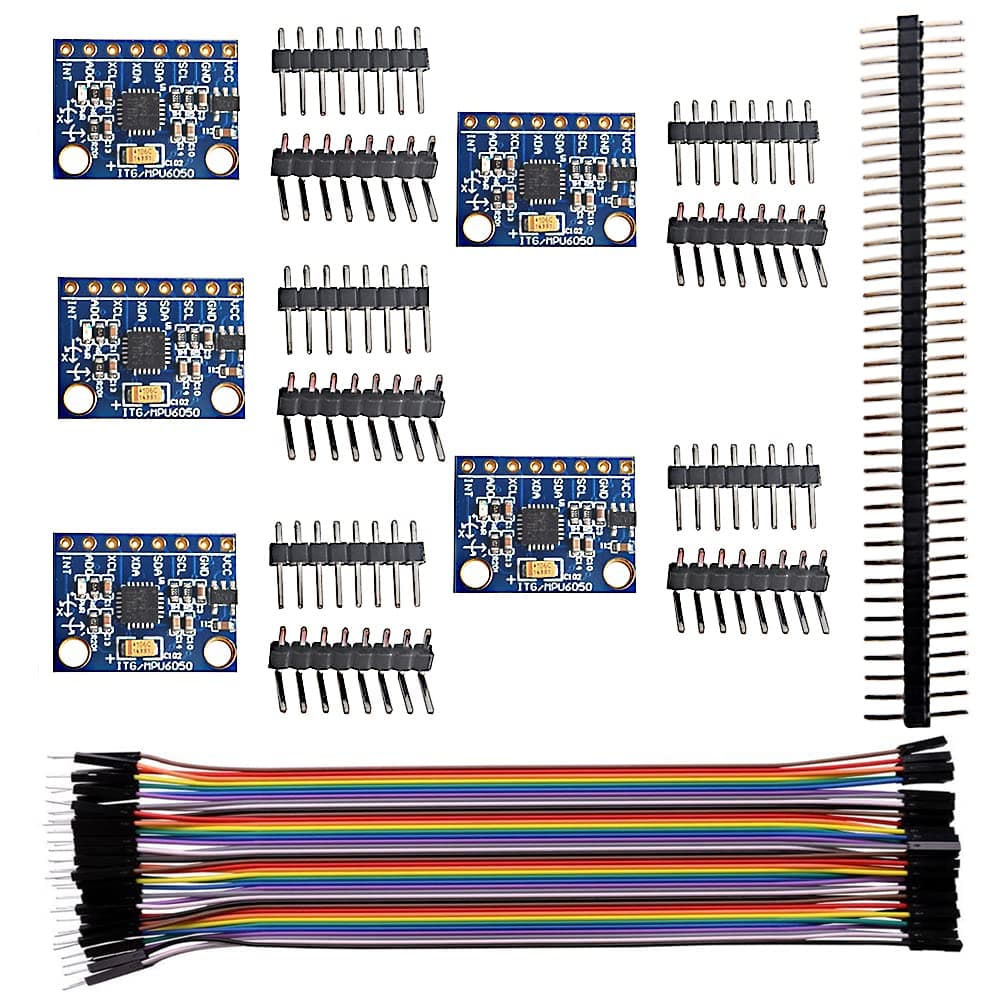
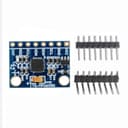
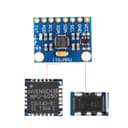
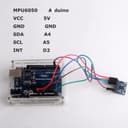
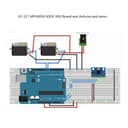
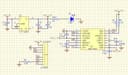
🚀 Elevate your projects with precision motion sensing that keeps you ahead of the curve!
The Stemedu 5PCS GY-521 MPU6050 sensor modules combine a 3-axis gyroscope and 3-axis accelerometer with 16-bit resolution, supporting multiple sensitivity ranges and I2C communication. Ideal for robotics, drone stabilization, VR/AR, and motion gaming, these compact breakout boards deliver high accuracy and reliability in a convenient 5-pack, perfect for professional-grade prototyping and development.


| ASIN | B07PY38BCB |
| Best Sellers Rank | #154,217 in Industrial & Scientific ( See Top 100 in Industrial & Scientific ) #55 in Acceleration Sensors |
| Brand Name | Stemedu |
| Customer Reviews | 4.6 4.6 out of 5 stars (75) |
| Manufacturer | Stemedu |
| Material Type | Silicon |
| Maximum Supply Voltage | 5 Volts |
| Measurement Accuracy | High accuracy |
| Measuring Range | Gyroscope range: ±250 °/s, ±500 °/s, ±1000 °/s, ±2000 °/s; Acceleration range: ±2g, ±4g, ±8g, ±16g |
| Model | GY-521 |
| Mounting Type | Surface Mount |
| Output Type | Digital |
| Specific Uses For Product | Robotics, Drone stabilization, VR/AR motion tracking, Motion-based gaming systems |
| Style Name | Modern |
| UPC | 768390744521 |
| Unit Count | 5.0 Count |
| Upper Temperature Rating | 85 Degrees Celsius |
G**D
Good Value
Excellent sensor for robot balance and recovery. Priced for fun project. Learning to use is not super complicated.
B**N
Work great for vehicle applications
I’m using these to record gyroscope data from my wheels to determine toe angles. They have a very small error tolerance, and I’m confident they give accurate readings.
H**T
This is a great deal for your money.
Taking a course on raspberry pi’s. Have not used them yet but have some ideas for a few of them.
A**R
Great functionality
Worked great. Versatile in that they work with Arduino mouse and keyboard libraries. Awesome value for the price!
A**L
es lo que esperabamos
A**Y
Bad quality
Really bad quality, the Data keeps drifting.
G**L
Threading is great on these little peices.
Good threading, inserted in 3D printing with a hot soldering iron works great but threads need protecting or cleaning afterward. Seems like a lot of awkward sizes included where more of the smaller length and diameter would be useful overall. You'll run out of the small one and have almost useless large one left over. If you can just get one or two sizes in quantity would be better overall.
S**N
worked as intended. No faulty units on arrival which is also a plus with these tiny sensors.
A**T
Tested one with a raspberry pico and the arduino core and I was able to have data graphing in about 30 minutes. I've not used the rest but if they're like the first I'll be very happy.
J**R
I am quite impressed with these. If you spin it fast enough it needs to be restarted, here is some Arduino code to do that: const int MPU_addr=0x68; // I2C address of the MPU-6050 int16_t AcX,AcY,AcZ,Tmp,GyX,GyY,GyZ; if (AcY==0, AcX==0){ Serial.println("Needs to Reboot"); Wire.beginTransmission(MPU_addr); Wire.write(0x6B); // PWR_MGMT_1 register Wire.write(0); // set to zero (wakes up the MPU-6050) Wire.endTransmission(true); Serial.println("Rebooted"); delay(10); }
R**D
You will see many of these on Amz, I got these as they offered good price/unit ratio, and I have spares if I blow them up with my experiments with ESP8266/Arduino. Pretty standard units, they have usable accuracy to 0.01 degrees (I haven't used the accelerate output yet) with an exponential filter applied, but also work well with complementary filters (slow to react) and kalman filter(no good on 8-bit platforms). The gyro is effective in the short term, but will tend to drift over long time periods. Using the I2cdevlib library, you have access to both the raw data, and output from a built-in Digital Motion Processor which allows you to offload complex signal processing of the gyro/accel. from your MCU to the 6050.
I**R
In my review I will try not to focus too much on the MPU6050 unit itself but rather the board. But as general guidance to other enthusiastic people out there, these low-cost inertial sensors require a lot of de-noising and calibration before being usable for most applications. Overall the noise characteristics of this sensor seem to be stable. (I had almost an identical output during the motion using four units). Some positives: 1. Obviously, getting 5 sensors for this price is very good. 2. Two different headers are provided with different angles (straight and 90 degrees). This is important if you want to fit your sensors inside a small box. Issues with the board: 1. The board is a bit flimsy. So make sure that no unnecessary amount of pressure was used when bolting it down.
ترست بايلوت
منذ 3 أيام
منذ 3 أسابيع