We remain fully operational. Our teams are working around the clock to ensure your deliveries continue safely.

قم بتنزيل التطبيق


معلومات عنا
حقوق الطبع والنشر © 2024 Desertcart Holdings Limited
قم بتنزيل التطبيق
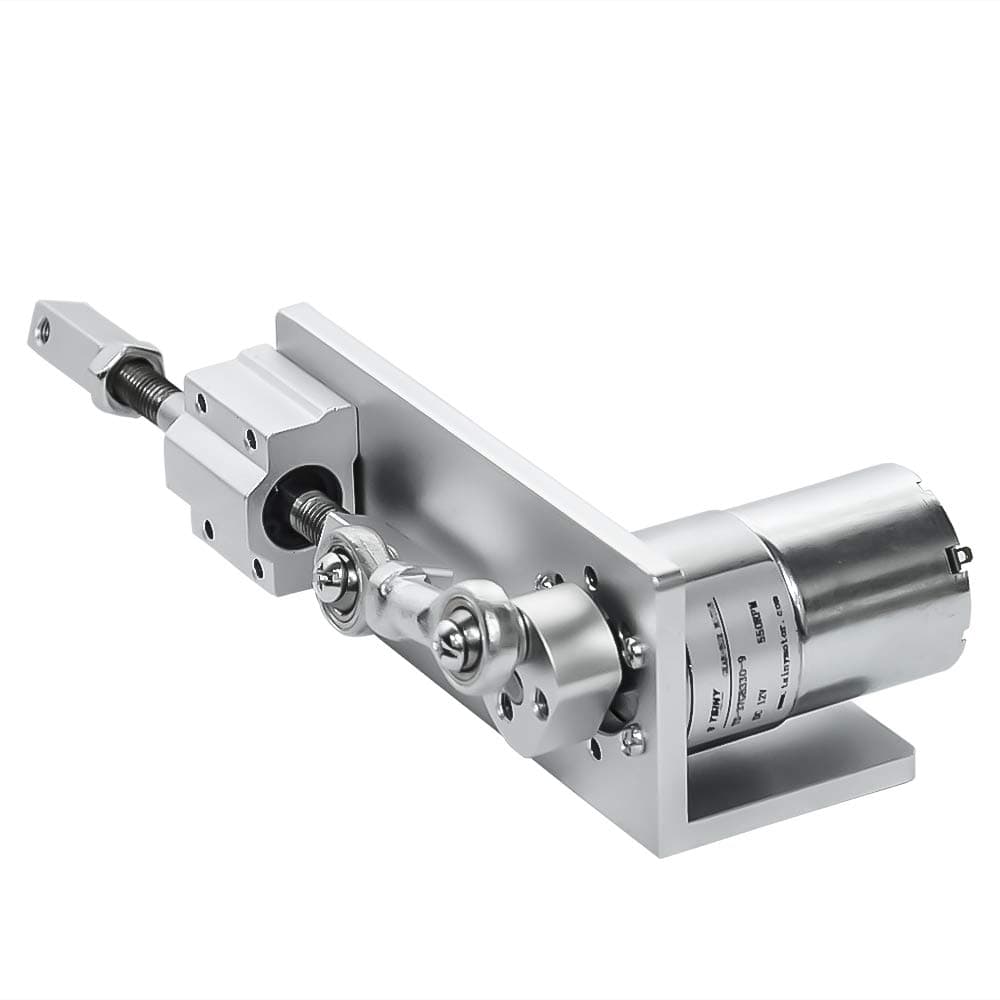
🔧 Power Your Precision Projects with Adjustable Torque & Stroke!
The DIY Reciprocating Cycle Linear Actuator is a rugged 12V motor delivering 15 RPM with adjustable stroke lengths (12mm, 16mm, 20mm) housed in a sturdy aluminum alloy bracket. Engineered for industrial and DIY applications like shale shakers and spraying machines, it offers reliable reciprocating linear motion with easy customization and durable construction, making it a top choice for millennial professionals seeking precision and versatility in their projects.
| ASIN | B07NV8ZVM2 |
| Best Sellers Rank | #215,082 in Industrial & Scientific ( See Top 100 in Industrial & Scientific ) #214 in Linear Motion Actuators |
| Brand Name | KZNANZN |
| Customer Reviews | 4.2 4.2 out of 5 stars (30) |
| Horsepower | 15 Watts |
| Item Weight | 0.62 Kilograms |
| Manufacturer | KANZNAN |
| Material Type | Alloy Steel, Aluminum |
| Model | 1 |
| Shaft Diameter | 12 Millimeters |
| Speed | 15 RPM |
| UPC | 663591407896 |
| Voltage | 12 Volts |
W**R
High quality item.
Great for diy projects
B**E
Linear actuator reciprocating engine
Very rugged and durable but I screwed up and ordered the wrong one I got the 15 RPM and I should have got the 150 RPM this was intended to use for a DIY dirt classifier for gold prospecting!
A**R
Rotation to translation mechanism
This rotation to translation mechanism was used to calibrate the acceleration vs. the voltage output of an accelerometer. This particular unit runs at a low rpm speed using a geared motor. Ashtonishly, the mechanism is well built and the offset circular to linear linkage offers three different radius positions which allows three different linear displacements. We purchased (separately) a 550 rpm motor that fit the apparatus to allow for a faster rpm. You and your students will enjoy using this mechanism. The physics behind the relationship between rotation angle and translation is fastenating.
J**.
Very low torque
Very low torque
R**H
Misleading Chart in Description, Otherwise Great
The actuator works perfectly, and can be adjusted in speed using a DC Motor Speed Control Potentiometer. But note that the chart in the description images is misleading: suggesting a wide range of speeds in RPM. The motor only operates at 15 RPM with max 12 V. I measured my linear actuator and it is actually running at 30 RPM, so a 2 second period of fore-aft vibration. A Potentiometer can slow that down, but you won't get the hundreds of RPMs suggested in the table. I am not sure why they even include that whole misleading info in the description currently.
Z**H
Impressively low quality, but it does move back and forth
The linear bearings used in this are impressively low quality, and they have the most play I've ever seen in a bearing. That said, the actuator does do its job and moves back and forth repeatedly. You'll want to add additional linear constraints if those are important for your application. I stopped using this after 4 days because the play in the linear bearings became too significant for my jig, so I don't have a good sense of overall lifetime.
J**I
very nicely made. I like it.
ترست بايلوت
منذ شهرين
منذ يوم واحد