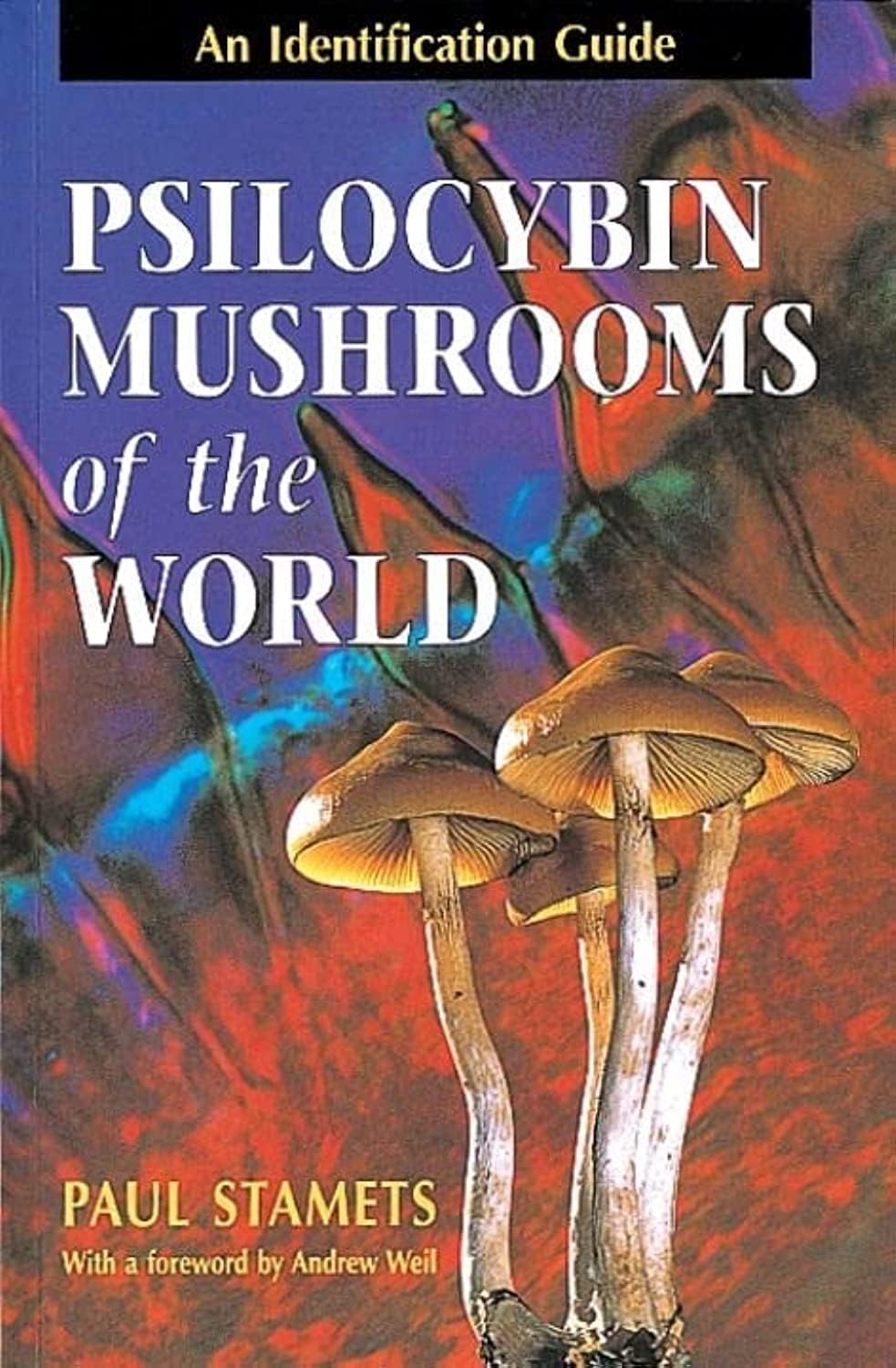
Psilocybin Mushrooms of the World: An Identification Guide
Product ID: 1562967
⭐4.8/5 star rating from 3,000+ reviews
📚Original publisher edition
📸High-quality color photos
Buy anything from 5,000+ international stores. One checkout price. No surprise fees. Join 2M+ shoppers on Desertcart.
Desertcart purchases this item on your behalf and handles shipping, customs, and support to KUWAIT.
🍄 Unlock the secret world of psilocybin—know your fungi, own your journey!
Psilocybin Mushrooms of the World is a definitive identification guide featuring high-quality color images and expert insights by Paul Stamets. This original publisher edition is a top-ranked, highly rated resource that educates readers on the diverse species of psilocybin mushrooms, emphasizing safe identification to avoid toxic lookalikes. Ideal for enthusiasts and professionals seeking authoritative knowledge in mycology and mental health applications.

| Best Sellers Rank | #30,241 in Books ( See Top 100 in Books ) #5 in Microbiology (Books) #11 in Mushrooms in Biological Sciences #33 in Environmental Science (Books) |
| Customer Reviews | 4.8 out of 5 stars 3,061 Reviews |
T**Y
Good high quality pics, original publisher version
Good read, informative, good quality color picture pages for identification, original publisher version. Veterans shouldn't have to go to Colorado or Mexico for treatment with this or that ibogain stuff I've been hearing really helps vets with ptsd n so many other mental health issues.
M**H
Must read for anyone interested in psilocybin!
This book is a must read for anyone who is interested in psilocybin. Paul Stamets masterfully weaves his expertise, a wide body of research literature, and personal experiences in to an extremely well written, organized, detailed book. The book also includes pictures. Before I had this book, I had assumed that there was only one psilocybin mushroom. Imagine my surprise to learn that psilocybin has many varieties! The book also shows why it is critical for people to either purchase/use verified psilocybin mushrooms or to follow specific steps to ensure any mushrooms that are legally found in the wild are psilocybin. There is a mushroom that looks exactly like psilocybin, but that mushroom is a deadly poison to the human body.
Z**H
Very helpful, Well written, Wish I got the field guide version!
This book is written by Paul Stamets, a long standing staple in the Mycology (Study of mushrooms) community. This book provides a brief history of Psilocybin, safety nets for tripping, and identification knowledge out of every pore. This book teaches the 'Stametian' (Of Stamets) method of narrow down and properly identifying species. In the chapter "Major Psilocybin Genera" and onward have these identification pages (see figure 3) that are so dense with facts, and features as well as a nice picture. This book is a MUST HAVE for beginner mycologists, those that want to be able to tell these incredible fungi apart from their potentially lethal counterparts. I wish I had gotten the field guide version because I used this book in the field for the first couple weeks and it took some damage. If you do read this book, I GUARANTEE that you will be craving more knowledge after. Luckily, he also provides a bunch of sources, mycologists, and books that are certainly worth checking out. Happy Hunting!
B**E
The definitive work on the subject
The definitive work on the subject as presented by the world's foremost authority.
C**N
Informative
Good book but was looking for a book that had more info on specific mushrooms with clearer photos. The photos was more important than all the info pertaining to the mushrooms to me.
J**A
None better!
"Psilocybin Mushrooms of the World" is a first-rate reference on psilocybes, and one that I would enthusiastically recommend to anybody with an interest. That said, however, I'd like to weigh in with a bit of personal advice on the subject: Even for experienced mycologists, mushroom identification can be a difficult process. Would you be willing to stake your life on whether a mushroom's spores are rust-brown, as opposed to a rusty purplish-brown? That's a pretty subjective call, and the only way to be 100% certain is to throw spore and tissue samples on the microscope. Many edible mushrooms have deadly look-alikes, and to make matters worse, every known mushroom has variant strains. By following the guidelines in this book, an inexperienced enthusiast can be *reasonably* certain that he or she has correctly identified a field specimen, but even the best field guide is no substitute for experience and good judgment (as Stamets himself states repeatedly in this book!). This is a great reference work for anybody with an interest in mycology, but it shouldn't be mistaken for a "green light" to pick wild mushrooms for personal consumption. That said, this book is a real gem, with detailed summary descriptions of several dozen known and suspected psilocybes. Each description is accompanied by at least one color photograph. Stamets uses very scientific terminology in describing each psilocybe-- considering the consequences of a false identification, it's important for the author to be as precise in his descriptions as possible-- but there are also several helpful pages of charts at the end of the book which explain what all of this technical jargon means. This is far and away the best field guide to psilocybe mushrooms that I've seen so far. I can truly recommend this work without reservation!
D**.
Yeah, I know...
Oh, he bought a Psilocybin Mushroom book, he must be a trippy hippy! Not even. I am an amateur mycologist and my library was severely lacking in information about the Psilocybin mushroom. Not any more. This book takes up the slack where most other guides were severely lacking. If we don't know this stuff then we can't be fully informed as we study in the field. So say what you will, I will pee in a jar for anybody anytime, as long as you are giving me a paycheck or a physical. That being said... Paul Stamets, is in many ways the ultimate mycologist. He started learning about mushrooms as a logger in the PNW, much the same as I did. But he took it so much further, becoming the author of several books that cover just about everything you would want to know about mushrooms. How to grow them, medicinal studies, inventing things using fungi, you have to check out all the things Paul Stamets has been doing with mushrooms. His book, Mycelium Running, is a resource that could help reshape the environmental movement into something so much more common sense than tree-sitting ever could be. This guy is about as close to a genius as anybody I have seen in the mycology field, yet he still gets a bit overboard on some things fungal. I can't quite agree that mycelium has any sort of thought pattern or intelligence beyond it's genetic instincts. But he has been far more immersed in the subject than I, so maybe in person he could persuade me to think so. But for now I am glad to have this and two other of his books in my mushroom library. Exellent photography and information. Get it.
K**E
Fascinating book including historical use, interesting facts and captivating stories.
A wealth of information and insight from author Paul Stamets. Along with identification and biological information on mushrooms, he includes personal history and stories that are fascinating to read. The history of the mushroom in different cultures and religions along with the resurgence of psilocybin use in the 60s and to more current times is very interesting to read and ponder. This is a fascinating read even if you don't collect spores, molds, and fungi like Egon. I will say that my disappointment so far lies in there not being a really user friendly guide to hunting the different species of mushrooms. I really wanted something that would give me a state or region and then show pictures and descriptions and where they usually grow (tree trunk, under bushes, etc.) and also possible seasonality of when the best times are to look for them by region. I'm not sure if this has been compiled by anyone yet because I've been looking and haven't found one yet that includes everything I want. This is a book I would buy again, even though it was missing that information that I was hoping for.
Trustpilot
3 days ago
3 weeks ago