

ESV Study Bible
Product ID: 1695805
Buy anything from 5,000+ international stores. One checkout price. No surprise fees. Join 2M+ shoppers on Desertcart.
Desertcart purchases this item on your behalf and handles shipping, customs, and support to KUWAIT.
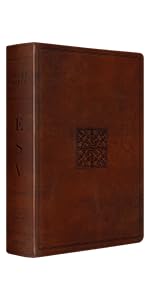
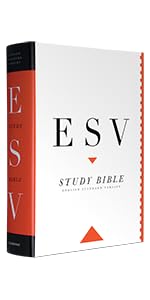
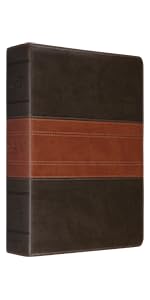
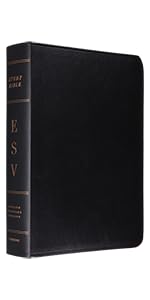
Over 2.5 Million Copies Sold | Winner of the ECPA Book of the Year Award “The scope and theological faithfulness of the ESV Study Bible study notes is breathtaking.” ―John Piper The ESV Study Bible was designed to help you understand the Bible in a deeper way. Created by a diverse team of 95 leading Bible scholars and teachers―from 9 countries, nearly 20 denominations, and 50 seminaries, colleges, and universities―the ESV Study Bible features a wide array of study tools, including extensive study notes, 200 full-color maps, 40 full-color illustrations, charts, timelines, articles, and introductions, making it a valuable resource for serious readers, students, and teachers of God’s Word. Bestselling: Over 2.5 million copies sold 20,000 Study Notes: Accessible study notes on every page help readers dive deeper into Scripture’s meaning and application Robust Bible Resources: Includes 200+ charts and timelines, 240+ full-color maps and illustrations, 50+ topical theology articles, 120 Bible character profiles, and more Quality Production: All editions feature smyth-sewn binding and 9-point type, with TruTone and leather editions featuring additional ribbon markers, gilding, and a quality guarantee Review: Great Bible for studying; understand how translations work. - I love this study Bible so much, I've bought it multiple times because the pages are kind of thin and I tend to ware my Bible out by going through the pages so much, but this thing is packed to the brim with so much information and I feel that I've learned so incredibly much from it, and it has been an Absolutely invaluable part of my spiritual journey. I am writing this review as I buy another copy for myself because my binding came off and so this time I'm going to buy one for my sister. I bought it for my husband as well last year. I recommend this to everyone who is looking to grow in their spiritual life with Jesus. ESV is a great translation as it's word for word. I was going through some other reviews of this Bible and I noticed someone say it was "missing verses" and they had written in a missing Bible verse (Matthew 17:21) and if you know how to use the study Bible you will see that if there are little numbers next to a verse (a 4 in the corner here in this verse), it means you should reference the footnotes right below the scriptures, find the number, and you'll see that it says "some manuscripts insert verse 21: but this kind never comes out except by prayer and fasting". I think people need to understand that biblical translation isn't something that one person does right and another does wrong necessarily. They're based on which ancient manuscripts the translators think are the earliest and most reliable. Some manuscripts include certain sentences, and some don't. In this case the verse is missing in the main text, but appears in the footnote and it's because the translators are being honest about the evidence, they're not hiding anything. The ESV chooses to follow the earliest manuscripts so they put the verse in a footnote instead of the main text. Other translations like KJV or NKJV follow the later manuscript so they include it. Same Bible, same meaning, just different manuscript choices. Review: So much information, for the price it's a steal! - I love this Bible! I'm used to using an NIV study bible that my parents got me after I was baptised, but when I got further along in my faith and put more devotion into reading the word I wanted to get an ESV bible to be able to see how a more literal translation of various passages as I studied. I got this ESV Study Bible, and I love it! I still primarily use my NIV Study Bible because as a whole I find it easier/quicker to understand and I have years of personal notes written into it, but this bible served me well for a couple months when I sent that bible away to get rebound. Absolutely recommend this Bible to anyone! I find its study notes extremely insightful, the book introductions have so much useful contextual information, and the articles in the back explaining Christian doctrine is so amazingly put together, it would be a great resource to a new Christian if this was their first Bible. (Which, if you are and you're chill with a more literal translation, I cannot recommend this Bible to you enough!) There's many more features of this Bible that I haven't dug into yet but really should. At the price I paid for this (somewhere between $40-45), this is honestly a steal! No-brainer, buy one! An ESV bible plus so much additional and valuable resources and information, this is really an excellent Bible with great value!






| Best Sellers Rank | #515 in Books ( See Top 100 in Books ) #1 in Old Testament Bible Study (Books) #4 in Christian Meditation Worship & Devotion (Books) #6 in Christian Bibles (Books) |
| Customer Reviews | 4.8 out of 5 stars 10,452 Reviews |
R**Z
Great Bible for studying; understand how translations work.
I love this study Bible so much, I've bought it multiple times because the pages are kind of thin and I tend to ware my Bible out by going through the pages so much, but this thing is packed to the brim with so much information and I feel that I've learned so incredibly much from it, and it has been an Absolutely invaluable part of my spiritual journey. I am writing this review as I buy another copy for myself because my binding came off and so this time I'm going to buy one for my sister. I bought it for my husband as well last year. I recommend this to everyone who is looking to grow in their spiritual life with Jesus. ESV is a great translation as it's word for word. I was going through some other reviews of this Bible and I noticed someone say it was "missing verses" and they had written in a missing Bible verse (Matthew 17:21) and if you know how to use the study Bible you will see that if there are little numbers next to a verse (a 4 in the corner here in this verse), it means you should reference the footnotes right below the scriptures, find the number, and you'll see that it says "some manuscripts insert verse 21: but this kind never comes out except by prayer and fasting". I think people need to understand that biblical translation isn't something that one person does right and another does wrong necessarily. They're based on which ancient manuscripts the translators think are the earliest and most reliable. Some manuscripts include certain sentences, and some don't. In this case the verse is missing in the main text, but appears in the footnote and it's because the translators are being honest about the evidence, they're not hiding anything. The ESV chooses to follow the earliest manuscripts so they put the verse in a footnote instead of the main text. Other translations like KJV or NKJV follow the later manuscript so they include it. Same Bible, same meaning, just different manuscript choices.
J**T
So much information, for the price it's a steal!
I love this Bible! I'm used to using an NIV study bible that my parents got me after I was baptised, but when I got further along in my faith and put more devotion into reading the word I wanted to get an ESV bible to be able to see how a more literal translation of various passages as I studied. I got this ESV Study Bible, and I love it! I still primarily use my NIV Study Bible because as a whole I find it easier/quicker to understand and I have years of personal notes written into it, but this bible served me well for a couple months when I sent that bible away to get rebound. Absolutely recommend this Bible to anyone! I find its study notes extremely insightful, the book introductions have so much useful contextual information, and the articles in the back explaining Christian doctrine is so amazingly put together, it would be a great resource to a new Christian if this was their first Bible. (Which, if you are and you're chill with a more literal translation, I cannot recommend this Bible to you enough!) There's many more features of this Bible that I haven't dug into yet but really should. At the price I paid for this (somewhere between $40-45), this is honestly a steal! No-brainer, buy one! An ESV bible plus so much additional and valuable resources and information, this is really an excellent Bible with great value!
M**U
Great study bible, absolutely recommend it!
Wow, I was not expecting the sheer size of this beefy bible! Its really packed full of alot of notes, maps, content, and nothing compares to the weight of wisdom from God's word. Two things I wanted to quickly address because I saw the 1 star reviews from what appear to be those who misunderstand or have not seen how footnotes work. In Matthew 17:21, which is probably the most common "missing verse" ive seen throughout the low star reviews, you can see in the 2nd image I included that there is a footnote which quotes the verse. The reason that the KJV/NKJV include the verse is due to the manuscripts available at the time. With the ESV, even NIV, and other modern translations, the writers have access to older and more authentic manuscripts closer to the source date of the original, which dont include certain verses. But the "missing" ones are generally included as footnotes, you just have to look a few inches towards the bottom of the page. Secondly, the book of Ruth IS indeed in this study bible. Its not missing like people claim. It is even packed with notes and commentary. And finally, the apocryphal books. The ESV as a translation itself does not include the deuterocanonical books that catholic/orthodox translations include because its not a catholic/orthodox version. If you want the apocrypha, you can pick up an NABRE. This isnt the book for you, however they do include the list of the apocrypha in the abbreviations page. And a quick note about the commentary. Its made by humans entirely, breaking down the text like any scholar would. Its not to be taken as Gods word or infallible. Its simply a tool. Its another perspective by people who have studied and have knowledge on the text breakdowns to assist those wanting to learn deeper. Anyway, I really really love this new addition to my bible collection and intend to really break down and absorb God's message to us using this to assist me.
C**E
A Must-Have for Bible Study Enthusiasts 📖✨
The ESV Study Bible (Hardcover) has been an incredible resource for my personal Bible study, and I can’t recommend it enough for those who want to dive deeper into God’s Word. What I Love: Rich Study Notes: The extensive study notes are detailed and insightful, offering explanations, historical context, and cultural backgrounds to enhance understanding. It’s like having a personal guide through the Scriptures. Clear, Readable Text: The English Standard Version is known for its accuracy and readability, striking a great balance between being faithful to the original texts and being easy to understand. Hardcover Durability: The hardcover makes this Bible durable and able to withstand regular use. It's a beautiful edition that will last for years to come. Incredible Resources: From maps to charts to timelines, the additional resources in this study Bible are super helpful in providing a broader context to the passages you’re reading. Helpful for All Levels: Whether you’re a beginner or a seasoned Bible reader, this study Bible offers something for everyone. The notes are accessible for newcomers but also deep enough for those who want to dive into more complex theology. Why It’s Worth It: If you’re serious about studying the Bible and want a tool that will guide you through a deeper understanding, the ESV Study Bible (Hardcover) is an excellent choice. The quality of the paper, binding, and the richness of the study notes make it a great investment. ⭐ Rating: 5/5 This Bible is more than just a regular book—it’s a valuable tool for anyone serious about growing in their faith and understanding of Scripture.
M**E
Understandable and insightful
Love the illustrations and in depth explanations. I teach Sunday School and it is my go to Bible for preparing lessons.
S**.
Great study Bible (but tiny print)
Love the quality binding and ease of how it lays open and handles while reading. My only drawback is the print is too small for me so I upgraded to the large print version. Excellent study notes for those willing to use them!!! Great Study bible
D**H
A Detailed Comparison with the NIV Zondervan Study Bible - Both Superb!
The ESV Study Bible (ESVSB) now has a sturdy new "competitor" in the NIV Zondervan Study Bible (NIVZSB). How do they stack up against each other? In this review I will note similarities between the two, describe some differences, and survey their approach to 10 controversial topics/texts. (For a much fuller version of this review, covering more topics/texts, visit my website by searching for "Dwight Gingrich" and "NIV Zondervan Study Bible.") SIMILARITIES: Both are massive works, first (NIVZSB) and second (ESVSB) in length among major evangelical study Bibles.Both stand firmly within the conservative evangelical tradition. Both are scholarly works with general editors bearing PhDs from the University of Cambridge—Wayne Grudem for the ESVSB and D. A. Carson for the NIVZSB. My incomplete manual comparison of the contributors to the two study Bibles revealed at least 9 people who contributed to both. Both affirm traditional authorship for contested books such as the Pentateuch (Moses with minor editorial shaping), Isaiah (Isaiah), Matthew (the apostle Matthew), the Pastoral Epistles (Paul), and 2 Peter (the apostle Peter). There are even typographical similarities: both volumes print the sacred text in a single column on each page, with cross references along the outside margins, and with commentary in double columns beneath. Indeed, these two study Bibles are similar enough that the main factor that should influence your choice between the two is your preference in translations. DIFFERENCES: It appears to me that the ESVSB is somewhat stronger than the NIVZSB in these areas: Charts, maps, illustrations, historical information, and general apologetic or bibliological articles. The ESVSB, for example, has separate articles devoted to archeological topics, biblical languages, biblical doctrine, biblical ethics, and the perspectives that various denominations, religions, and cults bring to Scripture. A comparison of the introductions to Exodus shows that the one in the ESVSB is slightly longer (six pages to the NIVZSB’s five), with more attention given to the historical reliability of the book and to its literary features. Similarly, the NIVZSB introduction for Galatians is three pages long, while the ESVSB’s covers four pages, providing a little more historical data, a superior map, and more space devoted to charts rather than photographs. The differences, I stress, are differences of degree. The similarities here outweigh the differences, but I give the ESVSB the blue ribbon for visual helps and breadth of topics addressed in articles. The NIVZSB is stronger in at least one way: its emphasis on biblical theology. This makes sense, given the editors of the two volumes: Wayne Grudem’s most significant authorial effort is his massive and massively popular Systematic Theology, while D. A. Carson is better known for both his commentaries and his editorial work in books such as the Commentary on the New Testament Use of the Old Testament and the series New Studies in Biblical Theology. The NIVZSB’s focus on biblical theology is most evident in the twenty-eight articles found before the concordance. Most articles are two or three pages long; together they cover sixty-six pages. Since these articles are the most unique part of this new study Bible, I will list them here, with their authors: The Story of the Bible: How the Good News About Jesus Is Central – Timothy Keller The Bible and Theology – D. A. Carson A Biblical-Theological Overview of the Bible – D. A. Carson The Glory of God – James M. Hamilton Jr. Creation – Henri A. G. Blocher Sin – Kevin DeYoung Covenant – Paul R. Williamson Law – T. D. Alexander Temple – T. D. Alexander Priest – Dana M. Harris Sacrifice – Jay A. Sklar Exile and Exodus – Thomas Richard Wood The Kingdom of God – T. D. Alexander Sonship – D. A. Carson The City of God – T. D. Alexander Prophets and Prophecy – Sam Storms Death and Resurrection – Philip S. Johnston People of God – Moisés Silva Wisdom – Daniel J. Estes Holiness – Andrew David Naselli Justice – Brian S. Rosner Wrath – Christopher W. Morgan Love and Grace – Graham A. Cole The Gospel – Greg D. Gilbert Worship – David G. Peterson Mission – Andreas J. Köstenberger Shalom – Timothy Keller The Consummation – Douglas J. Moo While I disagree with minor points in some of these articles, I find myself agreeing with a much higher percentage of what is said here than with what is said in most systematic theologies. That is the benefit of staying closer to the language of Scripture itself. Most of these articles are very useful and some (such as Keller’s opening one) are even moving. I have a niggling question about the place of such essays in a study Bible (how many readers will really find and benefit from this content in their specific moments of exegetical need?), but reading them can certainly make one a better reader of Scripture. CONTROVERSIAL TOPICS/TEXTS: On the central matters of the gospel, both study Bibles are solid. They promote the core gospel message well, along with the necessary human response to God’s grace. And, though both are generally Calvinistic throughout, they do not emphasize this interpretive lens in a way that overshadows the biblical message itself. Well done. But how does they handle more controversial passages—texts which theologically conservative Christians sometimes disagree about? And how does the NIVZSB compare to the ESVSB in its handling of these texts? Creation: These study Bibles hold similar positions here: (1) On "days": The ESVSB presents five readings that “faithful interpreters” offer regarding the days of creation but refrains from assessing them. The NIVZSB says the mention of “days” “emphasizes the logical development of God’s creation more than it pinpoints the chronological development” (p. 20). (2) On "kinds": Both suggest this is a general term that (so they imply) leaves the door open for theistic evolution. (3) Both affirm that Adam and Eve were historical persons. Divorce and Remarriage: Both study Bibles underscore at Matthew 5:31-32 and Matthew 19:1-12 that “Jesus is reaffirming God’s original intention that marriage be permanent and lifelong” (NIVZSB, p. 1970). They teach that both divorce and remarriage are “possible but never ideal” (NIVZSB, p. 1969) in cases where one marriage partner engages in “sexual immorality” (Matt. 5:32; 19:9). It seems that the NIVZSB may interpret “sexual immorality” slightly more broadly, saying that the Greek term “porneia [is] the broadest term for sexual sin. It refers to sexual relations with any other person besides one’s monogamous heterosexual spouse” (p. 1939). The ESVSB, rather than speaking of “sexual relations,” specifies “sexual intercourse,” possibly a narrower term. On the other hand, the NIVZSB takes a more rigid stance than the ESVSB on 1 Corinthians 7:10-16: “There are only two options for a divorced woman: (1) remain unmarried or (2) reconcile with her husband.” It acknowledges regarding verse 15 ("the brother or sister is not bound in such circumstances”) that “it is often suggested that this allows a deserted Christian spouse to remarry” but states that “this interpretation is not plausible.” Homosexuality: Both study Bibles state clearly that homosexual relations are sinful. An NIVZSB comment on Romans 1:26-27 succinctly states that “in making humans [sic!] beings male and female…, God manifests his intention for human sexual relations” (p. 2293). Gender Roles: It will surprise some readers to learn that the NIVZSB takes nearly the same stance on gender roles as the ESVSB does. In all the gender texts I survey, the NIVZSB and ESVSB adopt nearly the same position—gender role difference in marriage and church are timeless principles, men are called to authoritative and loving leadership in home and church while women are called to submit, and women may not be overseers but may perhaps be (non-teaching) deacons. The NIVZSB does apparently leave the door open for women to teach men in non-authoritative positions in the church, but otherwise the differences between the study Bibles are differences of tone more than position, with the ESVSB giving a more rigorous defense of the position shared by both. Nonresistance and Relationship to Government: On Matthew 5:38-48 the NIVZSB says that “Jesus is prohibiting retaliation for wrongs experienced.” It explains that a slap on the cheek is “a common Jewish insult by a superior to a subordinate, not an aggressor’s blow.” (p. 1939). This brief interpretation leaves the door open for Christians to use deadly force in other circumstances, though the NIVZSB does not explicitly state this. The ESVSB presents this position much more clearly: “Jesus is not prohibiting the use of force by governments, police, or soldiers when combating evil… One should not return an insulting slap, which would lead to escalating violence. In the case of a more serious assault, Jesus’ words should not be taken to prohibit self-defense…, for often a failure to resist a violent attack leads to even more serious abuse.” This difference is also evident in places like Romans 12-13, where the NIVZSB gently questions whether governments have the right to administer capital punishment, while the ESVSB suggests one way believers can "overcome evil with good" is through military or police force. Spiritual Gifts: I haven’t found any clear statement where the NIVZSB strongly affirms whether or not the “miraculous” spiritual gifts continue to this day. This is remarkable, given that Sam Storms, a strong continuationist, was chosen to author an essay on “Prophets and Prophecy.” In this article he only vaguely hints at his own position by some present-tense references to prophecy. The ESVSB adopts a similar stance: “Bible-believing Christians disagree as to whether the gift of tongues ceased after the apostolic age of the early church, or whether tongues is a spiritual gift that should continue to be practiced today.” Clearly, both Bibles are aiming to avoid a fight over this volatile topic. Foreknowledge, Predestination, Election: At Romans 8:29-30 the NIVZSB gives two possible explanations for God’s foreknowledge: “Perhaps ‘knew ahead of time’…: God ‘foreknew’ who would believe in him and so predestined them. But ‘know’ probably has the biblical sense of ‘enter into relationship with’…: God chose to initiate a relationship with people ‘before the creation of the world’… and on that basis ‘predestined’ them” (p. 2307). The ESVSB only presents the second option, and emphasizes that “predestined” means “predetermined” and that God’s calling is “effective,” not merely an invitation. At Romans 9 comments are similar. At Ephesians 1 both are strongly Calvinistic. At 1 Timothy 2:4, the ESVSB has a lengthy note that describes both Arminian and Calvinist interpretations without taking sides (surprise!), ending thus: “However one understands the extent of the atonement, this passage clearly teaches the free and universal offer of salvation to every single human being; ‘desires’ shows that this offer is a bona fide expression of God’s good will.” On this Timothy verse the NIVZSB suggests that “what God ‘wants’ may be hindered by lack of human faith.” This last statement opens the door to non-Calvinistic interpretations (but does not demand them). The NIVZSB and the ESVSB are both similarly Calvinistic regarding God’s choice and offer of salvation, but with occasional surprising flexibility. Eternal Security: At Hebrews 6:4-6 the NIVZSB notes the “great difficulties for interpretation,” describes several common interpretations, and finally concludes that “those who do not hold on to faith in Christ show that their experience was superficial rather than genuine” (p. 2503). The ESVSB directs us to a note at Hebrews 3:14, which says “Scripture is clear… that true believers cannot lose their salvation.” At Hebrews 7:25 the NIVZSB argues that the fact that Jesus “always lives to intercede for” believers “precludes their turning back” (p. 2507). But such statements are relatively rare in the NIVZSB. At 1 John 2:19 the NIVZSB makes no clear theological deductions, while the ESVSB states that “this implies that those who are truly saved will never abandon Christ.” The ESVSB makes similar statements at John 6:40, John 10:28, 2 Peter 1:10, and Jude 1:2—all places where the NIVZSB makes no clear assertions about whether believers can ever lose their salvation. Sabbath and Lord’s Day: These study Bibles take a similar stance on this topic. At Exodus 20:8-11 the ESVSB makes no Christian application, while the NIVZSB mentions that the Sabbath “anticipates the experience of rest through faith in Christ” (p. 155). At Colossians 2:16-17 the ESVSB says “it is debated whether the Sabbaths in question included the regular seventh-day rest of the fourth commandment, or were only the special Sabbaths of the Jewish festal calendar.” At Galatians 4:10 the ESVSB notes that some “believe that the weekly Sabbath command is not temporary but goes back to God’s pattern in creation.” The NIVZSB whispers (with dramatically different tone than Paul!) that “treating certain times as more sacred than others… is not an essential feature of Christian faith” (p. 2390). Thus, unlike the ESVSB, the NIVZSB apparently never suggests the Sabbath command may still apply. However, it seems a little more open to seeing Sunday worship as being normative (see description of the practice of the early church at 1 Cor. 16:2 and Rev. 1:10). Israel and the Church: Both are inconsistent on this topic. The NIVZSB's “Exile and Exodus” article presents one perspective strongly: “As the only perfectly obedient Israelite...—a faithful remnant of one—Jesus (not the unbelieving nation) is the sole heir of all of the covenantal promises made to Abraham, Israel, and David... Life everlasting, a land flowing with milk and honey, a posterity as numerous as the stars, a perpetual reign over all creation, and uninhibited access to the Father’s presence all belong exclusively to him” (p. 2661). Both agree that at 1 Peter 1:1 Peter “implicitly claims that the church of Jesus Christ is the new Israel, made up of both Jewish and Gentile believers in Christ” (NIVZSB, p. 2539; ESVSB says "explicitly"). However, both Bibles (perhaps especially the ESVSB) also suggest multiple times that seeing a future role for an ethnic Israel is a legitimate interpretative approach. CONCLUDING OBSERVATIONS: My general sense is that the NIVZSB is slightly more careful than the ESVSB to avoid offending its readers—or, to state things more positively, that it is aiming to please a slightly larger readership. On the one hand it is equally careful to adhere to the basic evangelical commitments (things such as traditional authorship and the historical reliability of Scripture), while also feeling equally free to adopt recent approaches to synthesizing the Bible and science (no firm stance on the days of Genesis or the question of evolution). On the other hand, it seems slower to affirm some of the more fundamentalist ideas of evangelicalism (things such as capital punishment or a special plan for the future of ethnic Israel), it feels slightly more cautious as it affirms some points of evangelical doctrinal dispute (inability of true believers to fall from the faith, distinct gender roles in the church), and it is sometimes slower to pick sides at all regarding what the text means for today (the Christian and the military). But such differences are comparatively minor when set within the widely diverse translations and study Bibles currently on the market. Both the NIVZSB and the ESVSB are solidly conservative evangelical and among the very best in their class. I am very happy to recommend both for your judicious use. ----------- The ESVSB is still about as good as a study Bible gets. I give both 4-1/2 out of 5 stars.
D**D
GREAT for serious students
This is one of the best Bibles I have purchased and the study note are so informative. This is great for serious students.
L**R
Great Bible
Very neat, notes are really helpful.
S**S
Nice bible study but Tobit and Ruth are missing
UPDATE: Matthew 17:21 was omitted from this bible. The NIV bible also omits it. Other verses were omitted also. I am starting to think I need to find an old used bible. So far I have found the book of Tobit and of Ruth missing. Lots of maps and diagrams. Lots of explanation of measurements (a shekel for instance). Lots of commentary. Almost good glossary.
N**O
Love it
❤️
M**B
Great book - perfect study bible
I bought this as a second hand book and still in great quality. I love it that this study Bible provides context in a simple and clear way. There’s so much to explore and I’m looking forward to diving in. Pleased with this purchase.
C**Y
Beautiful
I love it. Font size is perfect.
Trustpilot
3 weeks ago
4 days ago