Some deliveries may take a little longer than usual due to regional shipping conditions.

قم بتنزيل التطبيق


معلومات عنا
حقوق الطبع والنشر © 2024 Desertcart Holdings Limited
قم بتنزيل التطبيق
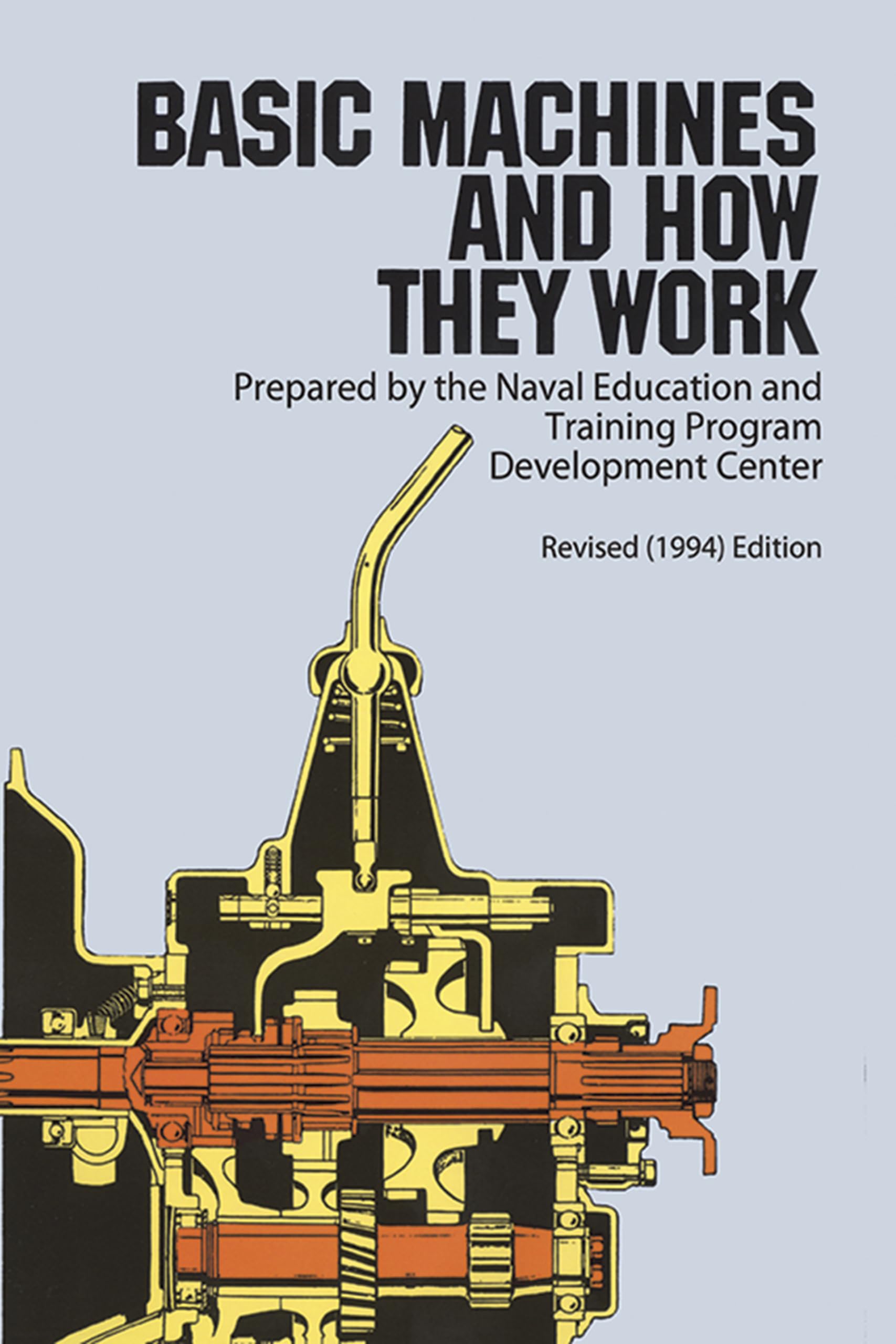
From the Publisher Learn How Machines Work—From Levers to Engines A Hands-On Introduction to Mechanical Principles – Covers levers, pulleys, gears, engines, and more—using plain language and over 200 detailed illustrations. No Advanced Math Required – Designed for readers with a basic understanding of math, this guide makes mechanical concepts approachable and practical. Covers Key Concepts in Mechanics – Learn about force, work, friction, power, pressure, and machine efficiency through real-world examples and applications. Review: Lots of diagrams, some useful (basic) equations, and fun to read - This is a Dover book (they have excellent reprints of classic works). Good content, useful for just about anybody but especially for those who have to dabble occasionally in some other discipline that involves mechanical devices from simple levers to car engines. It's a fun read too. Review: Simple yet deeply informative. - I haven’t read all of it yet. I’m really liking it so far. It presents a lot of information simply and concisely with helpful illustrations. I’ve had some modest success using old US Navy training material as a reference in the past, and this is definitely meeting my expectations. I heartily recommend this to anyone who wants to broaden their own understanding of machinery, especially for those who have found that conventional, modern education and workplace training does not yield satisfactory understanding.
| Best Sellers Rank | #56,995 in Books ( See Top 100 in Books ) #4 in Machinery Engineering (Books) #6 in Physics of Mechanics #43 in Civil & Environmental Engineering |
| Customer Reviews | 4.6 out of 5 stars 1,039 Reviews |
J**D
Lots of diagrams, some useful (basic) equations, and fun to read
This is a Dover book (they have excellent reprints of classic works). Good content, useful for just about anybody but especially for those who have to dabble occasionally in some other discipline that involves mechanical devices from simple levers to car engines. It's a fun read too.
E**R
Simple yet deeply informative.
I haven’t read all of it yet. I’m really liking it so far. It presents a lot of information simply and concisely with helpful illustrations. I’ve had some modest success using old US Navy training material as a reference in the past, and this is definitely meeting my expectations. I heartily recommend this to anyone who wants to broaden their own understanding of machinery, especially for those who have found that conventional, modern education and workplace training does not yield satisfactory understanding.
C**G
Helpful, if quirky
I bought this book as part of my goal to re-learn some basic engineering skills. I found it helpful and informative, but extremely long winded. Given that it's written for the navy, it's very insular in it's context, centering around naval usages. It also lacks a textbook style succinctness and instead sounds like a lecture to a group of children or like an educational video from the 70's with drastic over-simplification and a certain Norman Rockwell feel to it. Above said, the basic principals and their associated formulas ARE clearly communicated along with their relevant applications. Happy with this book, but do not feel the naval context is clearly communicated in the description, nor the style of its format.
J**.
Great primer on machines
I've had a copy of this book for quite sometime. Recently, I bought more to give to kids in the family who have mechanical interests. This is an excellent primer starting from levers and proceeding simply but building to how the internal combustion and manual transmission works. A definite read for anyone with wants a simple explanation of basic mechanical systems or those who just like to read increasingly better presentations of those topics they throw at you when learning basic physics and engineering. There is some inadvertent humor. The chapter on the block and tackle asks you to remember when you watch movers take a piano out a fourth story window, handling it with ease only a rope. Well, no, even in my 50s, I can't say I ever saw that outside of a Bugs Bunny cartoon or black and white movie. But then, the machines remain the same and are still used today although generally with hydraulic-operated drum doing the hauling.
C**S
great book
Great book, well written, easy to understand, illustrations clearly drawn easy to connect with explanation, timeless, I recommend this book.
D**T
Overrated, but still useful
A decent book, but way overrated here. How many people could read the last chapter (13 - Power Trains) and get anything practical out of the mind-numbing detail? There are also several sloppy mistakes throughout the text that make it a bit difficult to follow at times: a lowercase "L" ("l") becomes a "1" in the lever formula (original formula is on 1-4, incorrect versions are on 3-1, 4-1); typos in numbers (e.g. "10" is written instead of "20" on 6-5); "330" is a typo instead of "300" on 3-4; etc. For a book without much math in it, they could have been more meticulous with the little bit they did include. Assuming you know absolutely nothing about machines (like me) -- then this is a good book if you read the first 12 chapters (not really counting chapter 11, which is way too diffuse to be useful), and if you're careful with all the Navy jargon ("block" = "pulley", "tackle"="fall"="rope", etc.). Assuming you already know how all the machines work, this book will probably be a handy refresher and review.
S**D
Good First steps for reluctant Learners
This is a very fundamental text and as such it is a excellent basis for further study in the subjects of mechanics and physics. You would be surprised how most people especially the younger generation, though clearly comfortable with current technology especially the use of electronic devices, cannot grasp the simple concept of a lever arm or why you need to understand geometry, trig functions, basic physical properties of fluids, etc... Anyway, I liked it and I keep it handy on my desk for occasions when simple examples are required for clarification purposes. A good follow on text is "Making Things Move" by Dustyn Roberts, also well written for the layman, student or hobbyist.
C**R
Great gift for an old Navy Machinest Mate.
Got this book as a gift for my father, a former Navy Machinest's Mate. He loved it and it brought back old memories. The lessons were clear and concise with the text and copious detailed graphics working well together. Basic Machines and How They Work starts with explaining the classical simple machines, lever, inclined plane, pully and its relation to the lever, compound pully, and screw and its relation to the inclined plane. Book then proceeds to combine these simple machines and explain how these simple machines build up to more complicated mechanical structures: clutches, transmissions, and internal combustion engines, all with a sailor's point of view and sprinkled with nautical jargon. A good basis, too, for high school physics students.
ترست بايلوت
منذ 5 أيام
منذ أسبوعين