We remain fully operational. Our teams are working around the clock to ensure your deliveries continue safely.

قم بتنزيل التطبيق


معلومات عنا
حقوق الطبع والنشر © 2024 Desertcart Holdings Limited
قم بتنزيل التطبيق

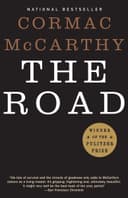
📖 Dive into the literary event that everyone’s talking about — don’t miss out on The Road!
The Road by Cormac McCarthy is a critically acclaimed post-apocalyptic novel featured in Oprah’s Book Club. It chronicles a harrowing journey of a father and son through a bleak, ash-covered world, exploring themes of survival, love, and humanity. Praised for its sparse, powerful prose and emotional depth, it ranks among the top contemporary literary fiction bestsellers with over 36,000 reviews and a 4.4-star rating.


| ASIN | 0307387895 |
| Best Sellers Rank | #833 in Books ( See Top 100 in Books ) #11 in Contemporary Literature & Fiction #27 in Literary Fiction (Books) #49 in Reference (Books) |
| Customer Reviews | 4.4 4.4 out of 5 stars (37,053) |
| Dimensions | 8 x 5.1 x 0.9 inches |
| ISBN-10 | 9780307387899 |
| ISBN-13 | 978-0307387899 |
| Item Weight | 2.31 pounds |
| Language | English |
| Print length | 287 pages |
| Publication date | March 28, 2006 |
| Publisher | Vintage |
A**A
6 stars, but not perfect...
Cormac McCarthy presents bleak as no other writer can. While I was reading The Road, several times I thought that I’ll never again believe a writer who uses the word “hopeless” to describe the plight of their character. In The Road, there is nothing but hopelessness. Almost. Which leads to where I struggled with this novel. I’m giving it 5 stars, though it deserves at least 6 even though I think it has a few flaws. And even with 6 stars, I strongly suspect he was awarded the Pulitzer Prize not so much for this work as much as for his body of work. If you can stomach the astounding violence in Blood Meriden, it is the far better book of the two. On the off chance, you don’t already know the details of the plot, this is your spoiler warning. I have long avoided reading The Road though friends have encouraged me to. I only read it after reading McCarthy’s Blood Meridian. I’ve long avoided the novel because the premise is that they are traveling down a road in a hostile, post-apocalypse setting. One of the first things you learn as a combat soldier is you never take the road. In the military, these are called “natural lines of drift.” It’s a clever way to say “the route people will take”. If you have ever walked across fields that cows frequent, you know what I mean. Cows find the easiest path and tread it over and over. If you want to kill a cow, just wait along one of those paths. Roads for humans are the same. If you want to kill a human, just wait along a road. This world of McCarthy’s is populated with “bad guys” who are almost invariably cannibals. This is because there is simply no food left, no living thing other than the last scraps of humanity preying on each other. They are often also on the road or setting up ambushes along it. Several times during the story, the man, and the boy avoid dying in such encounters. Too many times to my thinking. So, if you take the road literally, the entire premise seems flaky. But the road is needed as a literary device: The two main characters have to start somewhere and end somewhere else. It is both physical and metaphorical. So they travel a road for hundreds and hundreds of miles, miraculously, without getting hurt. I was so taken with McCarthy’s writing after Blood Meridian, I decided to read The Road in spite of my doubts about their travels on this road of theirs. So getting into the book, and starting down the road, the next issue I had was that they were pushing a shopping cart full of their meager belongings. You may see homeless people pushing shopping carts under bridges or down a sidewalk. You don’t see people pushing shopping carts hundreds of miles over roads after a decade of neglect and (apparently) nuclear blasts. To his credit, McCarthy had his character’s wear out one and often had to dig a path through sand or snow to keep the cart going. Doable? Maybe…for a while. But the doable part had another issue. It takes a lot of water and a lot of calories to keep pushing such a cart. The Road‘s landscape — world — is depressingly bleak and gray; even the snow falls gray. Rivers are described as ugly sludge. For much of the book, I wondered where they were getting water clean enough to drink. Though they stumbled across a few forgotten caches of food and water from time to time, not until the last few pages did we actually see them getting water out of a creek, straining it to clean it. It was a weak throw to acknowledging how they were getting their water. But he did not share it until the end of the book because it mitigates the desolate, rotted Earth images of the earlier portion of the book. Maybe the streams are not quite so dirty. Another problem I had with the book was how they were getting enough calories to keep their strenuous trek going (in freezing weather, no less). I’ve lived outside doing hard work for weeks at a time. You burn 3K calories a day…easily. That is a lot of food. When the book starts, there is no explanation of how they came to have a cart full of supplies. No matter. But as they deplete them through the story, they invariably stumbled upon more food as they were about to starve to death. And it was food the rest of humanity had missed while they were starving to death, seemingly over five or ten years. Yet the man and the boy found it, which was all too convenient. I also struggled with what event would kill all life on Earth other than humans? I don’t doubt there could be a nuclear exchange, or a devastating meteorite strike, or some other terrible event. But what puzzled me was that there is no other life. Nothing. There were no rats, flys, crickets or cockroaches… These are forms of life that are amazingly resilient. But somehow there are humans wandering about but none of these little critters. Not a lot of humans, but enough that we run into one or two or a dirty gaggle once every twenty or thirty pages. But not a mouse in sight. Seemed odd. And after hundreds of pages and hundreds of miles on the road, and after most of the people they came across were cannibals that wanted them for dinner, at the end, after the man dies, and the boy sits beside him for three days on the verge of dying, who walks up? A well-armed father with a good (Christian?) wife and their two children who are about the same age as the boy. The man has delivered his son into the hands of someone who will care for him and raise him in a safe environment. Not are these just playmates, but there is potential to propagate and start humanity anew. There is hope. Of course, there is no food and the Earth is incapable of growing anything. There are no animals, no living plants, nothing. Are we left to believe that the boy has been saved? Or will he live in misery and despair until one way or the other, he also falls? This, in turn, leads to the novel’s strengths. Beyond the extraordinary writing and the stunningly bleak vision, beyond the smart way McCarthy never feels the need to explain why or how it all happened, he sets up unrelenting tension. Arguably the core story is that the man — the father — does not have the courage to kill his son and then himself to escape their hell. Where is the wife? The boy’s mother? She killed herself, we discover, before the story opened. And when the story opens, the man has a pistol with — you guessed it — two bullets. So we know from the start he has not yet found the courage to kill them both, and not long after we start our trip down the road, the man has to use one bullet. With only a single bullet left, his dilemma is even more profound: Should he use it to kill the boy in his sleep? Get it over with? If so, how would he kill himself? He could do it, but he no longer would have such a simple and easy means as a self-inflicted shot to the head after killing his son. In short, he can’t bring himself to kill his child, the child he loves so dearly, the child that trusts him so totally, which is shown over and over through the story in deeply emotional, compelling ways. Thus the tension mounts as we see the man, coughing his lungs out, sick and wounded, starving, limping toward his own death. We are left wondering until the end if he has the guts to kill his child and save him from what will befall him when taken by the cannibals. In the end, though McCarthy could horrify us, the man could not kill the child, his child, so he created an ending that (to this reader) was completely out of step with the rest of his dark vision. All said, the book is brilliant and I highly recommend it. The writing is uniquely McCarthy’s and the vision, the tension and the violence are also something few (if any) writer can match. I urge you to read The Road. McCarthy is a literary treasure and his works – gut wrenching though they are – should be experienced because they are so unlike the tediously similar books that frequent the bestseller lists. Just don’t think it is going to be a fun trip down the road.
H**N
Haunted
I've liked post-apocalyptic fiction since junior high. When I was fifteen, I saw "The Omega Man" twelve times. (Yeah, I thought Rosalind Cash was hot, but that only had a little to do with it.) I would sometimes reflect on why I enjoyed the genre so. Was it because I enjoyed the idea of the human race being nearly wiped out? Nah. I like people, for the most part. I suppose what attracted me most to the stuff was much the same as what attracts folks to westerns: the rugged individual prevails against overwhelming odds, and preserves hope for his town, his country, or humanity itself. It was the adventure element of the genre, and the underdog standing of the typical post-apocalypse protagonist, that lured me. But then, I always wondered: Why doesn't the end or near end of humanity bother me, even in a fictional context? Am I secretly anti-social? Or, am I simply a mean dude wrapped in a veneer of civility? I harbored a mild conflict between enjoyment and vague guilt when reading or watching the end of the world, but I suppose that conflict only added spice to the allure. There was, and is, another element: the need to face my fears, especially fears that lurked in shadow. I grew up in a time when nuclear conflict between the U.S. and the Soviet Union was an all-too-real possibility. I remember the drills in elementary school, and I remember the thoughts that would come to me as I sat beneath my school desk. They were thoughts like, "If this was for real, I might never see my mom, dad, sister, or dog again." How much did those years emotionally brand folks of my generation? What lingers in the heart and the guts? I don't know. But I do know that I feel sorrow that we had to spend our childhoods with an awareness that we could be incinerated before the day ended. How very sad. Our biggest worry should have been whether we'd get grounded for some misdeed upon returning home from school. Anyway, I came upon "The Road" while browsing post-apocalypse novels on Amazon. Now, I'm a bit of a contrary son-of-a-gun. I've never rushed out to buy a book upon learning it was awarded any prize, and I don't like it when Oprah tells me what to do. But sheesh, a post-apocalypse novel winning the Pulitzer Prize? How does that happen? I ordered the book. I didn't know much about McCarthy before buying "The Road." So, I was distracted by his tendency to avoid punctuation, flaunt basic rules of grammar, and leave out quotation marks in dialogue. My thought was, "Sheesh, I guess I'm really lacking in sophistication. This guy is held up as a 'modern master,' but to me, he comes across as lazy. For cryin' out loud, is it really that much harder to type CAN'T instead of CANT?" What carried me along, though, were contrasting elements of the story. The man and boy struggle to survive in a grey, desolate world, where the only food available is what can be scavenged. They're heading south, because the man knows that he and his son cannot survive another winter in the north. The world seems utterly without hope. And yet, hope lives, tenaciously, in the love between father and son. The brutal, horrific portrayals of the world and its remaining inhabitants only serve to spotlight the connection between the boy and his dad. McCarthy writes, "Then they set out along the blacktop in the gunmetal light, shuffling through the ash, each the other's world entire." Then ending of the novel, safe to say, ain't stock Hollywood. I finished the novel with conflicting feelings. The story was compelling, and yet I had some regret that I'd even started it. Through much of the book, the writer's disregard of grammar rules and conventions was distracting, and yet somehow added to the bleak tone of the book, to the sense of utter desolation. McCarthy wasn't motivated to make this an easy read, especially in an emotional sense. The reader never gets off the hook. Escapist fare, it isn't. Truth be told, for much of the novel, I tended to side more with the two and three-star reviewers on Amazon than those who gushed over the novel. But time has changed my perspective. Early in the novel, it was a glass half-empty. Now, days after finishing it, it's a glass half-full. Is "The Road" a good book? Do I recommend it? I don't know. I really can't say. It's haunted me too much to be objective about it. Since I've read it, I think often about when my son was a newborn. He was born healthy and robust, but suddenly, I became hyper-aware of how much I had to lose. Worries of SIDS and other agents of the Grim Reaper circled about in my mind, like vultures with blood-soaked beaks. He slept with us as an infant, and I would often sit awake at night and watch his little chest rise and fall, all the while thinking, "Please, God, just let him keep breathing." I've been cursing "The Road" since I finished it. But last night, I started reading it again. I'm thinking that if I re-read it, I might chase away the shadows it's left in my heart.
R**E
If you want to fully dive into a book that catches your full attention and makes you forget about the world, this is it. A real page-turner, beautifully written, amazing story, heartbreaking, insightful, entertaining.
R**K
In een vernietigende zwarte kou doolt een vader naar het zuiden met als enige motivatie zijn zoon. We volgen dit tweetal in een post-apocalyptische wereld van as en onmenselijkheid door zo helder beschreven vernietiging dat de adem stokt. Er is geen hoop, maar de lezer denkt het te kunnen vinden.
F**N
Brilliant read, loved it. Fast, free delivery from Amazon
T**I
Amazing
M**A
Scritto in ma ieri quasi asettica, in alcune parti ripetitivo, quasi a suggerire il nuovo corso delle vicende umane dopo una misteriosa catastrofe che resta percepibile solo attraverso le tracce che lascia. Ci sono due visioni quasi contrastanti. Un padre che lotta per la sopravvivenza e un figlio che prima accetta qualsiasi nefandezza come qualcosa di indiscusso, e poi, crescendo, inizia a sviluppare una sua personale coscienza. E' un grido forte all'umanità, alla riconquista di valori perduti. Storia che lascia tantissime emozioni e che merita di essere letta tutta di un fiato.
ترست بايلوت
منذ 3 أسابيع
منذ أسبوعين