Happy People: A Year in the Taiga
Product ID: 18271333
Buy anything from 5,000+ international stores. One checkout price. No surprise fees. Join 2M+ shoppers on Desertcart.
Desertcart purchases this item on your behalf and handles shipping, customs, and support to KUWAIT.
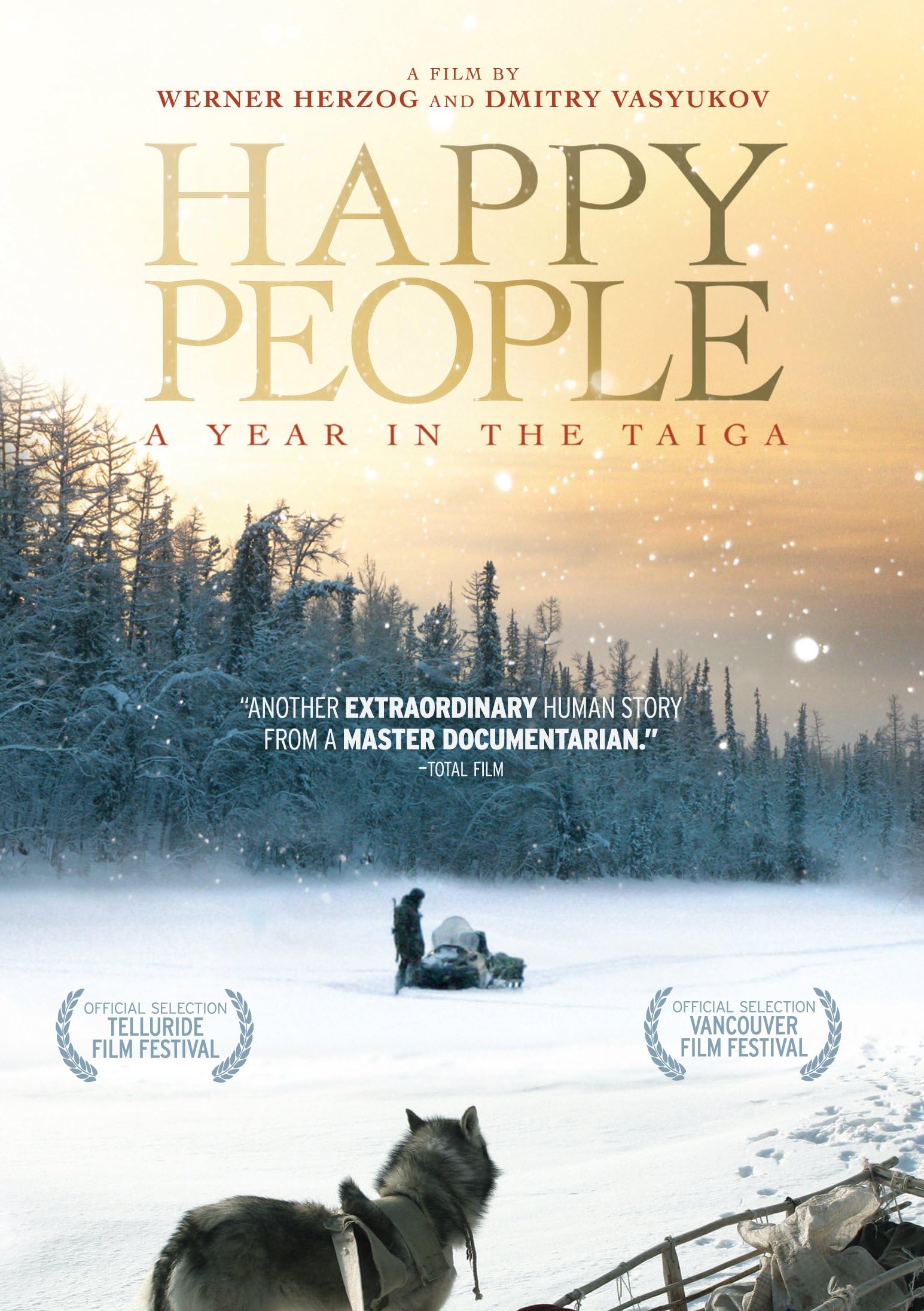
With Happy People: A Year in the Taiga, Werner Herzog takes viewers on yet another unforgettable journey into remote and extreme natural landscapes. The acclaimed filmmaker presents this visually stunning documentary about the life of indigenous people living in the heart of the Siberian Taiga. Deep in the wilderness, far away from civilization, 300 people inhabit the small village of Bakhtia at the river Yenisei. There are only two ways to reach this outpost: by helicopter or boat. There's no telephone, running water or medical aid. The locals, whose daily routines have barely changed over the last centuries, live according to their own values and cultural traditions. With insightful commentary written and narrated by Herzog, Happy People follows one of the Siberian trappers through all four seasons of the year to tell the story of a culture virtually untouched by modernity. Review: Outstanding quality documentary - This is a very engaging documentary, not an empty moment. I bought B00AXYZZ6C as well as the blu ray and the region 2 DVD with English voice over. Buy B00AXYZZ6C, the region 1 DVD; it has the Russian soundtrack with subtitles. The English voice-over version (Art-Haus blu-ray and region 2 DVD) has the wrong emphasis and affect; it's off-putting. Also, it has extras; an interview with Werner Herzog and a separate feature on the Siberian taiga. This is also available on YouTube as a 4 part version without the Herzog narrative. It's also very compelling. Blu ray picture quality is the same as in the DVD. Review: Independence and self-sufficiency… - I’ve been a fan of the movies of Werner Herzog ever since the ‘70’s, when Atlanta’s only “art theater” would feature them. In particular, I was moved by his 1977 movie, Heart Of Glass , about the impact on a medieval German village when it lost the knowledge on how to make red glass. (I’ve frequently thought of the parallels with present-day America losing the knowledge and trained workforce that can make so many products). In the ‘70’s, Herzog was most famous for Aguirre, the Wrath of God . More recently, Herzog produced a documentary, Grizzly Man on TimothyTreadwell, who was killed by the grizzly bears that he loved in Alaska. For “Happy People,” Herzog teamed up with Russian director, Nikolay Nikiforovitch Siniaev. It was released in 2013. Bahkta is a village of 300 people, located on the Yenisei River in Siberia. The Yenisei is one of the three great rivers of Siberia; all flow to the Arctic Ocean. It is the middle one of the three; recently I read Jeffrey Tayler’s excellent account of his trip down the eastern-most of the three, the Lena, in his book River of No Reprieve: Descending Siberia's Waterway of Exile, Death, and Destiny . There are no roads to Bahkta. Transportation to the village is solely by the Yenisei and by helicopter. (Google maps provides excellent detailed aerial views of the village!) The taiga, a Russian word now generally accepted in English, is the Siberian forest, which is one and a half times the size of the United States. “Happy People” is a year in the life of Gennady Soloviev, who earns his livelihood in the traditional manner of a trapper, mainly of sable. He is somewhere between 50 and 60 years old, with an adult son to whom he is teaching traditional methods, including how to make a boat as well as skis from a tree that they cut down. Soloviev claims that he can outski others with store-bought synthetic-material skis. There “concessions” to the modern world are snowmobiles, chain saws and motors for their boats. Hand tools are used for most other work. Soloviev looks like a dour Slav. Werner Herzog narrates the film, in English, and his intonations seem to capture Soloviev’s spirit. Soloviev says that he was dumped off in the taiga in the 1970’s, with no radio, no winter clothes, a partner who proved to be useless, and with a promise of a stove that was never delivered. He says simply: “I survived.” Herzog commences his year in the spring. May 01, besides its traditional holiday associations in Russia, marks the end of winter, as the ice on the Yenisei begins to break up. May 09 is also still celebrated, and Herzog, the German, poignantly films an old veteran, bedecked with medals, from “the Great Patriot War.” (a/k/a World War II), in which 20 million Russians died. Then there are the maddening clouds of mosquitoes during the summer, as work moves forward to prepare for the autumn trapping season. Birch bark tar is used as a mosquito repellant. Soloviev traps alone. He has a base cabin, and outlying cabins that have to be stocked for the season. All must be in place before the freeze. His territory is 1500 square kilometers. His son also traps, but in his own territory. He drives his snowmobile down the frozen Yenisei, a 150 km, to be at home for Christmas. His dog must run beside him. He loves his dogs (a trapper has to have them!) but will not spoil them. The last day of December was “mild,” at a minus 33. Happy people? Throughout the movie, rare is even a smile. Women are in the deep background, their lives unexamined. As Herzog explains though, late in the movie, Soloviev pays no taxes, has no bosses to please, and is free of committee meetings. He is self-reliant, in an extreme world, where there is no margin for error. He is his own man. How many of us can say the same? Unmentioned in the film are the very upscale stores that sell sable coats with $90,000 price tags; so too, unmentioned are the models who “go bare” rather than wear fur. Yet another world. Herzog was 70 years old when he produced this movie in 2013. His creative powers are certainly undiminished over the past almost half century. The cinematography is brilliant, and includes numerous underwater and aerial shots. And the storyline is just about perfect, with the enormity of the solitude of the taiga playing a key supportive role. 6-stars.
| Contributor | Dmitry Vasyukov, Werner Herzog |
| Customer Reviews | 4.5 out of 5 stars 2,167 Reviews |
| Format | Color, Multiple Formats, NTSC, Widescreen |
| Genre | Special Interests |
| Language | English |
| Number Of Discs | 1 |
R**E
Outstanding quality documentary
This is a very engaging documentary, not an empty moment. I bought B00AXYZZ6C as well as the blu ray and the region 2 DVD with English voice over. Buy B00AXYZZ6C, the region 1 DVD; it has the Russian soundtrack with subtitles. The English voice-over version (Art-Haus blu-ray and region 2 DVD) has the wrong emphasis and affect; it's off-putting. Also, it has extras; an interview with Werner Herzog and a separate feature on the Siberian taiga. This is also available on YouTube as a 4 part version without the Herzog narrative. It's also very compelling. Blu ray picture quality is the same as in the DVD.
J**I
Independence and self-sufficiency…
I’ve been a fan of the movies of Werner Herzog ever since the ‘70’s, when Atlanta’s only “art theater” would feature them. In particular, I was moved by his 1977 movie, Heart Of Glass , about the impact on a medieval German village when it lost the knowledge on how to make red glass. (I’ve frequently thought of the parallels with present-day America losing the knowledge and trained workforce that can make so many products). In the ‘70’s, Herzog was most famous for Aguirre, the Wrath of God . More recently, Herzog produced a documentary, Grizzly Man on TimothyTreadwell, who was killed by the grizzly bears that he loved in Alaska. For “Happy People,” Herzog teamed up with Russian director, Nikolay Nikiforovitch Siniaev. It was released in 2013. Bahkta is a village of 300 people, located on the Yenisei River in Siberia. The Yenisei is one of the three great rivers of Siberia; all flow to the Arctic Ocean. It is the middle one of the three; recently I read Jeffrey Tayler’s excellent account of his trip down the eastern-most of the three, the Lena, in his book River of No Reprieve: Descending Siberia's Waterway of Exile, Death, and Destiny . There are no roads to Bahkta. Transportation to the village is solely by the Yenisei and by helicopter. (Google maps provides excellent detailed aerial views of the village!) The taiga, a Russian word now generally accepted in English, is the Siberian forest, which is one and a half times the size of the United States. “Happy People” is a year in the life of Gennady Soloviev, who earns his livelihood in the traditional manner of a trapper, mainly of sable. He is somewhere between 50 and 60 years old, with an adult son to whom he is teaching traditional methods, including how to make a boat as well as skis from a tree that they cut down. Soloviev claims that he can outski others with store-bought synthetic-material skis. There “concessions” to the modern world are snowmobiles, chain saws and motors for their boats. Hand tools are used for most other work. Soloviev looks like a dour Slav. Werner Herzog narrates the film, in English, and his intonations seem to capture Soloviev’s spirit. Soloviev says that he was dumped off in the taiga in the 1970’s, with no radio, no winter clothes, a partner who proved to be useless, and with a promise of a stove that was never delivered. He says simply: “I survived.” Herzog commences his year in the spring. May 01, besides its traditional holiday associations in Russia, marks the end of winter, as the ice on the Yenisei begins to break up. May 09 is also still celebrated, and Herzog, the German, poignantly films an old veteran, bedecked with medals, from “the Great Patriot War.” (a/k/a World War II), in which 20 million Russians died. Then there are the maddening clouds of mosquitoes during the summer, as work moves forward to prepare for the autumn trapping season. Birch bark tar is used as a mosquito repellant. Soloviev traps alone. He has a base cabin, and outlying cabins that have to be stocked for the season. All must be in place before the freeze. His territory is 1500 square kilometers. His son also traps, but in his own territory. He drives his snowmobile down the frozen Yenisei, a 150 km, to be at home for Christmas. His dog must run beside him. He loves his dogs (a trapper has to have them!) but will not spoil them. The last day of December was “mild,” at a minus 33. Happy people? Throughout the movie, rare is even a smile. Women are in the deep background, their lives unexamined. As Herzog explains though, late in the movie, Soloviev pays no taxes, has no bosses to please, and is free of committee meetings. He is self-reliant, in an extreme world, where there is no margin for error. He is his own man. How many of us can say the same? Unmentioned in the film are the very upscale stores that sell sable coats with $90,000 price tags; so too, unmentioned are the models who “go bare” rather than wear fur. Yet another world. Herzog was 70 years old when he produced this movie in 2013. His creative powers are certainly undiminished over the past almost half century. The cinematography is brilliant, and includes numerous underwater and aerial shots. And the storyline is just about perfect, with the enormity of the solitude of the taiga playing a key supportive role. 6-stars.
D**L
Absolutely fascinating
I was almost immediately enthralled with this documentary about the life of a trapper in the boreal forest of Siberia in the town of Bakhta (population around 300). I did not expect it to be so interesting, but looking at the credits of director Werner Herzog, 68 in all, I am not so surprised. Apparently I have stumbled upon a great director of documentary films that previously I knew nothing about. Also directing was Dmitry Vasyukov. What makes this work so well is the clear, concrete detail shown as the trapper (Nikolay Nikiforovitch Siniaev, I believe) goes about what he has to do throughout the entire year in order to survive in the harsh climate. What must be done in spring as he prepares for the melting of the snow (and the mosquitos!) is very different from what must be done in the dead of winter when there is ice on the man’s beard. Interesting enough during both winter and summer they fish the river for pike, breaking ice in winter and throwing nets in the summer, which they either smoke or feed to the dogs. The dogs! In this film we can see clearly the essential symbiotic relationship between humans and dogs. It is not clear that the trapper would be able to do his work without the help of his dogs. The dog’s ears and its sense of smell augment the man’s knowledge and experience so that together we see them work as a team. When the man makes a mosquito repellent from the bark of a birch tree (I think it was birch) he rubs it on his dogs as well. The amount of carpentry and other wood working that the trapper has to do, including making craft to navigate the rivers and streams, is surprising. Of course the traps he makes are made mostly of wood. He traps sable for its valuable fur. To do so he has to place traps over a wide area which means he has to maintain various cabins in the woods that he and whoever is working with him can stay overnight since the treks cover many miles of frozen ground. We see him knocking down the snow piled high on the cabins, repairing damage made by bears, etc. The idea that the people are happy and especially the trapper cannot be argued with even though their lives are hard. The life’s lesson here is that when a man is consumed with work that he has to do, that is necessary for his survival, and it is work that he can do, that he has developed the skills to do, that man is happy. He is happy partly because he is close to nature; in fact he is immersed in nature in a way similar to way hunters and gathers were in Paleolithic times. It can be argued that that world, however challenging, is one that is natural for humans. (Of course there are other natural environments, some very different such as an equatorial jungle demanding a different set of skills.) After watching this I intend to watch some of Herzog’s other films. By the way, Klaus Badelt’s score is beautiful and haunting. --Dennis Littrell, author of “Cut to the Chaise Lounge or I Can’t Believe I Swallowed the Remote”
C**E
Not a life of quiet desperation
Happy People: A Year in the Taiga Having just re-watched Nanook of the North) recently, Herzog's Happy People revisits people who live hand-to-mouth in a place where the summers last about as long as a Twitter trend and the winters determine your every action in life. We meet our central characters with a much more serious tone than we met Nanook and his family almost one hundred years ago. Instead of Canada, however, they subside in Siberia with semioccasional modern conveniences (chainsaws and snowmobiles are all that come to mind). The landscapes sometimes remind me of the bleak Wisconsin winters of Stroszek and other times mosquito-infested shots from Grizzly Man . More importantly, however, is the way the camera reads their faces. These are mostly trappers, men of small stature and tall on wisdom. This is not the stuff of John Colter from The Lewis and Clark Journals or some tough guy with a big truck that defines his manhood -- his existence-- with the fact that he shoots mammals and will show you pictures on his Android if you give him five seconds to get started. No, these are a dying thread of man's survival through the last Ice Age. You see it in their eyes. You catch glimpses of what Elizabeth Gilbert saw in Eustace Conway when she wrote The Last American Man . This is the core of what it means for a man to a man and his dog to do what it takes to not die in conditions that would undoubtedly kill most everyone very quickly. And their faces! Their faces show a happy people. They walk a tightrope between life and death and they do not show fear or disappointment in the world. This point comes to a climax as Dmitry, our protagonist-trapper, comes to check on one of his trapping sheds late in the winter day, as daylight is slipping away, only to find that a tree has fallen on it and he much now expend thousands of calories-worth of effort to quickly mend the cabin enough to sleep in it that evening. In just about any other film ever made, had this situation arisen, the character would throw a conniption-fit, try to deal with the situation by raising the drama level of the moment (see the truly terrible The Grey) for a fictional example), and that very conflict would draw the viewers in closer (making producers smile with dollar signs). But in this film, Dmitry sucks it up, does the backbreaking work necessary to survive, and shows us a true (Happy People?) nature to himself. Other films show similar themes and are worth checking out. From the aforementioned Nanook of the North (a film where the climax is building an igloo!) to Dick Proenneke Alone in the Wilderness 's 1968 home films of his survival in Alaska with its patient shots of how he built his tools and home. Yet there's something more straightforward and honest about Herzog's depiction of how the sable traps are made and checked all winter long. He shows us how to make skis and make canoes. The ice is treated as a flexible tool depending on what Dmitry wants to do with it. At times he's Van Gogh working that river as his palette. The water, slush, ice, rocks, and other pieces come together to help him paint his way of living. He does things his own way (shoots pike on the line) and has trained his dog to follow him over 100 miles to the Christmas celebration by running on the ice. This may be Herzog's most honest and straightforward documentary to date. Does that mean you'll like it the most? Probably not. This is a simple film about simple people. They are free and Herzog does them justice by letting them be as free as possible as he shows a year of their lives.
P**N
Wonderful documentary
Such a refreshing movie. Gennady is the GOAT.
D**K
A Man and his Dogs
This documentary takes place in The Taiga Forest eco-region of Eastern Siberia, and as the story opens and various people are interviewed,they all seem to be truly happy although they are all living a hardscrabble existence, and would surely all qualify for government assistance in our country. Yet the men in this community who make their living by trapping [sables primarily] seem to think they have the best of all worlds, in that they are free to choose, work enough to survive and provide for their families, and then enjoy what appears as a cohesive community life with all the others in their small village of approximately 300 people total. The main character Gnady [spelling], a trapper exclaims at the beginning of his interview that no man can ever be considered a true trapper without his dog[s]. He has two hunting dogs at the time of filming, of some mixed lineage, but I would say looked mostly like what you would expect in this hard land - Siberian Huskies. He praised all of them, including the ones who were now too old to hunt with him and whom he says will eat as well as the working dogs. He also calls them his pensioners. Like all true dog lovers he brags about their various exploits and expresses how saddened he is by the fact that his best dogs died too young as both his favorite female and male companion were killed by the same bear, which he quickly dispatched but not before it had killed his two companions. Gnady is also very proud of his own self sufficiency in the forest, showing how he actually built a hut and and a pair of skis. They fell the trees for the hut and skis, with their most modern piece of equipment being a chain saw. But they make their own wooden wedges to split the giant trees into boards, which they cut shape and plane by hand into the final finished skis. As with all Werner Herzog films the photography is superb, with its desolate yet breathtaking beauty and the terrific underwater scenes showing the Russian Pike in their natural habitat. And credit should be given to Dmitry Vasyukov as co-producer and who was responsible for most of the scenes, but Herzog, as is typical, does all the narration in his distinctive gravelly voice, although you can distinctly hear Gnady telling him the story in Russian. A wonderful story of a tough existence, and yet as the title says a Happy Group of People. Highly recommended!
N**D
Interesting but poor HD quality
We paid for the HD version but I don't think it was delivered as such--I saw no distinction in the resolution, saturation, and so on, that would make me think it was HD. The narration is in English but all the dialog is subtitled Russian. It's a pet peeve, but, having to read subtitles means you miss much of the style and imagery of the film. And, because it seems to require much less Russian to express thoughts than English, you've got to read (in some cases) quite fast. The film is interesting in its simplicity. Lots of questions came to mind about how these folks interact with the outside world, but little is mentioned. We see more of the romantic aspects of the life than what must be its reality. Happy People? I don't know. Perhaps more content.
S**.
Not a huge Herzog fan, but this was Amazing
This was so well done. You feel like you are there. The camera work is superlative (except for the final arial pan that was a but low res). Again, you are "in" the movie. Props to the crew and cameramen who trekked to this remote location. The underwater photography is especially exceptional. Super props for the non-actors never once looking at the camera (except for a couple kids in the Christmas scene). The folio and voiceovers superbly support the film's intent, as do the tone and sparsity of Herzog's narration. You can feel the cold, remote silence. You can understand why people were not forced, but have chosen, this life of true freedom from all government oversight. The trailer does a fair job representing the movie, including some of the finer photographic moments, but lacks the immersion feel you experience in the actual movie. Nobody gets eaten by a bear (except for an animal in part of a storytelling), but the tale is equally exciting in a visceral way. Like Into the Wild (1996), it makes you want to go there, but with the realization that you'd be dead in a week or less.
Trustpilot
2 weeks ago
2 months ago