We remain fully operational. Our teams are working around the clock to ensure your deliveries continue safely.

قم بتنزيل التطبيق


معلومات عنا
حقوق الطبع والنشر © 2024 Desertcart Holdings Limited
قم بتنزيل التطبيق
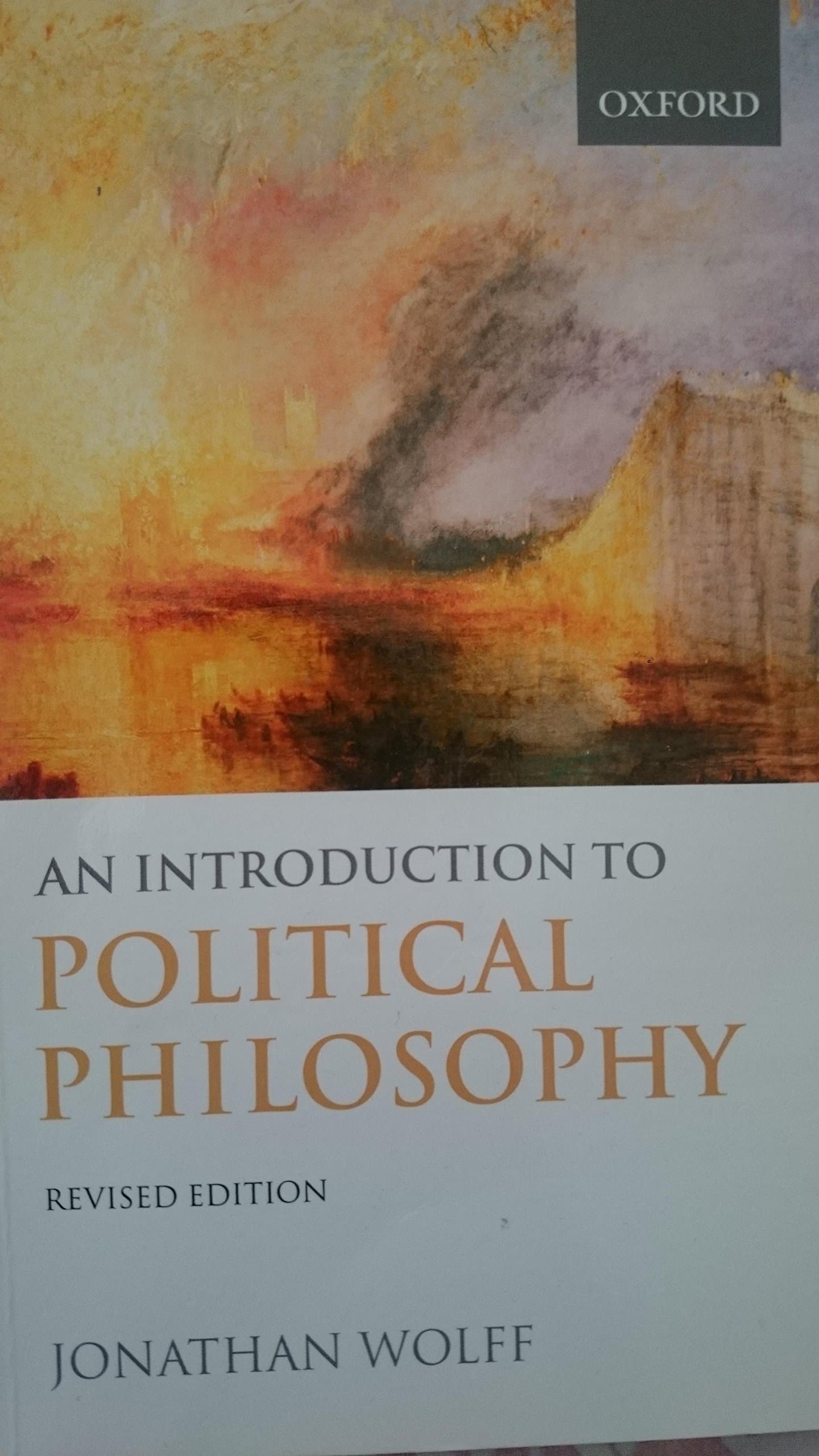
Buy An Introduction to Political Philosophy 2 by Wolff, Jonathan (ISBN: 9780199296095) from desertcart's Book Store. Everyday low prices and free delivery on eligible orders. Review: A brilliant introduction - Jonathan Wolff's introduction to political philosophy is by far the superior of all within its kind. Whilst many introductions to philosophy tend to overlook political and social philosophies, Wolff provides a sweeping and impartial review of the main debates in political philosophy through a series of intriguing and engaging questions. This unusual structure is one of the highlights of this peerless work; it maintains an interesting atmosphere of intellectual curiosity and provides an arena for the contention of different views. Furthermore, it allows for a development of political philosophy from the ground up; a real and unmissable novelty. Another feature of this work, which I have heard offered as a criticism, is a lack of decisive conclusion; Wolff remains entirely objective in his treatment of the arguments and his indecision is one of the many highlights of this work. This is most eminent in his conclusion to the book itself, in which he claims that despite a lack of answers, we ought to continue to practice our political philosophising. In writing this review, I must confess, I endeavour to remain objective in my dealing with the work and have tried to find grounds to criticise it. However, there is nothing in this work which I find I can provide negative report of, at least without making trivial or unfounded attacks. Overall, this is by far the greatest introduction available and one which is entirely deserving of its great reputation. Review: Perfect synopsis of the main political philosophers and arguments - This book proved ideal for my undergraduate module in Political Philosophy, I would recommend to any fellow students. It is very comprehensive while remaining crystal clear. It explains a variety of approaches within each chapter, tackling one issue at a time. As you progress, links are made with previous arguments that have arose. Personally I did not think I would enjoy reading a book on Political Philosophy, however I was nicely surprised about the fluidity and ease of the language, sparking a real interest. I breezed through the book in a matter of days. Serves as a good study/revision book.
| Best Sellers Rank | 412,091 in Books ( See Top 100 in Books ) 209 in Introduction to Philosophy 468 in Academic Philosophy 9,024 in Other Reference by Subject |
| Customer reviews | 4.6 4.6 out of 5 stars (84) |
| Dimensions | 21.34 x 1.27 x 13.46 cm |
| Edition | 2nd |
| ISBN-10 | 019929609X |
| ISBN-13 | 978-0199296095 |
| Item weight | 295 g |
| Language | English |
| Print length | 240 pages |
| Publication date | 23 Mar. 2006 |
| Publisher | Oxford University Press, U.S.A. |
L**M
A brilliant introduction
Jonathan Wolff's introduction to political philosophy is by far the superior of all within its kind. Whilst many introductions to philosophy tend to overlook political and social philosophies, Wolff provides a sweeping and impartial review of the main debates in political philosophy through a series of intriguing and engaging questions. This unusual structure is one of the highlights of this peerless work; it maintains an interesting atmosphere of intellectual curiosity and provides an arena for the contention of different views. Furthermore, it allows for a development of political philosophy from the ground up; a real and unmissable novelty. Another feature of this work, which I have heard offered as a criticism, is a lack of decisive conclusion; Wolff remains entirely objective in his treatment of the arguments and his indecision is one of the many highlights of this work. This is most eminent in his conclusion to the book itself, in which he claims that despite a lack of answers, we ought to continue to practice our political philosophising. In writing this review, I must confess, I endeavour to remain objective in my dealing with the work and have tried to find grounds to criticise it. However, there is nothing in this work which I find I can provide negative report of, at least without making trivial or unfounded attacks. Overall, this is by far the greatest introduction available and one which is entirely deserving of its great reputation.
U**R
Perfect synopsis of the main political philosophers and arguments
This book proved ideal for my undergraduate module in Political Philosophy, I would recommend to any fellow students. It is very comprehensive while remaining crystal clear. It explains a variety of approaches within each chapter, tackling one issue at a time. As you progress, links are made with previous arguments that have arose. Personally I did not think I would enjoy reading a book on Political Philosophy, however I was nicely surprised about the fluidity and ease of the language, sparking a real interest. I breezed through the book in a matter of days. Serves as a good study/revision book.
M**D
Very very very basic but useful to anybody who's just finished A-level studies and wants ...
Very very very basic but useful to anybody who's just finished A-level studies and wants to grasp the basic before heading into first year
A**A
Elegant, balanced, and refreshing
Reading a political philosopher is a refreshing contrast from the bogus certitudes of politicians. Wolff considers key topics such as the state, democracy, liberty, and justice, aspiring to guide us from `muddled ignorance' to `informed bemusement'. Firstly, we learn that, despite the general consensus that we need an appointed authority to prevent general breakdown in society, no theory can be found to demonstrate definitively that that all citizens should be compelled to obey it ! Secondly, the different forms of democracy are analysed -it would work better than the alternative (benign dictatorship with exhaustive opinion polls) if people voted according to their conscientious estimate of the best solution for the whole of society. It is actually of more doubtful efficacy if we (as we tend to) simply choose what's best for ourselves (`the tyranny of the majority'). Unless of course democracy has an added function - perhaps to promote a culture of universal respect. As to the questions: How much liberty should we each possess ? Which is more important when social justice competes with liberty? Which should be our primary concern, the individual or society ? After elegant exposition of the arguments, I was left to agree with Wolff that `there can be no final word' in political philosophy. Finally, there are other equilibria to recognize: should we be radical and progressive, placing our weight behind whichever argument we find most plausible? Or conservative, and sceptical of the usefulness of political theories? And should we prioritise reforming the law, or focus on applying it with sensitivity and compassion? Thanks to this book, I am now more intrigued by politics, less impressed by politicians, and a fully signed-up floating voter !
T**K
So usefull
This book has really good info on political philosophy and was a lifesaver for me. Attempting to actually read all of Hobbes and Rousseau in the time I had was impossible, but this really helped me understand what they were on about.
D**L
Amazing books and helped me write an outstanding personal statement ...
Amazing books and helped me write an outstanding personal statement as a result of the insight. Would highly suggest any philosophers or politicians alike to read this, or even just anyone who is intrigued by that which has no clear reason.
N**O
An excellent read; a lucid and synoptic book on the ...
An excellent read; a lucid and synoptic book on the key tenets of the subject. I would recommend it to anyone who would like a deeper insight into these fundamental sociological disciplines.
P**T
very good
This is a very good introduction. It is easy to read with good examples and original quotes from biggest thinkers and philosophers
S**E
I used this book for my political philosophy intensive course as a guide to prepare my students before reading the original classics. My students are able to understand the contents easily and Professor Wolff writes in a way that beginners to political philosophy can read this book as though it were an article, once through, and still understand the technical ideas. I love that Professor Wolff summarizes major theories and the methods in a logical manner. He covers the basics, leaving room for thoughts and arguments. This is the 3rd time I required this book for my course. Background: My students are mostly pre-college as our course is for gifted youth. So by "able to understand easily", I mean for pre-college students. College Students: This should serve as an easy introduction into political philosophy. Of course, I recommend also reading Hobbes' Leviathan, Rousseau's Social Contract, etc. However, even without those basic classical readings, Professor Wolff highlights the major ideas of the most politically influential philosophers into an easy to read and sometimes humourous book. For Political Science, Philosophy and History majors, I definitely recommend having a copy of the book. It can even serve as a substitute of notes for most lectures in political philosophy courses. Unless someone else writes an even more marvelous book (but this is the best of my 5 year search), I will be using this book for all my future political philosophy intensives.
C**N
As the title says, this is a mere introduction to a vast topic. The author decided to select a few philosophers among the most important and develop their ideas using concepts, but also examples and analogies. It is by far non exhaustive -- but how could an introduction be --, but highly recommanded as a first read.
J**E
I am new to this discipline and I'm very glad I stumbled upon this book. It provides, if not answers, a good overview of what philosophers have reasoned on important questions like: who should rule? Do we have a moral obligation to obey the state? Have all humans been imbued with unalienable natural rights? If not, are we entitled to natural rights at all or can we find some other justification for rights? What political system is best suited to promote the greatest happiness? Unbridled Capitalism or Totalitariam Communism? Something in between perhaps? This is a book that is very well written, does not beat around the bushes and goes to great lengths to explain and cover the most complicated concepts. It does cover a lot of material, however, and I'm currently finding myself reading it for the second time (an extremely rare thing for me) to make sure I get all the finer points. A definitely recommend this book.
M**C
This is a very good introduction...I mean VERY good. I have not finished it yet but I can tell you that it is written in such a way that you really get all the substance without sweat...and also..you simply do not want to put the book down...really a page turner. They way Mr Wolff presents the differents views on each issue is excellent!!! Interested in Political Philosophy??? This should be your book of choice.
J**H
This book was a requirement for my Political Science class, so naturally I went in dreading it. However, I was pleasantly surprised how accessible and understandable this book was. Jonathan Wolff lays out the basics of the early theorists of political philosophy excellently. He takes every argument, states it in a very simple, easy to understand manner, and then provides the counterpoint and typically lists one critic of the idea. He does this throughout the book so the reader can make up his/her mind which side is right. Wolff does an outstanding job of staying as unbiased as one can when it comes to politics. If you are a college student as I am about to read this, don't worry, it will be a breath of fresh air in comparison to all of the other books from other classes.
ترست بايلوت
منذ أسبوعين
منذ يومين