We remain fully operational. Our teams are working around the clock to ensure your deliveries continue safely.

قم بتنزيل التطبيق


معلومات عنا
حقوق الطبع والنشر © 2024 Desertcart Holdings Limited
قم بتنزيل التطبيق

Buy anything from 5,000+ international stores. One checkout price. No surprise fees. Join 2M+ shoppers on Desertcart.
Desertcart purchases this item on your behalf and handles shipping, customs, and support to KUWAIT.
🛡️ Stop leaks like a pro—because your AC deserves the ultimate defense!
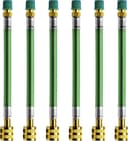
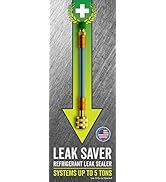
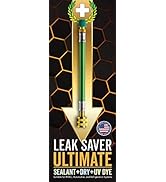
Leak Saver Direct Inject Ultimate 6-Pack is a professional-grade 3-in-1 AC refrigerant leak sealer that combines permanent leak sealing, moisture removal, and UV dye leak detection. Compatible with most HVAC systems up to 5 tons and all common refrigerants, it offers a straightforward, mess-free direct injection installation. Trusted by HVAC professionals with over 4 million units sold, this USA-made formula protects your system without harming sensitive components, making it the go-to solution for efficient, long-lasting AC maintenance.





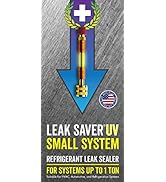






| ASIN | B086M3WGPT |
| Best Sellers Rank | #10,380 in Automotive ( See Top 100 in Automotive ) #20 in Air Conditioning Line Repair Tools |
| Brand | Leak Saver |
| Customer Reviews | 4.3 4.3 out of 5 stars (922) |
| Date First Available | March 31, 2020 |
| Item Weight | 1.08 pounds |
| Manufacturer | Leak Saver |
| Manufacturer Part Number | LS-05ULT-6P |
| Product Dimensions | 9.5 x 6.5 x 3 inches |
A**R
quality
as described, easy installation and good value
H**P
didn't break my system
I think I did over 10 hours of pure, uninterrupted research to find out whether this would clog and destroy my AC system or magically repair it. Here's what I found. For context, I have a newer type of heat pump that uses R-410a (Bosch BOVA36HDN1M120G) paired with an old high-velocity duct system (Unico MC3642HX) *Will this destroy my AC system? What various sources report is that organosilane, polymer-free leak sealants (like this one) are generally safe for new model heat pumps and will not "slug" or otherwise destroy sensitive components in modern machines. Supposedly, this is because they will only react and harden when exposed to the pressure and oxygen variations associated with getting outside of the closed refrigerant loop of your system (i.e., when exposed to an actual hole). Leak sealants (generally) apparently got a very bad rap in the 2000s because they used to be polymer-based which, when introduced into systems like mine, immediately caused problems with sensitive (apparently "microscopic") valves and whatnot that modern heat pumps use to regulate the flow of refrigerant. They can also apparently cause problems when other contaminants like air or water have already entered the system, causing the leak sealant to trigger earlier within the refrigerant line instead of at the leak site, resulting in issues when the refrigerant flow constricts. I agonized about what to do because I had a leak in my system that took 2 years to allow enough refrigerant to escape to make my heat pump lock out (what most would describe as a micro leak). For reference, in my area (a HCOL suburb), multiple HVAC companies said that their go-to in my situation would be to pull all the refrigerant out, separate my system into indoor coil, piping and outdoor unit, and then do a nitrogen test to find the leak. It apparently would take about half a day to do this process, and I was quoted about $200/hr of labor during high-season (December). And that was to find the leak only. Additional costs would then be tacked on for repair which, by the way, if you have an R-410a system like mine, may not be viable if the leak is in your coil because R-410a is being phased out. And even more costs would come into play if the leak wasn't somewhere easily accessible, like inside walls or ceilings. There are some products that apparently can electronically detect leaks, but it was a chore to get HVAC techs (from multiple companies) to even mention this option. I imagine there's some self-interest at play there, but those leak detectors are also available online if you are inclined to try them. Putting all that together, I asked one of the HVAC workers visiting me to give his real thoughts on the sealant. Off the record, he said the official line is that it's not recommended (injecting anything into your refrigerant line will immediately void any warranties you might have on your unit), but that the end result would either a fix or nothing. He said he would advise just refilling periodically, and getting a can of R-410a somewhere (since these are being phased out, with the expectation that prices go up over time, like they did for R-22). I decided to trust in internet research and go for it, and had the tech add in the sealant for me (I saw some videos online claiming that this process was straightforward, but also multiple videos where people added this into the wrong pressure line, resulting in it exploding in their hands, or adding it with too much or too little air). I then ran the system in cold mode for 3 hours, and then ran it at a moderate heating mode constantly since then. The system is still working fine. I don't know if the leak sealant has worked or not, but the system itself has been fine for about a month now. If you decide to take the risk that I did, I suggest you check the SDS sheet for the product you choose. The one for this one is available here (https://www.leaksavers.com/apps/help-center) under the "Leak Saver Installation Help" category, and make sure you are also getting a "polymer-free" organosilane leak sealant as opposed to one of the older polymer-based sealants still floating around (especially at big box stores). Otherwise, good luck. Ultimately, I think this is one of those things that you just have to take a leap of faith on, because all reputable HVAC companies will give you the same party line about this not being an approved product, and all technicians will generally repeat that mantra. The only thing I can say is that it did not immediately kill my system (parts mentioned above).
A**2
Made my leak worse
Quick update - this seller did a great job from a customer service perspective. They made the situation right. It is great to know that there are still products and manufacturers that guarantee your satisfaction with their products! What a bummer! I've been a big fan of Leak Saver products until this one. I've used the Leak Savor Direct Inject UV Dye and Leak Sealer on 4 heat pumps over the past 5 years had had 50/50 mixed results. Now that I've used this product on another older heat pump at a second home, I have to say that I'm no longer sold this stuff works. I also have to say that I have "suffered" silently as I have had several issues with the product including a multipack that had broken "pipes" of the leak sealant in the bag to now this "Ultimate 3-in-1" actually making my leak much worse. The problem with the multipacks are that the contents are hidden until you open them. Unless you are going to do that before the return period you don't know if you have a damaged and/or defective product. In the latter case, this Ultimate formulation took me from having a leak that lasted a month before dropping out the pressure switch to a leak that was significantly bad enough that it only took 3 days for that to happen. I cannot tell if it gummed up the TXV to make it worse or what but suffice to say my hail mary didn't work and I'm now having to replace a heat pump.
A**R
Easy to use.... Time will tell!
I've got a slow leak somewhere on my 16 year old r410a 3ton Lennox Hvac - losing about 2lb of refrigerant over 8 months or so. Decided to try this leak saver as a last ditch hail Mary before biting the bullet and replacing the system. Used the charge in with refrigerant method - tube was clear and it was in in a couple of seconds, very simple. Left the tube attached while I topped up the rest of the refrigerant to the correct level. System is currently running great again, heating and cooling as it should. It's only been 3 weeks and given the leak is very slow before it becomes noticeable, it might be a while before I can tell if this has worked or not. I have shined my UV light round the usual suspect leak spots....have not seen any dye. Will check back in in a few months to see how it's doing, fingers crossed at this point!
G**D
Facile à utiliser
E**I
Easy to use , straight forward application
M**W
I would suggest that if you’re considering paying this much for a product, you have a more serious issue and need to replace some parts. Did not seal the leak in my vehicle, wound up finding and repairing the leaking part so this was a waste of time and money.
H**B
Recently had a need for this product which was ordered over the winter and 2 of the 3 tube had leaked out while sealed in the factory pouch, pretty sure I received them like that as I stored them in a safe location while in my possession
9**M
They leaked in package and only had 1/4 left in tube
ترست بايلوت
منذ 5 أيام
منذ شهر