We remain fully operational. Our teams are working around the clock to ensure your deliveries continue safely.

قم بتنزيل التطبيق


معلومات عنا
حقوق الطبع والنشر © 2024 Desertcart Holdings Limited
قم بتنزيل التطبيق
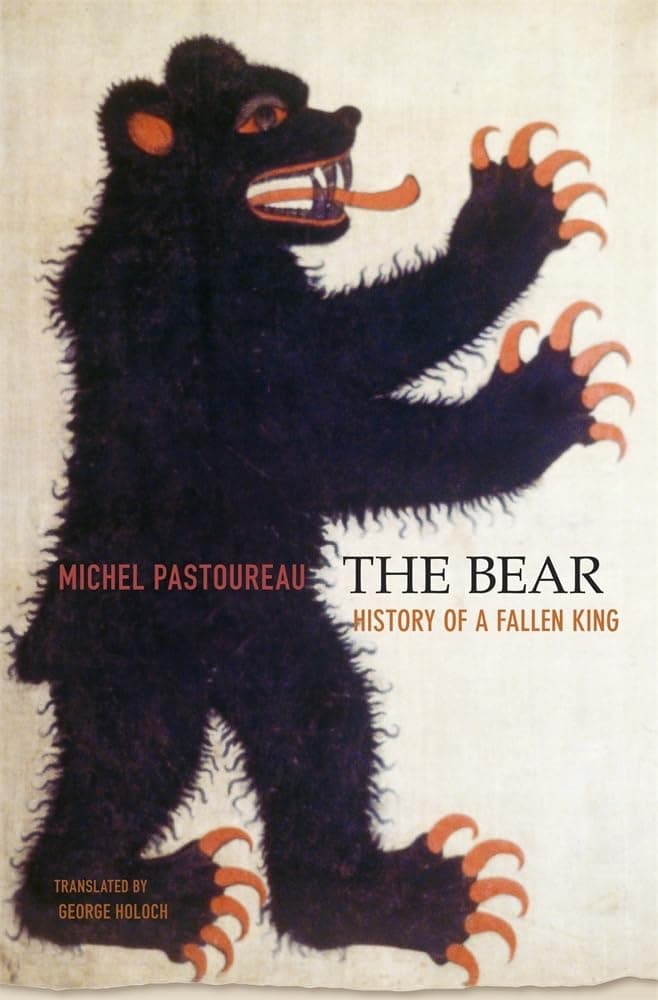
The Bear: History of a Fallen King [Pastoureau, Michel, Holoch, George] on desertcart.com. *FREE* shipping on qualifying offers. The Bear: History of a Fallen King Review: Great Book, Worthy of the Bears - Michel Pastoureau, my teddy bear Brownie (b. 1941) and I salute you! This book is both scholarly and readable, with great illustrations and a clear narrative. Pastoureau has clearly shown the role of the church in the demotion of the bear from hero to degraded entertainer, as it swept away the old religions of Europe with a skillful use of transformation, from picturing the bear as a servant to saints in many stories to flipping pagan bear-related holidays to Christian celebrations. Throughout the account runs the continuing use of the same names related to bears, even in Christian times. I found this aspect of the book especially enlightening as I never knew all the bear's names throughout European history. King Arthur?? Of course! The Bear is a model of popular culture scholarship; I look forward to reading Pastoureau's books on the history of colors and stripes. And I loved the happy ending--the revenge of the bear, i.e. the rise of the teddy bear in the twentieth century. Review: Well researched and written - I held off buying this book because some reviews complained about the writing (duplicative, difficult to follow). I eventually ordered it because the author has successfully published other books, and because of the unique nature of this book’s material. I haven’t found another like it. Rather than difficult, I found it to be very well researched and easy to read. And I gained a much better appreciation for veneration of bears in ancient Europe. I recommend this book.
| Best Sellers Rank | #1,338,203 in Books ( See Top 100 in Books ) #2,913 in Folklore & Mythology Studies #3,759 in Popular Culture in Social Sciences #6,329 in Christian Church History (Books) |
| Customer Reviews | 4.6 4.6 out of 5 stars (34) |
| Dimensions | 6.12 x 1.2 x 9.25 inches |
| Edition | Translation |
| ISBN-10 | 0674047826 |
| ISBN-13 | 978-0674047822 |
| Item Weight | 2.31 pounds |
| Language | English |
| Print length | 384 pages |
| Publication date | October 17, 2011 |
| Publisher | Belknap Press: An Imprint of Harvard University Press |
B**N
Great Book, Worthy of the Bears
Michel Pastoureau, my teddy bear Brownie (b. 1941) and I salute you! This book is both scholarly and readable, with great illustrations and a clear narrative. Pastoureau has clearly shown the role of the church in the demotion of the bear from hero to degraded entertainer, as it swept away the old religions of Europe with a skillful use of transformation, from picturing the bear as a servant to saints in many stories to flipping pagan bear-related holidays to Christian celebrations. Throughout the account runs the continuing use of the same names related to bears, even in Christian times. I found this aspect of the book especially enlightening as I never knew all the bear's names throughout European history. King Arthur?? Of course! The Bear is a model of popular culture scholarship; I look forward to reading Pastoureau's books on the history of colors and stripes. And I loved the happy ending--the revenge of the bear, i.e. the rise of the teddy bear in the twentieth century.
N**R
Well researched and written
I held off buying this book because some reviews complained about the writing (duplicative, difficult to follow). I eventually ordered it because the author has successfully published other books, and because of the unique nature of this book’s material. I haven’t found another like it. Rather than difficult, I found it to be very well researched and easy to read. And I gained a much better appreciation for veneration of bears in ancient Europe. I recommend this book.
M**S
Excellent information
The Bear: History of a Fallen King includes many interesting facts about past cultures' view and treatment of bears. I was fascinated enough by the information to start researching the history of the bear in art, literature, and culture beliefs. I found the writing style/translation a bit frustrating, though. The author is quite repetitive and insists on the use of long series in those repetitions. It reminds me of a student attempting to pad the length of an essay. Nonetheless, the topic is compelling. The notes and bibliography are excellent. Well worth the read. Five stars for content, dropped to 4 for writing style.
G**E
Excellent item arrived right on schedule!
Excellent item arrived right on schedule!
T**N
Hidden History
This book reveals the history of the older pagan culture of Europe. The bear as a symbol of religious freedom was supplanted by the aggressor symbolized by the lion. Great reading and suppressed history.
K**N
Interesting, not Meticulously Fact Checked
This is a highly readable history of the bear in European culture. The author puts forth an interesting thesis about the prominence of the bear in prehistoric and early historic/pre-Christian times, when the bear was an object of respect, of realistic fear, and sometimes of veneration. He proceeds to show how attitudes towards the bear changed, with the implication that this was -- consciously or unconsciously -- orchestrated by the Christian church, for whom the bear's pagan associations were threatening. Most of this material was new to me, and I did not delve into the sources listed. Thus for the most part I do not know how accurate it is. A couple of statements, however, I am pretty sure are incorrect. In discussing the Norse gods, the book says "the war god Thor was early on given as surname the common name for bear in Old Norse: bjorn (Thorbjorn)...." Nowhere in my fairly extensive reading of Norse mythology and Scandinavian sagas have I seen the god Thor called Thorbjorn; Thorbjorn is man's name that incorporates the god's name. In discussing Beowulf, the hero of the Old English poem of that name, the book rightly points out that the name Beowulf (bee wolf) suggests a bear. However, when it states that "Beowulf is a bear, or rather the son of a bear and a woman" it goes beyond the text or any scholarship that I am aware of. These dubious statements are used to support the arguments of the book, which leads me to wonder if many more points might be misstated or exaggerated. The book is interesting, and -- taken with a grain of salt as to details and bias -- the main premise is believable. it is for the most part anecdotal, and includes a number of engaging stories from history and folklore.
M**S
Rare writing
This book is beyond extraordinary. Pastoureau has taken a subject of vast significance - about which hardly a word has been written - and illuminated with erudition and style not just the animal's sorry history, but also Christianity, scholasticism, zoology, heraldry, hagiography and onomastics, with brilliant insights on the side into dietetics, toponomy, and a host of other disciplines. His mind is as wide-ranging as the magnificent Ursidae of the past, so terribly persecuted by the medieval church. A shocking indictment of ecclesiasticism, evangelization and anthropolatry.
A**R
Five Stars
Great !
K**E
This book is scholarly but also fun to read. Super interesting information. Also, I loved the illustrations and the edition, I thought it was going to be meh, but this book is gorgeous. I read someone in the ratings saying that the book is boring, pfff… it even made me had dreams about the bear and everything, (and very few books had that effect on me). Wishing all pastoreaus books will be translated into English soon 🙏🏼
E**.
genial
ترست بايلوت
منذ شهر
منذ 3 أسابيع