

🔒 Seal the Deal with Confidence!
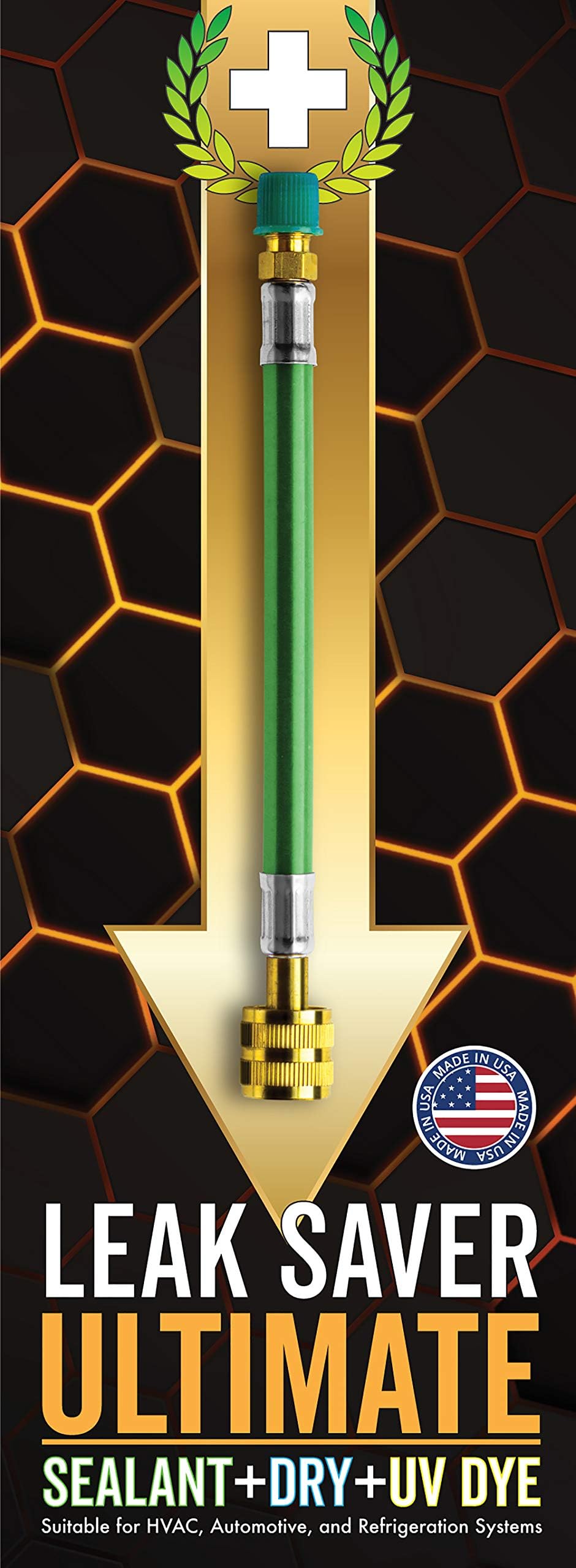
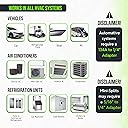
The Leak Saver Direct Inject Ultimate 3-in-1 is a professional-grade AC refrigerant leak sealer that combines leak sealing, moisture removal, and UV dye detection in one easy-to-use package. Compatible with a wide range of HVAC systems and refrigerants, it ensures a permanent seal within 7 days, making it a trusted choice for both professionals and DIY enthusiasts alike.







| Manufacturer | Leak Saver |
| Brand | Leak Saver |
| Item Weight | 3.2 ounces |
| Package Dimensions | 8.9 x 1.9 x 0.6 inches |
| Country of Origin | USA |
| Manufacturer Part Number | LS-05ULT-MFN |
A**R
quality
as described, easy installation and good value
H**P
didn't break my system
I think I did over 10 hours of pure, uninterrupted research to find out whether this would clog and destroy my AC system or magically repair it. Here's what I found. For context, I have a newer type of heat pump that uses R-410a (Bosch BOVA36HDN1M120G) paired with an old high-velocity duct system (Unico MC3642HX) *Will this destroy my AC system? What various sources report is that organosilane, polymer-free leak sealants (like this one) are generally safe for new model heat pumps and will not "slug" or otherwise destroy sensitive components in modern machines. Supposedly, this is because they will only react and harden when exposed to the pressure and oxygen variations associated with getting outside of the closed refrigerant loop of your system (i.e., when exposed to an actual hole). Leak sealants (generally) apparently got a very bad rap in the 2000s because they used to be polymer-based which, when introduced into systems like mine, immediately caused problems with sensitive (apparently "microscopic") valves and whatnot that modern heat pumps use to regulate the flow of refrigerant. They can also apparently cause problems when other contaminants like air or water have already entered the system, causing the leak sealant to trigger earlier within the refrigerant line instead of at the leak site, resulting in issues when the refrigerant flow constricts. I agonized about what to do because I had a leak in my system that took 2 years to allow enough refrigerant to escape to make my heat pump lock out (what most would describe as a micro leak). For reference, in my area (a HCOL suburb), multiple HVAC companies said that their go-to in my situation would be to pull all the refrigerant out, separate my system into indoor coil, piping and outdoor unit, and then do a nitrogen test to find the leak. It apparently would take about half a day to do this process, and I was quoted about $200/hr of labor during high-season (December). And that was to find the leak only. Additional costs would then be tacked on for repair which, by the way, if you have an R-410a system like mine, may not be viable if the leak is in your coil because R-410a is being phased out. And even more costs would come into play if the leak wasn't somewhere easily accessible, like inside walls or ceilings. There are some products that apparently can electronically detect leaks, but it was a chore to get HVAC techs (from multiple companies) to even mention this option. I imagine there's some self-interest at play there, but those leak detectors are also available online if you are inclined to try them. Putting all that together, I asked one of the HVAC workers visiting me to give his real thoughts on the sealant. Off the record, he said the official line is that it's not recommended (injecting anything into your refrigerant line will immediately void any warranties you might have on your unit), but that the end result would either a fix or nothing. He said he would advise just refilling periodically, and getting a can of R-410a somewhere (since these are being phased out, with the expectation that prices go up over time, like they did for R-22). I decided to trust in internet research and go for it, and had the tech add in the sealant for me (I saw some videos online claiming that this process was straightforward, but also multiple videos where people added this into the wrong pressure line, resulting in it exploding in their hands, or adding it with too much or too little air). I then ran the system in cold mode for 3 hours, and then ran it at a moderate heating mode constantly since then. The system is still working fine. I don't know if the leak sealant has worked or not, but the system itself has been fine for about a month now. If you decide to take the risk that I did, I suggest you check the SDS sheet for the product you choose. The one for this one is available here (https://www.leaksavers.com/apps/help-center) under the "Leak Saver Installation Help" category, and make sure you are also getting a "polymer-free" organosilane leak sealant as opposed to one of the older polymer-based sealants still floating around (especially at big box stores). Otherwise, good luck. Ultimately, I think this is one of those things that you just have to take a leap of faith on, because all reputable HVAC companies will give you the same party line about this not being an approved product, and all technicians will generally repeat that mantra. The only thing I can say is that it did not immediately kill my system (parts mentioned above).
A**2
Made my leak worse
Quick update - this seller did a great job from a customer service perspective. They made the situation right. It is great to know that there are still products and manufacturers that guarantee your satisfaction with their products! What a bummer! I've been a big fan of Leak Saver products until this one. I've used the Leak Savor Direct Inject UV Dye and Leak Sealer on 4 heat pumps over the past 5 years had had 50/50 mixed results. Now that I've used this product on another older heat pump at a second home, I have to say that I'm no longer sold this stuff works. I also have to say that I have "suffered" silently as I have had several issues with the product including a multipack that had broken "pipes" of the leak sealant in the bag to now this "Ultimate 3-in-1" actually making my leak much worse. The problem with the multipacks are that the contents are hidden until you open them. Unless you are going to do that before the return period you don't know if you have a damaged and/or defective product. In the latter case, this Ultimate formulation took me from having a leak that lasted a month before dropping out the pressure switch to a leak that was significantly bad enough that it only took 3 days for that to happen. I cannot tell if it gummed up the TXV to make it worse or what but suffice to say my hail mary didn't work and I'm now having to replace a heat pump.
A**R
Easy to use.... Time will tell!
I've got a slow leak somewhere on my 16 year old r410a 3ton Lennox Hvac - losing about 2lb of refrigerant over 8 months or so. Decided to try this leak saver as a last ditch hail Mary before biting the bullet and replacing the system. Used the charge in with refrigerant method - tube was clear and it was in in a couple of seconds, very simple. Left the tube attached while I topped up the rest of the refrigerant to the correct level. System is currently running great again, heating and cooling as it should. It's only been 3 weeks and given the leak is very slow before it becomes noticeable, it might be a while before I can tell if this has worked or not. I have shined my UV light round the usual suspect leak spots....have not seen any dye. Will check back in in a few months to see how it's doing, fingers crossed at this point!
K**.
Works like a champ!!
This is my second success with a leak saver product. Normally I wouldn't use a product like this - first it seems too good to be true, second - technically many people say you're not supposed to use leak sealers in AC since there can cause issues. In this case (and my previous use on a car AC) there wasn't really another alternative. My 20+ year old Subzero refrigerator was running very warm (65 degrees) so I got a tech in and he said it needed complete new pipework, evaporator compressor the lot, he figured somewhere around $2-3 k, maybe higher (more than it was worth). I had all the AC gear: manifold, hoses, 15 pound can of Freon, etc from a couple of car AC repairs, so I checked out the low side pressure and sure enough it was pulling a vacuum. Technically you're supposed to monitor high and low side to properly diagnose (that way you can verify it its a leak, or compressor or expansion valve issue) but this only has the low side port. I topped it off over a couple of days and sure enough every few days it needed a little more Freon. However the pressures looked a bit weird, I figured something else was wrong beside a leak since compressor cut-in, cut-out was about 50psi / 5psi, and according to the tech manual it should be 36psi / 16psi. I was really wary of using it but like I say there really wasn't much alternative except buy a new refrigerator. Also Leak Saver did solve an AC issue for my car a couple of years back where three shops (over nine months) couldn't find the leak and kept topping it off with a pound of Freon at $100 a shot. Likely it was the evaporator which is 25 hours of labor: pull out front seats, air bags, complete dash the lot - Basically very very expensive! So for the refrigerator I loaded Leak Saver in and a couple of hours later it's running great pressure are almost spot on at 34/17. So Yeh! What can I say - almost unbelievable but it definitely works! Monitoring carefully and all looks perfect after two days, so I'll disconnect the manifold and then check the pressures in a month or so. Also I used the Ultimate (with moisture remover) on this job since it had been running with a vacuum on low side and it's possible air & moisture had got in (even though there's a cap over the port) BTW car AC is still running great as well and that was 2+ years ago. Also don't forget to purge your hose lines with Freon when you hook up to the port - you don't want to add air and moisture into the system.
A**.
Does not work. Stuck valves, and expensive fittings for a one time use??
UPDATE: this week the fridge stopped working again, loss of freon. So this product did not fix the very slow leak as I was hoping it would, so have to give it one star now. For the price, this is not a good value. The expensive brass fittings on each end are not reusable, and obviously jack the price up. The leak I’m trying to fix is in a fridge, and is very slow (2 to 3 months), and I’d expect this product would work, yet it doesn’t. And have not been able to find the actual leak using a black light to reveal the UV dye… frustrating!! Original, initial review: I just put this in today for my Samsung side by side. I did get the leakstop into the fridge today, I’ll come back in a few weeks to report on efficacy. 1) package came with no instructions whatsoever… just the stop leak tube in a sealed package, in a branded slightly larger package… I went online for the instructions. 2) Installing was challenging. There’s a valve at both ends, and neither activated. The input from the manifold has Schrader valve, but my hose/gauge does not have the fitting to activate it. 3) The valve on the other end would not activate when screwed into a bullet piercing valve. I had to unscrew the first Schrader valve completely, connecting the gauge, the contents ended up in the hose, so the hose was the intermediate step… I ended up not using the supplied fancy brass fittings on a mini hose, though not intentionally, simply the valves were not working for me. 4) at $46 I wonder how much was due to the nice knurled brass fittings? Is the compound available to refill the tube? Is there a recycling program? 5) the fluid tube is very stiff… this became a problem as I had installed the bullet valve pointing straight up last week when I was doing the initial refill with r134a…. So there was not enough clearance between valve and chassis, making attaching challenging due to the stiffness… Wondering what I can do with these nice fittings, LOL…
R**R
HVAC/ Air Conditioning Leak Stop
This is stop leak and I have an evaporator that's becoming porous. The company's support and educational materials gave me faith to do the install. I am a former HVAC mechanic so I knew how to do the charge and also I understand the risks. Know that using this product could clog small metering provisions on your evaporator. If this happens you'd have some extra work to do because of it. I know how to do this and thought it was worth the risk. So far so good and because it circulates about in the circuit it is available to stop future leaks that might occur. If I had a leak after this I think I'd stop adding it, more is not better. This can work however.
C**Y
Amazing product
Had this beer / wine fridge that stopped cooling after 2-3 years and I replaced every part you can imaging on it trying to repair it. I even rented a small vacuum and removed all the refrigerant and refilled it which worked ok for about 3 months but wouldn’t get down to 40 degrees on the beer side and eventually stopped cooling altogether. Looked to buy a replacement unit but really didn’t want to spend $1600 for a “better” brand figuring if I cheap out the same thing would happen again. I saw this product and for the $40 I figured it was worth a shot. Well I’ll be damned within hours it was down to 40 degrees and it been holding there for about 6 weeks strong so I’d have to call it fixed at this point! What a life saver this stuff is!! Couldn’t be happier to spend $40 to fix this unit over the $1600 to replace it!
ترست بايلوت
منذ يومين
منذ أسبوعين