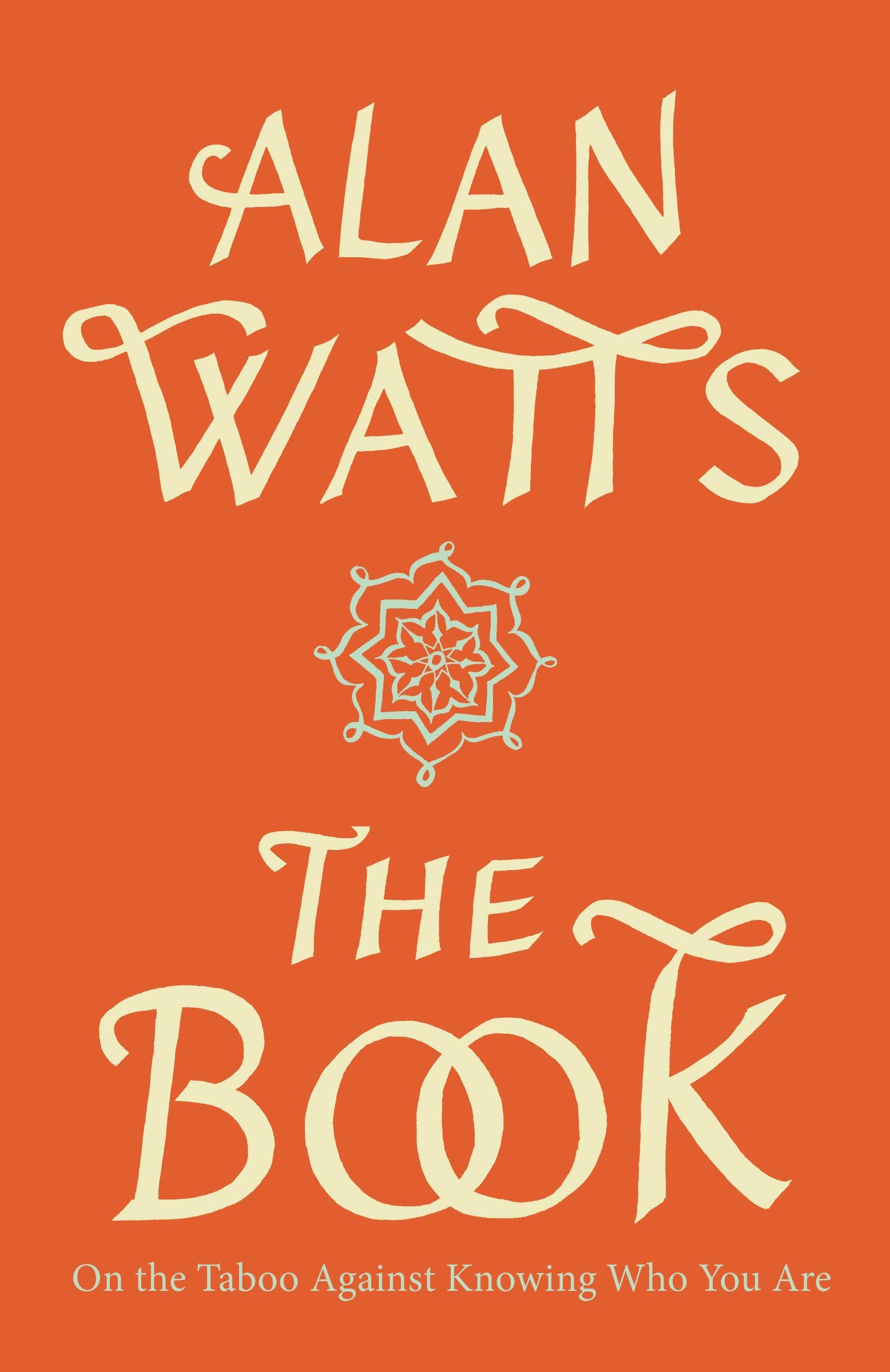
The Book: On the Taboo Against Knowing Who You Are
Product ID: 225635
Buy anything from 5,000+ international stores. One checkout price. No surprise fees. Join 2M+ shoppers on Desertcart.
Desertcart purchases this item on your behalf and handles shipping, customs, and support to KUWAIT.
A revelatory primer on what it means to be human and a mind-opening manual of initiation into the central mystery of existence , by “perhaps the foremost interpreter of Eastern disciplines for the contemporary West" ( Los Angeles Times ). At the root of human conflict is our fundamental misunderstanding of who we are. The illusion that we are isolated beings, unconnected to the rest of the universe, has led us to view the “outside” world with hostility, and has fueled our misuse of technology and our violent and hostile subjugation of the natural world. To help us understand that the self is in fact the root and ground of the universe, Alan Watts provides us with a much-needed answer to the problem of personal identity, distilling and adapting the Hindu philosophy of Vedanta. Review: I would recommend to anyone seeking deeper understanding, self-awareness, and clarity! - On the Taboo Against Knowing Who You Are is an absolutely mind-expanding book that challenges everything you think you know about yourself and the world around you. From the very first page, I was drawn into a deep, compelling exploration of identity, consciousness, and the subtle forces that shape our lives. The author writes with both clarity and intensity, making complex philosophical and psychological ideas accessible without ever watering them down. What makes this book truly remarkable is how it blends personal insight, spiritual wisdom, and practical guidance. Each chapter feels like a journey, encouraging you to question assumptions, look inward, and confront the social and psychological pressures that often prevent genuine self-knowledge. It is not a light read, but every paragraph rewards careful attention with profound insight. I found myself pausing to reflect repeatedly, scribbling notes, and revisiting passages that resonated deeply. The concepts presented are revolutionary yet grounded. Ideas about the hidden dynamics of consciousness, the nature of identity, and the ways in which society subtly enforces conformity opened my mind in ways few books ever have. I feel more aware, more present, and more courageous in questioning my own patterns and choices after reading this. Overall, On the Taboo Against Knowing Who You Are is a transformative book that I would recommend to anyone seeking deeper understanding, self-awareness, and clarity in a confusing world. It challenges you, inspires you, and leaves a lasting impression that continues to unfold long after the final page. If you are ready to confront your own mind and awaken to your true self, this book is an absolute must-read. Review: Makes Eastern theology applicable - This is the second Watts' book I've read, and it is by far my favorite of the two. However, if you're new to Watts and are not sure if you'll like his work, my recommendation would be to find some of his free lectures online and listen to those first. Watts' words packed more of a wallop in the spoken form; however, he uses his words economically either way, so I've found myself having to listen and re-listen to the same lectures again and again to catch and fully understand the conclusions he reaches during his treatment of this subject matter. As for Eastern theology: I do not have much background in this topic, but I did complete an Introduction to Buddhism class several years ago in college. And although I understood the "what" of the material presented in class and in the textbooks, I didn't get the "why" -- as in, why should anyone, especially a Westerner, attempt to apply Buddhist teachings and philosophy to his or her life. Moreover, the class material felt cold and inaccessible to me; it seemed this Eastern thought summed me up as an insignificant speck who was doomed to miserably repeat myself after death again and again, in lesser or greater lifeforms, over and over again until I finally understood what this class never could teach me, and then I'd finally die. Poof. That's it. No meaning, no understanding. And so, I wondered, why should I care or even believe in this stuff? Some years later, I listened to Watts' lectures and noticed that he talked about the "why" -- why Buddhist thought and practice should matter, what it really means, and how it can help make sense of my own existence. What a novel concept! To make heady, cerebral, cryptic, esoteric theology digestible to the average schlub eager to learn! That's what Watts did, and he did it even better in this book. And more to the point, he doesn't even limit his message to an analysis of Buddhism. In fact, if such references to the aforementioned theology were made, then I didn't catch them. He just talks about "what is,"and that is significant to us all, regardless of philosophical/theological bent. Although it is only 159 pages long, it is deceptively dense. Again, Watts uses his words economically. Although at first glance, a reader might be tempted to think he's rambling aimlessly, but I can assure you he's not. He maintains his focus like a laser beam of light. He doesn't waste a single word or thought on the reader, but the reader will most certainly have to either linger on certain sentences, or go back and read them again until the idea is grasped. I know the man is long dead and gone, but if I could ever say one thing to him, I'd say this -- thank you, thank you, for making ancient mystical teachings and practice so clear, so understandable. I laughed, I cried, I think I'm finally beginning to understand that which I was never meant to understand.

| Best Sellers Rank | #6,111 in Books ( See Top 100 in Books ) #4 in Humanist Philosophy #5 in Philosophy Metaphysics #118 in Personal Transformation Self-Help |
| Customer Reviews | 4.7 out of 5 stars 4,903 Reviews |
N**H
I would recommend to anyone seeking deeper understanding, self-awareness, and clarity!
On the Taboo Against Knowing Who You Are is an absolutely mind-expanding book that challenges everything you think you know about yourself and the world around you. From the very first page, I was drawn into a deep, compelling exploration of identity, consciousness, and the subtle forces that shape our lives. The author writes with both clarity and intensity, making complex philosophical and psychological ideas accessible without ever watering them down. What makes this book truly remarkable is how it blends personal insight, spiritual wisdom, and practical guidance. Each chapter feels like a journey, encouraging you to question assumptions, look inward, and confront the social and psychological pressures that often prevent genuine self-knowledge. It is not a light read, but every paragraph rewards careful attention with profound insight. I found myself pausing to reflect repeatedly, scribbling notes, and revisiting passages that resonated deeply. The concepts presented are revolutionary yet grounded. Ideas about the hidden dynamics of consciousness, the nature of identity, and the ways in which society subtly enforces conformity opened my mind in ways few books ever have. I feel more aware, more present, and more courageous in questioning my own patterns and choices after reading this. Overall, On the Taboo Against Knowing Who You Are is a transformative book that I would recommend to anyone seeking deeper understanding, self-awareness, and clarity in a confusing world. It challenges you, inspires you, and leaves a lasting impression that continues to unfold long after the final page. If you are ready to confront your own mind and awaken to your true self, this book is an absolute must-read.
W**E
Makes Eastern theology applicable
This is the second Watts' book I've read, and it is by far my favorite of the two. However, if you're new to Watts and are not sure if you'll like his work, my recommendation would be to find some of his free lectures online and listen to those first. Watts' words packed more of a wallop in the spoken form; however, he uses his words economically either way, so I've found myself having to listen and re-listen to the same lectures again and again to catch and fully understand the conclusions he reaches during his treatment of this subject matter. As for Eastern theology: I do not have much background in this topic, but I did complete an Introduction to Buddhism class several years ago in college. And although I understood the "what" of the material presented in class and in the textbooks, I didn't get the "why" -- as in, why should anyone, especially a Westerner, attempt to apply Buddhist teachings and philosophy to his or her life. Moreover, the class material felt cold and inaccessible to me; it seemed this Eastern thought summed me up as an insignificant speck who was doomed to miserably repeat myself after death again and again, in lesser or greater lifeforms, over and over again until I finally understood what this class never could teach me, and then I'd finally die. Poof. That's it. No meaning, no understanding. And so, I wondered, why should I care or even believe in this stuff? Some years later, I listened to Watts' lectures and noticed that he talked about the "why" -- why Buddhist thought and practice should matter, what it really means, and how it can help make sense of my own existence. What a novel concept! To make heady, cerebral, cryptic, esoteric theology digestible to the average schlub eager to learn! That's what Watts did, and he did it even better in this book. And more to the point, he doesn't even limit his message to an analysis of Buddhism. In fact, if such references to the aforementioned theology were made, then I didn't catch them. He just talks about "what is,"and that is significant to us all, regardless of philosophical/theological bent. Although it is only 159 pages long, it is deceptively dense. Again, Watts uses his words economically. Although at first glance, a reader might be tempted to think he's rambling aimlessly, but I can assure you he's not. He maintains his focus like a laser beam of light. He doesn't waste a single word or thought on the reader, but the reader will most certainly have to either linger on certain sentences, or go back and read them again until the idea is grasped. I know the man is long dead and gone, but if I could ever say one thing to him, I'd say this -- thank you, thank you, for making ancient mystical teachings and practice so clear, so understandable. I laughed, I cried, I think I'm finally beginning to understand that which I was never meant to understand.
J**X
Alan Watts and the Mother-Lode of Spirituality
Like a number of the reviewers here, I have a decades-long history with THE BOOK. In my case, it launched a life-long pilgrimage marked by the study of Vedanta, mysticism, and religious philosophy, and a deep existential craving to understand. THE BOOK sparkles with quotable lines on almost every page, some witty, some profound. Watts had discovered the mother-lode of spirituality, Advaita Vedanta, and he expressed it in a form that (literally) children can understand. The central thesis of THE BOOK can be expressed in a single sentence: "Every individual is an expression of the whole realm of nature, a unique action of the total universe." (p. 9). From the beginning, Watts insists that what is needed is not "words to live by," but a new sense of self and the world. When confronted by a world it perceives as alien and hostile to itself, the reaction of the empty and impoverished ego is to attack. While our present limited view has led us into a cycle of violence against our environment and each other, the first battle field is intimately personal: "Our generation knows a cold hell, solitary confinement in this life, without a God to damn or save it. Until man figures out the trap and hunts ... "the Ultimate Ground of Being," he has no reason at all for his existence. Empty, finite, he knows only that he will soon die. Since this life has no meaning, and he sees no future life, he is not really a person but a victim of self-extinction." (p. 17) The internecine human conflicts Watts has observed and the rapacious resolve to subjugate nature are rooted, not only in the "ego-trick," but in the "dualism" that Vedanta also denies, the conviction that Reality divides neatly into two opposed halves, whether man and nature, life against death, or pure good vs. pure evil. Moreover, rather than see these dualities as poles of a single process, we see within each dyad two bitter enemies of one another. We play "the game of black and white," as Watts calls it, not as a game at all, but as a war. At this writing, the same ancient warfare is being enacted between Republicans and Democrats, and between Moslems and the West. Not content to moderate and "contain" the conflict, each side works to exterminate the other. From beginning to end, Watts returns again and again, ever more elegantly to restate the original problem: "The sensation of "I" as a lonely and isolated center of being is so powerful and commonsensical, and so fundamental to our modes of speech and thought, to our laws and social -institutions, that we cannot experience selfhood except as something superficial in the scheme of the universe. I seem to be a brief light that flashes but once in all the aeons of time-- a rare, complicated, and all-too-delicate organism on the fringe of biological evolution, where the wave of life bursts into individual, sparkling, and multicolored drops that gleam for a moment only to vanish forever. Under such conditioning it seems impossible and even absurd to realize that myself does not reside in the drop alone, but in the whole surge of energy which ranges from the galaxies to the nuclear fields in my body." (pp. 12-13) On the other hand, Watts is eager to disabuse us of the notion that, now we must strive with all our might to realize that this is so. There is an ancient traditional formula that "The One has become many for the sake of reunion through Love." If this is so, the Self is free to awaken or not in its own good time. In the meantime, our adventure will not leave a trace on its original nature. What then ARE we to do with this astonishing revelation? "If, then, after understanding, at least in theory, that the ego-trick is a hoax and that, beneath everything, "I" and "universe" are one, you ask, "So what? What is the next step, the practical application?"-- I will answer that the absolutely vital thing is to consolidate your understanding, to become capable of enjoyment, of living in the present, and of the discipline which this involves. Without this you have nothing to give-- to the cause of peace or of racial integration, to starving Hindus and Chinese, or even to your closest friends," (p. 115-116) I have been cultivating that advice ever since. Review by the author of: Redesigning God: Nuts and Bolts of the Emerging Religion
J**N
Self knows Self
An essential book. The Western world is a wasteland of self-involved narcissitic idiots, such as me and you. If you wish to confront what most spend their entire lives avoiding, then read this book. If you are a coward afraid to examine yourself openly and honestly, then this book is not for you. Watts says what few will bother to address. He uncompromisingly condemns the self-involved idiocy endemic within Western culture that values trivial things like TV, advertising, brand names etc and other meaningless distractions that add nothing to our self knowledge. Why are people in poor countries who live simple lives generally happier than complicated wealthy westerners? If you want to know why happiness is not something to buy or or gain or achieve, then read this highly intelligent book, hell read it twice amigo.
T**T
Good read to give the gray matter something to mull over.
Very interesting read. Did I learn something new? Well, yes and no, maybe. Good example of philosophcal discussion.
D**R
What a Wonderful Book
Although I'd first heard of Alan Watts' The Book: On the Taboo Against Knowing Who You Are several years ago, it wasn't until I watched Dakota Wint's YouTube video Top 5 Books Every New Spiritual Seeker Needs that I was motivated enough to actually check it out. First things first—I know that I will benefit a lot from re-reading this book several times. It's extremely dense and packed with a lot of valuable information, a lot of which I likely didn't absorb during my first reading of the book. The basic premise of the book is that we have been told that we are isolated beings, "unconnected to the rest of the universe", which has led to our viewing the "outside" world with hostility and "has fueled our misuse of technology and our violent and hostile subjugation of the natural world". However, Watts asserts that this belief is mistaken and that we are in fact directly connected to everything else there is. In the beginning of the book, Watts discusses the concept of cultural taboos—things like making direct eye contact with another person or performing an act that is against one's religion. This leads him to make the following point: "The most strongly enforced of all known taboos is the taboo against knowing who or what you really are behind the mask of your apparently separate, independent, and isolated ego." The concept of "I" is extremely powerful and commonplace in most societies on Earth, and it is so fundamental to our modes of speech and thought, as well as our laws and social institutions. Watts spends many words of this book arguing against the concept of personal selfhood in favor of a more universal concept of identity—one that includes the rest of reality in addition to the components that we would normally judge as "ourselves". One of the other things I found interesting was Watts' definition of "attention" as "narrowed perception"—because when we attend to one thing, we ignore everything else. In Watts' own words: "conscious attention is at the same time ignore-ance (i.e., ignorance) despite the fact that it gives us a vividly clear picture of whatever we choose to notice." These are just some of the concepts that Watts describes in The Book. If either of these ideas sound interesting to you, I would definitely give this a read. I wish that this review was able to more fully show how wonderful this book is, but since this is only my first read-through, I feel like I was only able to skim the surface of its ideas and therefore will likely have more to say about it upon successive readings. I definitely give this one two thumbs up though!
A**M
Interesting read will make you think
Great read.
E**R
A Very Important Book
I purchased and read "The Book: On the Taboo Against Knowing Who You Are" by Alan Watts based on another reader's review, where it was compared to Jiddu Krishnamurti's "Freedom from the Known". Krishnamurti's "Freedom from the Known" has long been a favorite of mine (I love all of his books, really) because after reading that small book, my worldview changed completely. The comparison to "The Book" is spot on. (As an aside: I also adore Thich Nhat Hanh). Everything I felt after reading "Freedom from the Known", I feel again after reading "The Book", only on a larger, more all-encompassing scale. As strange as it is to see myself writing this, I'm writing this: Alan Watts seems to have it figured out. Everything. The few reviewers who wish to trivialize what this book is saying seem more to be trivializing the author. What Watts is saying is that everything we think we know about the world is wrong. And he's right. Even the most cynical among us knows it too, but because we've all been hypnotized to believe one thing, any lucid, coherent suggestion otherwise (no matter how cogent and obvious) must be wrong. And it must be attacked and destroyed. But that's understandable since that is exactly what we are taught to do from childhood. If we don't like or understand something, we MUST deny or attack it. Often this is done "argumentum ad hominem", which is an attempt to negate the truth of a claim by pointing out a negative characteristic or belief of the person supporting it. It is a logical fallacy. But very common, because it's easy. But no. "The Book" is absolutely wonderful, life-changing, eye-opening, and fantastic. It's truly amazing. I plan to read it many more times, sitting with the words, feeling what they say. It is the one single book that I would say is the most important book I've ever read. My deserted island book. My favorite book. I whole-heartedly recommend "The Book: On the Taboo Against Knowing Who You Are" by Alan Watts to anyone and everyone, more than any other book I can ever recommend. If a person comes to this short book with an open mind, great things will happen. Peace to you. Enjoy!
S**H
Lightbulbs for the mind
You know when you read something that really, really makes you think? Well, that. I've recently discovered Watts and he makes a lot of sense to me. He has a considered, fair and balanced view of society, self, and cause-&-effect. Watts philosophy was relevant when written, still relevant now and, unless man's societal fabric changes, will be relevant a century from now. I truly believe what he's saying, although I don't believe he is some sort of prophet -- a lot of his source material, studies and conclusions are commonly threaded in sense and in construction. Themes such as; awareness, self, now, presence, etc., are not outlandish concepts. Alan really does engage the reader throughout the book making it far from a dry read. This really is the key as to why I sat up and took notice of what he was saying. I'm not referring to the religious aspect of Watts philosophy. He isn't a zealot nor is he pushy or preachy about getting his personal beliefs thrust onto the reader. I'm not religious and I certainly recognise that there are numerous religious aspects to Watts thinking and reasoning. But it is certainly not forced. My particular interest in Watts philosophy regards society's bias towards money, how we communicate, our lack of awareness and coming to terms with our function in life. He examines the fabric of our society and allows the reader come to their own conclusions. This I like. Watts is certainly easier to get to grips with than, say, Jung or Sartre -- even though Watts apparently studied under C G Jung as a student. I don't consider these writings to be anything other than thought provoking, as they undoubtedly provide mountains of food for thought. They're pitched directly at Westerners and certainly don't feel restrictively religious in nature. I've seen some comments saying that Watts writing is disjointed and doesn't flow easily -- I didn't find it like that at all. I found it very easy to wander through his text. His use of language is easy and intelligent. I shall certainly be balancing this out with more 'scientific' biased books from different authors. I just hope I can discover something as practical and entertaining to read
S**I
A pointer to truth
This book could in all sense give us a great insight on the concept of the whole . A nice reading!!
C**N
very good
Alan watts is truly a genious. There is a part in the book which really left me dumbfounded! I will not spoil what it is(or I can't because you have to read the previous chapters to understand it), but the whole book leads to that moment. If you comprehend and correctly understand the points he makes, when you arrive to that page, Watts will do the following: he will explain how it feels to grasp the thing he is explaining (it feels like the first time riding a bicycle) and then, as you understand the thing it hits you in the same way he describes it! When I understood his point I was laughing out loud, filled with joy and amazement and it really felt in the way he described it! If you manage to keep reminding your self of the knowledge this book gives to you, life is irrefutably easier. The graphic design and typography job in this copy are overall average. A must read for lovers of philosophy!
E**N
Good quality
Great book
L**A
On the tboo against knowing who you are
Very easy to read and understand. Answered my questions. This book is recommended for all those who are seeking to understand what in general cannot be understood by words alone.
Trustpilot
1 month ago
1 month ago