We remain fully operational. Our teams are working around the clock to ensure your deliveries continue safely.

قم بتنزيل التطبيق


معلومات عنا
حقوق الطبع والنشر © 2024 Desertcart Holdings Limited
قم بتنزيل التطبيق
Buy anything from 5,000+ international stores. One checkout price. No surprise fees. Join 2M+ shoppers on Desertcart.
Desertcart purchases this item on your behalf and handles shipping, customs, and support to KUWAIT.
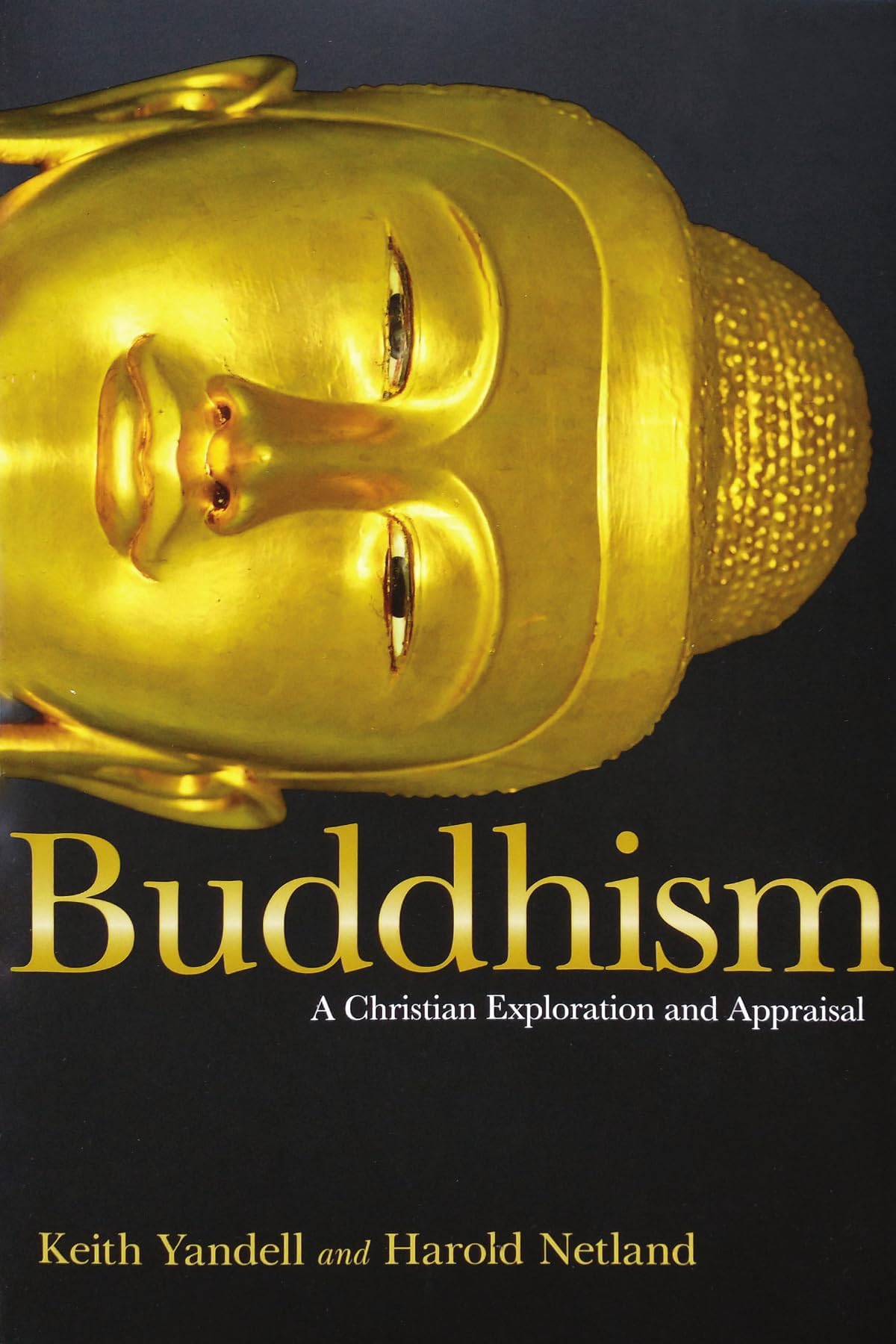
Buddhism: A Christian Exploration and Appraisal [Yandell, Keith, Netland, Harold] on desertcart.com. *FREE* shipping on qualifying offers. Buddhism: A Christian Exploration and Appraisal Review: The Dharma and the Gospel - Keith Yandell and Harold Netland, Buddhism: A Christian Exploration and Appraisal (Downers Grove, IL: IVP Academic, 2009). $22.00, 230 pages. The diversity of the world's religions raises several important questions: Do religions make truth claims? Can these truth claims be assessed? Can the assessment be negative without also being violent? For one group of people--especially in the religious studies guild--the answer to all three questions is negative. Properly interpreted, they argue, religions do not make truth claims. That is why such people believe in the epistemic and moral parity of religions. However, they go on to argue, religious fundamentalists--who do not interpret their own religions properly--do make truth claims which are absolute and mutually exclusive. Such truth claims inevitably lead to violence. For another group of people--especially orthodox religious practitioners, but also hardcore atheists--the answer to all three questions is affirmative. Religions make truth claims about the way things should be, the way things are, and the way to align is with ought. Religions diagnose the human condition and prescribe a remedy. These truth claims may therefore be assessed on the basis of how correctly they diagnose reality and how helpful the prescribed remedy is. And the process of diagnosis and prescription can be done nonviolently. As Pope John Paul II put it of Roman Catholicism: The church imposes nothing; she only proposes. In their exploration and appraisal of Buddhism, Keith Yandell and Harold Netland clearly belong to the second group of people. Both are philosophers of religion and practicing Christians. Their study of Buddhism, in both its description of what that religion is and its assessment of that religion's truth claims, strives to be fair and critical. The authors divide their study into three parts: the first three chapters are historical. Chapter 1 narrates the history of the Buddha and the evolution of his religious insights within India, culminating in Theravada Buddhism. Chapter 2 narrates the history of Buddhism as it spread throughout Asia and developed new forms, culminating in Mahayana Buddhism. Chapter 3 narrates the arrival of Buddhism in the West, focusing especially on how D.T. Suzuki's unique interpretation of Zen Buddhism shaped America's understanding of religion. The next two chapters are analytical. Chapter 4 focuses on core Buddhist doctrines, while chapter 5 focuses on three schools of Buddhist thought: personalism, the varieties of Madhyamaka, and reductionism. The final chapter provides a concise description of fundamental differences--even contradictions--between Christianity and Buddhism. Although Yandell and Netland eschew any intention of refuting Buddhism, at several points in chapters 4 and 5, that is the effect nonetheless. The authors argue that certain core Buddhist doctrines, considered singly and in relationship to one another, are problematic. Among the doctrines considered are karma, impermanence, no-self, dependent co-origination, conscious states, and nirvana. While chapters 1-3 and 6 are introductory and can be read quickly, chapters 4-5 are tough sledding for anyone not interested in metaphysics. They are the most philosophical chapters in the book, and they repay the dedicated reader with new insight. I appreciated this book, both for its introductory chapters and its philosophical discussion. It is an excellent model of how adherents of one religion can engage adherents of another religion at a very high level of intellectual sophistication. However, the book had several shortcomings in my opinion. First, the focus on metaphysics overwhelmed what interests many Americans--including many American Christians--about Buddhism: namely, meditation and morals. The book is largely, though not solely, a metaphysical critique of Buddhism. In the author's defense, metaphysics lies at the heart of Buddhism. If Buddhism describes reality incorrectly, then its prescribed remedy will not work. In other words, if the metaphysics is wrong, the meditation and morals will be of no avail. Still, I would have liked to have seen more discussion of Buddhist meditation and moral philosophy. Second, a glossary would have been very helpful. Many of Buddhism's core doctrines have Indian, Chinese, Tibetan, and Japanese names. In a book this long, one starts to get one's Buddha and Bodhisattva confused, not to mention one's karma and dharma. If there is a second edition of this book, I would recommend adding a glossary for the benefit of readers new to Buddhist terminology. Third, the book provides a bibliography of secondary source material. I would appreciate a similar bibliography of primary source material. That way, I and other readers can read Buddhist "scriptures" ourselves. Finally, there were a few misspellings and typographical errors in the text, including a misspelling of Theravada in the table of contents. None of these shortcomings should stop you from purchasing and reading this book, however. It is exactly what it says it is: "a Christian exploration and appraisal" of Buddhism. It is both fair and critical, and as I wrote above, a model of how Christians should interact with adherents of other religions. I recommend this book enthusiastically. Review: Great book that concentrates on the beleifs rather than the 'practical Buddhism' that we see so much of. - This book was very helpful in providing an overview of Buddhism, spending a balanced amount of time addressing the history, the spread of Buddhism with it's different kinds, its metaphysical beliefs and its similarities and, namely, differences with Christianity. This is all done without overwhelming the reader with too much information. When certain kinds of Buddhism are looked at, only a few go really in depth, while other's are only sparsely mentioned. This is actually a good thing, as this book is an introduction. I've read introductions before where almost every kind of Buddhism is explained with heavy, unfamiliar vocabulary, leaving the reader slightly befuddled and at a loss about what is important and what is Buddhism. This book avoided the pitfalls. The history was needed to understand the origins of Buddhism and also how the spread of Buddhism as different schools (from Therevada to Mahayana, and then also Vajrayana) took place. The third chapter, The Dharma Comes West was insightful to see 1.) how Buddhism also acts as a missionary religion and 2.) how Buddhism that has come to the shores of the USA is not necessarily typical Buddhism, or even typical Zen Buddhism for matter. The next two chapters I found to be the most helpful in that many books never really tackle the "beliefs" of Buddhism. But here, some of the foundational beliefs are systematically considered, namely the beliefs of "Impermanence, No-self and Dependent Co-origination", Conscious States" and "Enlightenment". Also made clear here is that Buddhism, like other religions (such as Hinduism, Atheism, Islam, Christianity, etc.) is exclusivist. There is a disease and a diagnosis and a remedy. And religions differ all as to what these are. If one is wrong about these, then there are grave consequences, as only one of them is correct. For me personally, explanations of the doctrines of "no-self" and "Dependent Co-origination" were very helpful. Buddhism believes that there is no such thing as a person, only a combination of many parts, many experiences that have accumulated over time and that are constantly changing. If I speak of myself, there is " no Stephen", but only arms and legs, cells and the outside influence of climate, culture, and environment. If I should understand that I am nothing, "I" would attain enlightenment, being free from the delusion of "self". Although there appears to be Stephen, there really is not. The helpful illustration used was that of the chariot. There is no chariot. There are wheels and sprockets and a horse and a seat and a cushion…but there is no chariot. The final chapter confirmed some things that I had thought about difference between Christianity and Buddhism. The idea of history is very important in the Christian tradition. Whether an event actually occurred historically is foundation for a belief in Jesus, whereas in Buddhism, it is not that big of an issue. Buddhism seems to be less founded on a person and much more founded on the teachings. Also, Buddhism is essentially an atheistic religion with no room for God, and so notions of sin and evil are quite different than Christianity. Early Buddhism rejected ideas of Brahma and the gods. But, only mentioned in passing, some of the Mahayana traditions, such as Pure Land, seem to elevate Buddha to that of a divine being. He is able to move beyond time and space and encapsulates all that is beautiful and good. Rely on him and you will be saved and enter into the pure land. A good question is how far can Buddhism adapt and include other systems of belief while still remaining "Buddhism". To me, it seems that many times (at least the case here in Japan to a degree), a lot of the names have been imported, but there is only echos here and there of what Buddhism originally was. I see Shinto views of what happens to the dead and what should be done about them, but I see the rituals and rites carried out under the name of Buddhism. So, is that still Buddhism or not? Again, whenever I read some comparison between Buddhism and Christianity, the importance of history in the Christian tradition seems to stand out. I think that is something that I had taken for granted, assuming that historically verifiable truth is foundational for belief...but coming across other cultures and religions, that is often not the case (speaking of history and faith, NT Wright as a lot of good stuff about that) In any case, a great book for an overview of Buddhism coming from a very fair Christian viewpoint.



| Best Sellers Rank | #1,358,385 in Books ( See Top 100 in Books ) #236 in Karma Buddhism #1,671 in Comparative Religion (Books) #2,534 in Christian Apologetics (Books) |
| Customer Reviews | 3.8 3.8 out of 5 stars (10) |
| Dimensions | 6 x 0.7 x 9 inches |
| ISBN-10 | 0830838554 |
| ISBN-13 | 978-0830838554 |
| Item Weight | 14.7 ounces |
| Language | English |
| Print length | 230 pages |
| Publication date | May 22, 2009 |
| Publisher | IVP Academic |
G**D
The Dharma and the Gospel
Keith Yandell and Harold Netland, Buddhism: A Christian Exploration and Appraisal (Downers Grove, IL: IVP Academic, 2009). $22.00, 230 pages. The diversity of the world's religions raises several important questions: Do religions make truth claims? Can these truth claims be assessed? Can the assessment be negative without also being violent? For one group of people--especially in the religious studies guild--the answer to all three questions is negative. Properly interpreted, they argue, religions do not make truth claims. That is why such people believe in the epistemic and moral parity of religions. However, they go on to argue, religious fundamentalists--who do not interpret their own religions properly--do make truth claims which are absolute and mutually exclusive. Such truth claims inevitably lead to violence. For another group of people--especially orthodox religious practitioners, but also hardcore atheists--the answer to all three questions is affirmative. Religions make truth claims about the way things should be, the way things are, and the way to align is with ought. Religions diagnose the human condition and prescribe a remedy. These truth claims may therefore be assessed on the basis of how correctly they diagnose reality and how helpful the prescribed remedy is. And the process of diagnosis and prescription can be done nonviolently. As Pope John Paul II put it of Roman Catholicism: The church imposes nothing; she only proposes. In their exploration and appraisal of Buddhism, Keith Yandell and Harold Netland clearly belong to the second group of people. Both are philosophers of religion and practicing Christians. Their study of Buddhism, in both its description of what that religion is and its assessment of that religion's truth claims, strives to be fair and critical. The authors divide their study into three parts: the first three chapters are historical. Chapter 1 narrates the history of the Buddha and the evolution of his religious insights within India, culminating in Theravada Buddhism. Chapter 2 narrates the history of Buddhism as it spread throughout Asia and developed new forms, culminating in Mahayana Buddhism. Chapter 3 narrates the arrival of Buddhism in the West, focusing especially on how D.T. Suzuki's unique interpretation of Zen Buddhism shaped America's understanding of religion. The next two chapters are analytical. Chapter 4 focuses on core Buddhist doctrines, while chapter 5 focuses on three schools of Buddhist thought: personalism, the varieties of Madhyamaka, and reductionism. The final chapter provides a concise description of fundamental differences--even contradictions--between Christianity and Buddhism. Although Yandell and Netland eschew any intention of refuting Buddhism, at several points in chapters 4 and 5, that is the effect nonetheless. The authors argue that certain core Buddhist doctrines, considered singly and in relationship to one another, are problematic. Among the doctrines considered are karma, impermanence, no-self, dependent co-origination, conscious states, and nirvana. While chapters 1-3 and 6 are introductory and can be read quickly, chapters 4-5 are tough sledding for anyone not interested in metaphysics. They are the most philosophical chapters in the book, and they repay the dedicated reader with new insight. I appreciated this book, both for its introductory chapters and its philosophical discussion. It is an excellent model of how adherents of one religion can engage adherents of another religion at a very high level of intellectual sophistication. However, the book had several shortcomings in my opinion. First, the focus on metaphysics overwhelmed what interests many Americans--including many American Christians--about Buddhism: namely, meditation and morals. The book is largely, though not solely, a metaphysical critique of Buddhism. In the author's defense, metaphysics lies at the heart of Buddhism. If Buddhism describes reality incorrectly, then its prescribed remedy will not work. In other words, if the metaphysics is wrong, the meditation and morals will be of no avail. Still, I would have liked to have seen more discussion of Buddhist meditation and moral philosophy. Second, a glossary would have been very helpful. Many of Buddhism's core doctrines have Indian, Chinese, Tibetan, and Japanese names. In a book this long, one starts to get one's Buddha and Bodhisattva confused, not to mention one's karma and dharma. If there is a second edition of this book, I would recommend adding a glossary for the benefit of readers new to Buddhist terminology. Third, the book provides a bibliography of secondary source material. I would appreciate a similar bibliography of primary source material. That way, I and other readers can read Buddhist "scriptures" ourselves. Finally, there were a few misspellings and typographical errors in the text, including a misspelling of Theravada in the table of contents. None of these shortcomings should stop you from purchasing and reading this book, however. It is exactly what it says it is: "a Christian exploration and appraisal" of Buddhism. It is both fair and critical, and as I wrote above, a model of how Christians should interact with adherents of other religions. I recommend this book enthusiastically.
Q**Y
Great book that concentrates on the beleifs rather than the 'practical Buddhism' that we see so much of.
This book was very helpful in providing an overview of Buddhism, spending a balanced amount of time addressing the history, the spread of Buddhism with it's different kinds, its metaphysical beliefs and its similarities and, namely, differences with Christianity. This is all done without overwhelming the reader with too much information. When certain kinds of Buddhism are looked at, only a few go really in depth, while other's are only sparsely mentioned. This is actually a good thing, as this book is an introduction. I've read introductions before where almost every kind of Buddhism is explained with heavy, unfamiliar vocabulary, leaving the reader slightly befuddled and at a loss about what is important and what is Buddhism. This book avoided the pitfalls. The history was needed to understand the origins of Buddhism and also how the spread of Buddhism as different schools (from Therevada to Mahayana, and then also Vajrayana) took place. The third chapter, The Dharma Comes West was insightful to see 1.) how Buddhism also acts as a missionary religion and 2.) how Buddhism that has come to the shores of the USA is not necessarily typical Buddhism, or even typical Zen Buddhism for matter. The next two chapters I found to be the most helpful in that many books never really tackle the "beliefs" of Buddhism. But here, some of the foundational beliefs are systematically considered, namely the beliefs of "Impermanence, No-self and Dependent Co-origination", Conscious States" and "Enlightenment". Also made clear here is that Buddhism, like other religions (such as Hinduism, Atheism, Islam, Christianity, etc.) is exclusivist. There is a disease and a diagnosis and a remedy. And religions differ all as to what these are. If one is wrong about these, then there are grave consequences, as only one of them is correct. For me personally, explanations of the doctrines of "no-self" and "Dependent Co-origination" were very helpful. Buddhism believes that there is no such thing as a person, only a combination of many parts, many experiences that have accumulated over time and that are constantly changing. If I speak of myself, there is " no Stephen", but only arms and legs, cells and the outside influence of climate, culture, and environment. If I should understand that I am nothing, "I" would attain enlightenment, being free from the delusion of "self". Although there appears to be Stephen, there really is not. The helpful illustration used was that of the chariot. There is no chariot. There are wheels and sprockets and a horse and a seat and a cushion…but there is no chariot. The final chapter confirmed some things that I had thought about difference between Christianity and Buddhism. The idea of history is very important in the Christian tradition. Whether an event actually occurred historically is foundation for a belief in Jesus, whereas in Buddhism, it is not that big of an issue. Buddhism seems to be less founded on a person and much more founded on the teachings. Also, Buddhism is essentially an atheistic religion with no room for God, and so notions of sin and evil are quite different than Christianity. Early Buddhism rejected ideas of Brahma and the gods. But, only mentioned in passing, some of the Mahayana traditions, such as Pure Land, seem to elevate Buddha to that of a divine being. He is able to move beyond time and space and encapsulates all that is beautiful and good. Rely on him and you will be saved and enter into the pure land. A good question is how far can Buddhism adapt and include other systems of belief while still remaining "Buddhism". To me, it seems that many times (at least the case here in Japan to a degree), a lot of the names have been imported, but there is only echos here and there of what Buddhism originally was. I see Shinto views of what happens to the dead and what should be done about them, but I see the rituals and rites carried out under the name of Buddhism. So, is that still Buddhism or not? Again, whenever I read some comparison between Buddhism and Christianity, the importance of history in the Christian tradition seems to stand out. I think that is something that I had taken for granted, assuming that historically verifiable truth is foundational for belief...but coming across other cultures and religions, that is often not the case (speaking of history and faith, NT Wright as a lot of good stuff about that) In any case, a great book for an overview of Buddhism coming from a very fair Christian viewpoint.
J**A
Good Exploration & Appraisal of the Subject
Well written and researched. This is a worthy read for someone who wants to understand what Buddhism really is.
P**K
There aren't many books that provide detailed analysis and critique of Buddhist thought at a high level of sophistication. The authors, thanks to their training in philosophy of religion and Eastern thought, have managed to accomplish this. A little warning though, you'll have a tough time understanding this book without a good grasp of both analytic philosophy and the Buddhist worldview.
ترست بايلوت
منذ 4 أيام
منذ 5 أيام