![The Boy in the Striped Pajamas [DVD]](https://m.media-amazon.com/images/I/71It2aP9Z-L._AC_SL3840_.jpg)
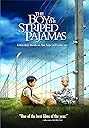
The Boy in the Striped Pajamas [DVD]
Product ID: 23885192
Details
- FormatAC-3 Color DVD
- ContributorAmber Beattie
- LanguageEnglish
- Runtime1 hour and 34
- StudioMiramax
Buy anything from 5,000+ international stores. One checkout price. No surprise fees. Join 2M+ shoppers on Desertcart.
Desertcart purchases this item on your behalf and handles shipping, customs, and support to KUWAIT.
The innocence of childhood savagely collides with the Holocaust in The Boy in the Striped Pajamas . Bruno (Asa Butterfield) knows that his father is a soldier and that they have to move to a new house in the country... a house near what he thinks is a farm. But his father isn't just a soldier; he's a high-ranking officer in Hitler's elite SS troops who's just been placed in command of Auschwitz. As Bruno explores the woods around the house, he discovers the concentration camp's perimeter fence. On the other side sits a boy his own age, with whom Bruno strikes up a friendship--a friendship that will have tragic consequences. The Boy in the Striped Pajamas is most powerful in the details: The casual brutality of a Nazi lieutenant; the uncomfortable juxtaposition of the family's domestic life with glimpses of the treatment of the imprisoned Jews; a ghastly propaganda film suggesting that life at Auschwitz was like a holiday. But more than anything else, Butterfield's performance makes this film compelling. The young actor perfectly conveys Bruno's limited perspective even as the film carefully unveils the larger, darker reality. The movie's ending will undoubtedly spark arguments, but only because of the emotional complexity of what happens-- The Boy in the Striped Pajamas is made with great skill and compassion. Also featuring David Thewlis ( Naked ) and Vera Farmiga ( The Departed ) as Bruno's parents. --Bret Fetzer Review: Deserves 10 Stars - By Darrell Stoddard, [email protected] This emotionally wrenching film deserves 10 Stars. Changed my life forever and a major part of my life was spent in motion pictures. The movie will change your life everlastingly too if you open your heart to a simple fictional story of a little German boy who befriends a Jewish boy through the barbed wire fence of a concentration camp. My heart was ripped out, but I will be a more loving, gracious, forgiving person for having seen this sensitive and also horrifying motion picture. YES, as the reviewers have said: It is "historically inaccurate to the extreme." "It is total fiction." It is "ridiculously contrived." It is "all too absurd." It is "hard to swallow." It is "forced and artificial," and "The actors have British accents instead of German." One critic posed the question, "Did Bruno's father in the end get what he deserved?" Such moralizing and such criticisms of the film make me wonder if those viewers of the film missed the unanswered questions of the Holocaust. How could it happen? How could so many good people allow it to happen? The most insightful reviewer said, "What is appalling to me is reading all of the one-star reviews. I now see how the holocaust (shoah) could have taken place. All that is necessary is for a nation to be composed of and ruled by people with no feelings, bereft of human compassion and sensitivity, just like several of the reviewers here." Great Art (even fiction) reveals to us "things as they really are". Through Bruno and his mother, we see through the eyes of Germans who were totally innocent until they came face to face with with the horrors of the "final solution." Most Europeans accepted the deportation of Jews, some not knowing what would be their fate and others even accepting the fate of Jews because it was so easy to blame Jewish Merchants and Jewish Bankers for World War 1 and for the collapse of the German economy. Savings were totally wiped out. It took 22 million German Marks to buy a loaf of bread. Though not the same, we can understand today how easy it would be to blame all Muslims for 9/11. Through Bruno's sister we see how easy it was to indoctrinate an entire nation of German youth. A notable exception was the 17 year old Mormon boy, Helmuth Hubener, that resisted the 3rd Reich and was sentenced by a German Court for treason and beheaded by guillotine on October 27, 1942 at Plötzensee Prison in Berlin. (See his true story on Wikipedia!) In this motion picture we see and learn how good men, good fathers, and good soldiers, putting military obedience ahead of even their mothers, wives and children, directed and became the executioners of millions of Jews. Even still photos of all the corpses, and eye witness accounts of the Holocaust do not give us that understanding. Last, by identifying and seeing through the eyes of an innocent child, we learn from the film what it was like to be ordered into the gas chambers. No other motion picture, book, or document has ever, or ever will, capture that experience or the depth of those feelings like the film "Boy in the Stripped Pajamas." Would that each viewer could become as a little child (Matthew 18:3), like Bruno, not judgmental, and not critical. The Holocaust (like the film) is hard to believe but the gas chambers to kill and the ovens to burn bodies were real. I've seen them with my own eyes. I've been in the house made sacred by Anne Frank. My next door neighbor was one of the first U.S. soldiers into the Dachau Prison Camp, and my neighbor across the street served in the Danish Underground. Let us resolve, NEVER AGAIN, not just in five languages, but in all the languages of the world. There were those in Germany that truly did not know what was happening to the Jews, but no other film answers for me how an entire nation could be led by one man to kill, or accept the killing, of so many. I will be forever haunted by the words, "If he had been your Fuehrer, you would have followed him too." Although it is fiction, "Boy In the Striped Pajamas" reveals not the historical truth, but the TRUTH of Nazi Germany as it was. FOOTNOTE: What follows regarding man's inhumanity to man is presented because HISTORY WILL REPEAT ITSELF IF WE DO NOT KNOW AND UNDERSTAND IT! People today need to know that Hitler did not invent anti-semitism. It began with the crucifixion of Jesus Christ and has never ceased. It is mind boggling to learn that throughout history there have been innumerable and hundreds of attempts in many countries to kill all of the Jews. (See "Pogroms" on Google, then read the Wikipedia account.) I was shocked beyond belief to read Martin Luther's anti Jewish sentiments published in 1543 (See "On the Jews and Their Lies - Wikipedia" Luther's feelings about the Jews and what should be done to them were as vile and reprehensible, as any words spoken in Nazi Germany. Indeed, Luther's document may have been the blueprint for the Nazi Holocaust. Seeing history repeat itself so many times makes us wonder if there is hope to save the Jews and the world from so much hate and killing. Pope John VI in 1965 issued his historic "Nostra Aetate" that expresses understanding, forgiveness and love for the Jews and for all religions. Pope John Paul VI states in this history changing document that the death of Christ, "cannot be charged against all the Jews, without distinction, then alive, nor against the Jews of today." The age old doctrine behind all of the Pogroms which stated that "all Jews, past, present, and future were collectively guilty of the Crucifixion of Jesus," was officially revoked by a Catholic Pope! EVERYONE should read entirely the "Nostra Aetate" which is one of the most important documents in the history of mankind (It takes just a few minutes to read and can be found on Google)! The current Pope Benedict XVI who was forced to join the Hitler Youth as a child in Nazi Germany (in two books) has made a sweeping exoneration of the Jewish people for the death of Jesus Christ. There is hope for the world! These are history changing actions by two Catholic Popes. It would be well for everyone who wants the world to be a better place to thank Catholics for Pope John VI and Pope Benedict XVI. We must be ever vigilant against condemning another. "Therefore thou art inexcusable, Oh man, whosoever thou art that judgest: for wherein thou judgest another, thou condemnest thyself: for thou that judgest doest the same things." (Romans 2:1). Jews who migrated to Israel after World War 11, themselves committed a Holocaust of the Palestinian people. Tens of thousands of Palestinians were killed and nearly one million were forced into refugee camps. "This is my Land. God gave this Land to me," was not justification for killing the Palestinians! There is one notable voice in the Middle East that documents the atrocities by all three sides and seeks to reconcile Jews, Christians, and Muslims. Elias Chacour, a Palestinian Melkite Christian Priest has established a school in Ibillon near Galilee where Christians, Jews, Muslims, and Druze study side by side. More important than their secular studies, students learn to love their enemies. To bring peace to the Holy Land, Elias Chacour's book "BLOOD BROTHERS" SHOULD BE REQUIRED READING FOR EVERYONE. Two unsung and less known heroes of the Holocaust are Irena Sendler and Raoul Wallenberg. Their stories should be told along with the stories of Oskar Schindler, Corrie Ten Boom, and Anne Frank. Irena Sendler was a Polish Catholic Social worker who saved more than 2500 Jewish Children from the Warsaw Ghetto. If you have any interest in the Holocaust, YOU MUST READ the inspiring story "Life in A Jar - The Irena Sendler Story" on Google. In 2007 when Sendler was still alive, she was nominated for the Nobel Peace Prize. Al Gore received the prize that year instead. Raoul Wallenberg is credited with saving near 100,000 Hungarian Jews. At the peril of his life he defied the Nazis innumerable times. Read a summary of Wallenberg's unbelievable courage to save Hungarian Jews on Google: "Profile of a Leader: The Wallenberg Effect." See Wallenberg's complete story in the book "Righteous Gentile" available used from desertcart.com from a number of book dealers for one cent plus $3.99 for shipping and handling. EVERY reviewer gave the book 5 stars! Unlike Schindler, Wallenberg had only his humanity and no ulterior motive in saving Jews; and he probably saved more Jews than Schindler. Few Motion pictures can compare to the book. The motion picture "Wallenberg A Hero's Story" is even equal to the book "Righteous Gentile"! Both the book and the movie will lift your very being to heaven. Man at his best is so good, so noble, so Christlike, that we would fain throw a cover over men and women when they are less. Mankind needs Hero's like Wallenberg to lift and redeem us. It will make anyone a better person to make the book or the motion picture a part of their life. See all of my Reviews. I write only about books, events, or motion pictures that have changed the course of history or unforgettable books or motion pictures that will totally change peoples lives. Darrell Stoddard, Founder - Pain Research Institute and saveusa.biz Review: Challenging, heart-rending - The Boy in the Striped Pajamas is extremely intense, even painful, but so beautifully done that one becomes pulled in. In this film, we see the holocaust through the eyes of innocence - and the eyes are German. We experience the story in the heart of a loving family - and the family is German. Because of that viewpoint, we can understand a little better how people remained morally unchallenged during the holocaust, even when the ghastly truth was literally just outside their gates. We can see, achingly, that we, as good people, are not immune to allowing that which we now condemn in hindsight. The film draws parallels between the world of the camp, with the striped clothing those interred there must wear behind electrified fences, and the stark, fortress-like house in which the German commandant's family lives, with it's barred stair rail and locked, guarded fence. We come to see that both groups are, in very different ways, imprisoned. The fact that the main characters, Bruno and Schmuel, are each eight years old, allows us to feel tenderly toward them in their different innocent circumstances, and levels our sympathies. Bruno's mother is a sensitive and nurturing woman, and the daughter dabbles with the Reich teachings and the Reich heroes in the manner that we'd recognize in a twelve-year-old girl of today idolizing media stars. We are even shown the loving father inside the proud, severe military commandant. This makes experiencing the film very difficult, as the viewer becomes emotionally engaged in the friendship between Schmuel inside the camp, and Bruno with his warm German family in their compound. As a retired teacher I recall the difficulties of encouraging young people to understand this time in history. To them, the holocaust is something that happened long ago, done buy a known monster, and something that they, as modern people, simply wouldn't do. I wish I'd had this film to help them open their eyes to the commonality of people. It shows us that Germans of the holocaust were ordinary people, too. The film is fiction, but somehow it is truer than a documentary because it lets us into the hearts of those who lived in that time, and leads us to recognize that the kind of thinking that lead to the holocaust is not, most unfortunately, banished to the distant past. The seeds of the holocaust flowered into horrible fruit then, and the same seeds are within each of us now. The film shows us through the commandant's innocent family that expressions of hate can devastate the hater as well. We have an obligation to pass on the story of the holocaust to the current generation, so the mindset which lead to the atrocities can be recognized and avoided. Though it is difficult viewing, parents should watch it with children whom they judge capable, so that the priceless understanding that comes through the film will not be lost to the future.
| Contributor | Amber Beattie, Asa Butterfield, Cara Horgan, David Hayman, David Thewlis, Jack Scanlon, Jim Norton, Mark Herman, Richard Johnson, Rupert Friend, Sheila Hancock, Vera Farmiga Contributor Amber Beattie, Asa Butterfield, Cara Horgan, David Hayman, David Thewlis, Jack Scanlon, Jim Norton, Mark Herman, Richard Johnson, Rupert Friend, Sheila Hancock, Vera Farmiga See more |
| Customer Reviews | 4.8 out of 5 stars 5,354 Reviews |
| Format | AC-3, Color, DVD, Dolby, NTSC, Subtitled, Widescreen |
| Language | English |
| Runtime | 1 hour and 34 minutes |
| Studio | Miramax |
D**D
Deserves 10 Stars
By Darrell Stoddard, [email protected] This emotionally wrenching film deserves 10 Stars. Changed my life forever and a major part of my life was spent in motion pictures. The movie will change your life everlastingly too if you open your heart to a simple fictional story of a little German boy who befriends a Jewish boy through the barbed wire fence of a concentration camp. My heart was ripped out, but I will be a more loving, gracious, forgiving person for having seen this sensitive and also horrifying motion picture. YES, as the reviewers have said: It is "historically inaccurate to the extreme." "It is total fiction." It is "ridiculously contrived." It is "all too absurd." It is "hard to swallow." It is "forced and artificial," and "The actors have British accents instead of German." One critic posed the question, "Did Bruno's father in the end get what he deserved?" Such moralizing and such criticisms of the film make me wonder if those viewers of the film missed the unanswered questions of the Holocaust. How could it happen? How could so many good people allow it to happen? The most insightful reviewer said, "What is appalling to me is reading all of the one-star reviews. I now see how the holocaust (shoah) could have taken place. All that is necessary is for a nation to be composed of and ruled by people with no feelings, bereft of human compassion and sensitivity, just like several of the reviewers here." Great Art (even fiction) reveals to us "things as they really are". Through Bruno and his mother, we see through the eyes of Germans who were totally innocent until they came face to face with with the horrors of the "final solution." Most Europeans accepted the deportation of Jews, some not knowing what would be their fate and others even accepting the fate of Jews because it was so easy to blame Jewish Merchants and Jewish Bankers for World War 1 and for the collapse of the German economy. Savings were totally wiped out. It took 22 million German Marks to buy a loaf of bread. Though not the same, we can understand today how easy it would be to blame all Muslims for 9/11. Through Bruno's sister we see how easy it was to indoctrinate an entire nation of German youth. A notable exception was the 17 year old Mormon boy, Helmuth Hubener, that resisted the 3rd Reich and was sentenced by a German Court for treason and beheaded by guillotine on October 27, 1942 at Plötzensee Prison in Berlin. (See his true story on Wikipedia!) In this motion picture we see and learn how good men, good fathers, and good soldiers, putting military obedience ahead of even their mothers, wives and children, directed and became the executioners of millions of Jews. Even still photos of all the corpses, and eye witness accounts of the Holocaust do not give us that understanding. Last, by identifying and seeing through the eyes of an innocent child, we learn from the film what it was like to be ordered into the gas chambers. No other motion picture, book, or document has ever, or ever will, capture that experience or the depth of those feelings like the film "Boy in the Stripped Pajamas." Would that each viewer could become as a little child (Matthew 18:3), like Bruno, not judgmental, and not critical. The Holocaust (like the film) is hard to believe but the gas chambers to kill and the ovens to burn bodies were real. I've seen them with my own eyes. I've been in the house made sacred by Anne Frank. My next door neighbor was one of the first U.S. soldiers into the Dachau Prison Camp, and my neighbor across the street served in the Danish Underground. Let us resolve, NEVER AGAIN, not just in five languages, but in all the languages of the world. There were those in Germany that truly did not know what was happening to the Jews, but no other film answers for me how an entire nation could be led by one man to kill, or accept the killing, of so many. I will be forever haunted by the words, "If he had been your Fuehrer, you would have followed him too." Although it is fiction, "Boy In the Striped Pajamas" reveals not the historical truth, but the TRUTH of Nazi Germany as it was. FOOTNOTE: What follows regarding man's inhumanity to man is presented because HISTORY WILL REPEAT ITSELF IF WE DO NOT KNOW AND UNDERSTAND IT! People today need to know that Hitler did not invent anti-semitism. It began with the crucifixion of Jesus Christ and has never ceased. It is mind boggling to learn that throughout history there have been innumerable and hundreds of attempts in many countries to kill all of the Jews. (See "Pogroms" on Google, then read the Wikipedia account.) I was shocked beyond belief to read Martin Luther's anti Jewish sentiments published in 1543 (See "On the Jews and Their Lies - Wikipedia" Luther's feelings about the Jews and what should be done to them were as vile and reprehensible, as any words spoken in Nazi Germany. Indeed, Luther's document may have been the blueprint for the Nazi Holocaust. Seeing history repeat itself so many times makes us wonder if there is hope to save the Jews and the world from so much hate and killing. Pope John VI in 1965 issued his historic "Nostra Aetate" that expresses understanding, forgiveness and love for the Jews and for all religions. Pope John Paul VI states in this history changing document that the death of Christ, "cannot be charged against all the Jews, without distinction, then alive, nor against the Jews of today." The age old doctrine behind all of the Pogroms which stated that "all Jews, past, present, and future were collectively guilty of the Crucifixion of Jesus," was officially revoked by a Catholic Pope! EVERYONE should read entirely the "Nostra Aetate" which is one of the most important documents in the history of mankind (It takes just a few minutes to read and can be found on Google)! The current Pope Benedict XVI who was forced to join the Hitler Youth as a child in Nazi Germany (in two books) has made a sweeping exoneration of the Jewish people for the death of Jesus Christ. There is hope for the world! These are history changing actions by two Catholic Popes. It would be well for everyone who wants the world to be a better place to thank Catholics for Pope John VI and Pope Benedict XVI. We must be ever vigilant against condemning another. "Therefore thou art inexcusable, Oh man, whosoever thou art that judgest: for wherein thou judgest another, thou condemnest thyself: for thou that judgest doest the same things." (Romans 2:1). Jews who migrated to Israel after World War 11, themselves committed a Holocaust of the Palestinian people. Tens of thousands of Palestinians were killed and nearly one million were forced into refugee camps. "This is my Land. God gave this Land to me," was not justification for killing the Palestinians! There is one notable voice in the Middle East that documents the atrocities by all three sides and seeks to reconcile Jews, Christians, and Muslims. Elias Chacour, a Palestinian Melkite Christian Priest has established a school in Ibillon near Galilee where Christians, Jews, Muslims, and Druze study side by side. More important than their secular studies, students learn to love their enemies. To bring peace to the Holy Land, Elias Chacour's book "BLOOD BROTHERS" SHOULD BE REQUIRED READING FOR EVERYONE. Two unsung and less known heroes of the Holocaust are Irena Sendler and Raoul Wallenberg. Their stories should be told along with the stories of Oskar Schindler, Corrie Ten Boom, and Anne Frank. Irena Sendler was a Polish Catholic Social worker who saved more than 2500 Jewish Children from the Warsaw Ghetto. If you have any interest in the Holocaust, YOU MUST READ the inspiring story "Life in A Jar - The Irena Sendler Story" on Google. In 2007 when Sendler was still alive, she was nominated for the Nobel Peace Prize. Al Gore received the prize that year instead. Raoul Wallenberg is credited with saving near 100,000 Hungarian Jews. At the peril of his life he defied the Nazis innumerable times. Read a summary of Wallenberg's unbelievable courage to save Hungarian Jews on Google: "Profile of a Leader: The Wallenberg Effect." See Wallenberg's complete story in the book "Righteous Gentile" available used from amazon.com from a number of book dealers for one cent plus $3.99 for shipping and handling. EVERY reviewer gave the book 5 stars! Unlike Schindler, Wallenberg had only his humanity and no ulterior motive in saving Jews; and he probably saved more Jews than Schindler. Few Motion pictures can compare to the book. The motion picture "Wallenberg A Hero's Story" is even equal to the book "Righteous Gentile"! Both the book and the movie will lift your very being to heaven. Man at his best is so good, so noble, so Christlike, that we would fain throw a cover over men and women when they are less. Mankind needs Hero's like Wallenberg to lift and redeem us. It will make anyone a better person to make the book or the motion picture a part of their life. See all of my Reviews. I write only about books, events, or motion pictures that have changed the course of history or unforgettable books or motion pictures that will totally change peoples lives. Darrell Stoddard, Founder - Pain Research Institute and saveusa.biz
G**I
Challenging, heart-rending
The Boy in the Striped Pajamas is extremely intense, even painful, but so beautifully done that one becomes pulled in. In this film, we see the holocaust through the eyes of innocence - and the eyes are German. We experience the story in the heart of a loving family - and the family is German. Because of that viewpoint, we can understand a little better how people remained morally unchallenged during the holocaust, even when the ghastly truth was literally just outside their gates. We can see, achingly, that we, as good people, are not immune to allowing that which we now condemn in hindsight. The film draws parallels between the world of the camp, with the striped clothing those interred there must wear behind electrified fences, and the stark, fortress-like house in which the German commandant's family lives, with it's barred stair rail and locked, guarded fence. We come to see that both groups are, in very different ways, imprisoned. The fact that the main characters, Bruno and Schmuel, are each eight years old, allows us to feel tenderly toward them in their different innocent circumstances, and levels our sympathies. Bruno's mother is a sensitive and nurturing woman, and the daughter dabbles with the Reich teachings and the Reich heroes in the manner that we'd recognize in a twelve-year-old girl of today idolizing media stars. We are even shown the loving father inside the proud, severe military commandant. This makes experiencing the film very difficult, as the viewer becomes emotionally engaged in the friendship between Schmuel inside the camp, and Bruno with his warm German family in their compound. As a retired teacher I recall the difficulties of encouraging young people to understand this time in history. To them, the holocaust is something that happened long ago, done buy a known monster, and something that they, as modern people, simply wouldn't do. I wish I'd had this film to help them open their eyes to the commonality of people. It shows us that Germans of the holocaust were ordinary people, too. The film is fiction, but somehow it is truer than a documentary because it lets us into the hearts of those who lived in that time, and leads us to recognize that the kind of thinking that lead to the holocaust is not, most unfortunately, banished to the distant past. The seeds of the holocaust flowered into horrible fruit then, and the same seeds are within each of us now. The film shows us through the commandant's innocent family that expressions of hate can devastate the hater as well. We have an obligation to pass on the story of the holocaust to the current generation, so the mindset which lead to the atrocities can be recognized and avoided. Though it is difficult viewing, parents should watch it with children whom they judge capable, so that the priceless understanding that comes through the film will not be lost to the future.
M**.
Middle school appropriate
Good movie. I played it for my students when we read texts about the Holocaust. It's nice to find a movie I can play in my classroom that is appropriate, not animated, and interesting. Even though the movie seems slow moving, the kids really looked forward to watching it over a three day period.
S**Z
amazing
absolutely outstanding, loved it a lot.
M**E
Heartbreaking Story of Innocence During Nazis Rule
I've watched many great film adaptations of books written about the Holocaust and how it affected all involved. Yet, THE BOY IN THE STRIPPED PAJAMAS, was probably the most heart-breaking movie I've seen because it showed in chilling details how two young boys - one Jewish, one German, became innocent victims of Hitler's Nazis madness to exterminate Europe of non-Aryans. The movie was all the more powerful and heart-wrenching in its portrayal of the hedonist perpetration of human extermination because the two main child characters [eight-year-old Shmuel, 'the boy in the stripped pajamas', and eight-year-old, Bruno 'the son of the Commandant responsible for the extermination camp were Shumel is held captive'] are exemplary in their roles of capturing children's naivety and inability to comprehend the unthinkable. Other reviewers have written in great detail about the specifics of the plot. It is multi-layered and complex, examining the the characters who portrayed participants and victims of a an evil event in recent history, and the effects it had on each. Instead, I prefer to focus my comments on why I believe this movie is so important. In my opinion, we underestimate the innocence of young children and their gullibility, their 'magical thinking' to believe in an idealistic world, and the pureness of their hearts to believe the best in their parents; failing to see, imagine, or comprehend any flaws. Even when young children are exposed to the 'worse' of abusive conditions, most don't grasp the depth of their circumstances. For this reason [among others] children are easily manipulated to do what they are told by predators; coerced to believe in angels and gifts when they obey, or condemned to be tormented by monstrous demons if they don't comply. Because of the subtleties in the manner the scenes are directed, rather than the 'overtness' obvious to us as adults, the dialogue between Bruno and Shumel made this movie all the more chilling to watch. As viewers, we watch their friendship blossom knowing they have already become unsuspecting victims. Through the innocent and loyal camaraderie that we witness between Bruno and Shumel - two 'sacrificial lambs' - we discover the unimaginable horror, power, magnitude, and atrocity of the Holocaust. THE BOY IN THE STRIPPED PAJAMAS is a movie to be watched by families who have teenagers. It is a film I'll long remember. Maizie Lucille James January 14, 2012
S**E
So sad!
Good movie.
D**N
This film is in the higest class of films that exist.
It is quite possible that more has been written and filmed about The Holocaust than any other historical event. Not just in regard to hard research, but many of the world's finest novelists have fictionalized the story, film makers have touched upon the subject, playwrights, composers, painters and poets. If there has been a way to express the shock- and shock is an understatement in this case- it has been attempted. John Boyne, a gifted and now internationally known Irish author, wrote the book "The Boy In The Striped Pajamas" in about two weeks time. As he said, in order to maintain "the voice," once he began he was afraid to stop. The same is true when reading it- we are compelled to continue and it is evident from early in the book that Boyne has disguised the terminal words so that it can apply to any and all of the other holocausts' that occurred prior to and after this one. In fact, only once does Boyne choose to use a "telling" word; on page 54 one of the officers says, "Heil Hitler" but then we are told that the boy assumed that this was like saying, "Well, goodbye for now and have a pleasant afternoon." Mark Herman, under the umbrella of both Miramax and BBC Films set forth to create this book effectively for film- a difficult task given that so much of the emotional swtruggle is internal and difficult to show on film, but he managed it and did so beautifully. Becauswe this film is in the smae catagoiry (in regard to quality) as "Sophie's Choice" I couldnt give it five stars- that doesn't mean that everyone shouldn't see this film. The small issues with the film are strongly outweighed by the genuis behind it- most of that genuis comes from the premise which leads us back to John Boyne. The boy, his name Bruno; his age eight and is able to say things with just his eyes that make the fiolm entiurely possible. Without Bruno (expeertly plkayed by Asa Butterfield) the filmn wouldnp;t work. His co -star, the nine yea old Schmuel on the other side of the fenvce ius played by Jack Scanlon who manages to exude sadnewss. The confussion that Bruno has regarding their situation is simply too complicated for Schmuel to explain. The finest performance in the film belongs to Vera Famiga, who plays Bruno's mother and wife to the Commandant at this camp. Like "Sophies Choice" and Meryl Streep's classic performance in that film, Farmiga builds and devlops over a period of ninety-three minutes until, at the apogee of the film we see her undderstanding reach fruition, just as the rain begins to fall. Her emotional breakdown at this point is raw, honest and something to which every parent can connect. The film score, composed and performed by James horner ("Titanic") is a character unto itselfl The entire score is based upon a simple piece he composed that sounds like a gentle folks song. It is diatonic and in three quarter time. He utilizes synthesiers as well as wind instruments to add omonious irony to his music (the synthesisisers were expertly prograqmmed by Ian Underwood and Aaron Martin; the music editor was Dick Bernstein. The score builds momentum and continues, often at battle with itself, disploaying conflict between the characters as well as the situation itself. The music reaches it end with the film on a perfect ubnison which echos, just as the movie does. The innocence and ignorance of this young boy is as critical to the brilliance of this work as the story of the Titanic. (I speak not just of Cameron's film, but Maury Yeston's musical, "a Night to Remember" and the three other films made between 1938 and 1984) Herin is a tool where the audience not only knows so much more than Bruno, but that we are anticipating the sadness that ends the film. So we are prepared to cry but when the end does come, it is so shockiung that we aren;t ablke to cry; it';s not possiblke, this ending, though we've taken every step with these two boys and, of courwe (nbecause of our knowledge of what really happened) we know all too well that the ending is quite feasible. This film is by no means a "Sophie's Choice" though the horror is just as shocking, but few situations in cinematic history have been able to achieve what "Sophie's Choice" did. Still, the two films use a similar foundation but are about very different things. Where the ending is horrifyingly shocking and, like "Sophie's Choice," completely unexpected (who in fact could have imagined an ending such as this one) the poignancy of "The Boy In Striped Pajamas" makes it impossible for this film- and the fame it will generate - to be satirized in any way. Because the innocence and ignorance, as a result of the way his parents have shielded Bruno, is a metaphor for the way in which the population who was aware of the death camps were inactive; complacent and how the same continues to occur day after day from the beginning of recorded time to the continued genocide in Darfur- the world's largest death camp- to which the UN has placed sanctions against while The full force of the American military tore apart Iraq in search of Weapons of Mass Destruction. The current political winds in the United States suggest that Gay Americans and Female Americans are just as vulnerable. All of these circumstances suggest that you could very well be next. John Boyne's book manages to suggest all of this is his two hundred page fable using a modicum of brilliantly chosen words. His ending: John Boyle has sub-titled his book, A Fable" and it is. His final words are like a double edged sword: "And that's the end of the story of Bruno and his family. Of course all of this happened a long time ago and nothing like that could ever happen again. Not in this day and age." The irony of this ending reminds us that this is a fable, but more so, it makes us stop and think of the responsibility that we all owe to anyone who has been maltreated, either in the form of Bruno, Anne Frank, Sophie Zawotoski or Carol Stewart, Amy Fitzpatrick, Dave Pelzer and the millions of others. As a parent I would have watched this film with both of my daughters as early as sixth grade. Perhaps earlier. Those things that they d0o not understand will gloss over them; they will ask the right questions at the right times and it would be very wise to prepare a parental lesson plan for this because our children must learn of the Hollocaust and by far, this is the best way to introduce it to them I've seem to date. After this, they can read Anne Frank's diary and collefctively with the schools curriculum, they can see. but as we all learneed from Jonathan Demme's "silence of the Lambs" what the film doesn;t show and is left for our minds to create is often more horrific than a John Carpenter slaher film. The filmn is not able to end with the same impact as the book, but the ending is still remarkably powerful, filled with painful irony and one image that we watch for a few moments longer than we wish to as we see that there really was no other way this story could end.
M**I
Good movie
This is a very good movie. Quite emotional too so when you watch it you gotta be ready for the emotions you gonna feel. Its quite educational too of the dark history the Jews went through.
A**R
Excellent.
Worth watching. Very good movie.
D**E
What war can do
A truly sad movie.
D**L
Buena pelicula a buen precio
Buena pelicula a muy buen precio.Contiene audio castellano dts-hd 5,1 e ingles 5.1. Subtitulos solo en castellano. Como extras nos encontraremos con: Escenas eliminadas y un documental llamado La amistad va mas alla de la alamabrada
R**)
erschütternder Film aus der Perspektive eines Kindes gesehen
Ich muss sagen, dass ich immer noch ganz ergriffen bin von dem Gesehenen. "Der Junge im gestreiften Pyjama", nach dem gleichnamigen Roman von John Boyne, ist für mich ein sehr gelungenes Werk mit überzeugender schauspielerischer Leistung. Aus der Sicht eines achtjährigen Jungen schildert der Film die Gefühle und Eindrücke eines Kindes in einer mehr als wichtigen Epoche unserer jüngeren Geschichte. Bruno ist der Sohn eines wichtigen Wehrmachtoffiziers aus Berlin, der eines Tages als Leiter eines Konzentrationslagers aufs Land versetzt wird. Bruno fällt es sehr schwer Berlin, aber vor allem seine Freunde zu verlassen.In seinem neuen Zuhause angekommen, sieht er aus seinem Fenster einen " Bauernhof " und hofft dort neue Freunde zu finden. Doch seine Eltern wollen nicht, dass Bruno die Gegend erkundet und Kontakt mit den Kindern vom " Bauernhof " aufnimmt. Die Villa , in der Bruno mit seiner Familie lebt, ist stark abgeschirmt und von Soldaten bewacht, die Bruno ein Entkommen aus diesem Haus und dem Grundstück sehr schwer machen. Doch eines Tages gelingt es Bruno vom Grundstück zu entkommen und auf Entdeckungstour zu gehen. Was er entdeckt, ist ein Konzentrationslager, dass er aber nicht als solches erkennt, da er auch nicht um seine Bestimmung weiß.Er freundet sich mit Shmuel an, einem ebenfalls achtjährigen Jungen, der in dem Lager lebt und den er am Zaun des Lagers trifft. Ja, dieser Film sollte wirklich in Schulen eingesetzt werden, da er sehr überzeugend die damalige Zeit und die Zerrissenheit des achtjährigen Bruno widerspiegelt, der das erste Mal im Leben mit den Taten des 3. Reiches konfrontiert wird.Sich nicht des schrecklichen Gräuel bewusst, ist er doch nur auf der Suche nach einem Freund, den er auch in Shmuel findet. Auch wenn ihm in den Gesprächen , die die Eltern miteinander führen und durch die Doktrin seines Hauslehrers, immer wieder bewusst gemacht wird, dass Juden anders und verabscheuenswürdig und für die Schmach der Deutschen verantwortlich sind, kann er dies nicht mit seiner Freundschaft mit Shmuel in Zusammenhang bringen, da er für ihn ein Freund ist.Trotzdem wird er durch eine Situation dazu gezwungen Schmuel zu verleugnen. Ich finde, es ist dem Regisseur sehr gut gelungen, die Zerrissenheit und das Unverständnis des achtjährigen Bruno rüber zu bringen. Bruno fühlt schon eine gewisse Bedrohung und die sich immer mehr zuspitzende Situation in seinem Elternhaus (auch die Eltern streiten sich immer öfter), aber er kann es mit seiner kindlichen Weltanschauung nicht in Zusammenhang bringen. Ihm ist es wichtig, seine Freundschaft mit Schmeul zu retten und dafür ist er auch bereit zu lügen. Mir fallen noch so viele Dinge ein , die ich zu diesem Film sagen möchte, daran merke ich auch, wie sehr er mich beeindruckt und tief bewegt hat,Doch ich glaube ich würde einfach zuviel verraten und ich finde es sollte sich jeder sein eigenes Bild machen über dieses außergewöhnliche Werk. Mein Dank gilt vor allem John Boyne, der dieses wichtige Thema aufgegriffen hat und eines meiner Meinung nach sehr gut nachfühlbar macht. Die filmische Darstellung dieses herausragenden Werkes ist meiner Meinung nach sehr gut gelungen und man kann so etwas nicht oft genug zeigen , um die Taten der damaligen Zeit lebendig zu erhalten.Dies gilt meines Erachtens als die beste Abschreckung.
A**A
Acquisto emozionante
Arrivato un giorno prima insieme ad altre cose prese....Avevo visto il film in tv,e mi aveva emozionato molto....A distanza di tempo,ho pensato di acquistarlo....ottimo rivederlo ogni tanto,sopratutto per imparare a non dire bugie ai bambini e imparare che i piú piccoli vedono oltre.......le "differenze" ....ps. apparte una piccola parte,non ci sono scene crude,ma molte scene giocano sull'immaginazione,(a parer mio),é questo che rende il film toccante emotivamente
Trustpilot
1 month ago
3 days ago