We remain fully operational. Our teams are working around the clock to ensure your deliveries continue safely.

قم بتنزيل التطبيق


معلومات عنا
حقوق الطبع والنشر © 2024 Desertcart Holdings Limited
قم بتنزيل التطبيق
Buy anything from 5,000+ international stores. One checkout price. No surprise fees. Join 2M+ shoppers on Desertcart.
Desertcart purchases this item on your behalf and handles shipping, customs, and support to KUWAIT.
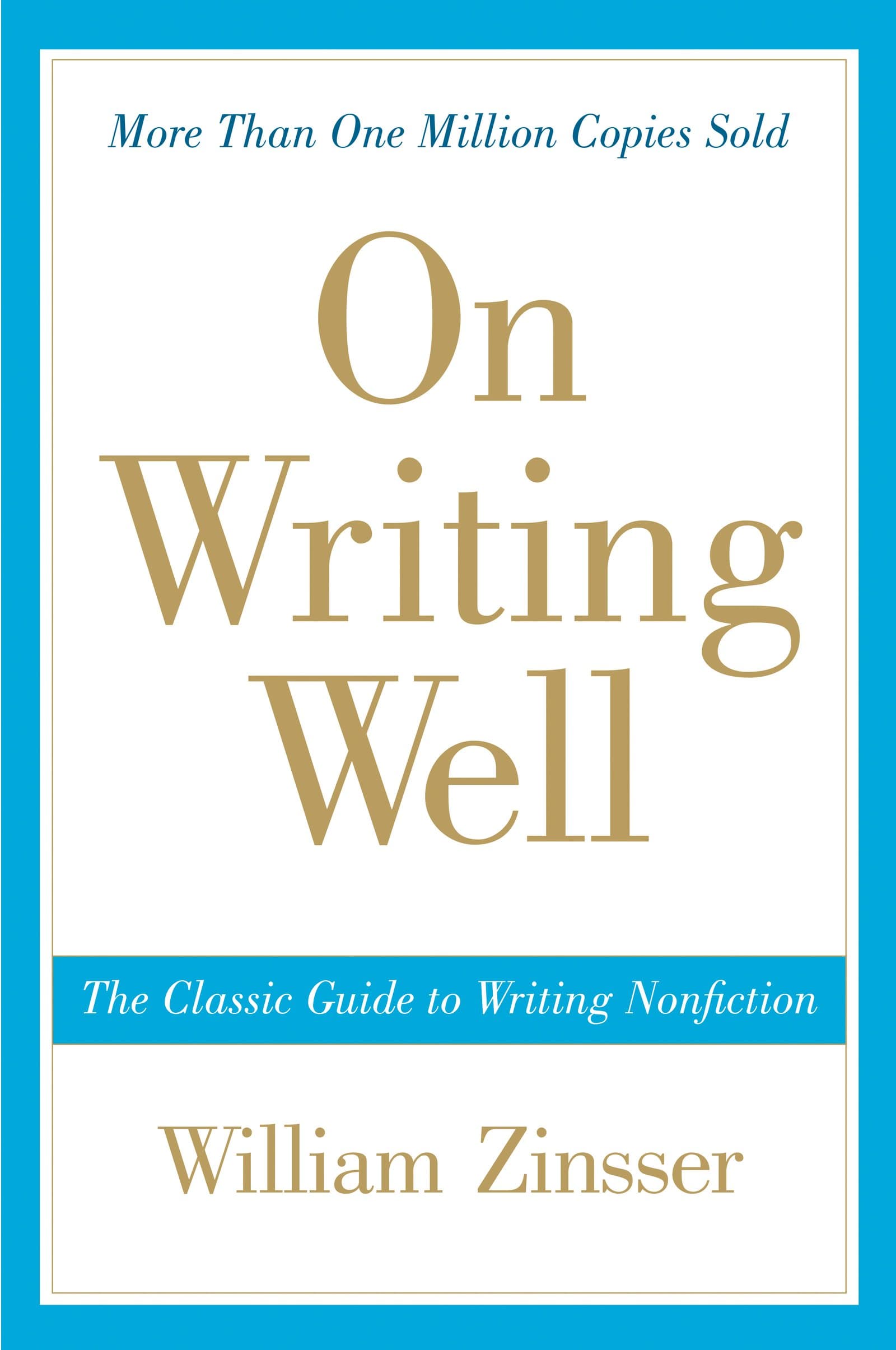
desertcart.com: On Writing Well: The Essential Guide to Mastering Nonfiction Writing and Effective Communication: 9780060891541: Zinsser, William: Books Review: A Timeless Guide for Aspiring Writers - William Zinsser’s "On Writing Well" is a must-read for anyone looking to improve their nonfiction writing skills. With its clear structure and practical advice, Zinsser emphasizes the importance of simplicity, clarity, and voice in writing. One of the book’s standout features is its conversational tone, making it accessible and engaging for writers at any level. Zinsser shares personal anecdotes and experiences, which not only illustrate his points but also keep the reader engaged. His emphasis on the writer's unique perspective is refreshing, encouraging writers to find their own voice rather than simply follow trends. The chapters cover various aspects of writing, from the importance of revision to understanding the structures of different types of nonfiction. Zinsser’s insights into the writing process are both practical and motivational, helping writers to overcome common challenges like self-doubt and writer’s block. What makes Zinsser’s guide classic is its enduring wisdom. Although written decades ago, the principles laid out in this book remain relevant today in our fast-paced, information-driven world. Overall, "On Writing Well" is not just a guide; it’s a companion for anyone who wants to write better and convey their message more effectively. Highly recommended for aspiring writers, editors, and anyone who wants to sharpen their writing craft. Review: The Must Book for Serious Wrtiers - I read On Writing Well by William Zinsser twice. I loved this book. sOn Writing Well embodies what excellent writing should be. At first I thought the book would be a dull "how to write" book, much like a cookbook, without a lot of creativity. Instead, On Writing Well has depth and soul. It challenges me to ask, what can I achieve for the glory of God if I implement these nuggets of wisdom? On Writing Well gives me a high standard to emulate and debunks many myths perpetrated by people I consider more knowledgeable than myself. This book is a gift to anyone who takes writing seriously. I also believe there is a spiritual battle waged in Christian writing. The evil one does not want God's glory to be revealed in human creativity. If he can persuade Christian writers through mediocrity and deception that publishing articles or books is the ultimate goal without a passion for truth, beauty, and redemption, our writing will be compromised. We will sacrifice our best-God's creativity--for a cheap counterfeit. As Zinsser states so well, we need role models who exhibit good writing that we can copy to help us develop our own style. I also feel "normal" now knowing I am not "crazy" with my compulsion to rewrite things over and over as I fidget for the right construction. I take comfort in knowing at least Zinsser does the same thing. There are too many good points On Writing Well to summarize in a few short paragraphs, so I want to break them down into the four parts of the book as Zinsser presented them. Part I Principles All these principles would apply equally to fiction and nonfiction. 1. Good writing must exhibit humanity and warmth. A writer's product is himself, not the subject that he is writing about. 2. Write clearly and eliminate all clutter. 3. Be yourself on paper as you are in person. 4. Write the way that is most natural to you. 5. Write to please yourself--I like to think I am writing to please God. To paraphrase from the Bible, whatever I do, do it as if I am doing it unto the Lord, and give Him the glory. That means the reader deserves the best I have to offer. 6. Writing is art through imitation. 7. Avoid journalese and cheap words--the world has enough of them already (I know because I caption them every day). Instead, surprise the reader with the rhythm and cadence of verbs and nouns that express vitality and beauty in unexpected ways. 8. Respect the English language and write correctly--it will show you care about the reader and respect his intelligence. Part II Methods All these principles would apply equally to fiction and nonfiction. 2. Unity ensures orderliness in terms of presentation, pronoun, tense, and mood. 3. Enthusiasm will keep the reader engaged. 4. Leave the reader with one new thought or idea to consider after he finishes your story. 5. Be flexible--let your writing take you where it wants to go. Trust your material. 6. Make your lead so compelling that the reader can't put your book down. 7. Always have more material to draw from than you think you will need. 8. Look for the story in your writing--people love stories. 9. Know when to end (I have read my share of great books that I never finished because I became bored in the waning chapters). 10. Use active and precise verbs and adjectives. Avoid overuse of adverbs. My translation is, if it sounds like writing, it's a poor substitute. My favorite books are those where I get lost in the story--I have been transported to another world or another time and forget I am reading until something or somebody disturbs me. 11. Omit the "little qualifiers." In my book Children of Dreams, I did a word search for qualifiers I tend to overuse like "very" and removed them. I also did a search for exclamation points--most of those came out also. The change in overall appearance was stunning. 12. Avoid contractions like "I'd, he'd, and we'd." I don't write these words captioning because I don't like them (they don't exist in my captioning dictionary), so I am glad to know I don't ever need to write them. 13. Don't overstate. I have been turned off by writers who overstated a fact. My translation is, don't insult the reader's intelligence. 14. Don't compare your writing to others. Your only competition is with yourself. 15. If something can't be fixed, take it out. In captioning parlance, when in doubt, take it out. Better not to caption it than to caption it wrong. 16. Keep paragraphs short. 17. Rewrite, rewrite, rewrite. Part III Forms (Noted for my own edification) 1. Dramatic nonfiction should have no inferring or fabricating, but a condensing of time and events is acceptable to tell the story, raising the craft of writing nonfiction to art. 2. Seize control of style and substance when writing about people and places; take unusual care with details. 3. A memoir covers a short span of time and is not autobiographical. Use sound, smell, touch and rich remembrance to allow the reader to enjoy the journey alongside you. 4. When writing science, write as an ordinary person, sequentially, and never forget the human element is what will make the story come alive. 5. Strip from business writing all the extra "lingo" and write with what Zinsser calls the four articles of faith: Clarity, simplicity, brevity and humanity. 6. Sports writing is rich in opportunity for nonfiction writers--a source of material for social change and social history. Strip away the sports jargon and write with active verbs and colorful adjectives. (This chapter spoke to me personally as it takes months of training to become a competent sports captioner. Because I hope to incorporate sports into my creative writing, I'm glad to know that good sports writing eliminates the junkie lingo that I caption every day). 7. Criticism is a serious intellectual act undertaken by those trained in the area of inquiry. The first qualification should be to love the type of art being critiqued. 8. Humor is the secret ingredient to nonfiction writing that adds zest and joy to truth and life. Part IV Attitudes The following would apply to fiction except for 6 through 10. All would apply to nonfiction. 1. Avoid cheap writing, clichés, and breeziness. Develop a style that the reader with recognize as "your voice." 2. Write with sincerity. Your best credential is yourself. 3. Focus on process, not outcome. Zinsser calls it, "The Tyranny of the Final Product." 4. Quest and intention should guide us in our writing. Quest is the search for meaning and intention is what we wish to accomplish--the soul of our writing. 5. Writing is about making decisions, and ultimately, where you wish to take the reader on your journey. 6. Consider the resonance of the words you choose and its emotional impact on the reader. 7. As a nonfiction writer, "You must get on the plane." (I think about the adoption of my two daughters from Nepal and Vietnam. My book Children of Dreams is about their adoptions. If I never got on the plane, I wouldn't have them. Neither would the reader have my book. 8. When writing memoir, choose one point of view to preserve unity; i.e., writing from the viewpoint of the child versus the adult looking back. They are different kinds of writing. 9. Remember, when writing memoir, it's your story. Memoirs should have a redemptive quality--readers won't connect with whining. 10. Organize your memoir through a series of reductions, focusing on the small stories tucked away in memory. The reader will connect because the stories will resonate with universal truth. 11. Strive to write the best you can. Give all of yourself. The reader deserves the best you have to offer.
| ASIN | 0060891548 |
| Best Sellers Rank | #3,809 in Books ( See Top 100 in Books ) #1 in Rhetoric (Books) #4 in Writing Skill Reference (Books) #8 in Fiction Writing Reference (Books) |
| Customer Reviews | 4.6 4.6 out of 5 stars (5,735) |
| Dimensions | 0.76 x 5.31 x 8 inches |
| Edition | Anniversary,Reprint |
| ISBN-10 | 9780060891541 |
| ISBN-13 | 978-0060891541 |
| Item Weight | 2.31 pounds |
| Language | English |
| Part of series | On Writing Well |
| Print length | 336 pages |
| Publication date | May 9, 2006 |
| Publisher | Harper Perennial |
| Reading age | 15 - 18 years |
D**S
A Timeless Guide for Aspiring Writers
William Zinsser’s "On Writing Well" is a must-read for anyone looking to improve their nonfiction writing skills. With its clear structure and practical advice, Zinsser emphasizes the importance of simplicity, clarity, and voice in writing. One of the book’s standout features is its conversational tone, making it accessible and engaging for writers at any level. Zinsser shares personal anecdotes and experiences, which not only illustrate his points but also keep the reader engaged. His emphasis on the writer's unique perspective is refreshing, encouraging writers to find their own voice rather than simply follow trends. The chapters cover various aspects of writing, from the importance of revision to understanding the structures of different types of nonfiction. Zinsser’s insights into the writing process are both practical and motivational, helping writers to overcome common challenges like self-doubt and writer’s block. What makes Zinsser’s guide classic is its enduring wisdom. Although written decades ago, the principles laid out in this book remain relevant today in our fast-paced, information-driven world. Overall, "On Writing Well" is not just a guide; it’s a companion for anyone who wants to write better and convey their message more effectively. Highly recommended for aspiring writers, editors, and anyone who wants to sharpen their writing craft.
L**S
The Must Book for Serious Wrtiers
I read On Writing Well by William Zinsser twice. I loved this book. sOn Writing Well embodies what excellent writing should be. At first I thought the book would be a dull "how to write" book, much like a cookbook, without a lot of creativity. Instead, On Writing Well has depth and soul. It challenges me to ask, what can I achieve for the glory of God if I implement these nuggets of wisdom? On Writing Well gives me a high standard to emulate and debunks many myths perpetrated by people I consider more knowledgeable than myself. This book is a gift to anyone who takes writing seriously. I also believe there is a spiritual battle waged in Christian writing. The evil one does not want God's glory to be revealed in human creativity. If he can persuade Christian writers through mediocrity and deception that publishing articles or books is the ultimate goal without a passion for truth, beauty, and redemption, our writing will be compromised. We will sacrifice our best-God's creativity--for a cheap counterfeit. As Zinsser states so well, we need role models who exhibit good writing that we can copy to help us develop our own style. I also feel "normal" now knowing I am not "crazy" with my compulsion to rewrite things over and over as I fidget for the right construction. I take comfort in knowing at least Zinsser does the same thing. There are too many good points On Writing Well to summarize in a few short paragraphs, so I want to break them down into the four parts of the book as Zinsser presented them. Part I Principles All these principles would apply equally to fiction and nonfiction. 1. Good writing must exhibit humanity and warmth. A writer's product is himself, not the subject that he is writing about. 2. Write clearly and eliminate all clutter. 3. Be yourself on paper as you are in person. 4. Write the way that is most natural to you. 5. Write to please yourself--I like to think I am writing to please God. To paraphrase from the Bible, whatever I do, do it as if I am doing it unto the Lord, and give Him the glory. That means the reader deserves the best I have to offer. 6. Writing is art through imitation. 7. Avoid journalese and cheap words--the world has enough of them already (I know because I caption them every day). Instead, surprise the reader with the rhythm and cadence of verbs and nouns that express vitality and beauty in unexpected ways. 8. Respect the English language and write correctly--it will show you care about the reader and respect his intelligence. Part II Methods All these principles would apply equally to fiction and nonfiction. 2. Unity ensures orderliness in terms of presentation, pronoun, tense, and mood. 3. Enthusiasm will keep the reader engaged. 4. Leave the reader with one new thought or idea to consider after he finishes your story. 5. Be flexible--let your writing take you where it wants to go. Trust your material. 6. Make your lead so compelling that the reader can't put your book down. 7. Always have more material to draw from than you think you will need. 8. Look for the story in your writing--people love stories. 9. Know when to end (I have read my share of great books that I never finished because I became bored in the waning chapters). 10. Use active and precise verbs and adjectives. Avoid overuse of adverbs. My translation is, if it sounds like writing, it's a poor substitute. My favorite books are those where I get lost in the story--I have been transported to another world or another time and forget I am reading until something or somebody disturbs me. 11. Omit the "little qualifiers." In my book Children of Dreams, I did a word search for qualifiers I tend to overuse like "very" and removed them. I also did a search for exclamation points--most of those came out also. The change in overall appearance was stunning. 12. Avoid contractions like "I'd, he'd, and we'd." I don't write these words captioning because I don't like them (they don't exist in my captioning dictionary), so I am glad to know I don't ever need to write them. 13. Don't overstate. I have been turned off by writers who overstated a fact. My translation is, don't insult the reader's intelligence. 14. Don't compare your writing to others. Your only competition is with yourself. 15. If something can't be fixed, take it out. In captioning parlance, when in doubt, take it out. Better not to caption it than to caption it wrong. 16. Keep paragraphs short. 17. Rewrite, rewrite, rewrite. Part III Forms (Noted for my own edification) 1. Dramatic nonfiction should have no inferring or fabricating, but a condensing of time and events is acceptable to tell the story, raising the craft of writing nonfiction to art. 2. Seize control of style and substance when writing about people and places; take unusual care with details. 3. A memoir covers a short span of time and is not autobiographical. Use sound, smell, touch and rich remembrance to allow the reader to enjoy the journey alongside you. 4. When writing science, write as an ordinary person, sequentially, and never forget the human element is what will make the story come alive. 5. Strip from business writing all the extra "lingo" and write with what Zinsser calls the four articles of faith: Clarity, simplicity, brevity and humanity. 6. Sports writing is rich in opportunity for nonfiction writers--a source of material for social change and social history. Strip away the sports jargon and write with active verbs and colorful adjectives. (This chapter spoke to me personally as it takes months of training to become a competent sports captioner. Because I hope to incorporate sports into my creative writing, I'm glad to know that good sports writing eliminates the junkie lingo that I caption every day). 7. Criticism is a serious intellectual act undertaken by those trained in the area of inquiry. The first qualification should be to love the type of art being critiqued. 8. Humor is the secret ingredient to nonfiction writing that adds zest and joy to truth and life. Part IV Attitudes The following would apply to fiction except for 6 through 10. All would apply to nonfiction. 1. Avoid cheap writing, clichés, and breeziness. Develop a style that the reader with recognize as "your voice." 2. Write with sincerity. Your best credential is yourself. 3. Focus on process, not outcome. Zinsser calls it, "The Tyranny of the Final Product." 4. Quest and intention should guide us in our writing. Quest is the search for meaning and intention is what we wish to accomplish--the soul of our writing. 5. Writing is about making decisions, and ultimately, where you wish to take the reader on your journey. 6. Consider the resonance of the words you choose and its emotional impact on the reader. 7. As a nonfiction writer, "You must get on the plane." (I think about the adoption of my two daughters from Nepal and Vietnam. My book Children of Dreams is about their adoptions. If I never got on the plane, I wouldn't have them. Neither would the reader have my book. 8. When writing memoir, choose one point of view to preserve unity; i.e., writing from the viewpoint of the child versus the adult looking back. They are different kinds of writing. 9. Remember, when writing memoir, it's your story. Memoirs should have a redemptive quality--readers won't connect with whining. 10. Organize your memoir through a series of reductions, focusing on the small stories tucked away in memory. The reader will connect because the stories will resonate with universal truth. 11. Strive to write the best you can. Give all of yourself. The reader deserves the best you have to offer.
N**E
Written with Warmth and Humanity
"Few people realize how badly they write," says William Zinsser. But there's hope. Writing, he says, is a craft that can be learned by anyone who is willing to work at it. We should remember something about the man or woman who, in our mind, sits down at the keyboard and types out the perfect piece on the first go: that person doesn't exist. "Writing is hard work. A clear sentence is no accident. Very few sentences come out right the first time, or even the third time. Remember this in moments of despair. If you find that writing is hard, it's because it is hard." Zinsser's section on the principles of writing sounds like Strunk and White's The Elements of Style. Simplicity is the highest virtue--"The secret of good writing is to strip every sentence to its cleanest components." On the other hand, "clutter is the disease of American writing." Clarity, simplicity, brevity, and humanity are Zinsser's "four articles of faith." He says that any piece of non-fiction writing can be enjoyable if it is written with "warmth and humanity." And he proves his point. On Writing Well is full of stories about real people. I enjoy reading it as much as any novel. I read half of it in the bookstore before I bought it, and I have read it several times since then. Zinsser doesn't just talk about principles, grammar, and style. His book has chapters on nearly every genre of non-fiction writing: interviews, travel articles, memoir, business writing, science and technology, sports writing, reviewing, and humor. There's something for everyone. I do realize how badly I write. For that reason, I read every book on writing that I can find. Few have been as helpful as On Writing Well. None have been as enjoyable to read. Zinsser is qualified to tell us how to write. He has written books on subjects from baseball to jazz, including this book that has sold over one million copies and is in its seventh printing. Mr. Zinsser has also taught writing at Yale and Columbia University. We get a glimpse of Zinsser's political views in places. Though they are different than mine, it doesn't change the way I feel about the book. Unlike some books on writing, this one is not trying to persuade the reader politically or morally. Zinsser's goal is to make better writers. What if we hear his likes and dislikes? After all, he's a real person writing with warmth and humanity. If you want a book that will help you become a better non-fiction writer, this is the one.
A**I
Com relação à empresa do site, o produto chegou rápido, adiantado e intacto. Com relação ao produto, é um ótimo livro para quem necessita melhorar a redação em inglês: a linguagem é leve; o conteúdo, instrutivo e conta com conhecimento fruto de anos de experiência do próprio autor como professor de Letras - Inglês em Yale. Recomendo lê-lo juntamente com o Elements of Style.
K**E
Spedizione arrivata in tempo, oggetto come da descrizione, libro ben scritto.
D**R
This classic book has been my main guide to writing in all my years as a journalist. It is not only full of excellent advice on what good writing is, but it is also an entertaining read - not a dry, dusty reference book. It has been revised many times over the years and is still THE one to have on your shelf (or your Kindle reader). I have give it as a present to young writers many times.
V**R
This was recommended to me on X when I asked how I can become a better copywriter. I was not disappointed. Great ideas about how to write, why to write and the technicalities in the middle. If you are interested in writing commercially or otherwise, it's a great primer on writing with no assumed knowledge. I admit he is a bit left leaning politically however it's not strong and easily dismissed. Good read
F**A
Buen libro, tiempo y forma cumplido para el envío , aún que no fue para si no un regalo lo disfrutaron mucho
ترست بايلوت
منذ 5 أيام
منذ أسبوع