Buy anything from 5,000+ international stores. One checkout price. No surprise fees. Join 2M+ shoppers on Desertcart.
Desertcart purchases this item on your behalf and handles shipping, customs, and support to KUWAIT.
🚨 Sniff out leaks before they cost you—be the HVAC hero your team trusts!
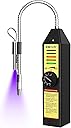
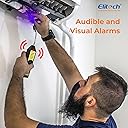
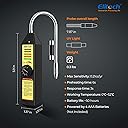
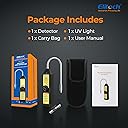
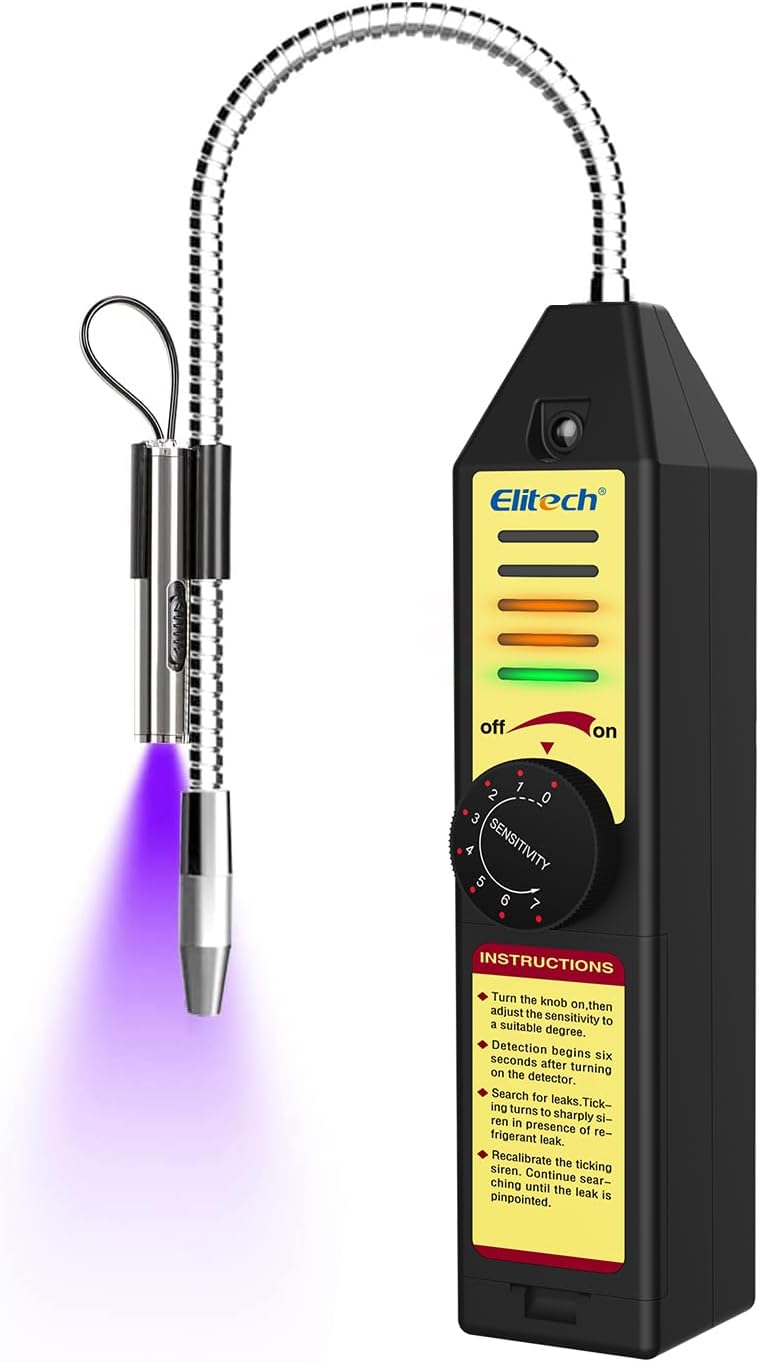
The Elitech WJL-6000S Freon Leak Detector is a professional-grade HVAC tool designed to detect all halogen refrigerants including R22, R134A, R410A, and blends. Featuring 7 adjustable sensitivity levels down to 0.21oz/year, it offers rapid detection within 3 seconds and a flexible 7.9-inch probe for hard-to-reach areas. Equipped with both audible and visual alarms, this battery-powered device ensures precise, reliable leak detection for technicians and DIY pros alike.


| ASIN | B015FK1EH2 |
| Alarm | Audible, Visual |
| Best Sellers Rank | #14,195 in Tools & Home Improvement ( See Top 100 in Tools & Home Improvement ) #17 in Gas Detectors & Alarms |
| Brand | Elitech |
| Color | WJL-6000 |
| Customer Reviews | 4.2 out of 5 stars 5,227 Reviews |
| Enclosure Material | Metal, Plastic, Rubber |
| Item Dimensions D x W x H | 1.37"D x 1.37"W x 5.9"H |
| Item Weight | 0.45 Pounds |
| Manufacturer | Elitech |
| Model Number | WJL-6000 |
| Operating Humidity | 95 percent |
| Power Source | Battery Powered |
| Product Dimensions | 1.37"D x 1.37"W x 5.9"H |
| Product Style | modern |
| Sensor Type | Ionization |
| Style | modern |
| UPC | 705911761681 841161102970 841161102918 |
| Unit Count | 1 Count |
| Upper Temperature Rating | 52 Degrees Celsius |
M**K
Simple to use, inexpensive, and works.
I ordered this product at the beginning of an auto AC DIY project that went on for months, and didn't get around to actually using it for awhile, but by the time I did, I found that it worked great, and was well worth the price I paid for it. Specifically, it helped me confirm that the valves on both high and low AC service ports were leaking, and that I needed to replace the cores in both valves. It subsequently helped me to confirm that my core replacements worked, and sealed the leaks I was previously detecting. Both the detection and sensitivity functions worked fine for me, and they should for you too, as long as you follow the instructions and don't expect this simple gizmo to perform like some kind of lab grade precision tool. When searching for leaks in unknown locations, the instructions suggest starting with the highest sensitivity level, then gradually decreasing it until you've pinpointed the exact location of the leak. I did the opposite, because I was testing for leakage from two known locations (AC service port valves) ... in other words, I started with the lowest sensitivity, put the tip as close to the valve opening as I could without touching it, and then worked my way up to gauge the severity of the leak. I got a few false alarms in ambient air at the highest sensitivity setting (knob turned until stopped), but wasn't upset about that. Just turned off to clear/reset the internal electronics, started the sequence again at a slightly lower sensitivity setting, and it worked fine. No false alarms when I backed the knob off a little from max rotation, which I see as "normal" for a simple device like this. For example, the control knob just isn't that sophisticated ... it's the same as a combination power/volume control dial on a radio, which probably gets pretty sketchy when it's controlling the "sensitivity" of something as delicate as an electronic gas detecting sensor. This is a BASIC refrigerant leak detector that worked as advertised for me, for a very reasonable cost. Very satisfied.
A**Y
What a cool little tool. Cheap and accurate when used correctly!
I've been struggling to find a tiny leak in my HVAC system. Dye (Twice) with leak sealer failed to seal the leak and it was nowhere to be found for over a month. I decided to take a chance and get this "sniffer" to help locate the leak. Reading the reviews i was a little worried since many people stated it does not work. but after careful research and understanding that the sniffing tip of the unit is ultra-sensitive, I ended up purchasing it anyways thinking i will be very gentle with it. The tool showed up the next day, I put batteries in the unit and activate it and it seemed to perform the initial startup properly. I went to the outside unit (which I already had completely open) and started moving the probe 1/2"-1" from any object but following the copper lines, i went near every soldering point and nothing... I thought for sure the unit is not working. I went back inside and took apart the air handler cover and started following the copper lines and in 5 seconds, the tested start beeping fast as I came close to one of the valves inside the air handler. I then turned the unit off and waited a few seconds to have the air remove any leftover halogen from the tip and started it up again and went in the direction of the same area and again it started beeping. I confirmed that the leak was there by spraying some water with dish soap in it to make bubbles and BINGO! I tightened up that nut and verified with bubbles AND the sniffer that the leak was gone. All in all, the unit performed perfectly when you use it gently and I performed the test multiple times after allowing it to sit unused for a few minutes between tests.
D**S
Seems to work, originally thought it did not
So I thought the unit didn't work but it turned out I had 1 of the 4 batteries in backwards. My bad. Amazingly the unit still blinks the LED mostly green even with one of the batteries backwards, just doesn't detect refrigerant. With the batteries properly installed I can spray a small burst of HFC 152a into a cabinet and then the probe detects the refrigerant whenever it's brought near the cabinet. Though after about a minute the refrigerant has dissipated enough that it can no longer be detected (in a mostly closed cabinet) so the sensitivity may not be as high as advertised. original 1 star review *The unit doesn't wnework. The unit powers up properly with the green LED blinking. But there is no change when exposed to refrigerant, even spraying HFC 152a directly at the probe. Tested it outside with no refrigerant and also in the garage, spraying HFC 152a, at different sensitivity levels. Same blinking and beeping in all cases. Possibly it's just a bad unit. I may try another one and if that works I'll update this review.
D**N
They actually work great, and come with a blacklight
These things are great and well worth $25 if you are a "do it yourselfer". This is the second one I bought, because the first is in another state. The beeper will find freon, even on R1234yf, as I tested it with the can. It found the leak on my R134 on my Toyota last year. And, using the blacklight, just found the leak on my GMC Sierra, which comes precharged with fluorescent dye. (below) Didn't expect much for the cost, but they really work.
S**F
GREAT Sensing, but the batteries will last longer than the unit will. Read further.
I’ve had a couple of these leak detectors and used them on automotive systems (R134a). They work great and are capable of finding even very minute leaks, BUT be aware that if you “saturate” the tip, you’ll have to pitch the unit in the trash because it won’t perform correctly again unless you remove and clean the tip THOROUGHLY with rubbing alcohol. Even then you may have to tweak the trim potentiometer on the circuit board to get it back to being able to sense properly. But for ~$20 I’ll take that gamble. I’ve put this unit up against a Bacharach H10 Pro on identical leaks and not only is this unit easier to handle, it found a leak the H10 didn’t in one case - and the H10 costs as much as 20 of these! One drawback is the lack of a longer tube and remote sensing tip like the H10 has. For some locations, that’s a better way to access the joint. On the saturated tip comment I made above, don’t be thinking you can just replace the tip if that happens - you’ll never find them. Besides, if they could be replaced they’d cost you more in time and parts than a brand new unit. Bottom line, the batteries will last longer than the unit unless you buy the really cheap industrial batteries.
D**R
Piece of garbage!
Doesn’t work! I had a leak in my mini split system. I tried to find it with this unit. No leak found. I had a hvac company come out and they found it right away with their sniffer. $210 later I found out that this unit is garbage. Do no purchase!!!
M**B
Works when it wants to.
I dunno what to say. I put it into my ac low side service port and it beeps. I put it next to my water pump it also beeped once lol. Water pump isn’t even close to any ac lines or compressor etc. It does detect Freon as my mechanic sprayed Freon near it in the air and it went off but it also gave false positives by my water pump as if it mistook heat or antifreeze smell for Freon. I don’t know if my ac service port is leaking Freon or not now because of the false positives. I’ll keep it as a toy to help diagnose it but it doesn’t seem as accurate as everyone says. I also turned down the sensitivity button and once I got a beep and once I didn’t by the water pump. I’m gong to try it with the engine cold and see if same thing happens.
L**D
Excellent product
Excellent product
ترست بايلوت
منذ 3 أسابيع
منذ 3 أسابيع