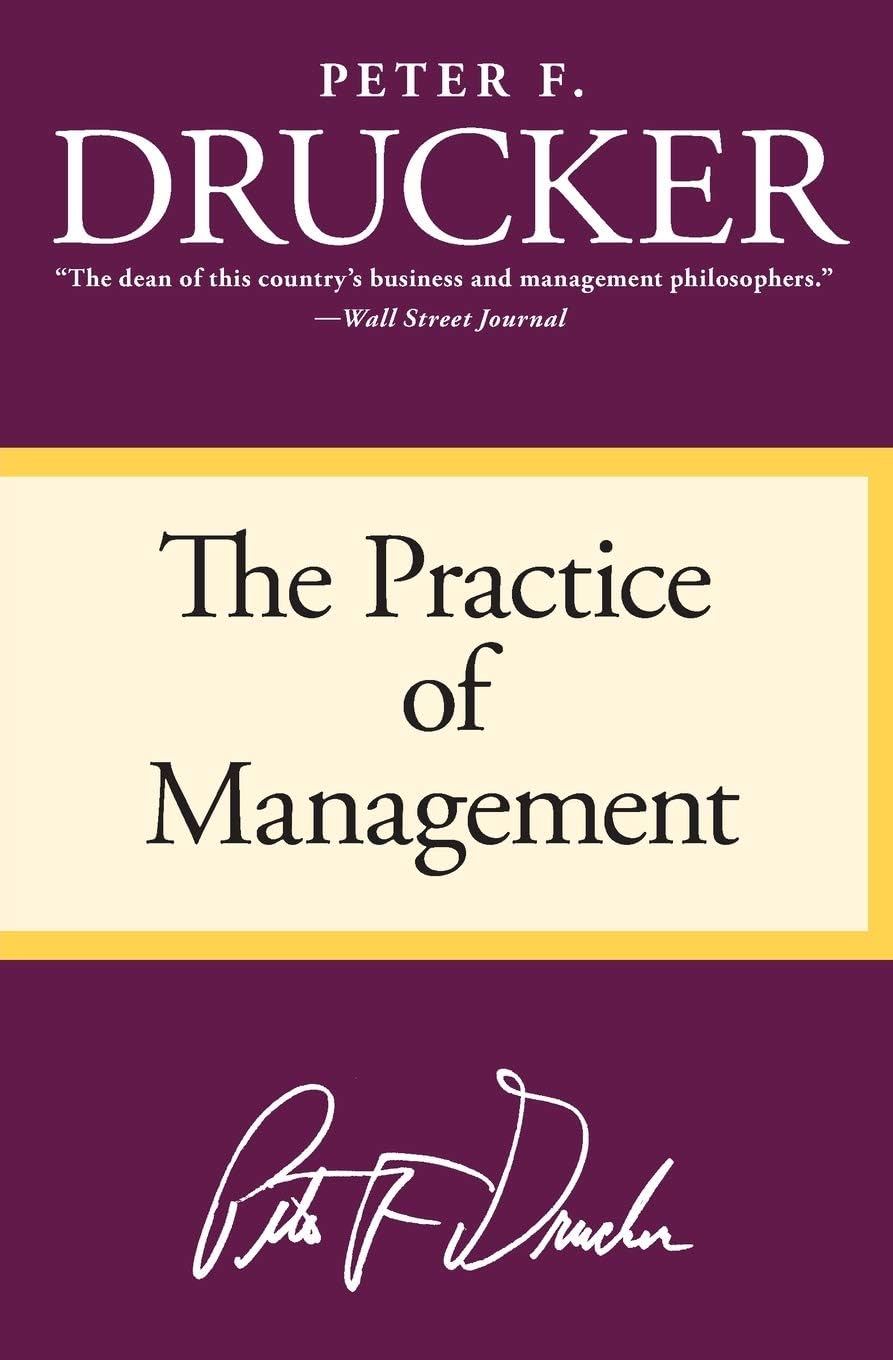
The Practice of Management
Product ID: 275430283
Buy anything from 5,000+ international stores. One checkout price. No surprise fees. Join 2M+ shoppers on Desertcart.
Desertcart purchases this item on your behalf and handles shipping, customs, and support to KUWAIT.
The Practice of Management : Drucker, Peter F.: desertcart.ae: Books Review: Talk about a dent in the universe! This classy Cold War tome cuts it open to demand space for a new thing: management. The universe complied. It used to be that a book, to be worthy of the name, would claim supreme significance. Perhaps this disappeared with the Vietnam War, where the supreme society, the USA, began to harbor deep self-doubt. The Practice of Management, a classic by Peter F. Drucker, is from an earlier age: 1954. As such it's peppered with references to the enemy, to Soviet Russia and Communism with a capital C. The practice of management, the book’s title, is therefore no less about business than saving civilization, enabling victory in the Cold War. And given that at least one reason for the USSR’s implosion is that it couldn’t compete economically, perhaps that indeed is what happened? Sixty years on this newfangled thing, management, feels as much part of the landscape as say the fire engine. Drucker suggests it's a profoundly Western practice in that its job is to question things, to be a systematic introspection into what the business is and should be. It’s also liberal in that it grows out of the idea that economic change can help social and even geopolitical change. He attempts to limit its scope to business rather than every field of endeavor, but I think over time that distinction has not held up; management is required regardless of whether profits are. (Nor it seems is the idea that it's a Western thing, given the later dominance of the Japanese in the field.) The author's confidence and authority is so supreme that it's sufficient to allow for humility. We are way beyond believing that the author knows whereof he speaks at least as much as anyone else in the world. There are also real insights—the type you think are obvious but you never thought of until now. That management is about looking up, not down. That staffs are a bad idea. Of the proper purview of business in society. Insights are taken from existing organizations where they succeed, from the Jesuits to the Soviets. Drucker focuses on the fundamental significance of planning, how indeed planning is in essence the job: setting what to do. There are great examples of companies that arrived at managerial insights and redirected the company accordingly. ATT: They must serve everyone, even the unprofitable thinly-populated areas, or the government will cease tolerating their monopoly. Sears: Their customers in the future are not going to be the current but waning isolated midwestern farmers who ordered by catalog, but the future suburbanites who will drive to a big store. So it’s bracing stuff and supported by the content and style of the book, infused with confidence borne of expertise borne of experience, and with moral purpose. It has a stylistic edge, a swipe sometimes of causticness. Along with its scope and ambition, its style makes it feel like that rare thing: not a genre one but a real book. Review: Good item
| Best Sellers Rank | #61,563 in Books ( See Top 100 in Books ) #84 in Time Management #111 in Project Management #536 in Encyclopedias & Subject Guides |
| Customer reviews | 4.6 4.6 out of 5 stars (222) |
| Dimensions | 13.49 x 2.39 x 20.32 cm |
| Edition | Reissue |
| ISBN-10 | 0060878975 |
| ISBN-13 | 978-0060878979 |
| Item weight | 294 g |
| Language | English |
| Print length | 416 pages |
| Publication date | 3 October 2006 |
| Publisher | HARPER BUSINESS |
A**N
Talk about a dent in the universe! This classy Cold War tome cuts it open to demand space for a new thing: management. The universe complied. It used to be that a book, to be worthy of the name, would claim supreme significance. Perhaps this disappeared with the Vietnam War, where the supreme society, the USA, began to harbor deep self-doubt. The Practice of Management, a classic by Peter F. Drucker, is from an earlier age: 1954. As such it's peppered with references to the enemy, to Soviet Russia and Communism with a capital C. The practice of management, the book’s title, is therefore no less about business than saving civilization, enabling victory in the Cold War. And given that at least one reason for the USSR’s implosion is that it couldn’t compete economically, perhaps that indeed is what happened? Sixty years on this newfangled thing, management, feels as much part of the landscape as say the fire engine. Drucker suggests it's a profoundly Western practice in that its job is to question things, to be a systematic introspection into what the business is and should be. It’s also liberal in that it grows out of the idea that economic change can help social and even geopolitical change. He attempts to limit its scope to business rather than every field of endeavor, but I think over time that distinction has not held up; management is required regardless of whether profits are. (Nor it seems is the idea that it's a Western thing, given the later dominance of the Japanese in the field.) The author's confidence and authority is so supreme that it's sufficient to allow for humility. We are way beyond believing that the author knows whereof he speaks at least as much as anyone else in the world. There are also real insights—the type you think are obvious but you never thought of until now. That management is about looking up, not down. That staffs are a bad idea. Of the proper purview of business in society. Insights are taken from existing organizations where they succeed, from the Jesuits to the Soviets. Drucker focuses on the fundamental significance of planning, how indeed planning is in essence the job: setting what to do. There are great examples of companies that arrived at managerial insights and redirected the company accordingly. ATT: They must serve everyone, even the unprofitable thinly-populated areas, or the government will cease tolerating their monopoly. Sears: Their customers in the future are not going to be the current but waning isolated midwestern farmers who ordered by catalog, but the future suburbanites who will drive to a big store. So it’s bracing stuff and supported by the content and style of the book, infused with confidence borne of expertise borne of experience, and with moral purpose. It has a stylistic edge, a swipe sometimes of causticness. Along with its scope and ambition, its style makes it feel like that rare thing: not a genre one but a real book.
A**5
Good item
し**ま
原書で読みたいので、探してました。意外と簡単な文章です。辞書無しでも高校レベルの英語力で理解出来ます。
A**O
Capolavoro. Da leggere assolutamente.
M**L
The book is absolute must read not only if you are in the management, but also as a short introduction on how management works. A bit overpriced though...
Trustpilot
3 weeks ago
2 weeks ago