

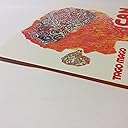


Tago Mago
Product ID: 31510110
Buy anything from 5,000+ international stores. One checkout price. No surprise fees. Join 2M+ shoppers on Desertcart.
Desertcart purchases this item on your behalf and handles shipping, customs, and support to KUWAIT.
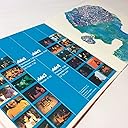
Limited double vinyl LP repressing of this 1971 album from the influential German Krautrock band. Can's influence can be heard and felt in bands that emerged during the Punk and Post-Punk scenes as well as in music created by Avant-Garde and experimental artists over the past four decades. Review: CAN SHOULD BE MORE WELL KNOWN-STELLAR COMPOSITIONS AND PLAYING - CAN (formed in Germany in the late 60's) was a fierce combination of rock (not r 'n' r), jazz, electronics, and with Damo Suzuki's vocals (used at times like another instrument), was one of the better bands playing something akin to Prog-Rock during the hey-day of that style. And when the band added their deep, aggressive, almost funk-like rhythms into the music, they produced an oftentimes visceral sound that was very compelling. They have been compared to the VELVET UNDERGROUND, but that's a bit of a misnomer. On extended tracks both groups had a (sometimes) similar sound. But when CAN added that snaky, dark, organic rhythmic feel, they were in a space of their own making. CAN were ultimately more aggressive in their playing than the V.U. They approach music differently-they begin playing and let the music take control-until they stop. Their music isn't as simplistic as the above sentence might lead you to believe-rather it's full of smaller, subtle (varied and various) influences that are woven into, and combined into a fierce overall approach-and it works. CAN was never all that well known, which is a shame. The band released several albums of well written, arranged, and exciting music-music that still has much of it's power intact today. But their music wasn't all that easy to understand, they were sometimes labeled as an avant-garde group, and that didn't equate into record sales. Even on the underground scene of the period, the band was not that well known or appreciated. They were perceived as "far out"-and in a sense, they were-but in a good, individualistic way. Besides "Tago Mago", they released other fine albums like "Ege Bamyasi", and "Future Days" among others. One of the tracks on the extra disc in this edition, "Spoon", was originally released on "Ege Bamyasi"-although the studio version was a bit over three minutes long. Here, the band stretches the composition out to approximately thirty minutes, where they really explore the arrangement to good effect. The band (for those who don't know) consisted of Holger Czukay on earth rumbling bass. Jackie Liebezeit-an extraordinary drummer capable of both pushing the band along in a groove, and playing with great finesse. Irmin Schmidt-a keyboard player who could play most any style, and used his talents to color the band's sound, and who could also play with great restraint when called for-with great beauty. Michael Karoli-a guitarist who could up the firepower when called for and who could also play with great restraint. And when you add Suzuki's sometimes "doomy" vocal style into the mix, you have a group of immense talent and power. And that brings us to "Tago Mago", one of the better (some say best) albums CAN ever released. THERE'S AN IMPORT EDITION WHICH IS IDENTICAL TO THIS RELEASE-BUT COSTS APPROXIMATELY TWICE AS MUCH-SO BEWARE. The sound is very good, having been remastered from the original stereo master tapes-under the watchfulness of both Irmin Schmidt and Holger Czukay, in Germany. This re-issue has the original packaging not seen since the original release-a nice touch-and it befits the band. The 14 page booklet is a good combination of essay and photographs. Included is a two page piece from the magazine Melody Maker from 1972. This concise article was used as the liner notes for the album's original release the same year. There's also an appreciation from Bobby Gillespie (PRIMAL SCREAM) on how the band influenced him. There are another two pieces on CAN and their music from Duncan Stubbs and Duncan Fallowell, which shed more light on the band. The discs slip inside separate sleeves that slip inside a wallet style holder. This, plus the booklet, fit inside a fold-apart holder. The colorful graphics that cover all the above really bring back the feel of that period of music, and a time when record labels/art directors were allowed to do just about anything. Over time this style of outside holder will tear or become damaged with use-but it sure looks cool! The shorter tracks (Disc 1 is approximately 73 minutes long) have an interest all their own (hear "Paperhouse", "Mushroom", or "Oh Yeah"-which begins with, literally, an explosion), but it's when the band allows themselves room to fully explore the music, that the group is heard at their best. Compositions like "Halleluhwah" (likened to Miles Davis' "Bitches Brew" jam era of tape editing tune construction, here also in a shorter 9 minute live version), "Peking O", and "Aumgn" are fine examples of the band at their best. The playing is intelligent yet exciting, taught and never flabby, and gives the band the chance to do what they do best-incorporate their various (and varied) influences into the music. And having an additional disc of live tracks (approximately 48 minutes worth) only emphasizes the band's sound. This is sometimes dense, rhythmically intense music that has a real edge to it-in part due to Suzuki's speaking/sung vocals and the band's use of droning sound (that's where the avant-garde label comes in), that in combination produces some exhilarating music that sets this band apart from other groups plying the Prog-Rock landscape. Listen to the live tracks ("Spoon", "Halleluwah") for prime examples of their rhythmically dense, subtly droning intense style of playing. This is collective, in-your-face, doom-laden, funky, nowhere-to-hide, space, trance music that comes from some other place-sounding like some kind of organic machine. It's music played by five people-but they seem to coalesce into some sort of powerful, singular group mind. This is music that needs to be heard all the way through at one sitting. To not do so, is to sharply lessen the impact and the effect it has on the whole listening experience. The scope of this music is broad and deep-it grabs a hold of both your mind and body until you find yourself a part of the collective experience that is "Tago Mago"/CAN. It's still a mystery why CAN was never more well known and accepted during the late 60's/early 70's. This was a period when musical boundaries were in constant flux and change. While other bands grabbed all the attention, CAN continued to play and release several fine albums-all to little or no fanfare. Perhaps it's because they hailed from Germany-while most (if not all) the well known groups were anchored in Britain, and to some extent America. Yes, their music has to be heard and not just listened to-you have to pay attention, but the rewards are very satisfying. The vocals weren't for everyone. And the "avant-garde" tag didn't help either. But no matter-CAN still rank as one of the finest groups of their era. And the rewards found in their music makes all the effort worthwhile. Open your ears, and you too might find some very fine music from a perennially unknown, yet cutting edge band. Hopefully the band's other fine albums will be re-issued in a format like "Tago Mago". Maybe they'll get the rewards they deserve after all. Review: The Inimitable Can - Simply put, this is one of the greatest records I have ever heard. I am very happy to finally have it on vinyl after years of listening to it through minimal-quality mp3s. I searched for a while for this particular record, to no avail. Until recently. The price was fair and the record plays very well. I love this album and am very pleased with the purchase. As far as the big question for the novice: should I buy this? If you have never heard this album, but you like Steve Reich or Stockhausen or perhaps Kraftwerk or John Cage or early-seventies Pink Floyd or Public Image, Ltd. or Eno or Television or the Velvet Underground circa White Light/ White Heat or you're looking into bucket list kind of albums, then it comes highly recommended. Not simply by me, but, by the looks of it, the overwhelming majority of this album's reviewers. Naturally, the sort of "if you like this, then..." comparisons to Can are wholly useless in describing the quality or cadence of the music. It effectively exists on its own plain. However, the artists I mentioned above are people or groups that, perhaps, were on a similar wave length to Can, and, also, fans of those artists will likely also be, or become at some point, Can fans. Also, this is a good album to get really stoned to.
| ASIN | B00HVP9Z7Q |
| Best Sellers Rank | #285,643 in CDs & Vinyl ( See Top 100 in CDs & Vinyl ) #116 in Krautrock #4,792 in Progressive Rock |
| Customer Reviews | 4.7 4.7 out of 5 stars (725) |
| Date First Available | January 24, 2014 |
| Is Discontinued By Manufacturer | No |
| Label | Mute |
| Language | English |
| Manufacturer | Mute |
| Number of discs | 2 |
| Original Release Date | 2014 |
| Product Dimensions | 0.32 x 12.41 x 12.41 inches; 1.31 Pounds |
S**N
CAN SHOULD BE MORE WELL KNOWN-STELLAR COMPOSITIONS AND PLAYING
CAN (formed in Germany in the late 60's) was a fierce combination of rock (not r 'n' r), jazz, electronics, and with Damo Suzuki's vocals (used at times like another instrument), was one of the better bands playing something akin to Prog-Rock during the hey-day of that style. And when the band added their deep, aggressive, almost funk-like rhythms into the music, they produced an oftentimes visceral sound that was very compelling. They have been compared to the VELVET UNDERGROUND, but that's a bit of a misnomer. On extended tracks both groups had a (sometimes) similar sound. But when CAN added that snaky, dark, organic rhythmic feel, they were in a space of their own making. CAN were ultimately more aggressive in their playing than the V.U. They approach music differently-they begin playing and let the music take control-until they stop. Their music isn't as simplistic as the above sentence might lead you to believe-rather it's full of smaller, subtle (varied and various) influences that are woven into, and combined into a fierce overall approach-and it works. CAN was never all that well known, which is a shame. The band released several albums of well written, arranged, and exciting music-music that still has much of it's power intact today. But their music wasn't all that easy to understand, they were sometimes labeled as an avant-garde group, and that didn't equate into record sales. Even on the underground scene of the period, the band was not that well known or appreciated. They were perceived as "far out"-and in a sense, they were-but in a good, individualistic way. Besides "Tago Mago", they released other fine albums like "Ege Bamyasi", and "Future Days" among others. One of the tracks on the extra disc in this edition, "Spoon", was originally released on "Ege Bamyasi"-although the studio version was a bit over three minutes long. Here, the band stretches the composition out to approximately thirty minutes, where they really explore the arrangement to good effect. The band (for those who don't know) consisted of Holger Czukay on earth rumbling bass. Jackie Liebezeit-an extraordinary drummer capable of both pushing the band along in a groove, and playing with great finesse. Irmin Schmidt-a keyboard player who could play most any style, and used his talents to color the band's sound, and who could also play with great restraint when called for-with great beauty. Michael Karoli-a guitarist who could up the firepower when called for and who could also play with great restraint. And when you add Suzuki's sometimes "doomy" vocal style into the mix, you have a group of immense talent and power. And that brings us to "Tago Mago", one of the better (some say best) albums CAN ever released. THERE'S AN IMPORT EDITION WHICH IS IDENTICAL TO THIS RELEASE-BUT COSTS APPROXIMATELY TWICE AS MUCH-SO BEWARE. The sound is very good, having been remastered from the original stereo master tapes-under the watchfulness of both Irmin Schmidt and Holger Czukay, in Germany. This re-issue has the original packaging not seen since the original release-a nice touch-and it befits the band. The 14 page booklet is a good combination of essay and photographs. Included is a two page piece from the magazine Melody Maker from 1972. This concise article was used as the liner notes for the album's original release the same year. There's also an appreciation from Bobby Gillespie (PRIMAL SCREAM) on how the band influenced him. There are another two pieces on CAN and their music from Duncan Stubbs and Duncan Fallowell, which shed more light on the band. The discs slip inside separate sleeves that slip inside a wallet style holder. This, plus the booklet, fit inside a fold-apart holder. The colorful graphics that cover all the above really bring back the feel of that period of music, and a time when record labels/art directors were allowed to do just about anything. Over time this style of outside holder will tear or become damaged with use-but it sure looks cool! The shorter tracks (Disc 1 is approximately 73 minutes long) have an interest all their own (hear "Paperhouse", "Mushroom", or "Oh Yeah"-which begins with, literally, an explosion), but it's when the band allows themselves room to fully explore the music, that the group is heard at their best. Compositions like "Halleluhwah" (likened to Miles Davis' "Bitches Brew" jam era of tape editing tune construction, here also in a shorter 9 minute live version), "Peking O", and "Aumgn" are fine examples of the band at their best. The playing is intelligent yet exciting, taught and never flabby, and gives the band the chance to do what they do best-incorporate their various (and varied) influences into the music. And having an additional disc of live tracks (approximately 48 minutes worth) only emphasizes the band's sound. This is sometimes dense, rhythmically intense music that has a real edge to it-in part due to Suzuki's speaking/sung vocals and the band's use of droning sound (that's where the avant-garde label comes in), that in combination produces some exhilarating music that sets this band apart from other groups plying the Prog-Rock landscape. Listen to the live tracks ("Spoon", "Halleluwah") for prime examples of their rhythmically dense, subtly droning intense style of playing. This is collective, in-your-face, doom-laden, funky, nowhere-to-hide, space, trance music that comes from some other place-sounding like some kind of organic machine. It's music played by five people-but they seem to coalesce into some sort of powerful, singular group mind. This is music that needs to be heard all the way through at one sitting. To not do so, is to sharply lessen the impact and the effect it has on the whole listening experience. The scope of this music is broad and deep-it grabs a hold of both your mind and body until you find yourself a part of the collective experience that is "Tago Mago"/CAN. It's still a mystery why CAN was never more well known and accepted during the late 60's/early 70's. This was a period when musical boundaries were in constant flux and change. While other bands grabbed all the attention, CAN continued to play and release several fine albums-all to little or no fanfare. Perhaps it's because they hailed from Germany-while most (if not all) the well known groups were anchored in Britain, and to some extent America. Yes, their music has to be heard and not just listened to-you have to pay attention, but the rewards are very satisfying. The vocals weren't for everyone. And the "avant-garde" tag didn't help either. But no matter-CAN still rank as one of the finest groups of their era. And the rewards found in their music makes all the effort worthwhile. Open your ears, and you too might find some very fine music from a perennially unknown, yet cutting edge band. Hopefully the band's other fine albums will be re-issued in a format like "Tago Mago". Maybe they'll get the rewards they deserve after all.
R**N
The Inimitable Can
Simply put, this is one of the greatest records I have ever heard. I am very happy to finally have it on vinyl after years of listening to it through minimal-quality mp3s. I searched for a while for this particular record, to no avail. Until recently. The price was fair and the record plays very well. I love this album and am very pleased with the purchase. As far as the big question for the novice: should I buy this? If you have never heard this album, but you like Steve Reich or Stockhausen or perhaps Kraftwerk or John Cage or early-seventies Pink Floyd or Public Image, Ltd. or Eno or Television or the Velvet Underground circa White Light/ White Heat or you're looking into bucket list kind of albums, then it comes highly recommended. Not simply by me, but, by the looks of it, the overwhelming majority of this album's reviewers. Naturally, the sort of "if you like this, then..." comparisons to Can are wholly useless in describing the quality or cadence of the music. It effectively exists on its own plain. However, the artists I mentioned above are people or groups that, perhaps, were on a similar wave length to Can, and, also, fans of those artists will likely also be, or become at some point, Can fans. Also, this is a good album to get really stoned to.
S**D
one of experimental music's signature pieces
Can, the German experimental band that started in the late '60's and still garner a small but enthusiastic audience thanks to reissues and continued press coverage, stretched the limits of music and sound as far as it could go. Some may say it broke the limits, but that's a matter of taste and adventure. "Tago Mago" is the centerpiece of Can's career, a double CD that still boggles the mind today as it did over thirty years ago. Given the comparatively primitive state of recording technology that existed at the time, the sounds Can created were nothing short of astonishing. It is best to approach this disc as a soundscape as opposed to "traditional" music, because as we find by the second half of the CD, convention leaves the room. "Halleluwah" is an 18 minute percussive tour de force, with fluttering spacey keyboards punctuating the mix. It's more of a weird jam session, but does not grow dull, which is a feat considering its length. The real doozy is "Augmn", which is simply indescribable. Low, moaning voices that would scare the hell out of Alfred Hitchcock and a mad organ that sounds like a fairground run by Satan himself make this spooky, ethereal and just plain weird. Ditto "Peking O", with mainly demented shouts the main feature. Rock was about breaking the rules and going into worlds music wasn't supposed to go. Can is the perfect portal to what acid/experimental music might sound like on the other side of the worm hole. Are you adventurous enough to take this ride?
A**R
fab!
古**洋
これは、数年前にでたUSA製オレンジ盤の復刻です。前より盤が厚くなり、色も濃くなっています。(The sound mastersという刻印あり)。 しかし、A面だけ新しいスタンパーでプレスされており、音も若干良くなっているかも。やはりCAN だけに、謎めいたことをしてくれます。これでドイツの某有名プレス会社から、新たに復刻リリースされたら、また購入してしまうかもーー。
R**B
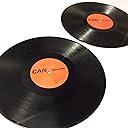
Edicion remasterizada de los tapes originales. Lo cual me agrada porque creo que la grabación original es medio lo-fi. Dos discos de 180g. El acetato es color naranja semi transparente, muy bonito y vistozo pero tambien hace dificil ver el polvo en él y limpiarlo. Sobre la música ni hablar, CAN en su estado más puro.
C**N
Album essencial do Krautrock, pena que recebi o meu disco com a capa amassada.
N**B
Great album
Trustpilot
5 days ago
2 weeks ago