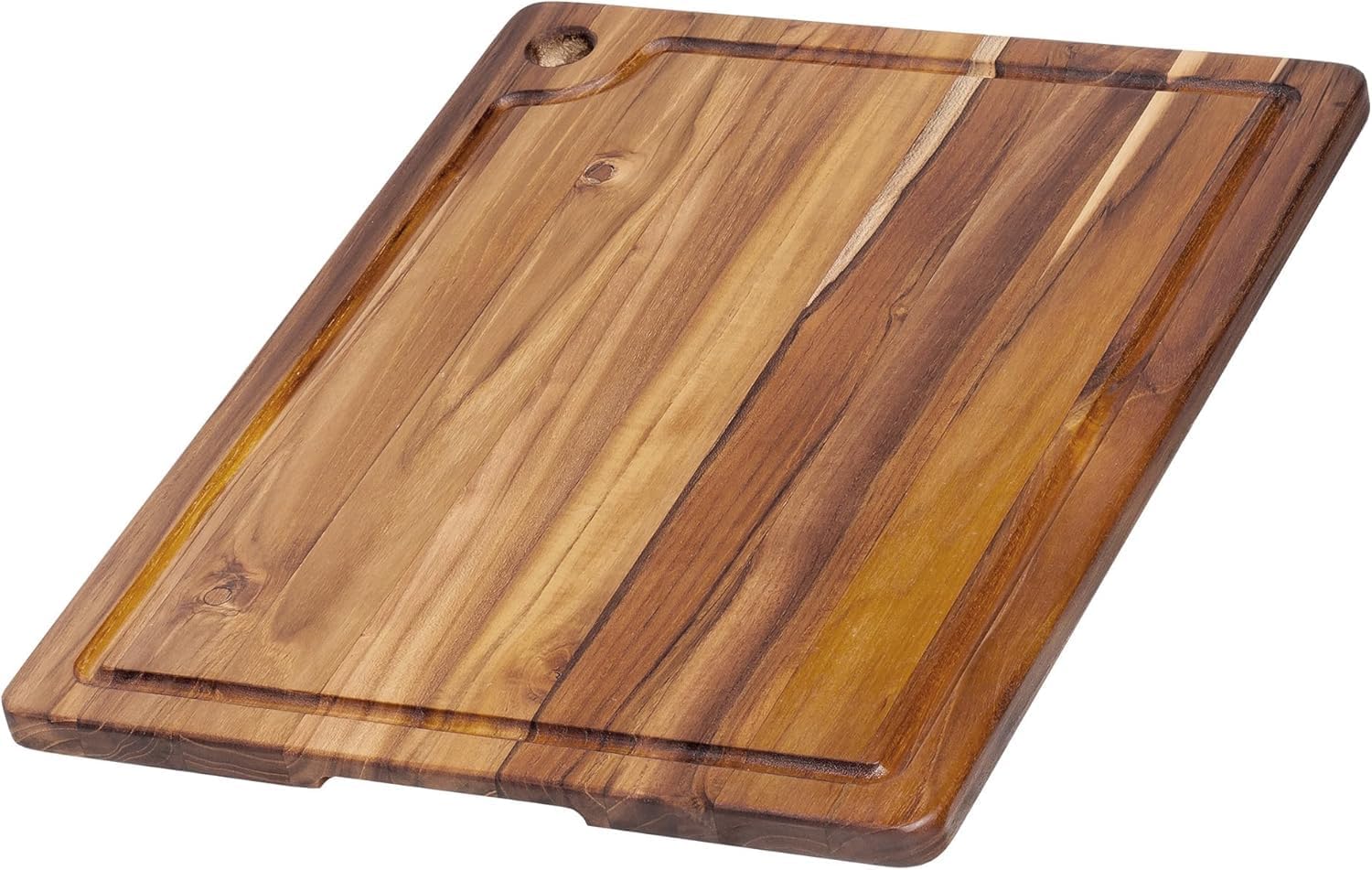
I can't remember how much time I spent researching cutting boards before I settled on this one, although it is safe to say, it was too much time....I should have stopped looking when I first came upon the Proteak board...but I kept looking, and learning, and always ended up coming back to this board. To add to my confusion, there is the long running debate between end grain and edge grain boards, not to mention the wood type war that rages among cutting board effecinatos. To say that it can get confusing is an understatement. Needless to say, when I came upon the Proteak cutting board, I was impressed. I was impressed with the size, the quality, the appearance, and the price. Yep. The price is quite impressive, but if you want a cutting board that will instantly become your favorite board, it is worth the cost....and believe me when I tell you that there are many similar cutting boards out there that cost quite a bit more than this one. First, let me explain the differences between End Grain and Edge Grain... Edge grain (long strips of wood, laying side by side to create your cutting board surface) absorbs less and takes less wood to make a board so they are often more cost effective. End grain (smaller blocks of wood, with the age rings showing, placed side by side to create a cutting board surface that consists of many different squares. Butcher Block boards are made from end grain wood. End grain is considered, by some, to be the least abrasive cutting surface for your knife edge and has been described as "self healing", which means that the small cuts on the surface of the board may close back up to some degree. This happens primarily because end grain wood is more moisture absorbent. Personally, I am not sure if that is a good thing or a bad thing. I guess it is a matter of personal preference. I chose the Edge Grain because I didn't like the idea of all the bacteria that can quickly grow in an end grain board. The wood type debate is one I won't get in to. While many people prefer hardwood cutting board, such as Oak, Maple, Teak, even Walnut and and Cherry, there are others who prefer soft wood, such as Fir, Hinoki Cypress and Pine woods. Again, I think it is a matter of personal preference. I chose a hardwood once again because of the possible bacteria build up factor of soft wood. Teak is considered to be an excellent hardwood for cutting boards, and, face it, the teak used to make this board is just plain gorgeous. Then there are the various cutting board styles. Cutting boards with feet are not intended to be used on both sides so you end up with half the cutting surface. If you do you switch the feet you can end up with holes in the board that absorb bacteria. Don't forget to pay attention to thickness no matter who you buy a board from. I didn't want a board thinner than 1.5" and would not want a board over 3" simply because of it's weight...but that's me... Which is what brought me to this 1.5" thick, 20" x 15" edge cut, Proteak cutting board. I am an old woman, and I have had more than my share of cutting boards since I first started cooking way back in 1970. I currently have a monster of an end cut butcher block cutting board sitting dormant on my cook book shelf. It weighs a ton, has no handles and is only usable on one side because some genius thought it was better to put feet on the thing than to notch out handles along the edge to make it easier to lift. And...I have been treating that board with various wood oil products for nearly ten years now, and it still sucks up oil like a sponge. If it sucks up oil, one can only imagine what it would do with the liquids from fish or meat. No thanks. My new Proteak has satiny smooth, usable surface on both sides, and handy notched out handles that make it easy for my arthritic old hands to lift and move from place to place. How nice is that? But, the main thing I love about this board is it's size. Don't wast your money on anything smaller than a 15" x 20" board if you intend to do any serious chopping. The larger cutting surface is just so nice... And then there is it's appearance. It is lovely! So lovely, in fact, that it has become a regular at our dinner table. I know that over time, my cutting board will develop it's fair share of battle scars. That's what cutting boards are for, but I am confident that those scars will only add to it's character and make me love it even more than I already do. And, keep in mind that both sides of this board are usable. I have been doing the majority of my chopping on one side, and keeping a "pretty" side for serving and storage. My board stands along the wall on my kitchen counter, close by the stove for easy access, but out of the way when not in use. And it looks lovely standing there! All wooden cutting boards require proper care and feeding, and I purchased products that are reportedly among the best to help care for the wood and protect its surface, and with a little bit of love and effort, I am confident that this cutting board will be the last cutting board I will ever buy.