We remain fully operational. Our teams are working around the clock to ensure your deliveries continue safely.

قم بتنزيل التطبيق


معلومات عنا
حقوق الطبع والنشر © 2024 Desertcart Holdings Limited
قم بتنزيل التطبيق


Buy anything from 5,000+ international stores. One checkout price. No surprise fees. Join 2M+ shoppers on Desertcart.
Desertcart purchases this item on your behalf and handles shipping, customs, and support to KUWAIT.
🎙️ Own your sound. Command the room.
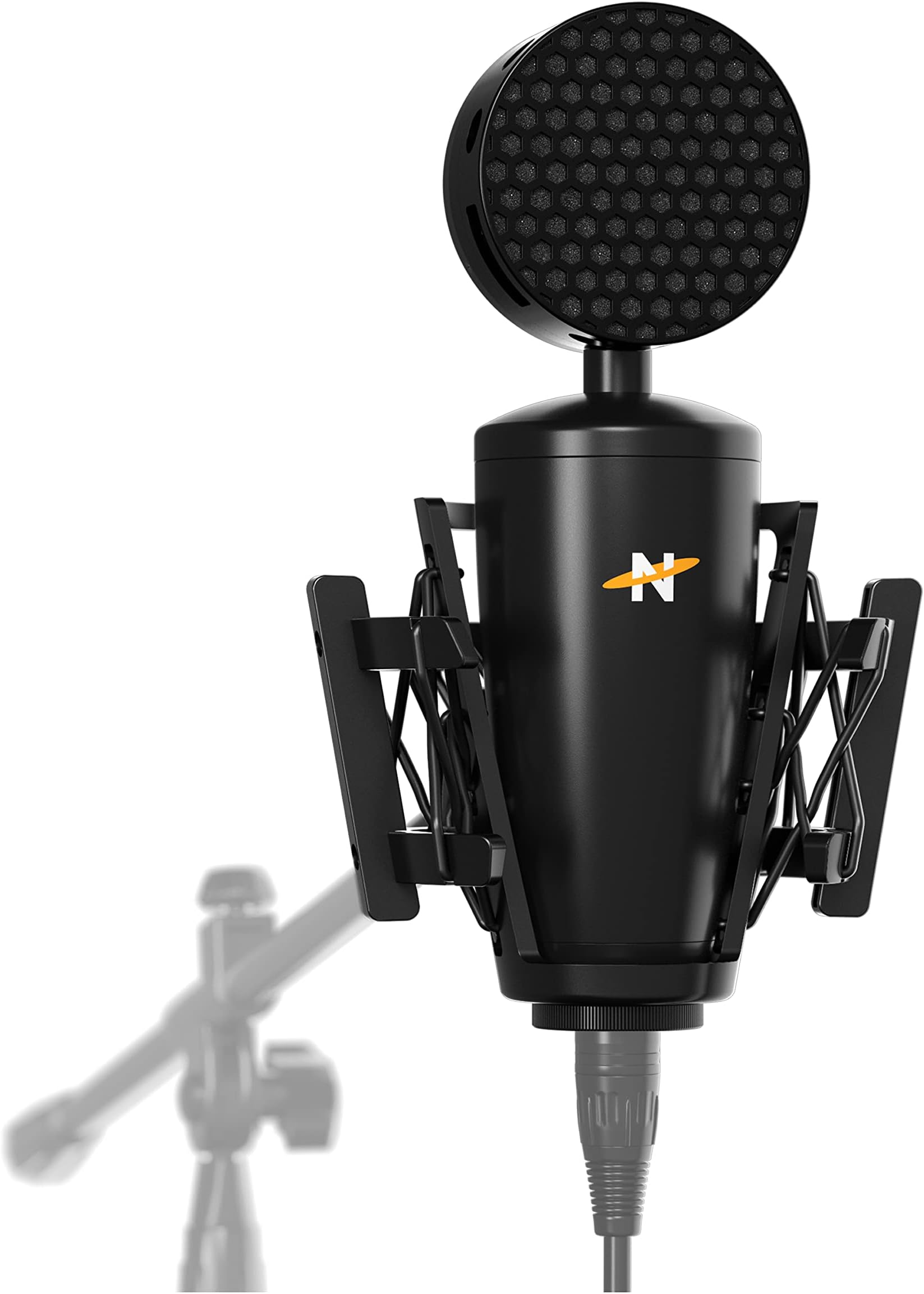
The Neat King Bee II is a professional cardioid large diaphragm true condenser microphone featuring a 34mm gold-sputtered capsule, Class A electronics, and a 78 dB signal-to-noise ratio. Designed for vocal recording, podcasting, and streaming, it includes a shock mount and pop filter, delivering studio-quality clarity and noise isolation through XLR connectivity.



| ASIN | B09HX1JPZX |
| Antenna Location | Singing, Streaming |
| Audible Noise | 78 Decibels |
| Audio Sensitivity | 120 Decibels |
| Brand | NEAT Microphones |
| Built-In Media | Honeycomb Pop Filter, Neat King Bee II Cardioid Large Diaphragm Condenser Microphone, Quick Start Guide, Shock Mount |
| Color | Black |
| Compatible Devices | Professional Audio Equipment with XLR Inputs |
| Connectivity Technology | USB |
| Connector Type | XLR |
| Customer Reviews | 4.6 4.6 out of 5 stars (223) |
| Enclosure Material | Plastic Metal |
| Frequency Range | 20 hz 20 khz |
| Frequency Response | 20 KHz |
| Item Type Name | Vocal Condenser Microphone |
| Manufacturer | NEAT |
| Mfr Part Number | MIC-2010-01 |
| Microphone Form Factor | Large Diaphragm |
| Model Name | King Bee II Microphone |
| Model Number | MIC-2010-01 |
| Number of Channels | 1 |
| Polar Pattern | Unidirectional |
| Power Source | ['+48V DC Phantom Power'] |
| Signal-to-Noise Ratio | 78 dB |
| Special Feature | XLR |
| UPC | 731855720101 |
B**N
No nonsense mic at a decent price. Top end is pretty OK and overall tilts a little to the dark side. I high pass or shelf -1dB @ 125hz depending on the singer for best vocal results. Better on various instruments than you might think.
C**S
One of the best Cardioid XLR microphones I could think of, the only complaint of course being the lack of a pop filter that could come with it, and also the shape of the microphone base itself being a little awkward for certain microphone stands, but those are really just nitpicks.
F**A
Tengo muchos micros, y este no le pide nada a los más caros, excelente opción para comenzar sin romper el cochinito. No te va a decepcionar!
T**J
I've been using microphones for three decades now. I've used plenty of condensers, from the cheap and nasty import all the way up to the Shure KSM9HS condenser capsule on my Shure UHF-R wireless set. When compared directly to the KSM9HS—which retails for over $700 and is a direct competitor to the Neumann KK105—the King Bee II is so much better that I wish they'd find a way to engineer a cartridge with the sound profile of the King Bee II for my wireless handheld. Most of the time I'm using my King Bee II, I'm on the air doing live streaming broadcasts. Running flat EQ through my Yamaha MG12XU mixing console (with 48V phantom power enabled, which this microphone requires to operate correctly), I almost sound authoritative enough to know what I'm supposed to be doing. Self-noise is incredibly low as advertised, and the sound I get from the mic is clear and full. I'd describe the lows as fat but not muddy. Unlike a lot of cheaper condensers, the highs on the King Bee II are balanced and avoid the shrillness in the mid-high area. To eliminate background noise, I opt to run my signal chain through a DBX 286s microphone processor. I do add a little compression and frequency enhancement, but it doesn't take much because the King Bee already sounds great on its own. So the gate on the DBX doesn't have to be cranked as hard, I usually stay about 3" or so off the mic. I was initially using the included pop filter—which is great quality and attaches firmly to the grille of the microphone—but the slight coloration the Neat pop filter adds to the sound led me to clip my old reliable gooseneck pop filter to my boom arm instead. That way, I'm not losing the excellent sound quality that draws me into the King Bee in the first place. The shock mount is solid and securely locks the mic into place so you can let it hang at any angle without worrying it will come crashing down to the ground. When it comes to boom arms, the King Bee is every bit as heavy as advertised, and the cheapy $20 arms just aren't going to cut it. You may as well go ahead and plan to buy a Rode PSA-1 or something similar. It's going to cost you a bit of money, but it's a solid mounting system that isn't going to buckle in on itself under the King Bee's weight. It will also protect your microphone for many years to come. The King Bee II might lack the flashiness of the old King Bee. It might not come with the same accessories or something to store it in when you're finished with it. It might only retail for $180—but holy cow, am I ever impressed with this microphone. I expected it to be a little better than the Audio-Technica AT2020 and the sE X1A, but I never expected it to sound that much better than a $400 Shure SM7B or a $700 Shure KSM9. However, Neat has shattered my expectations of what I should expect from microphones that are three times as expensive. What they have given us is broadcast-grade quality at a steal of a price. In short, would I recommend the King Bee II? Absolutely! Unless you can find me a better $180 microphone, this one will have my permanent recommendation. P.S.: I'm completely serious when I say I'd love Neat to try their hand at a King Bee-sounding capsule compatible with a Shure wireless handheld microphone. Right now, the sE V7 MC1 is the one to beat. With as excellent as the King Bee sounds for the price, I'd put my money on Neat to make the next SM58 (or even KSM9) killer if they were to do it. Come on guys...please?
A**ー
100ドル以下のマイクにしては中低音の力強さがあり高音も出ていた。 しかし、もう少し高いマイクと比べると押し出しが弱い。 この価格帯のマイクとしてはかなり良い。 振動を吸収するマイクホルダーを別に買う必要があるが、胴が特殊な形状で会うものが少ない。 わたしはこれを買いました。 (Dewuoyeu ユニバーサル マイク ショック マウント 調節可能なマイク スタンド、18mm~57mm のすべてのマイクに対応)
ترست بايلوت
منذ 4 أيام
منذ أسبوع