We remain fully operational. Our teams are working around the clock to ensure your deliveries continue safely.

قم بتنزيل التطبيق


معلومات عنا
حقوق الطبع والنشر © 2024 Desertcart Holdings Limited
قم بتنزيل التطبيق
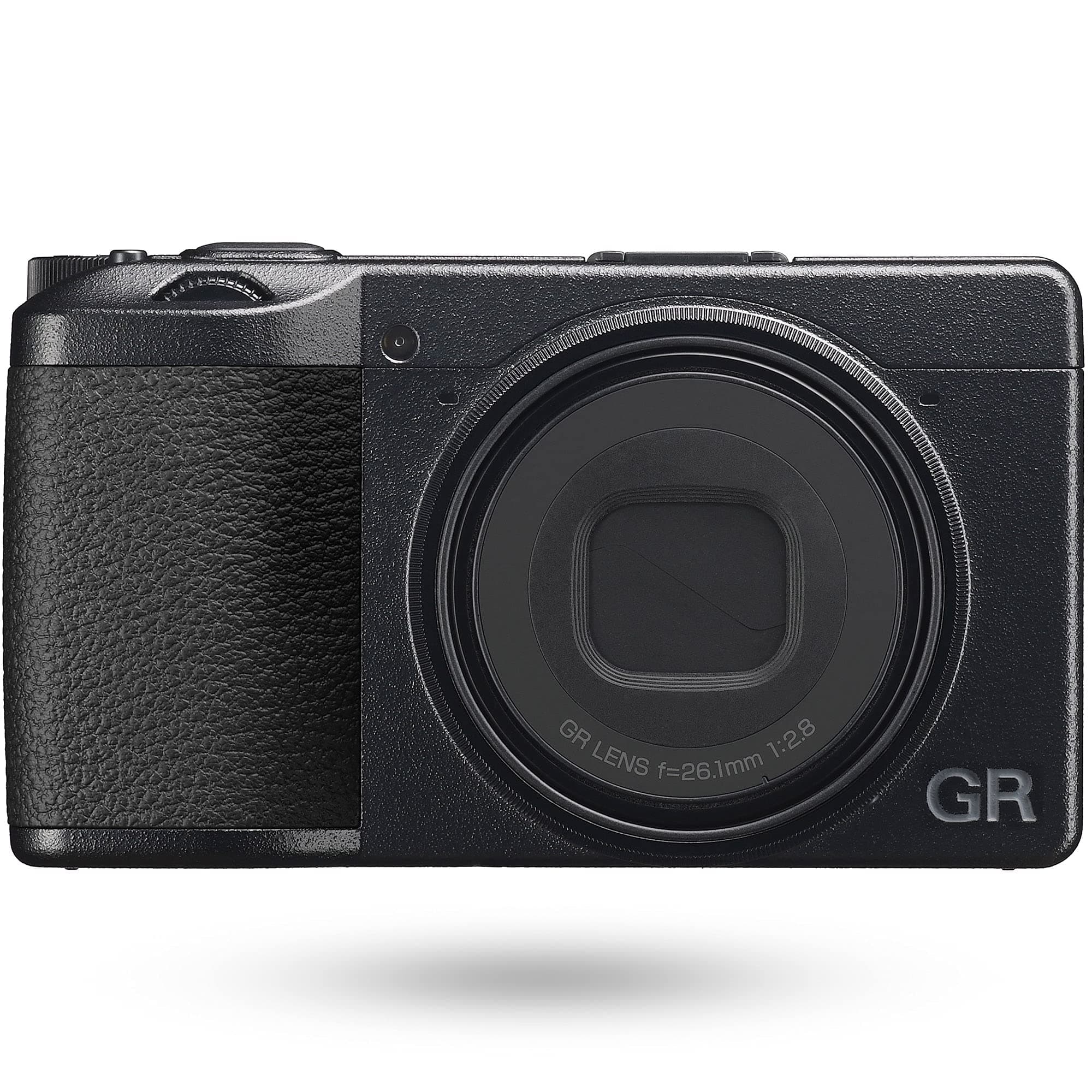


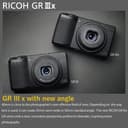
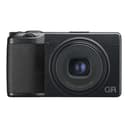

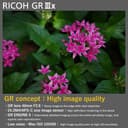


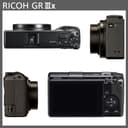
📷 Elevate your street photography game with Ricoh GR IIIx — where pro quality meets pocket-sized freedom!
The Ricoh GR IIIx is a compact digital camera featuring a 24.2MP APS-C sensor paired with a newly designed 40mm F2.8 GR lens that delivers natural perspective and exceptional sharpness. It boasts a rapid 0.8-second startup, hybrid autofocus for fast and precise focusing, and a 3-axis sensor-shift image stabilization system that compensates for camera shake up to 4 stops. With a high-definition 3-inch touchscreen, advanced in-body RAW editing, and dual Wi-Fi/Bluetooth connectivity, it offers professional-grade image quality and seamless sharing in a pocketable form factor tailored for street and travel photographers seeking both speed and discretion.




| ASIN | B09GL1L694 |
| Age Range Description | Adult |
| Aperture modes | F2.8-F16 |
| Are Batteries Included | Yes |
| Aspect Ratio | 1:1, 3:2 |
| Auto Focus Technology | Phase Detection |
| Autofocus | Yes |
| Autofocus Points | 101 |
| Best Sellers Rank | #28,732 in Electronics ( See Top 100 in Electronics ) #58 in Mirrorless Cameras |
| Bit Depth | 14 Bit |
| Brand | Ricoh |
| Built-In Media | Camera Body Only |
| Camera Flash | Hotshoe |
| Camera Lens | A 26.1mm GR lens providing a 40mm standard angle of view in the 35mm format, delivering images with a natural perspective and a truthful sense of depth, and imbued with unique optical technology for high image quality. |
| Color | Black |
| Compatible Devices | [Ricoh], USB, HDMI, Bluetooth, Wi-Fi |
| Compatible Flash Memory Type | SD |
| Compatible Mountings | Ricoh |
| Connectivity Technology | Wi-Fi |
| Continuous Shooting | 6 FPS |
| Crop Mode | 50mm and 71mm |
| Customer Reviews | 4.6 4.6 out of 5 stars (650) |
| Digital Scene Transition | false |
| Digital-Still | No |
| Display Fixture Type | Fixed |
| Display Maximum Resolution | 1080x608 |
| Display Resolution Maximum | 1.04 MP |
| Display Type | OLED |
| Dots Per Screen | 453.5 dots per square centimeter |
| Effective Still Resolution | 24.24 |
| Expanded ISO Minimum | 102400 |
| Exposure Control | Manual |
| File Format | MP4 |
| Flash Memory Bus Interface Type | MTP |
| Flash Memory Installed Size | 2 GB |
| Flash Memory Type | Single Compartment: SD/SDHC/SDXC |
| Flash Memory UHS Speed Class | U1 |
| Flash Modes | Automatic |
| Flash Sync Speed | 1/200 |
| Focal Length Description | 26.1mm (35mm Equivalent Focal Length: 40mm) |
| Focus Features | Hybrid |
| Focus Mode | Automatic AF (AF-A) |
| Focus Type | Manual and Auto Focus |
| Form Factor | Compact |
| Generation | III |
| Hardware Interface | Bluetooth |
| Has Color Screen | Yes |
| Image Capture Type | Video |
| Image stabilization | Sensor-shift |
| Item Weight | 9.2 Ounces |
| JPEG Quality Level | Normal |
| Lens Construction | 7 Elements in 5 Groups |
| Lens Type | Wide Angle |
| Manufacturer | RICOH |
| Manufacturer Part Number | 15286 |
| Maximum Aperture | 2.8 f |
| Maximum Focal Length | 40 Millimeters |
| Maximum Image Size | 6000 Pixels |
| Maximum Shutter Speed | 1/4000 seconds |
| Memory Slots Available | 1 |
| Metering Methods | Center-Weighted Average, Highlight, Multi, Spot |
| Minimum Focal Length | 26.1 Millimeters |
| Minimum Shutter Speed | 1/4000 seconds |
| Model Name | Ricoh GR IIIx |
| Model Number | RICOH GRIIIx |
| Model Series | III |
| Movie Mode | Yes |
| Night vision | No |
| Optical Zoom | 1 x |
| Photo Sensor Resolution | 24.24 MP |
| Photo Sensor Size | Compact |
| Real Angle Of View | 33.2 Degrees |
| Recording Capacity | 25 Minutes |
| Remote Included | No |
| Screen Size | 3 Inches |
| Self Timer | 10 Seconds, 2 Seconds |
| Sensor Type | CMOS |
| Series Number | 3 |
| Shooting Modes | Movie |
| Skill Level | Professional |
| Special Feature | Live View |
| Specific Uses For Product | Photography |
| Supported Image Format | JPEG |
| Total Still Resolution | 24 MP |
| Total USB Ports | 1 |
| Total Video Out Ports | 2 |
| Touch Screen Type | Capacitive |
| UPC | 027075303751 |
| Video Capture Format | MP4 |
| Video Resolution | 1080p |
| Viewfinder | Electronic |
| Warranty Description | 1 year manufacturer |
| White Balance Settings | Auto |
| Wireless Technology | Bluetooth |
| Write Speed | 8 fps |
| Zoom | Optical Zoom |
A**G
UPDATE, 4/23/2019: My original review is below, however I wanted to change my initial assessment from four to five stars due to a couple of considerations. One, I have found battery life to be fairly consistently better than the 200 shots advertised, unless I spend a lot of time editing RAW files or similar processor-intensive activity. Second, and more important, Ricoh released their first firmware update on 4/22, a month after the US release date, and it includes two things: support for the updated Image Sync app, allowing the camera's Wi-Fi/Bluetooth connection to smartphones, and an improvement to the camera's low light focusing speed and accuracy. Thank goodness for that last addition! I'm impressed with Ricoh for getting something out so fast to address the biggest downfall with the camera, and it does indeed improve things. Focus speed in very low light is still a lot slower than my Panasonic GX85 (but keep in mind, I am testing that camera with lenses that have wider maximum apertures than the GR III) but it is much faster and hunts a lot less than it did pre-update. This improvement applies directly to the main reason that I didn't initially rate this camera at five stars, so I am happy to be able to address that with a positive improvement. I know there are still forthcoming firmware updates, since the camera still has a "Grain" setting on some JPEG modes that is not fully functioning, and that future update is actually mentioned in the camera literature. END OF UPDATE, ORIGINAL REVIEW BELOW. The Ricoh GR III has been long awaited by Ricoh users now, since the original APS-C GR was released in 2013 and used 2013 technology, and the GR II really only added connectivity to the same camera. Sensor, processor etc. have been from that era for six years now, so it was high time for an update. I was lucky enough to be one of the first batch of Amazon stock, so I’ve had some time to get to know the camera. Now, if you don’t know what the Ricoh GR series is about, watch some videos or read some of the reviews for earlier models; the recipe hasn’t changed. It’s a truly pocket-sized camera that, unlike other pocket cameras, has excellent ergonomics, is designed for quick and effective operation, even one-handed, and delivers unique and powerful images with high quality and fidelity. I’m coming from using the Ricoh GR II for almost a year, and the GR III came at the right time (close to my birthday) so I was able to sell my previous model with little wear and tear and try the new model. I’ve used APS-C and Micro Four Thirds in the past, with a Panasonic GX85 being my main camera at present, but the Ricoh GR series has always been a unique spin on a camera, and one that complements another system quite well. I loved the GR II but always worried about developing dust on the sensor (the first one I bought had dust from the factory, even, so I exchanged it), and the dust removal system of the new model was icing on the cake for me along with all of the other updated features. Rather than give a lengthy review which most people won’t read (I tend to like to ramble on), I’m going to give some bullet points on what I think this camera offers over the previous models, and similar cameras among the competition. Everything else you can get from a spec sheet or a review in a lengthier format. • Image quality is absolutely fantastic. I love it. High ISO looks great, the feel of images is just incredible. GRs are tuned to be... different, in a good way. This one preserves that, while dialing up the IQ at the same time. Now, if you really liked the effect filters from the GR II, they are here except for cross process (sadly... firmware update? Ricoh is very good about improving and developing on their cameras post-launch, and they listen to users better than most, which not going so far as to compromise what they see as the core concept of the GR cameras) but they have a slightly different feel. There are a lot more parameters to change, but the GR II felt expertly tuned from default. So, what about Fuji JPEG colors? Personally, I’ve always felt that Fuji’s colors were only special in an era when most manufacturers’ JPEGs were bad. Everyone has gotten better, but Fuji can’t iterate because they’ve already given their film simulations fancy names, and people know what to expect. I think Ricoh’s Positive Film style bests Fuji’s Classic Chrome, personally. And the contrasty B&W options Ricoh makes are a lot different than the more subtle ones Fuji makes, so it’s not much of a comparison. • The touchscreen is awesome, Ricoh really got it right. It feels almost like a Panasonic, sadly without a screen to access all the main functions via touch on the same screen, like Panasonic or Olympus. But surprisingly, touch to focus and shoot is a fantastic addition to the repertoire of a GR. I can even shoot with the camera in my left hand! Anyone who has ever juggled a drink and a camera should appreciate being able to compose and shoot with either hand! Unlike the cheaper Fuji XF10, there’s no lag or jankiness to the touch functions, they just work. • Image stabilization works super well! In such a tiny camera, shake is harder to eliminate, as I'm sure you've noticed with the GR II. This is a welcome addition. Some people said that wide angle lenses don’t need image stabilization, but some things come from experience, not spec sheets: it’s much harder to avoid shake on a small camera body that is very light, so anything to aid in getting stable photos is good. Plus, being able to handhold down to half a second or longer, with care, allows for very cool light trail and movement blur effects handheld which you just couldn’t do with previous GRs, or any of the small Fujis. • The added resolution makes 35mm crop a lot more viable. Macro function is improved, and very sharp. 50mm crop combined with macro can be quite surprising. On a camera which is limited to a single, wide angle focal length, resolution enough to allow for fairly heavy cropping is a great thing. On top of this, the lens is so sharp that crops don’t suffer from a noticeable drop in resolution. The previous GR lens was super sharp, this one is even sharper if you believe the specs and tests, and my experience backs these up. • There are a few flaws. No camera is perfect, and not every previous flaw in the GR’s design was thoroughly fixed. Battery life is sure not great, but you can eke a lot more than the rated 200 shots out of it by switching the camera off when you're not taking photos. AF is the big bugbear. Fortunately, it’s not as bad as they say. It's very similar to the GR II, except noticeably faster in good light, and possibly worse in very bad light. My GX85 eats it for lunch in very low light, but I hold that the AF only completely falls on its face in lighting you probably wouldn't think to get photos in. Low, indoor artificial light is the main culprit. Even in low twilight outside, I got focus to lock pretty consistently. It’s a significant disappointment even so, and the biggest reason I couldn’t give this camera five stars out of the gate, because the lackluster AF in the previous model has been talked about so much, Ricoh knew it would be a big deal to users in the new model. And they tried. The camera now has phase detect and contrast AF in hybrid form, which theoretically should cut way back on hunting and racking focus. In good light, it does. But in bad light, it still really needs work. Ricoh has pointed out that the design of the lens requires that a larger group of elements, instead of a single lens element, need to move around to focus the camera. This allows for the high image quality. But it shouldn’t make the camera hunt as much as it does in bad light. I do expect things to get somewhat better in firmware updates, and I may even add a star. Here's the thing: the GR III is definitely a worthy upgrade over the GR II, and rockets the GR back into a premium option. But the GR II is special in its own right, and you could miss the recipe that that camera was made of, including the grainy, dirty high ISO look and the long and slim body style. And the flash. I'm not sorry I replaced mine, though. Because the GR III is special.
J**.
Update: Simply put, I couldn’t recommend this camera more. I absolutely LOVE it. Everything about it, actually. Goes in my jacket pocket everywhere I go. Takes GREAT pictures. The transfer of photos to my iPhone is also smooth and easy. I’ve been away from photography for a while, and this little Ricoh has brought me right back. If you’re curious about the picture quality, check out my Instagram, “Jasokrish”. (Keeping in mind that Instagram uses pretty aggressive compression.) Just buy this camera. You will not regret it! I received my Griii “Street Edition” on March 6, 2021. If you’re like me, you may have had a difficult time figuring out which Street Edition version this is. As you can see in the picture, my kit includes the Street-Edition camera finish and orange ring. It does NOT include the view finder or the strap with the matching-orange patch. Instead, it comes with a simple plain black strap. For me, I don’t care about those two things. I bought this camera as a replacement for my iPhone. I love the portability of the Griii. And thinking about it like my iPhone, I have never once wished my iPhone came with a viewfinder. I can take pictures from any point-of-view, very stealthily, and practically instantly, with the griii’s snap focus. I think the “limited Edition” kit includes the viewfinder for about $300 more, but it can also be purchased separately, if wanted. For me, I don’t think I’d ever use a viewfinder. Kind of defeats the purpose of the camera. The kit, however does include an extra battery, so that was a nice surprise. (How many batteries this kit includes is not very clear in the Amazon description.) It also includes a cable and electrical plug for charging the battery in camera. There is no external battery charger. Quick one-day impression of the camera itself is just, “wow”. The YouTube reviews all praise the sharpness of this camera, and I can vouch for how detailed my photos are. (Especially compared to my iPhone 11 Pro, which also is a decent camera—but no where able to produce the sharpness of the griii.). Ease of use, after living with YouTube instructional videos for a year or longer has also been a welcome surprise. It’s really simple, or as complex, as you want to make it. My first few shots have been impressive. I actually said, “Holy crap” when I looked at the pictures on my camera for the first time. Transferring images from the camera to iPhone is also very simple. Works through wifi or Bluetooth, which is sweet! I will update this review as I go. So far I’m absolutely loving this camera.
S**A
Llegó Justo la que anuncian un día antes de la fecha estipulada. Todo perfecto 👌🏼
R**Y
The photos online of this camera do not do it justice. It is small, sleek and has minimal branding. The photos suggest a cheap, plastic little point and shoot, which someone might mistake it for at a distance (Good! It doesn't draw attention). But, it's a magnesium alloy shell with high quality finishes. It feels solid, well made, and built to last. The photographs from this APS-C sensor are excellent in jpeg. Just as good as from a Fuji, Nikon, Canon or Sony with the same size sensor but in a far smaller body. The new 40mm lens is sharp. I like the automated cover for the lens when it is turned off/on so you don't need to handle a separate lens cap. The menu options are just as robust -perhaps even more so when it comes to snap focus- as other the other APS-C top players. This camera has countless menu options to configure it however you wish. I was debating between this or the Fuji X100v (I owned the original X100, loved it and still love Fuji X series cameras). I looked at an X100v at a store to confirm again it is not pocketable in a front jeans pocket, which this GR IIIx is. It's also light enough to carry in your front pocket all day. I really thought I would miss the EVF/viewfinder but the LCD achieves the same functionality albeit not close to your eye. This was my biggest concern but it actually makes it more discrete using the LCD screen rather than a viewfinder. The touch LCD can also be used to focus and trigger the shutter for greater discreteness either in Snap Focus or various standard AF/AE/Shutter modes. The app works as advertised but it's not ideal for moving large batches of RAW files so I just use a SD card reader with my laptop. The battery is one of its biggest knocks and it should be double the size, but it's good for a typical day of high volume shooting for most people without heavy use of offloading the photos via the app afterwards or constantly playing with menus. I just turn it off after every sequence of shots. I will still buy an additional battery and charging station for backup. In manual mode, I have it set to adjust the aperture, shutter speed, and ISO with one hand and three dials. Tip 1: the included wrist strap just needs to be knotted toward the bottom to make the opening a bit smaller for most people. Tip 2: A thumb grip is not necessary for most people and will make it less pocketable. There is a bump to rest your thumb by the playback button; just rest it at the inner joint of your thumb, not the top of your thumb, and it is a secure hold. Tip 3: definitely get glass tempered screen protectors. Ricoh, which also owns Pentax, is less well-known than the big players but is respected but its peers. This is definitely a mighty little one handed shooter. Very pleased with the GR IIIx.
K**N
Muy buena cámara, toma excelente fotos además llego en un perfecto estado, si la volvería a comprar
ترست بايلوت
منذ شهرين
منذ أسبوعين