We remain fully operational. Our teams are working around the clock to ensure your deliveries continue safely.

قم بتنزيل التطبيق


معلومات عنا
حقوق الطبع والنشر © 2024 Desertcart Holdings Limited
قم بتنزيل التطبيق
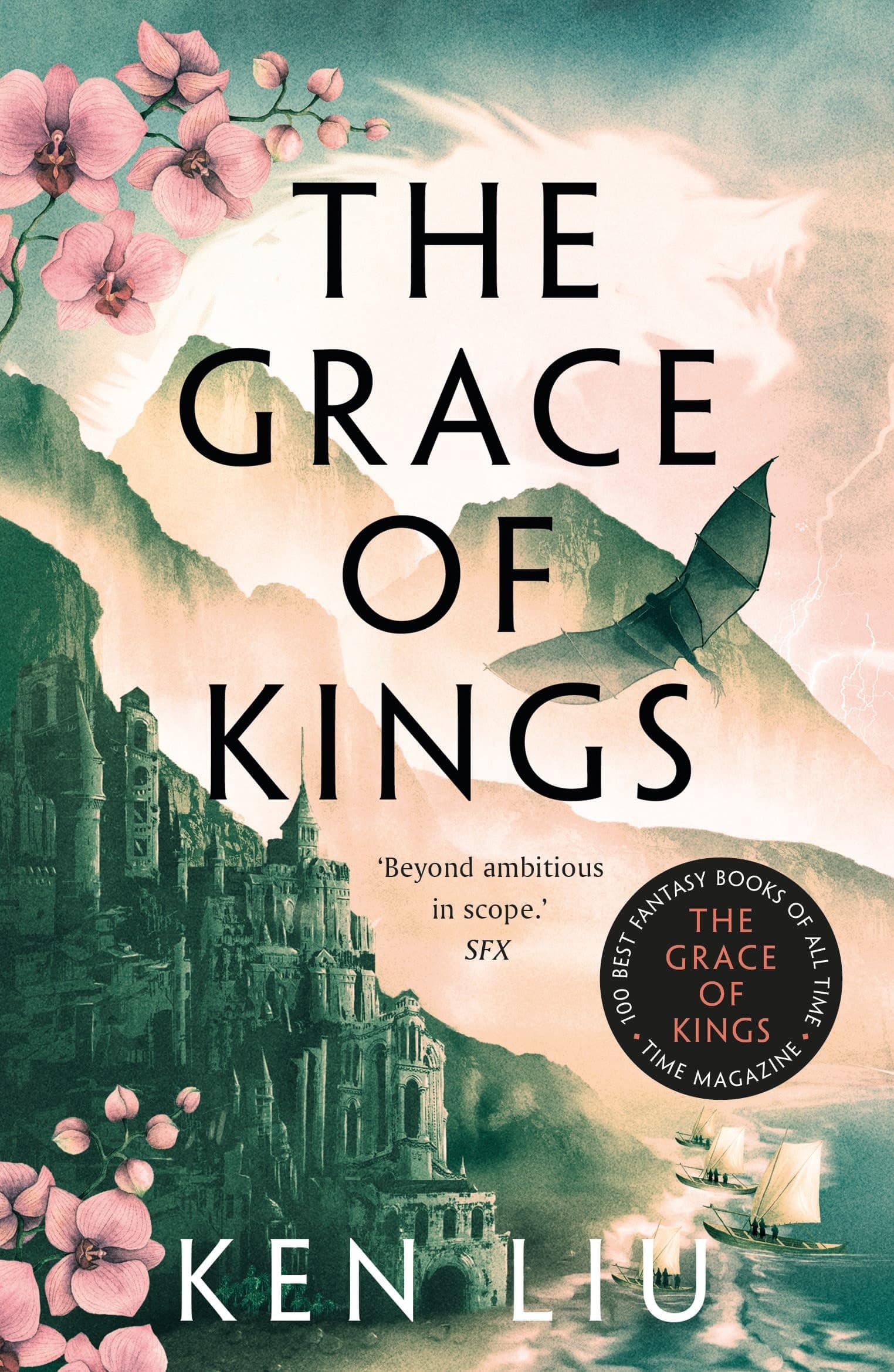
Buy anything from 5,000+ international stores. One checkout price. No surprise fees. Join 2M+ shoppers on Desertcart.
Desertcart purchases this item on your behalf and handles shipping, customs, and support to KUWAIT.
Review: Eastern Game of Thrones - Politics. Shrewdness. Betrayal. Science. Armies. Love. Lost-love. Witchcraft. Gore. Sheer number of lives lost in war. Eastern game of thrones, indeed. Review: enjoyable - Enjoyed reading this first book in series. Friendship and betrayal. Hunger for power and loyalty, it has everything in it. Overall good read.
| Best Sellers Rank | #32,746 in Books ( See Top 100 in Books ) #61 in Arthurian Fantasy #62 in Gaslamp Fantasy #97 in Historical Fantasy (Books) |
| Customer Reviews | 4.2 out of 5 stars 4,092 Reviews |
A**R
Eastern Game of Thrones
Politics. Shrewdness. Betrayal. Science. Armies. Love. Lost-love. Witchcraft. Gore. Sheer number of lives lost in war. Eastern game of thrones, indeed.
D**R
enjoyable
Enjoyed reading this first book in series. Friendship and betrayal. Hunger for power and loyalty, it has everything in it. Overall good read.
N**M
Amazing book of fantasy and politics
I loved the book, and I am back to reading it again and again. You really can’t put it down
J**K
Quite Possibly the Finest Debut Epic Fantasy Novel of Our Time
Drawing upon ancient Han Chinese mythology, with echoes of Japanese, Islamic Arab, and Polynesian mythology thrown in too, Ken Liu breathes fresh air into the genre of epic fantasy in his debut novel “The Grace Of Kings: Book One of the Dandelion Dynasty”. It is fresh air because it displays much of the same gritty realism found in such notable fantasy works as Robert Jackson Bennett’s “City of Stairs” and Lev Grossman’s “The Magicians” novels. Conjuring a fantastical world that seems far more realistic and natural than, for example, Benjamin Percy’s “The Dead Lands”, simply because Liu’s exquisite, quite poetic, prose, describes in realistic detail, the islands of Dara – both its wilderness and urban landscapes - that echo the early 22nd Century Bangkok depicted in Paolo Bacigalupi’s “The Windup Girl” or the near future rural United States in William Gibson’s “The Peripheral”. In plain English, the islands - including their fauna and flora as well as their human inhabitants - are rendered realistically to a far greater degree than what I have read from virtually all of the recently published near future works of dystopian speculative fiction, and for this reason alone, anyone thinking of writing speculative fiction in the future will have to pay close attention to what Liu has done here – and most likely will continue doing – in his “Dandelion Dynasty” saga. Much of Liu’s language in this novel is evocative of the exquisite, almost lyrical, prose found in Bacigalupi’s award-winning debut novel, without being derivative at all, creating for his readers, characters, setting and plot worthy of those in the “Arabian Nights” tales or in such memorable works of early Chinese fiction as the “Romance of the Three Kingdoms”. One early reviewer of “The Grace of Kings” has dubbed it the “Wuxia version of Game of Thrones”. While I concur with much of that reviewer’s enthusiastic appraisal, “The Grace of Kings” is a far more reflective meditation on statecraft and the relationship between a ruler and his subjects influenced not only by Confucian philosophy, but undoubtedly Machiavelli’s too. For this reason alone, “The Grace of Kings” is far more philosophical in its orientation than “A Song of Ice and Fire” (George R. R. Martin’s ongoing fantasy series that is the literary source material for “Game of Thrones”.) This is indeed a far more complex work of fantasy than simply concluding that this is just a Chinese-inspired theme and variation on Martin’s epic fantasy series. Especially compelling is Liu’s engrossing depiction of the evolving relationship between Kuni Garu, a former bandit, and Mata Zyndu, the last son of a martyred duke and descendant of a glorious dynasty of noted warriors and generals. When they first meet, they become close friends, virtual brothers, united in their quest to bring down the tyrannical empire created by the kingdom of Xana, the northernmost kingdom in the Dara archipelago. Once they achieve their quest, their friendship quickly unravels, leading to ample intrigue, and bitter, often brutal, warfare, culminating in savage battles between opposing armies far worse than those waged by Xana in its imperial ambition to unite the entire Dara archipelago under its rule. Those who pay heed only to the court intrigue, and the graphic violence exhibited by Garu, Zyndu and other key figures of the plot as well as entire armies, may miss much of the political philosophy which Liu describes, especially through the eyes of Garu, his humane protagonist. I can’t really recall when I read an epic fantasy of breathtaking scope and philosophical ambition comparable to “The Grace of Kings”. Clearly it raises a new standard of excellence in epic fantasy, noted not only for its realistic prose, but in its political philosophical ambitions too. A new standard of excellence that should be noted and honored not only by those acquainted with speculative fiction, especially epic fantasy, but also mainstream literary fiction fans and critics too. “The Grace of Kings” should be regarded as one of the most important novels published this year regardless of genre, and one that is especially timely, given the current state of world affairs. Along with Paolo Bacigalupi’s “The Windup Girl” and Emmi Itäranta’s “Memory of Water”, “The Grace of Kings” should be viewed as an instant classic of debut speculative fiction and one that warrants a wide readership beyond those who are devoted fans of epic fantasy.
ترست بايلوت
منذ 3 أسابيع
منذ شهر