

Secret history, the
Product ID: 413358235
Buy anything from 5,000+ international stores. One checkout price. No surprise fees. Join 2M+ shoppers on Desertcart.
Desertcart purchases this item on your behalf and handles shipping, customs, and support to KUWAIT.
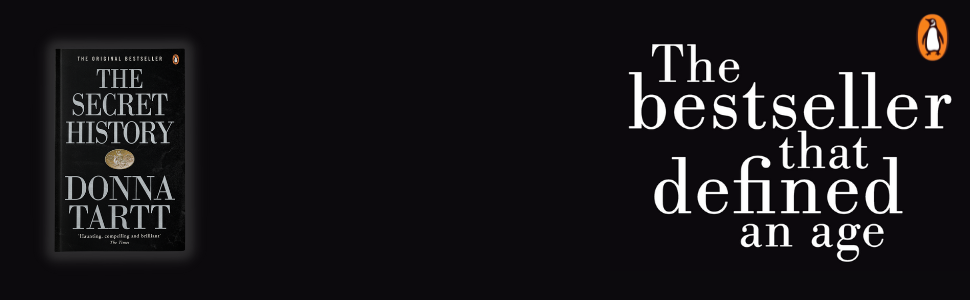
THE BESTSELLER THAT DEFINED AN AGE ''Everything, somehow, fit together; some sly and benevolent Providence was revealing itself by degrees and I felt myself trembling on the brink of a fabulous discovery, as though any morning it was all going to come together---my future, my past, the whole of my life---and I was going to sit up in bed like a thunderbolt and say oh! oh! oh!'' Under the influence of a charismatic classics professor, a group of clever, eccentric misfits at a New England college discover a way of thought and life a world away from their banal contemporaries. But their search for the transcendent leads them down a dangerous path, beyond human constructs of morality. ''Haunting, compelling and brilliant'' The Times ''Irresistible and seductive'' Guardian ''Enthralling... Forceful, cerebral and impeccably controlled'' New York Times Review: Atmospheric, consuming, and morally unsettling - The Secret History is a slow unspooling of beauty, intellect, and moral decay wrapped inside an almost hypnotic narrative voice. From the outset, it establishes an enclosed world—rarefied, aestheticized, and psychologically insulated from ordinary life—then gradually reveals the fractures beneath it. Tartt’s strength lies in atmosphere: the book feels densely lived-in, with a kind of classical elegance that makes the descent into ethical collapse even more disorienting. The characters are rendered with a detached intimacy that keeps the reader both close and slightly off-balance. What resonates most is the tension between admiration and unease. The group’s intellectual allure never fully fades, even as their actions become increasingly difficult to reconcile. That ambivalence is the engine of the novel. A compelling, immersive read that lingers not because it resolves its moral questions, but because it refuses to simplify them. Review: Excellent but Not Sweet - Published in 1992 this book is famous (infamous?) for providing impetus to the "dark academia" movement - if it can be called that. The story is, more or less, fashioned after a Greek tragedy with deeply flawed characters ultimately facing the consequences of their decisions and actions. Indeed, the characters are grim - they aren't decent human beings at all. The story is not uplifting so it's not a good choice if you are looking for something to improve your mood. There is a lot of alcohol, drugs, and perversity in the story - which is more or less required to get on the New York Times bestselling list. In that respect the story hits all the right notes. There are a few things that are unrealistic - one is the sway one of the characters has over the others, another is that the story takes place at a university, but the "students" seem to study or attend class very little and still manage to matriculate term after term. Of course, writing about students studying would not be interesting reading. Finally, if any college student consumed as much alcohol as depicted by the characters in this story, they would have died of alcohol poisoning before the second term. All that said, the prose is superb. Sooth as butter, the writing whisks you into the story and keeps you engrossed until the end. In fact, The Secret History is so well written that you almost forget you are reading. So, did I like the story? No. Was I entertained and captivated? Yes. I'd have preferred at least one decent, incorruptible, semi-Tom Bombadil type character to shed some light and hope. As it is, Francis was right when he said, "I am looking forward to asking him why the hell he didn't just shoot us all and get it over with."

| Best Sellers Rank | #677,700 in Books ( See Top 100 in Books ) #42 in Classic Literature & Fiction #80 in Suspense Thrillers #185 in Literary Fiction (Books) |
| Customer Reviews | 4.2 out of 5 stars 51,293 Reviews |
D**S
Atmospheric, consuming, and morally unsettling
The Secret History is a slow unspooling of beauty, intellect, and moral decay wrapped inside an almost hypnotic narrative voice. From the outset, it establishes an enclosed world—rarefied, aestheticized, and psychologically insulated from ordinary life—then gradually reveals the fractures beneath it. Tartt’s strength lies in atmosphere: the book feels densely lived-in, with a kind of classical elegance that makes the descent into ethical collapse even more disorienting. The characters are rendered with a detached intimacy that keeps the reader both close and slightly off-balance. What resonates most is the tension between admiration and unease. The group’s intellectual allure never fully fades, even as their actions become increasingly difficult to reconcile. That ambivalence is the engine of the novel. A compelling, immersive read that lingers not because it resolves its moral questions, but because it refuses to simplify them.
J**0
Excellent but Not Sweet
Published in 1992 this book is famous (infamous?) for providing impetus to the "dark academia" movement - if it can be called that. The story is, more or less, fashioned after a Greek tragedy with deeply flawed characters ultimately facing the consequences of their decisions and actions. Indeed, the characters are grim - they aren't decent human beings at all. The story is not uplifting so it's not a good choice if you are looking for something to improve your mood. There is a lot of alcohol, drugs, and perversity in the story - which is more or less required to get on the New York Times bestselling list. In that respect the story hits all the right notes. There are a few things that are unrealistic - one is the sway one of the characters has over the others, another is that the story takes place at a university, but the "students" seem to study or attend class very little and still manage to matriculate term after term. Of course, writing about students studying would not be interesting reading. Finally, if any college student consumed as much alcohol as depicted by the characters in this story, they would have died of alcohol poisoning before the second term. All that said, the prose is superb. Sooth as butter, the writing whisks you into the story and keeps you engrossed until the end. In fact, The Secret History is so well written that you almost forget you are reading. So, did I like the story? No. Was I entertained and captivated? Yes. I'd have preferred at least one decent, incorruptible, semi-Tom Bombadil type character to shed some light and hope. As it is, Francis was right when he said, "I am looking forward to asking him why the hell he didn't just shoot us all and get it over with."
F**B
Won't be easily forgotten
The moment I know I’ll love a book is when I’m going about my everyday life and, suddenly, tiny occurrences pleasantly jerk my mind back to the book’s world. It’s been days since I finished Donna Tartt’s The Secret History (1992) and I still find myself constantly daydreaming about this exquisite novel. The curious thing is that I didn’t love The Secret History the way I love most books I read. I didn’t sit in bed overnight reading just to reach the end and expecting a big twist or climax (which, to my pleasant surprise, it had), only to be momentarily relieved or disappointed before closing the book and returning to reality. As many readers have admitted before me, what kept me engrossed in this book was not what was going to happen, but how it would happen. Inexplicably, I wanted to live and breathe in that world, to stay in it for as long as possible and cling to every word and thought as much as I could. For that reason, I devoured it slowly—about three weeks passed until I’d read the book from start to finish. And still I can’t explain the emptiness after finishing, or the feeling that it’ll be hard to find a book that moves me in quite the same way this one did. The book centers on the recollections of Richard Papen regarding his dark experiences at the fictional Hampden College, a small liberal arts college in Vermont. Richard, a self-conscious and naïve student from a blue-collar background in Plano, California, arrives at Hampden with merely a suitcase and a desire to escape his miserable childhood home. At Hampden, Richard is, after some time and effort, accepted into the highly exclusive Classics major under the patriarchal and eccentric Professor Julian Morrow. Through the small group’s weekly meetings reminiscent of a secret society (there are merely 6 students in the major), he falls in with the cluster of seemingly unapproachable, picturesque scholars whose souls seem to have stepped out of an ancient Greek play. There’s group leader Henry Winter, tall and brooding, a clever linguist always sporting a suit. The others are red-haired and elegant Francis Abernathy, spritely and enigmatic twins Charles and Camilla Macaulay, and jovial, freeloading Edmund “Bunny” Corcoran. To fit in, Richard invents a backstory packed with Californian wealth, despite being the only one without family connections or a stable financial background. While submersed in the intellectual beauty of his studies and peers, combined with their frequent visits to Francis’ family’s empty, historic, relic-filled country house, Richard seems to be living a Classic dream come true. But after a bizarre, Dionysian bacchanal (basically a drug-induced, spiritual orgy in the woods) ends in both an accidental and, eventually, a premeditated murder, Richard begins to realize that his childish and somewhat shallow infatuation with the group may not be enough for him to swallow their treasure chest of dark secrets. After reading merely the first sentence, we are told (what we believe to be) the book’s climax. But what we don’t know is why or how their lives will fall apart, one by one, as if on the Devil’s very own hit list, as a result of a single moment in time. Ultimately, Richard’s superficial obsession to fit in, his “morbid longing for the picturesque at all costs,” proves to be not only his fatal flaw, as he himself admits, but his doorway into a dark, living, breathing world of heartache, melancholy, and never-ending nightmares. I’ll start by saying that I am by no means proficient in or even familiar with the Classics. I’m aware of the basics, of the idea of a “fatal flaw” and such, but not enough to feel comfortable writing about them with confidence. Therefore, for those of you debating whether to read this book because of this element, I can tell you now—the substance is not in this aspect, but in the character development and plot. The book does in many ways parallel a Greek tragedy, and those who are familiar with Classics will likely have an enhanced reading experience. However, by no means does it exclude readers without this background. The emphasis is strongly on the deterioration of a group of friends, not on Greek philosophy. Now, most critics of the book are quick to attack its seemingly pretentious aura, claiming that real 90’s college students would never talk like these do (“For a few minutes—goodness, how confusing this was—I thought of digging a grave but then I realized it would be madness” is an actual quote from a student) dress in European suits, or smoke 500 cigarette packs a day while they throw back expensive whiskey like its water. They’d never skip a college party of free-flowing beer, fluorescent lights, and sticky floors to sit in a country house and practice the box step, or discuss “whether Hesiod’s primordial Chaos was simply empty space or chaos in the sense of the modern world” while they play cards. But in a sense, I beg to differ. Yes, these characters can be slightly exaggerated, mostly in the first half of the book, which details their frequent gatherings and esoteric conversations (towards the end they notably start speaking in more colloquial terms). Yes, they can be irritating, despicable, and downright disturbing at times. But to be honest, this never bothered me as I was reading—in fact, it made the book even more fascinating. If you can’t handle some deliciously evil characters that pose as charming members of society, you probably won’t like many books out there. I see this pompousness as merely a way of cynically showing us that these students, with superficially beautiful minds and faces, with a seemingly supreme moral compass, are not only flawed and human, but often much worse than that. The premature deification of the group only serves to make their fall from grace that much more powerful, sad, and disquieting. Another point of contention regarding the novel is its tendency to ramble, to spend precious time illustrating minute details of the characters’ personalities, surroundings, thoughts, etc. Once again, this is true to a certain extent. This book is not written as an action novel or crime thriller, where everything is based on people running around solving things or shooting guns. If you can’t stand description and only want action, this book may not be for you. But to me, Tartt creates a world that’s tangible, where every description explains things so poignantly that you often feel you couldn’t have worded it better yourself. Yes, there are many words, but every word is there for a reason if you stop to examine it. And Tartt’s talent shines not only in her prose, but in her timing and in her ability to develop tension such that each secret revealed seems like a bomb dropped, no matter how small. It’s is the juxtaposition of the realistic ambiance and the perfectly timed reveals that, for me, makes The Secret History so moving and so difficult to leave. As a reader, you feel Richard’s nostalgia the way you recall your own sharp childhood memories that you long to go back to, and the way you often stop to consider the other paths that your life could’ve taken if only things had been different. I rarely experience emotions this strong when reading any book, and as much as I’d like to I can’t put my finger on what exactly about this book did it for me—and in that same way, I can’t guarantee the same for every reader. But I can say that if you’re looking for an intellectual, modern classic, a haunting psychological thriller, a mix between Lord of the Flies, The Perks of Being a Wallflower, and Dead Poets Society, or simply a book that will linger in your mind as you lay in bed each night — it’s sitting right in front of you.
J**F
Weak Opening with a Strong Ending
This won't be one of my typical 3-star reviews. To start, the writing is gorgeous and so dreamy. None of the scenes seem fully grounded, kind of as if Tartt is guiding the reader through the confusing haze Richard remembers of his college years. A California boy with dreams of studying ancient Greek, Richard goes to Hampden College in New England and it's all Greek to him until his entire friend group slowly starts unraveling. I love that the book opens with a murder because Richard starts off as a bit of a Holden Caulfield and the first half of the book just drags. None of the characters were remotely likable and, in the strangest way, I feel like I had met them all in college. They were pretentious and hyper-intellectual, but overall disasters. The poor pacing gives this first half 2 stars out of five. Then the second half starts and my enjoyment sky-rocketed. The characters don't get any more likable, but at least they get interesting. The entire fabric of Richard's reality starts falling apart. Secrets pop up and each influence in his life develops several extra dimensions. I particularly am fascinated by the charismatic Henry and the cowardly Francis. They were so fleshed out, even though Henry only allowed small glimpses of their true personalities. One of my biggest complaints was the sense of pacing. Sequences that lasted weeks, took a matter of paragraphs while entire hours lasted for pages. I kind of got the effect of adding tension in that way, but it wasn't for me. Ultimately, some really devious characters and interesting exploration on the effect trauma has on people's perception. I'm not sure this book was for me, but I am glad I read it.
A**F
Greek Tragedy meets Comedy of Manners
Greek Tragedy meets Comedy of Manners. Crime and Punishment meets The Great Gatsby. In Cold Blood (the movie, not the book) meets A Night at the Opera (the movie, not the album). Donna Tartt’s The Secret History is a novel of breathtaking ambition, mixing literary genres the way a chemist mixes unstable compounds—carefully, brilliantly, and with the occasional explosion. At its core, this is a Greek tragedy in tweed and cashmere: a tale of hubris, fate, and the long, echoing consequences of a single act. But it’s also a darkly comedic study in pretension and privilege, a Comedy of Manners set in a cloistered college where everyone seems to have a martini in one hand and a Euripides quote in the other. Tartt’s prose is crisp, ornate without being showy, and often chilling in its control. The narrator, Richard Papen, is a West Coast outsider seduced by an elite circle of classics students at a small Vermont college—a clique so rarefied they feel less like classmates and more like decadent aristocrats teleported in from a lost Fitzgerald novel. (Crime and Punishment meets The Great Gatsby, indeed—where moral rot hides beneath sophistication, and where beauty and lofty ideals walk hand-in-hand with Dyonisian violence.) The book operates on a slow burn, turning up the psychological temperature degree by degree. By the time blood is spilled, you feel complicit. Tartt isn’t writing a whodunit so much as a whydunit—and then a what-happens-to-everyone-after. Stylistically, the novel blends gothic dread with drawing-room wit. It’s In Cold Blood (the film, with its bleak detachment of rain shadows for tears) filtered through the off-kilter absurdity of A Night at the Opera—though in this case, Groucho’s anti-aristocratic quips are replaced by Bunny’s provocations. Beneath all this, The Secret History is a meditation on elitism—not just academic elitism, but the dangerous, intoxicating belief that intelligence, taste, and beauty can lift one above consequence. Tartt shows us how that illusion of detachment leads not to enlightenment, but to moral collapse. It’s a book that feels like a warning, a confession, and a dare. It reminds us that brilliance without grounding is just a more elegant kind of madness.
J**E
A tale of class, privilege, and cluelessness - it's adolescence and college all over again
I’ve had The Secret History in my TBR pile for…well, a long time now. But in the last two weeks, three separate students – with no connection between them – all brought up the book to me. And while I’m assuming that it has to do with BookTok (a thing that I know exists but which my age exempts me from having to learn about it), the fact that three different high schoolers all independently came up to me to talk about a thirty-year old book…well, it moved the book up to the top of my stack. So, having read it, I can certainly imagine a lot of why it’s appealing to a high school and/or college audience (beyond it being part of the “dark academia” trend right now)…but honestly, I have been thinking since I finished it about how I feel about the book, and I think I’ve yet to entirely decide. In its broadest strokes, The Secret History is about a young man named Richard Papen, who wants little more than to get out of his small town and away from his humble, working-class background. That’s how he ends up at Hampden College, a small liberal arts college in Vermont, where he finds himself drawn to an elite, exclusive, and small group of classics students – an invitation-only class focused on Greek translation but also a wider appreciation of classic literature and studies. Of course, that all seems fine, but it’s all colored a bit by the prologue, which informs us about the search for the body of one of the class’s members – killed by his classmates. To some degree, that’s really the whole plot of The Secret History, which spends about half of its length building up to that murder, and the rest of the book watching as the aftermath unfolds. There are some other key events here and there, but the major one takes place off-stage entirely and the other effectively serves as the book’s climax. Instead, this is a coming-of-age book of sorts, about a young man who finds an odd batch of kindred spirits and a chance to reinvent himself, and finds himself swept up in a group without connections to the larger community and with a deep sense of superiority about themselves, their knowledge, and their connections. Because make no mistake, these are upper-class students – well, apart from Richard, who is taking this chance to hide his working-class background and pretend that he’s part of their group. And the snobbery, the disdain, the self-righteousness and superiority of these characters…it’s a lot, and that’s before they commit a murder which often seems to be viewed almost entirely as an inconvenience for them as anything – a nuisance, rather than an act of evil. And this is where I struggle with the book. My initial reaction, as I read the book, was to view it much as I do the book The Great Gatsby – that it is a book about awful people, written from the point of view of one who’s almost as awful as the rest, but blissfully unaware of it. But as The Secret History goes on (and on – this is not a short book, and its prose and discussions can be longwinded at times), I struggled with that interpretation. Oh, there’s definitely at least one class member who we’re supposed to feel uneasy about…but more than anything, this book seems to pity these students, and never really pushes back against their ignorance or egos or snobbery. Then again, my English teacher brain chimes in, Nick Carraway doesn’t either, and you like that book just fine. It probably complicates my feelings on The Secret History to see it through the eyes of my students, too, because I know younger me would feel differently about these students, and I know some of them can see the great side of this – the sense of being better than the idiots you’re so often surrounded by, the sense of finding your peers and being able to have “real” conversations about things that matter, the desire to get to find yourself and to become something “intellectual.” And I can see it all being appealing, to where the book can be described as “incredibly sad” but not for the murder itself. But to see all of that and to not see the self-deceptions at the heart of The Secret History, I think, is to misread the book, because I think Tartt has to be viewing them through a lens of narcissism and self-involvement…because only that could justify how thinly drawn some of these characters are, and how ultimately thin the whole book is. For all of the length of The Secret History, I’m not sure it wears that weight well; by the time Tartt got to The Goldfinch, she was much better about her pacing and her story. (I do think that some – not all, but definitely some – of my issues with The Secret History come from it being a first novel.) Here, there are about three beats to hit, and the rest is sort of living in this world with these characters, which would be fine, I suppose, if there was all that much to them. I can live with them being awful people (see Gatsby, above)…but to be so empty, apart from Bunny and Henry? That’s a more disappointing flaw, even if it’s one that took me a bit into the book to realize. For all of that, though, I can’t deny losing myself in The Secret History‘s pages for hours at a time. I can’t really argue the tragic air that hangs over the back half of the book, or the way the book can nail the way that isolation from the “normal” world can cloud your judgment, or how repression and guilt can eat away at you. I can’t push back against the way it captures the feel of finding your “thing” at college and feeling like you’re with your peers and the world is ahead of you. Is the book too long? Is it pretentious at times (fittingly, given its characters and milieu)? Are the characters less developed than they seem, ultimately feeling more like pencil sketches rather than fully developed portraits? Yes, yes, and yes. But for all those flaws, The Secret History still kind of worked on me, and I can understand all too well why it would hit perfectly for a high school/college audience – and how for me, all I can feel is the same amused irritation we all have when dealing with younger people who just don’t quite know better yet.
A**A
A book for those that want to feel like an academic
I bought this a year after having read 'If We Were Villains', and it was so good! The book came with no scratches or markings and came quickly. A great read for all my fellow dark academia lovers.
J**S
Well written; utterly depressing
I can't figure out what makes this a good book, aside from the fact that it is well written. It's high level intellectual stuff. You'll just have to assume the characters know what they're talking about because most readers will be lost in all the Greek and high minded scholarship. I didn't like any of the characters. It seems to reach the climax halfway through then slowly descend to the end. That said, it's hard to walk away from. It's all consuming and very disturbing.
M**N
الكتاب اصلي
الكتاب تحفة وصل سليم وبدون أي خدوش
G**E
A gift and was well-received!
I didn't read it myself but the recipient was happy with it.
J**E
5 stars are not enough
Have you ever felt you’re going to miss characters from a book? Well, that’s how how I feel… just finished it and I already miss them. No book has hooked me so quickly. From page 1 I was already captured. I didn’t want to stop reading, all I was thinking for days was the book (I even dreamed about it). The story is not too fast (she definitely doesn’t rush it) but not too slow either. It takes you through it at the perfect pace to want to know but enjoy each moment at the same time. You feel the spaces, the ambient, the places. She writes in a way that absorbs you into the story. The way she writes in the 1st person you are not reading it, you are living it. And you feel connected with Richard (the main character), instantly. And the end!! There’s only one way to describe it: WHAT!! Find a nice corner, dimmed light and a calm playlist (classical is a perfect match if you ask me)… and enjoy it.
N**Z
Worth the read
Sad. Long. But definitely worth the invested time. For some reason, I couldn't put this book down. Enjoy and reflect.
J**U
Best book ever !!!
Livre reçu dans le délai indiqué, il est arrivé avec aucune pliure n'y dans une boite cassé. Ce livre est vraiment fantastique, l'histoire de ses jeunes est passionante, je ne me suis jamais autant attaché à un livre, je le garderais sans doute pour toujours, tellement je l'ai annoté.
Trustpilot
2 months ago
4 days ago