We remain fully operational. Our teams are working around the clock to ensure your deliveries continue safely.

قم بتنزيل التطبيق


معلومات عنا
حقوق الطبع والنشر © 2024 Desertcart Holdings Limited
قم بتنزيل التطبيق
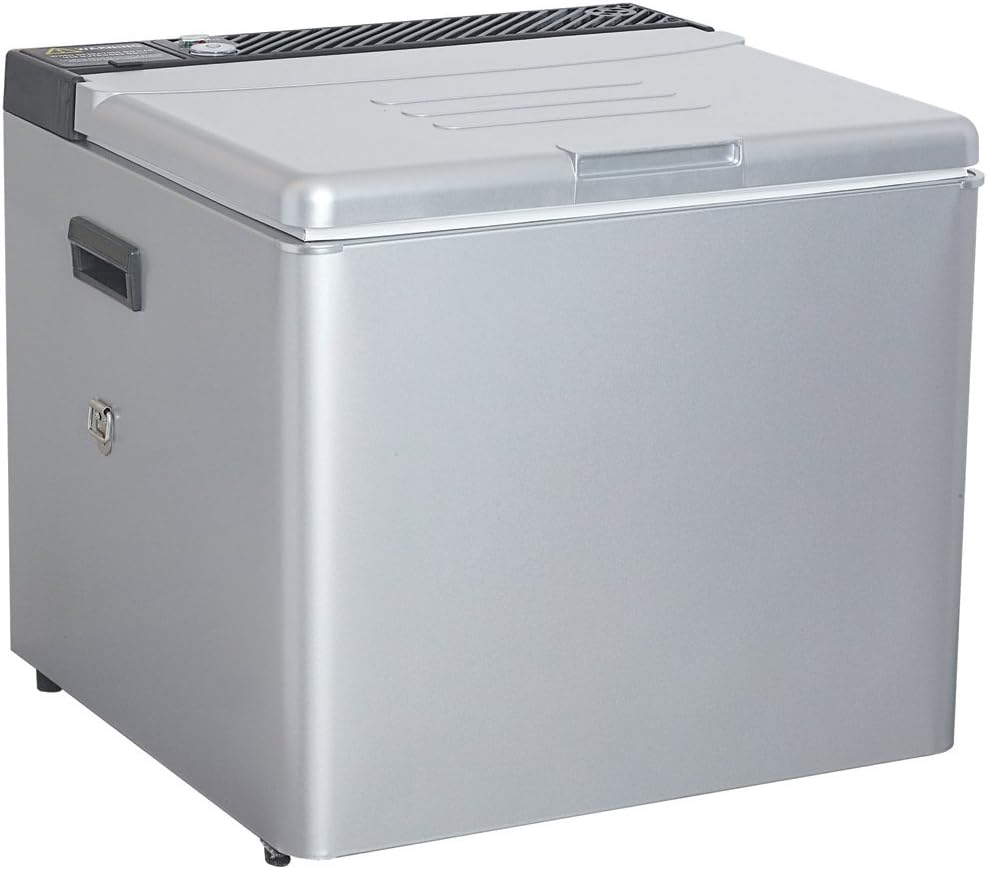
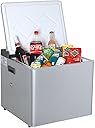
❄️ Stay Chill Anywhere, Anytime — The Ultimate 3-Way Portable Fridge for the Modern Explorer
The Porta Gaz 62734 is a versatile 51-quart portable refrigerator offering three power options—12V DC, 120V AC, and LP gas—ideal for camping, RVing, and home use. Featuring silent absorption cooling, a thermostat-controlled AC mode, and a robust build, it keeps your food and drinks refreshingly cold. Complete with all necessary accessories and designed for easy transport, it’s engineered to perform even at high altitudes, making it a reliable companion for off-grid lifestyles.
| ASIN | B00CXGFBOO |
| Additional Features | Portable |
| Brand | Porta Gaz |
| Brand Name | Porta Gaz |
| Capacity | 51 Quarts |
| Color | Silver |
| Cooling Method | Absorption |
| Customer Reviews | 3.3 out of 5 stars 20 Reviews |
| Finish Types | Matte |
| Form Factor | Chest |
| Installation Type | Freestanding |
| Item Weight | 41.8 Pounds |
| Lock Type | Electronic |
| Manufacturer | Porta Gaz |
| Manufacturer Part Number | 62734 |
| Model Name | 62734 |
| Model Number | 62734 |
| Number of Doors | 1 |
| Pattern | Solid |
| Size | 51 Quart |
| Special Feature | Portable |
| UPC | 627843104872 |
F**.
outstanding product
I bought this cooler in July 2013 and I was impressed with the quality of this product. It works great in 120 volt mode, it went down to 35 F in 12 hours with the otside temp @ 80 F, thermostat works great. I went camping at our property which is at 6000 feet, with outside temp at about 90 F the temp inside the cooler was about 56 F. I called their tech. support and recieved excellent service ( which is in Canada) and asked if they had a high altitude kit. I was pleasantly surprised when he said yes. We went through some troubleshooting to determine if the cooler was working ok. After this he checked with the factory to see what would be best, to change the orifice or adjust the gas regulator. They recommeneded to adjust the regulator that way if I wanted to use the cooler at a lower altitude I would not have to change the orifice so he sent me a adjusted regulator. I went camping at 6000 feet and the cooler cooled down to 41 F with the outside temp at 88 F. At night it went as low as 25 F. I have not tried it in DC mode yet. What I like about this cooler is that it runs in 120 volts/DC/propane. In propane mode the temp can be adjusted but has no thermostat. I was impressed with the quality. The cooler can be used anywhere due to it's 3 modes of operations. It comes with all cables/hoses/gas regulator complete ready to start. The owners manual is well written, does a good job on explaning how to do the maintenance that is required as well as troubleshooting. The tech. support is great and the price good. I would recommened this prouduct.
B**Y
Tried All Troubleshooting
Bought this product to use off the grid on propane. However, it only works on 12VDC and 120VAC. Contacted the manufacturer and they told me to clean the orifice through which the gas expels from. Did that and it still doesnt work on propane. tried to reach them again and they did not respond after many many emails. I asked if I could return and have them fix it or just refund my money, but they stopped responding. It works well on 120VAC, but primitive camping in the rough does not allow us to use it this way. If I had electric to use I would use a regular mini-fridge. Big waste of time and money.
R**A
Email contact wrong on box and in the owner's manual. It's .ca, not .com (a Canada email address, not American.
Have had this same type of 3-way for years in the cockpit of our 26ft. boat (note: they are not designed for marine use, so I have to do some modifications to keep it from rusting and to keep the electrical contacts sealed from moisture). The parts that wear out the fastest is the piezo igniter. I wanted to order a spare for our marine use). They include a parts list in the owner's manual, but only list a web site for the company that can't be found. UPDATE: 4/24/15 Have used the unit on our boat for a year now, with no issues. Does well on AC and propane (we rarely use it on DC- only when cruising a long distance and need to keep it refrigerated before switching to propane or shore power. For marine use, I removed the back cover and took all accessible electrical contacts apart and applied a good coating of dialectric grease to prevent corrosion. Then spray painted a good coating of paint on all the heat exchanger tubes. As earlier stated, put a remote thermoter inside so that you can keep track of the cooling around your campsite, or in our case, in the cabin of the boat. Turn down on cool nights, up a bit on hot days. We try to keep some sort of screen to keep direct sunlight from hitting it. Wife loves the large capacity, compared to our old unit (lasted 18 years). The current price is right. We paid $450 for our old unit 18 years ago, and it was almost identical to the new one, with improvements such as: a light indicating that it is cycling (AC), a flame indicated to let you know the flame is lit when on propane, and you adjust the needle to control your desired temp. setting, a shield on the inside to keep your food from direct contact with cooling unit inside, and a level indicator. Nice features that were not available on our old one (Igloo, with Dometic innards). UPDATE: The list their website WRONG in the owner's manual, and the same on the box it's packaged in (tech support acknowledged this when I talked to them). The main thing wrong was it was listed as a .com, instead of .ca which it is (Canada). I thank a reviewer of this product for figuring their correct address. Nothing shows up on Google, except places that sell them. After I have a chance to use this unit, I will update my review. The first unit I had to ship back. The AC thermostat would not cycle, no matter what the setting, and the temps were dropping down to 27 degrees and lower. It's supposed to be a fridge., not a freezer. UPDATE ON 5/13/2014: New unit arrived, and I tested it as I did the previous one. Everything was working as designed, with the AC cycling on and off to keep the temp within the range I had set it at (use a wireless thermometer inside to keep track of the temp. Been doing this for years with our old unit). They are not like a home refrigerator. They are not capable of keeping the temp adjusted for day and night use. Cool nights, one must turn down the dial, and back up during the day depending on how warm it gets. If you don't do this on a cold night, you risk the temp going down to freezing which produce does not like, as well as other food. Our old unit (on it's last leg) did not h ave a flame indicator, or the AC and DC light. The AC light will go on and off, indicating that it is cycling (a nice feature that makes it easy too see whether it is working properly). The level indicator it nice, but on a rocking boat, it's not a factor. Like a fridge in a trailer, level is not a major issue when on the move (or our rocking boat), but when still, must be fairly level because of the ammonia coolant. Make sure you follow the instructions to a "T", when first setting it up (they have no idea whether it was shipped on it's side or upright) We look forward to using it, as it has about a 3rd. more capacity than our old unit, and packing for a weeks food supply was difficult because of the small interior space. Amazon's return policy was wonderful. I took the defective unit to the UPS store (with the shipping labels that you print up from Amazon's site), and got an email that the replacement was already on it's way. If they do not receive it back within 30 days, the will charge your account for it. A few days after shipping it, I received an email confirming that they had received it in the condition it arrived in. No hassles, which is wonderful.
S**E
Not Satisfied
I bought this refrigerator for use in gas mode at a Michigan camp without electricity- only would cool inside down to 50F regardless of ambient outdoor temp between 70-42F. It did cool well on 120v, but since the cooling in the propane gas operation, which I purchased the unit for, was far from adequate for food storage I promptly returned item- buyers beware.
A**E
Does not work properly above 5000 ft altitude or in the car.
We bought this to keep food cold while camping. We live at an altitude of about 4500 feet. In the house or the garage, when plugged into an A/C outlet and perfectly leveled, the temperature inside hovers around 42 degrees F. When it was cold, we put cold food inside and plugged it into the DC outlet in the car. When we got to our campsite in the mountains a few hours later, the temp had risen to about 65. When we leveled it at the campsite and powered it with propane gas, it stayed around 61 degrees. This is obviously not cold enough to keep food from spoiling. We contacted the manufacturer about the issues and were told that it must be level at all times, even in the car. They are aware that it does not perform properly above 5000 feet. They were very responsive and told us we could purchase an additional regulator that would help with the altitude problem. I appreciate the quick responses I got from them. I have not yet purchased the additional regulator because I have already spent over $400 and there is no guarantee that this will resolve the altitude problem. It certainly does not address the problem of not staying cold while in transit. I think that these restrictions should be part of the item description on Amazon. Because the product was not advertised properly, I am disappointed with the product and with Amazon.
J**S
Best deal for "off-grid" refridgeration
The first night after receiving this fridge, I filled it with a case of bottled water at room temperature. It took about 48 hours to get those bottles cold! But that was because I did not pre-chill the fridge or the bottled water. With both at room temperature, the water acted as a heat sink that the fridge simply could not easily overcome. Then I tried another experiment, with the fridge at operating temperature, I refilled it with another case of bottled water (also at room temperature) and it was cooled in only 8 hours. So it pays to pre-chill the fridge and/or the contents, and preferably both. By far the most important rule (other than proper ventilation) is to keep the fridge level by using the bubble level that comes with the fridge. The closer it is to being perfectly level, the better it will work. I live off-grid, this is my only means of refrigeration. Running on propane, a single 20 lb BBQ grill size tank will last 40 days. By switching over to solar during the day and back to propane at night, I can get 2 months out of a single 20 lb propane tank. The capacity is ample for 2 adults, you can get a lot of food in there. And because of the top lid design, you don't lose much cold air by opening the lid several times a day. Overall this is a super efficient fridge for off-grid homesteaders. If you just want it for camping then I highly recommend pre-chilling the food and the cooler before leaving on a camping trip. The temperature controls only work on AC or propane. There is no temperature control on 12v DC.
C**D
Bummer
I really needed this to be a good product. I take a trip every year where I am dry camping for 2 weeks. I bought this so I could keep an outdoor refrigerator without doing ice runs (using propane). On the first use (and I am very careful with my things) the door hinge fell out on one side and the rubber foot fell off making the item unstable on the ground. Because I really needed this product to work, I overlooked these issues. Unfortunately, it doesn't keep things cold AT ALL either. It has a single cold plate inside that is hardly cold to the touch. It took 3 days for it to make a noticeable temperature difference and NEVER achieved "cold drink" status. This, coupled with poor quality and a very expensive price tag, makes this product a must miss. Too bad as I REALLY was hoping to have been able to write a great review here!
B**C
Following the instructions and so far, I'm happy with the purchase.
I've re-written this review because of some strange results that I was getting during testing. With that said, the fridge seems to be very finicky and even slight changes in its setting (levelness, temperature, use - open/closing, and food packing) can cause a wide fluctuation in temperature and recovery time. One thing to do is learn how these refrigerators work before you buy. They are not as efficient as home refrigerators. Check out the video's of Trailer Life on YouTube such as this one (and several more) - https://www.youtube.com/watch?v=w2yF66M1wDg What I decided to do was setup an area where all power sources could be tested with the exact same external and internal conditions. This area was maintained at 78 degrees. An internal fan was placed in the fridge. These circulating fans can be purchased in RV catalogs for RV fridges. The fan is battery operated and was placed in the exact same location for all testing. Externally I added a small fan to pull air over the condenser fins. The fan was placed on the top of the fridge next to the power controls. I set a thermometer on the right hand side of the fridge just to the edge of the LPG stove pipe. This captures the temperature of the heat generated by AC, DC, and the LPG. The fridge was allowed to run for 8 hours and is completely empty other than the internal battery operated fan and the wire leading into the fridge box to monitor the temperature. The results are from best to worst results: 1. AC - 32.2 degrees and stove pipe heat of 100 degrees 2. AC from a DC inverter - 33.4 degrees and stove pipe heat of 110 degrees 3. LPG (setting of low) and DC - 34.7 degrees and a stove pipe heat of 130 degrees (note the manufacture says not to run the fridge this way (on two sources), though I tried this, got pretty good results, and it does work it will void your warranty. By the way - some have complained about not having a thermostat for DC use. You can pickup a thermostat right here on Amazon for less than $15.00. It wouldn't take too savvy of an individual to wire it into the DC line to shut down the DC power if the fridge approached freezing. 4. DC - 35.1 degrees and a stove pipe heat of 110 degrees 5. LPG (setting of high) - 36.9 degrees and a stove pipe heat of 140 degrees I noticed that on AC and on the AC from the DC inverter the drop from room temperature down to the readings above was quicker than running on DC or LPG, with LPG being the slowest. It's important to note as some have here that the built in bubble level is way off. I used a regular carpenter's level setting on the closed lid and from inside the fridge to verify the fridge was level. Construction of the fridge is good, though I did find one rubber foot was loose. It was easy to tighten up. I was surprised none of the rubber feet are adjustable. A couple of wooden wedges taken when camping will be used to resolve the leveling issue. I contacted the seller about what was needed to use the fridge at high altitude (7000 feet) and promptly receiver a response to purchase a 9" W.C. regulator would take care of that issue. The response was short, but I had it in a matter of a few hours. After being unable to find a regulator for a reasonable price set to 9" W.C. I emailed the seller again and asked if they had a source for that product. I never received a response. I guess support from the seller is hit and miss. I can't stress the importance of following the instructions for use of an ammonia evaporative fridge like this. Do NOT pack the unit full of food and expect it to cool the food. This type of fridge works by the ability of the air in the fridge to be able to draw heat out of the contents of the fridge. If it's packed full of food and air can't move within the fridge, you'll find anything against the metal cooling plate inside will be cold but everything else in the fridge will be warm. Put the items that need to be colder nearer to the cooling plate in the back of the fridge. You don't need to freeze oranges, so put them towards the front. Use an RV fridge fan like I have used in the testing - you'll be surprised at how much faster this fridge will cool down and how much better it'll keep the contents cool. This type of fridge does not recover well from repeated opening/closing of the lid. Open, get everything you need and then close it up and leave it alone to recover. When you buy food at the store while out camping, take an ice chest with you and keep the purchased food cold (yes, with ice you also purchase). Putting cold food in the fridge will easily reduce the recovery time when the new items are put in. If the new items are boxed but are plastic bagged inside the box, why not remove the box? That'll allow better air flow and remove one more obstacle of the cool air getting to the food. Don't worry, you're not going to freezer burn your food with this fridge. My travel trailer only has AC fridges in it and I have planned for 3 dry camping trips next summer, so I needed a fridge that wouldn't need AC. Yes I have a generator but I don't want to run it when not needed. This is sort of an experiment in dry camping and off grid use of my travel trailer. This is why I purchased this fridge. When the LPG didn't return the results I had hoped for and considering the added expense and difficulty of purchasing a regulator to work at high altitude, I decided to test all methods of operation. As you can tell from the results AC is king with DC close behind. Since AC from a DC inverter looks pretty close to regular AC, my plan is to use solar panels to charge two deep cycle 6 volt batteries. Those batteries will be connected to my DC to AC inverter and that'll run my fridge, with DC and LPG being back up. The fridge never pulled more than 95 watts on AC. Now don't think that a little dash board solar panel is going to supply enough power to run this fridge, because it won't. Calculated out and then adding a day or more of safety into my plan I'll have at least six 48"x17" solar panels putting out a combined 15 amp at 12 volts DC. This will be enough to ensure my batteries stay charged and can run the fridge for two or possibly 3 days without any concern. I mentioned that I had a fan externally on this fridge for testing. I'll mount a small 12v muffin fan to do the same work this fan did. These fans take hardly measureable power so there won't be a problem with having it on. The internal battery fan can provide up to 40% better performance (that's not colder, that just means recover time, cool down time and such are improved), and the external fan can provide up to 50% better performance. I've used both on all my fridges, they certainly help. Would I like the fridge to be more efficient and operate better? Certainly, but my 1.3cuft fridge I had in my prior pop up trailer behaved very similar to this fridge, and it cost $600.00. For $400.00 for a 1.7cuft portable fridge, it's not bad at all. Just follow the instructions to the letter and use of this fridge should be with pretty good results.
ترست بايلوت
منذ أسبوعين
منذ 4 أيام