Some deliveries may take a little longer than usual due to regional shipping conditions.

قم بتنزيل التطبيق


معلومات عنا
حقوق الطبع والنشر © 2024 Desertcart Holdings Limited
قم بتنزيل التطبيق
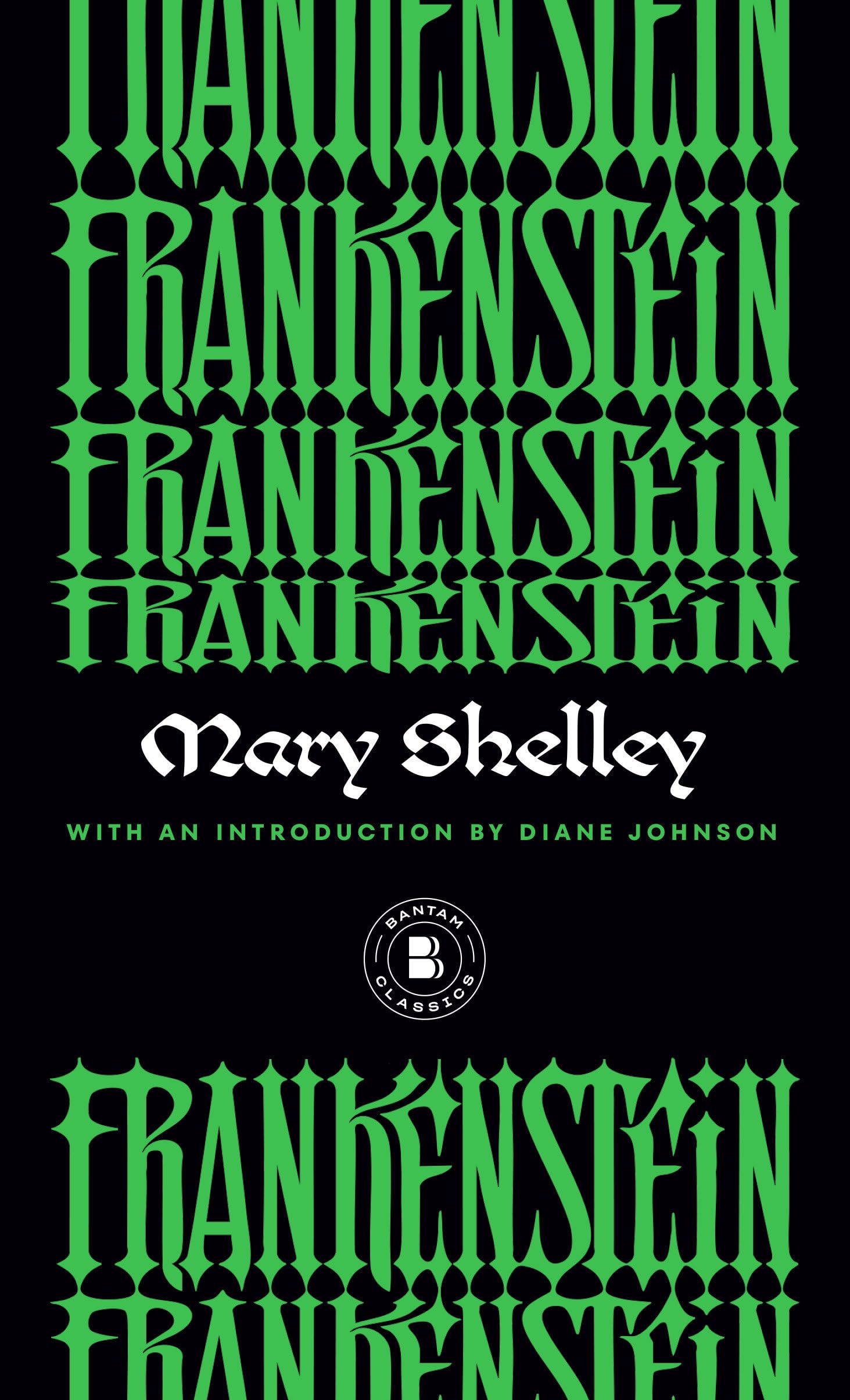
Frankenstein [Mary Shelley] on desertcart.com. *FREE* shipping on qualifying offers. Frankenstein Review: Shelley's powerful mind. (desertcartClassics Edition and 1818 uncensored e-artnow edition) - desertcart groups reviews for the same story even when they are from different editions and in the case of Frankenstein the worst is that there are two similar but not identical versions. The first is the 1818 uncensored edition by e-artnow; the other is the desertcartClassics Edition, it doesn't say which version it is but after reading it is clear to me that it's the posterior 1823 edition. The 1818 edition is a bit more journalistic in the sense to show you the events and let you think your own conclusions, the 1823 edition is a bit more explicit in the moral judgment of the wretched Victor Frankenstein. But these differences are quite subtle... in my opinion it had been better if we just had the 1818 story, it's perfect. Both editions has X-Ray, about the differences I can say: * desertcartClassics Edition (2 stars): In the positive side the formatting is modern and professional, you can easily see that you are reading a letter for example; the typography is clean allowing you to read with more comfort. In the negative side is evil the lengths that desertcartClassics attempt to hide dates, there is no year of publication, which is a sin considering there are the two different versions from different years; the malign editor even hides the date that is in the preface, sobbing his hands in the excitement to draw the readers into the pit of despair. * e-artnow edition (3 stars): In the positive side it contains the pure text, it's a normal formatting, not excellent as the desertcartClassics but works, but it's more useful as it informs you about the edition used. I read it fast along the desertcartClassic so I didn't find errors but could not guarantee their non existence. In the negative side... I have no important observations, I don't like the cover, the cinema version doesn't correspond to the book. In conclusion although the desertcartClassics edition is comfortable sadly it seems there is an attempt to hide the mentioned years. I cannot recommend it. The e-artnow edition is good enough, less comfortable to read but still has X-Ray and the mentioned years as the author intended them are present. Taking aside the editorial aspect I loved a lot to read Frankenstein. Mary Shelley made, barely 20 years old, an awe-inspiring horror novel. In my opinion far more impacting than Stevenson's "Strange Case of Dr Jekyll and Mr Hyde," with which it shares some characteristics. The creature, the creation of Victor Frankenstein, is human, he does terrible actions because he suffers, he has been abandoned by the man that donned life to him. Victor Frankenstein is the monster. Surrounded by persons that love him, even the creature could love him, he betrays them without compassion. He suffers but never for others but by the guilt of his lies being unleashed. Is crystalline that he only love physical beauty, Shelley is quite talented to make you feel like the witness of the mental struggle and physical stress of a dark hearted man. If there is something that reveal both the youth of Mary Shelly and her culture devoid of life experience is the fact that her characters triumph or fail through the study of books rather than from work, knowledge and reality. I felt Europe quite small too, it seemed like either the each of the characters bought the seven-league boots or that Europe is as big as a thematic park. But these are minor details for a classic whose reading at least once could enrich you. Review: An Unexpected Surprise - First, a note about the cover of the Penguin Classic Deluxe Edition: I’ve noticed in several other reviews of various books in this series that readers have negatively commented on the “cartoonish” like covers. Personally, I happen to like most of the covers in the Classic Deluxe series because they are bright and fun. Sure, it is nice to own a nice edition of a favorite classic. Yet, I don’t see the harm in the fun covers — there’s no rule that says that because something is a classic that it has to be bound with a stodgy, serious cover. Maybe the comic-like covers will catch someone’s interest, someone who might not normally read a book. Getting someone to read a book is the most important thing, right? In the introduction to this particular edition, author Elizabeth Kostova (who wrote a modern take on the Dracula story: “The Historian”), says that she picked up the book to reread, to refresh her memory, and as she was reading it she realized that she wasn’t rereading it at all. She’d never read it. She realized that she knew the myth of Frankenstein, the Hollywood version, the Halloween version, the bolt through the neck version. What she knew (or thought she knew) had come from pop culture. I knew that I had never read Frankenstein. It was always on my ‘to read …sometime” list. I couldn’t pass up the cover, so I bought the book. Like Ms Kostova, I felt that I knew the story of Frankenstein and his monster. Growing up in the 1970s, with all the weekend and late-night sci-fi/horror movies, I’d seen the old Bela Lugosi version, and many of the various other old black-and-white retellings. And lets not forget the Mel Brooks adaptation (which I was fairly certain had little to do with Shelley’s novel). When I sat down to read the book, I was drawn into the tale by the letters of Captain R. Walton, who is on an expedition to find his way through the icy waters of the north. Walton catches a glimpse of the monster, and not long afterwards rescues Victor Frankenstein from the icy water. The book is broken into three parts: Part One is mostly told via letters from Walton to his sister; Part Two is Victor Frankenstein’s narrative for the first part, then the monster’s narrative for the second half. Part Three takes up the story with Frankenstein again, ending with a few letters from Walton. There are several more detailed summaries of the plot, so I won’t go into much detail. However, there are a few things that I think are important to know (they are, in a slight way, spoilers — but, I promise not to give any of the major points away). The book is quite noticeably different from the Hollywood myth that most of us grew up learning. There’s no scene where Frankenstein is in a tower awaiting lightening, there’s no evil madness to him — he looks at making a creature as a scientific enquiry, rather than anything with evil intentions. There is no Ygor/Igor. There’s no little girl who hands the monster a flower. And, most astonishing: the monster speaks — eloquently. There are several gaps, parts where the reader just has to let the story unfold without pausing to think to rationally about it (the lack of detail on how the monster was created, the way the monster was educated and learned to speak and read, etc.) Don’t get caught up in trying to accept the logic — it’s not there. Just follow the tale, don’t think too deeply about how the monster learned so much from watching a family. Just go with it. The gaps aren’t really that important. What is important is that our pop culture has distorted the story so much that when one hears the word “Frankenstein” one thinks of the monster, not the doctor. In the novel, the monster is never given a name - he is simply referred to as monster, daemon, creature, horror. And, our pop culture version of the story has taken away the deep philosophical aspects of the novel. And, we’ve learned that the creature is the ‘bad guy’, but, there’s much to be said about Victor Frankenstein - most of it not nice. In many ways, he is the ‘bad guy’ of the story. He’s so intent on bringing a creature to life that when he does and sees how ugly and horrid the creature is, he immediately abandons it, leaving the monster to fend for himself. Frankenstein is relieved that the monster disappeared and barely gives him much thought until tragedy strikes the Frankenstein home. Two years have passed and monster and creator finally meet, and the monster speaks what I find to be one of the saddest things I’ve read. Frankenstein is angry at what his monster had done, and wants to kill him. In reply: “‘I expected this reception,’ said the daemon. ‘All men hate the wretched; how, then, must I be hated, who am miserable beyond all living things! … Remember that I am your creature; I ought to be thy Adam, but I am rather the fallen angel, whom thou drivest from joy for no misdeed. Everywhere I see bliss, from which I alone am irrevocably excluded. I was benevolent and good; misery made me a fiend.” The monster believes that if Victor will make him a wife, he will have someone to share his misery and torment with — they will be bound by their both being outcasts. Frankenstein first agrees to create a bride, but then realizes he cannot do so, for he might make more evil creatures. What is most interesting to me is that the Doctor is really a whiny, narcissistic man; he made the creature, and ran off immediately afterwards, abandoning the monster. When the monster does some bad things, Frankenstein takes no responsibility — he never thinks “maybe if I stayed and taught him what it was like to be human, he might have had a chance.” Instead, he let the monster loose in the world, and because of the creatures size and hideous features, he’s attacked and chased off everywhere he goes. He doesn’t learn about life from a benevolent creator — he learns about life from the flawed humans that inhabit the earth. But Frankenstein moans and groans about how tragic his life has become because of the monster without every really acknowledging his own lack of responsibility. In a way, part of the idea of the creature’s character comes down to the old Nature versus Nurture argument. In this case there was no nurture — he only had the horrified reactions of people to learn from. As the monster says “All men hate the wretched.” I was surprised to find that I disliked the Doctor so much. While I can’t say that I found the murderous monster lovable, there was certainly something very sympathetic about him. Frankenstein spends pages lamenting the misery of his life, yet it is a ‘woe is me’ type of lament. The creature seems more philosophical about his wretched existence and suffering — the monster isn’t about a bit of whining and lamenting, but he seems to have learned things about life that Frankenstein (the supposedly more educated one) fails to grasp. There are a few flaws in the tale — I’ve mentioned some above (i.e. how the monster learns to read and write). But there are some technical flaws as well — it’s difficult to keep track of how much time has passed. Sometimes it seems very long, until it’s mentioned only a few months have passed. Other times, years have passed with barely a mention. Frankenstein was a young man, in his mid-twenties when he created the monster, though it was tough to tell how old he was at the end. Stylistically, the novel is by turns engrossing, followed by a several pages that seem to drag on and on, making the pacing of the novel feel uneven. Yet, in spite of these small flaws, the story is much deeper in meaning, more philosophical in nature than I expected. It’s a novel that could lead to good conversations about the nature of good and evil, about who was the real monster of the story, and did Doctor or monster learn anything of value along the way. Most importantly, the legend of Frankenstein in our culture is one of horror — it’s often called a horror novel. But, it really isn’t. There is a bit of violence, though not graphic at all. Mostly, it’s a meditation on good and evil, life and death, and what we should or shouldn’t do if we have the power to do something. The story just happens to have a monster as one of the main characters. It’s not a story that would give you bad dreams, or make you feel fearful if you were home alone. I’m glad the comic-book cover captured my attention, and that I got around to reading the story sooner rather than later. I think it is a story that will keep me thinking for some time to come. I highly recommend the story (in whatever edition fits your budget or catches your fancy.) I give the story 4.5/5 stars.

| Best Sellers Rank | #339,017 in Books ( See Top 100 in Books ) #34 in Folklore (Books) #176 in Science Fiction Crime & Mystery #589 in Science Fiction Short Stories |
| Customer Reviews | 4.4 4.4 out of 5 stars (27,709) |
| Dimensions | 4.13 x 0.56 x 6.87 inches |
| Edition | Reissue |
| ISBN-10 | 0553212478 |
| ISBN-13 | 978-0553212471 |
| Item Weight | 4.4 ounces |
| Language | English |
| Print length | 256 pages |
| Publication date | June 1, 1984 |
| Publisher | Bantam Classics |
| Reading age | 16+ years, from customers |
R**.
Shelley's powerful mind. (AmazonClassics Edition and 1818 uncensored e-artnow edition)
Amazon groups reviews for the same story even when they are from different editions and in the case of Frankenstein the worst is that there are two similar but not identical versions. The first is the 1818 uncensored edition by e-artnow; the other is the AmazonClassics Edition, it doesn't say which version it is but after reading it is clear to me that it's the posterior 1823 edition. The 1818 edition is a bit more journalistic in the sense to show you the events and let you think your own conclusions, the 1823 edition is a bit more explicit in the moral judgment of the wretched Victor Frankenstein. But these differences are quite subtle... in my opinion it had been better if we just had the 1818 story, it's perfect. Both editions has X-Ray, about the differences I can say: * AmazonClassics Edition (2 stars): In the positive side the formatting is modern and professional, you can easily see that you are reading a letter for example; the typography is clean allowing you to read with more comfort. In the negative side is evil the lengths that AmazonClassics attempt to hide dates, there is no year of publication, which is a sin considering there are the two different versions from different years; the malign editor even hides the date that is in the preface, sobbing his hands in the excitement to draw the readers into the pit of despair. * e-artnow edition (3 stars): In the positive side it contains the pure text, it's a normal formatting, not excellent as the AmazonClassics but works, but it's more useful as it informs you about the edition used. I read it fast along the AmazonClassic so I didn't find errors but could not guarantee their non existence. In the negative side... I have no important observations, I don't like the cover, the cinema version doesn't correspond to the book. In conclusion although the AmazonClassics edition is comfortable sadly it seems there is an attempt to hide the mentioned years. I cannot recommend it. The e-artnow edition is good enough, less comfortable to read but still has X-Ray and the mentioned years as the author intended them are present. Taking aside the editorial aspect I loved a lot to read Frankenstein. Mary Shelley made, barely 20 years old, an awe-inspiring horror novel. In my opinion far more impacting than Stevenson's "Strange Case of Dr Jekyll and Mr Hyde," with which it shares some characteristics. The creature, the creation of Victor Frankenstein, is human, he does terrible actions because he suffers, he has been abandoned by the man that donned life to him. Victor Frankenstein is the monster. Surrounded by persons that love him, even the creature could love him, he betrays them without compassion. He suffers but never for others but by the guilt of his lies being unleashed. Is crystalline that he only love physical beauty, Shelley is quite talented to make you feel like the witness of the mental struggle and physical stress of a dark hearted man. If there is something that reveal both the youth of Mary Shelly and her culture devoid of life experience is the fact that her characters triumph or fail through the study of books rather than from work, knowledge and reality. I felt Europe quite small too, it seemed like either the each of the characters bought the seven-league boots or that Europe is as big as a thematic park. But these are minor details for a classic whose reading at least once could enrich you.
N**I
An Unexpected Surprise
First, a note about the cover of the Penguin Classic Deluxe Edition: I’ve noticed in several other reviews of various books in this series that readers have negatively commented on the “cartoonish” like covers. Personally, I happen to like most of the covers in the Classic Deluxe series because they are bright and fun. Sure, it is nice to own a nice edition of a favorite classic. Yet, I don’t see the harm in the fun covers — there’s no rule that says that because something is a classic that it has to be bound with a stodgy, serious cover. Maybe the comic-like covers will catch someone’s interest, someone who might not normally read a book. Getting someone to read a book is the most important thing, right? In the introduction to this particular edition, author Elizabeth Kostova (who wrote a modern take on the Dracula story: “The Historian”), says that she picked up the book to reread, to refresh her memory, and as she was reading it she realized that she wasn’t rereading it at all. She’d never read it. She realized that she knew the myth of Frankenstein, the Hollywood version, the Halloween version, the bolt through the neck version. What she knew (or thought she knew) had come from pop culture. I knew that I had never read Frankenstein. It was always on my ‘to read …sometime” list. I couldn’t pass up the cover, so I bought the book. Like Ms Kostova, I felt that I knew the story of Frankenstein and his monster. Growing up in the 1970s, with all the weekend and late-night sci-fi/horror movies, I’d seen the old Bela Lugosi version, and many of the various other old black-and-white retellings. And lets not forget the Mel Brooks adaptation (which I was fairly certain had little to do with Shelley’s novel). When I sat down to read the book, I was drawn into the tale by the letters of Captain R. Walton, who is on an expedition to find his way through the icy waters of the north. Walton catches a glimpse of the monster, and not long afterwards rescues Victor Frankenstein from the icy water. The book is broken into three parts: Part One is mostly told via letters from Walton to his sister; Part Two is Victor Frankenstein’s narrative for the first part, then the monster’s narrative for the second half. Part Three takes up the story with Frankenstein again, ending with a few letters from Walton. There are several more detailed summaries of the plot, so I won’t go into much detail. However, there are a few things that I think are important to know (they are, in a slight way, spoilers — but, I promise not to give any of the major points away). The book is quite noticeably different from the Hollywood myth that most of us grew up learning. There’s no scene where Frankenstein is in a tower awaiting lightening, there’s no evil madness to him — he looks at making a creature as a scientific enquiry, rather than anything with evil intentions. There is no Ygor/Igor. There’s no little girl who hands the monster a flower. And, most astonishing: the monster speaks — eloquently. There are several gaps, parts where the reader just has to let the story unfold without pausing to think to rationally about it (the lack of detail on how the monster was created, the way the monster was educated and learned to speak and read, etc.) Don’t get caught up in trying to accept the logic — it’s not there. Just follow the tale, don’t think too deeply about how the monster learned so much from watching a family. Just go with it. The gaps aren’t really that important. What is important is that our pop culture has distorted the story so much that when one hears the word “Frankenstein” one thinks of the monster, not the doctor. In the novel, the monster is never given a name - he is simply referred to as monster, daemon, creature, horror. And, our pop culture version of the story has taken away the deep philosophical aspects of the novel. And, we’ve learned that the creature is the ‘bad guy’, but, there’s much to be said about Victor Frankenstein - most of it not nice. In many ways, he is the ‘bad guy’ of the story. He’s so intent on bringing a creature to life that when he does and sees how ugly and horrid the creature is, he immediately abandons it, leaving the monster to fend for himself. Frankenstein is relieved that the monster disappeared and barely gives him much thought until tragedy strikes the Frankenstein home. Two years have passed and monster and creator finally meet, and the monster speaks what I find to be one of the saddest things I’ve read. Frankenstein is angry at what his monster had done, and wants to kill him. In reply: “‘I expected this reception,’ said the daemon. ‘All men hate the wretched; how, then, must I be hated, who am miserable beyond all living things! … Remember that I am your creature; I ought to be thy Adam, but I am rather the fallen angel, whom thou drivest from joy for no misdeed. Everywhere I see bliss, from which I alone am irrevocably excluded. I was benevolent and good; misery made me a fiend.” The monster believes that if Victor will make him a wife, he will have someone to share his misery and torment with — they will be bound by their both being outcasts. Frankenstein first agrees to create a bride, but then realizes he cannot do so, for he might make more evil creatures. What is most interesting to me is that the Doctor is really a whiny, narcissistic man; he made the creature, and ran off immediately afterwards, abandoning the monster. When the monster does some bad things, Frankenstein takes no responsibility — he never thinks “maybe if I stayed and taught him what it was like to be human, he might have had a chance.” Instead, he let the monster loose in the world, and because of the creatures size and hideous features, he’s attacked and chased off everywhere he goes. He doesn’t learn about life from a benevolent creator — he learns about life from the flawed humans that inhabit the earth. But Frankenstein moans and groans about how tragic his life has become because of the monster without every really acknowledging his own lack of responsibility. In a way, part of the idea of the creature’s character comes down to the old Nature versus Nurture argument. In this case there was no nurture — he only had the horrified reactions of people to learn from. As the monster says “All men hate the wretched.” I was surprised to find that I disliked the Doctor so much. While I can’t say that I found the murderous monster lovable, there was certainly something very sympathetic about him. Frankenstein spends pages lamenting the misery of his life, yet it is a ‘woe is me’ type of lament. The creature seems more philosophical about his wretched existence and suffering — the monster isn’t about a bit of whining and lamenting, but he seems to have learned things about life that Frankenstein (the supposedly more educated one) fails to grasp. There are a few flaws in the tale — I’ve mentioned some above (i.e. how the monster learns to read and write). But there are some technical flaws as well — it’s difficult to keep track of how much time has passed. Sometimes it seems very long, until it’s mentioned only a few months have passed. Other times, years have passed with barely a mention. Frankenstein was a young man, in his mid-twenties when he created the monster, though it was tough to tell how old he was at the end. Stylistically, the novel is by turns engrossing, followed by a several pages that seem to drag on and on, making the pacing of the novel feel uneven. Yet, in spite of these small flaws, the story is much deeper in meaning, more philosophical in nature than I expected. It’s a novel that could lead to good conversations about the nature of good and evil, about who was the real monster of the story, and did Doctor or monster learn anything of value along the way. Most importantly, the legend of Frankenstein in our culture is one of horror — it’s often called a horror novel. But, it really isn’t. There is a bit of violence, though not graphic at all. Mostly, it’s a meditation on good and evil, life and death, and what we should or shouldn’t do if we have the power to do something. The story just happens to have a monster as one of the main characters. It’s not a story that would give you bad dreams, or make you feel fearful if you were home alone. I’m glad the comic-book cover captured my attention, and that I got around to reading the story sooner rather than later. I think it is a story that will keep me thinking for some time to come. I highly recommend the story (in whatever edition fits your budget or catches your fancy.) I give the story 4.5/5 stars.
J**C
It’s a classic story about misery, badness, love, grief. If you are looking for learn about human feeling, this is a great reading.
J**Z
Buena calidad, pero el tiempo de entrega fue largo.
W**I
Shelley’s novel is transgressive in its content, and more transgressive in its nature – written by a female (at age 19!) under a pseudonym to penetrate the public approval. This novel explores human emotions, good and bad, in response to the ‘Other’ in true gothic fashion. The grunting, green-faced, bolt-bearing monster depicted by film and media is a pale imitation of Shelley’s masterpiece – but the original is a 'blue-print' for all monster creations. Despite being a cautionary tale on how nature, which is essentially good, can be corrupted by ill treatment – contemporary depictions have departed from the original characterization of an extremely well-spoken monster with immense speed and grace. PLOT (4.5/5) An intelligent and ambitious young student indulges a moment of thoughtless scientific passion and creates life. Horrified at his creation, Victor Frankenstein shuns the creature and attempts to discard it from his life and thoughts. The creature, however, is lost in an unkind world and seeks affection, and upon rejection then seeks revenge. STUDENT NOTES (5/5) + Although many reviewers note The York Notes version usefulness at GCSE, I found in instrumental at helping me receive an A* at A-Level as well: a) The (character, theme and quotation) analysis is brilliant, clear and precise. b) The exam questions, key quotations and chapter summaries were invaluable c) The responses to the text, both modern and those from Shelley's contemporaries are invaluable (especially the feminist and psychoanalytical essays). CHARACTERS (5/5) + Both main characters are easy to empathise with despite being completely at heads – both Victor (the ambitious scientist who realises his overreach and attempts to redeem himself) and the monster (whose fragile psyche is birthed from rejection) STYLE (4/5) + The original, but nevertheless still one of the most remarkable science fiction stories ever written, its relevance persists today as scientific discovery journeys further than before into ethical ambiguity (GM food, AI, cloning) and discrimination still exists in all its forms. + Typically Romantic and beautifully descriptive prose, particularly regarding the natural world. - The book begins very slowly with excessive detail, and the epistolary form makes it hard to convey any sense of suspense. But if you persist despite this you will be drawn in to Shelley's world.
N**A
“Frankenstein has done more than any other story to define the anxieties of modern life. But it’s what it tells us about compassion that we need now more than ever.”, by Rebecca Lawrence (BBC Culture - June 13, 2018) If you think that because you have watched the movie adaptations you can skip this book, then you don’t know what you are missing. The movie obscured Shelley’s intentions. This is not a horror book. It’s a drama at its finest. The writing is fascinating! And if you add the audiobook narrated by Dan Stevens you will be transported to the era and be totally involved in the emotional rollercoaster. The writing is complex and vivid and expresses the anguish of both monster and creator. I thought the story was exceptionally well told and the writing definitely brought it to life. What I enjoyed the most is that we have the monster’s perspective. What an incredible imagination! The author was 18 years old and this book was written in 1818, so take that into consideration. What a great read!
A**ー
Recommend it rather than mid-movies
ترست بايلوت
منذ شهرين
منذ يومين