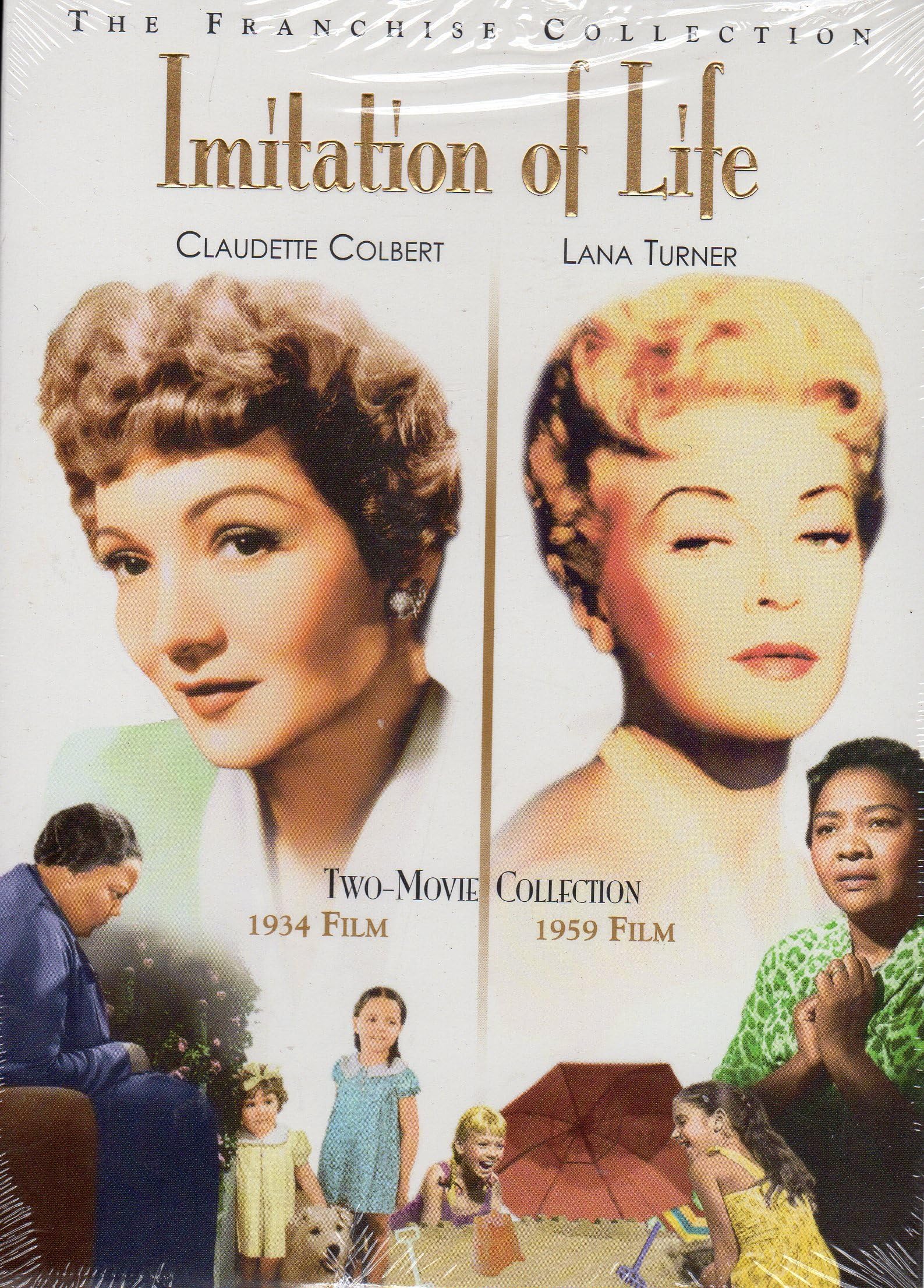
Imitation of Life (1934/1959)
Product ID: 4740799
Details
- GenreBlu-ray Movie
- FormatColor Dolby
- ContributorAlan Hale Baby
- LanguageEnglish
- Runtime3 hours and 56
Buy anything from 5,000+ international stores. One checkout price. No surprise fees. Join 2M+ shoppers on Desertcart.
Desertcart purchases this item on your behalf and handles shipping, customs, and support to KUWAIT.
Imitation of Life (1934) In this Academy Award-nominated Best Picture, Claudette Colbert and Louise Beavers are superb as two women with young daughters who build a fortune together. But success doesn't save them from sorrow with the passing years. Delilah's light-skinned teenager rejects her mother and her race, while Bea must choose between the man she loves and the daughter who loves him, too. Now all of them will pay the price of love in this spellbinding classic. Imitation of Life (1959) Lana Turner heads the outstanding cast with Juanita Moore in the second screen version of this emotionally-charged story about two widows and their troubled daughters. Lora's search for success causes her to neglect her daughter, while Annie's daughter rejects her culture by trying to pass for white. As the years pass, each of the four women realizes that she has been living out an emotionally fruitless existence. Bonus Content: Disc 1 - Imitation of Life (1959) Imitation of Life (1959) The last film in Hollywood of director Douglas Sirk ( Written on the Wind ), the 1959 Imitation of Life--an adaptation of Fannie Hurst's novel--is an endlessly fascinating film that speaks volumes about the American journey toward materialism and the racial tensions that are inseparable from it. Lana Turner plays a white single mother and aspiring actress who takes in a black housekeeper (Juanita Moore) and her daughter (played by an adolescent Susan Kohner), the latter so light-skinned she passes for white. As the years pass and success mounts for Turner, Moore also becomes more comfortable but her status as a domestic never changes. Meanwhile, Kohner's character, chafing against social constraints, rebels at every opportunity and throws a wrench into the perfect order Sirk chillingly captures through the precise, architectural design of his images. On one hand a '50s weepie and on the other a daring allegory, Imitation of Life is an unusual masterpiece. --Tom Keogh Review: Review for 2-Movie Special Edition - Having studied the 1959 version of "Imitation of Life" in film class, it has become one of my favorite films, one that is rich with many subtexts that may not be visible upon first glance. This special 2-disc DVD set contains both the 1934 and 1959 versions based on a Fannie Hurst tear-jerker novel. Tackling a sensitive issue for the times (in both versions), these movies deal with an African-American girl who wants to pass for white to have more opportunities open up for her. The girl's mother develops a friendship and working/subserviant relationship with a white woman who has her own daughter of the same age. How the two women function in their environments and the conflicts that occur due to the daughter's "passing" constitute the basis of both stories. The 1934 film stars Claudette Colbert and Louise Beavers as the mothers. The film seems very dated and old fashioned on the surface; watching it a 2nd time with the commentary track is very beneficial. Avery Clayton, an African-American Cultural Scholar, gives slight information on the making of the film, but gives the story plenty of explanation of the subtexts and is very helpful in putting some of the slightly offensive elements into the context of the times that the film was made. Beavers' character becomes the icon for Aunt Delilah's pancake mix, a thinly veiled version of Aunt Jemima. Colbert's character is given the idea to market Delilah's recipe and the two become rich; the fact that Beaver's character doesn't want any of the riches and is actually afraid NOT to be in a subserviant role to Colbert is somewhat uncomfortable. Colbert gives her typical warm performance and even today, she is a joy to watch. The rest of the film does seem very dated. Interestingly enough, Fredi Washington, an African-American actress, portrays Beaver's daughter; in the 1959 version, Susan Kohner, of Latino background, was the one who won that plum role. The 1959 version still holds up well; granted, it is somewhat over the top with some of the plot & Lana Turner's performance. However, director Douglas Sirk was able to put in so many rich subtexts and subtle critiques that this film can be watched multiple times without catching all of them. There was a battle going on between Sirk wanting an honest crititque of the times, and producer Ross Hunter wanting a glossy soap opera. This film was dismissed as a tawdry melodrama and labeled a dud by critics initially, but has become a cinema classic in the years that followed. Juanita Moore's performance as the African-American maid is one of the keys to the success of the film, and the rest of the casting is brillant: Turner, Sandra Dee, Kohner, and John Gavin. You'll also see a cameo by Sandra Gould, who later achieved minor fame as the 2nd Gladys Kravitz in TV's "Bewitched." For the 1959 film, the story is that Lana Turner plays an actress seeking fame, and Moore's character plays her maid and companion. Thankfully, there is no Aunt Delilah business here. Many of the scenes are powerhouses of acting: the final scene between mother and daughter when Moore agrees to let her daughter live her life as a white woman is a guaranteed tear-jerker. Turner also gives one of her best (if not most hysterical) performances during Annie's death scene. The commentary for this version is by Foster Hirsch, a film historian. As with Clayton's, his commentary is mainly limited to examining the film itself, not so much the making of the film. There are a few facts that he shares from his friendships with Susan Kohner and Juanita Moore that are very interesting, but overall, his commentary helps to pick out the hidden meanings that Sirk placed throughout. There is a short featurette calls "Lasting Legacy - An Imitation of Life" that talks about both films. Juanita Moore and respected film historians are on hand to talk about the movies. The featurette is very well done, but does leave one wishing there were more to it. It is approximately half an hour long. The quality of both films is fairly good; neither one looks like it came from the original negative, but they are both relatively clean and appear to have had some minor restoration work. This 2-Disc set is a real value, and highly recommended for those who love to study film. Review: Great Movies!! - Great movies!!!
| Contributor | Alan Hale, Allan Scott, Baby Jane, Carl Laemmle, Jr., Claudette Colbert, Dan O'Herlihy, Douglas Sirk, Eleanore Griffin, Henry Armetta, John Gavin, John M. Stahl, Juanita Moore, Lana Turner, Louise Beavers, Ned Sparks, Robert Alda, Rochelle Hudson, Ross Hunter, Sandra Dee, Susan Kohner, Theodore Soderberg, Warren William, William Hurlbut Contributor Alan Hale, Allan Scott, Baby Jane, Carl Laemmle, Jr., Claudette Colbert, Dan O'Herlihy, Douglas Sirk, Eleanore Griffin, Henry Armetta, John Gavin, John M. Stahl, Juanita Moore, Lana Turner, Louise Beavers, Ned Sparks, Robert Alda, Rochelle Hudson, Ross Hunter, Sandra Dee, Susan Kohner, Theodore Soderberg, Warren William, William Hurlbut See more |
| Customer Reviews | 4.8 out of 5 stars 5,565 Reviews |
| Format | Color, Dolby, Multiple Formats, NTSC, Subtitled, Widescreen |
| Genre | Blu-ray Movie, DVD Movie, Drama |
| Language | English |
| Runtime | 3 hours and 56 minutes |
D**E
Review for 2-Movie Special Edition
Having studied the 1959 version of "Imitation of Life" in film class, it has become one of my favorite films, one that is rich with many subtexts that may not be visible upon first glance. This special 2-disc DVD set contains both the 1934 and 1959 versions based on a Fannie Hurst tear-jerker novel. Tackling a sensitive issue for the times (in both versions), these movies deal with an African-American girl who wants to pass for white to have more opportunities open up for her. The girl's mother develops a friendship and working/subserviant relationship with a white woman who has her own daughter of the same age. How the two women function in their environments and the conflicts that occur due to the daughter's "passing" constitute the basis of both stories. The 1934 film stars Claudette Colbert and Louise Beavers as the mothers. The film seems very dated and old fashioned on the surface; watching it a 2nd time with the commentary track is very beneficial. Avery Clayton, an African-American Cultural Scholar, gives slight information on the making of the film, but gives the story plenty of explanation of the subtexts and is very helpful in putting some of the slightly offensive elements into the context of the times that the film was made. Beavers' character becomes the icon for Aunt Delilah's pancake mix, a thinly veiled version of Aunt Jemima. Colbert's character is given the idea to market Delilah's recipe and the two become rich; the fact that Beaver's character doesn't want any of the riches and is actually afraid NOT to be in a subserviant role to Colbert is somewhat uncomfortable. Colbert gives her typical warm performance and even today, she is a joy to watch. The rest of the film does seem very dated. Interestingly enough, Fredi Washington, an African-American actress, portrays Beaver's daughter; in the 1959 version, Susan Kohner, of Latino background, was the one who won that plum role. The 1959 version still holds up well; granted, it is somewhat over the top with some of the plot & Lana Turner's performance. However, director Douglas Sirk was able to put in so many rich subtexts and subtle critiques that this film can be watched multiple times without catching all of them. There was a battle going on between Sirk wanting an honest crititque of the times, and producer Ross Hunter wanting a glossy soap opera. This film was dismissed as a tawdry melodrama and labeled a dud by critics initially, but has become a cinema classic in the years that followed. Juanita Moore's performance as the African-American maid is one of the keys to the success of the film, and the rest of the casting is brillant: Turner, Sandra Dee, Kohner, and John Gavin. You'll also see a cameo by Sandra Gould, who later achieved minor fame as the 2nd Gladys Kravitz in TV's "Bewitched." For the 1959 film, the story is that Lana Turner plays an actress seeking fame, and Moore's character plays her maid and companion. Thankfully, there is no Aunt Delilah business here. Many of the scenes are powerhouses of acting: the final scene between mother and daughter when Moore agrees to let her daughter live her life as a white woman is a guaranteed tear-jerker. Turner also gives one of her best (if not most hysterical) performances during Annie's death scene. The commentary for this version is by Foster Hirsch, a film historian. As with Clayton's, his commentary is mainly limited to examining the film itself, not so much the making of the film. There are a few facts that he shares from his friendships with Susan Kohner and Juanita Moore that are very interesting, but overall, his commentary helps to pick out the hidden meanings that Sirk placed throughout. There is a short featurette calls "Lasting Legacy - An Imitation of Life" that talks about both films. Juanita Moore and respected film historians are on hand to talk about the movies. The featurette is very well done, but does leave one wishing there were more to it. It is approximately half an hour long. The quality of both films is fairly good; neither one looks like it came from the original negative, but they are both relatively clean and appear to have had some minor restoration work. This 2-Disc set is a real value, and highly recommended for those who love to study film.
C**A
Great Movies!!
Great movies!!!
A**G
Black& white are the best
Bought it as a gift. Love this movie, both versions
G**K
It’s a good movie
Good movie
M**I
Original and remake of an historically significant movie
This set contains the original 1934 and the remake of a movie that, in both releases, was considered to be socially groundbreaking. I am not going to review the two movies because the reviews on their respective product pages to which I have provided links are far more articulate than I can ever be. Instead, I am going to compare and contrast the original and the remake and give some reasons why the films are historically significant and groundbreaking. The 1934 movie, Imitation of Life (1934) , is based on and substantially follows Fanny Hurst's 1933 novel titled Imitation of Life . The usual Hollywood liberties are taken when transforming a novel into a screen play. The 1959 remake, Imitation of Life , differs significantly in detail (the original characters have different names, meet under different circumstances, and the successes enjoyed by one of the main characters comes from a different avenue.) However, while the details differ between the two films, the themes are the same, and the context the storylines are closely aligned to the eras in which the movies were made. The basic themes are race relations, the meaning of being Black in American society, and women breaking barriers. The 1934 version was the first film to humanize black Americans by portraying the characters as human beings who have feelings, aspirations and strong family ties (and challenges). Prior to (and after for decades to be honest) movies marginalized African Americans by portraying them as caricatures or stereotypes. More importantly, there was an obvious affection between and among the main characters of both races, which - in itself - was groundbreaking in the era. To be sure, there was racist stereotyping in the movie, including making the main black character into a "mammie" figure, complete with the dialect and mannerisms. Remember that this era was less than 70 years after the abolition of slavery and most white Americans were either blind to the impact on society and the nation as a whole, or were clinging to old illusions about how blacks could not take care of themselves. Considering the fact that the Motion Picture Production Code was trying to prevent the movie from being released the balance between portraying blacks as humans and the racial stereotyping tilts (in my opinion) towards this being a movie that raised consciousness and questions about race relations. The reason the Motion Picture Production Code did not want to release the movie is because of another aspect in the story: the daughter of the black main character was light skinned and made attempts to "pass for white" throughout the story. This implied that she had a white father, which was against most state laws at the time of filming (as unbelievable as it seems today). This aspect of the story adds another dimension to being a black American and is woven into the story. Interestingly, the woman who played the daughter, Fredi Washington, could have had a stellar career had she agreed to pass for white in real life, but refused - the exact opposite of her character, and an admirable stand for the era. For the above reasons, plus the cinematography and other factors, the original version was selected for preservation in the United States National Film Registry in 2005. The 1959 remake of Imitation of Life has major differences in details from the 1934 original, but the storyline is substantially the same. Among the differences in details is the main characters (the mothers and daughters) have different names than in the novel and original screenplay, and the white mother's success comes from some breaks in acting versus being given a secret family recipe by the black main character, which results in a multi-million dollar business. One reason for that change from the original is the era in which this version was made, there had been some major improvements in civil rights (still far short of equal rights), and in 1959 it was possible for a black woman to achieve success in business, making the original plot weak. However, the race relations and the meaning of being black in American society are still major themes. It is interesting to contrast the way those were presented in the original and this remake because there were some substantial differences in the ensuing 25 years. And, of course, the friendship between and among the main characters was still ahead of the time, despite some subtle stereotyping. In both films, too, the fact that a woman had avenues of success on her own were powerful messages. And the mother-daughter relationships in both sets of main characters were also powerful studies in both films. Features: the 1934 film has an interesting commentary, as does the 1959 remake. On the DVD containing the 1959 remake is a feature titled Making of Imitation of Life that is an informative discussion of both movies and their historical significance, as well as some interesting facts that focus on the 1959 remake. Another resource for the 1959 film is Born to Be Hurt: The Untold Story of Imitation of Life . Please visit the individual product pages for each movie for some excellent reviews.
M**S
A 30s CLASSIC THAT'S WELL WORTH A LOOK!
I'd known for several years that there was an original version of the glossy, 1959 classic Imitation of Life. So, I was glad to get my hands on a copy so I could compare the two versions - the jury's still out on which one is better, though! This original 1934 version tells the story of two widows and their daughters. Bea, played by Claudette Colbert, and Delilah, played by Louise Beavers. Delilah knocks on Bea's door, thinking that she's found the right house for an advertised maid's job. Delilah stresses how difficult it is finding an employer who'd accept her and her daughter as part of the deal. Bea offers Delilah a job on a trial basis, but her kind demeanour quickly grows on Bea, and Delilah ends up staying permanently. Delilah shares her family's pancake recipe with Bea, and before long, a successful business is in operation. The two of them hit the big time, and soon have an affluent lifestyles (albeit unequal - Delilah still insists on sleeping in the basement). Heartache is just around the corner, though. Delilah's daughter, Peola (played by Fredi Washington) is so pale skinned that she passes for white and rejects her mother. Peola's melancholy persona and rejection breaks Delilah's heart. Peola feels that without her mother around, she could easily join the dominant culture. At the same time, Bea's has problems of her own to contend with, but of a different kind. Bea and her daughter, Jesse, are in love with the same man, and this can only end in disaster. Imitation of Life caused controversy when it was released in 1934. Even today, almost 70 years later, the movie sparks discussions and debates among social commentators. Some complained that the maid stereotype played by Louise Beavers was racist, and is so politically incorrect. Think of life in America in the 30s: 1 The country was in the middle of the Great Depression 2 Civil rights movements were 30 years away 3 Racial segregation was ingrained in society 4 Film roles for African Americans were extremely limited When you consider these points, the plot of the film makes sense. The performances by the main characters are superb. Claudette looks particularly elegant and decadent, yet she remains humble and grounded, unlike the flighty 'diva' persona of Lana Turner's character. Louise Beavers may have been restricted to playing maids, but she made the most of her part. She was the best mother Peola could have wanted. Unfortunately, Peola felt that she was the wrong mother for her. The most beguiling character is Peola. Fredi Washington's life was something of a paradox. She was beautiful, green-eyed, straight haired and intelligent. At one point, it seemed as if Peola and Fredi's lives would merge. Fredi was encouraged to pass for white early on in her career. She refused. As such, her film roles were limited. She was far too beautiful and elegant to play maid roles, yet, as an African American actress, Hollywood didn't dare offer her romantic roles with the leading white actors. She was an actress that 30s Hollywood didn't know how to handle. Imitation of Life is a classic movie that's worth getting. A note to UK viewers - you'll need a VCR with NTSC playback to watch this movie.
K**B
Wonderful Film!
Classic film, one of my favorites! The dvd plays clear and compatible with many dvd / blu ray players!
B**R
Great movie
I love this movie. It's a real tear-jerker.
R**O
Buena Edición
Buena Edición en ingles con subtitulos en castellàno que contiene las dos versiones de 1937 y 1959. 100% recomendada .
C**W
Two excellent versions of the same story.
The blu-ray restoration of both these films is excellent. Anyone with a blu-ray player and interested in the films should not hesitate to invest in this double set. I was already aware of the famous Lana Turner version in which she plays an actress struggling for success. The 1933 Claudette Colbert version was unknown to me. In both films the relationships between the four main characters (white mother and daughter; black mother and daughter) is the same. But the Claudette Colbert version has her as a business woman struggling for success and not an actress. So, she gives an entirely different performance from Lana Turner but is just as good. The exploration of the issues around racial prejudice is interesting in both films and the ending is just as moving in both. Highly recommended.
A**R
Great price
Love this movie, glad it's in two versions
C**N
Imitation of Life: 2-Movie Collection Blu-ray USA release
Both movies look incredibly good here and plays fine on my region 2 Panasonic UB820 Blu-ray player. The movies are presented on a single disc, but this does not appear to affect image quality in any way. The 1934 version sports excellent contrast and clarity with no discernible scratches. The 1959 version boasts rich colours, excellent contrast, and sharp close-ups. Special features consist of the original trailers and some interesting feature commentaries; however, they can only be accessed by pressing the pop-up menu button on your remote control during playback of either movie. Claudette Colbert so charming. Very pleased with my purchase.
F**X
A must see!
I first watched this movie when I was 15 years old. It has stuck in my head since then (that's 40 years ago) as it is had a very emotional impact on me. I have watched this movie over and over and never once have I been bored with it. It true and very gripping and your emotions feel like you are right in the movie. I would recommend this movie highly to anyone who is 13 and over.
Trustpilot
2 months ago
5 days ago