We remain fully operational. Our teams are working around the clock to ensure your deliveries continue safely.

قم بتنزيل التطبيق


معلومات عنا
حقوق الطبع والنشر © 2024 Desertcart Holdings Limited
قم بتنزيل التطبيق
Buy anything from 5,000+ international stores. One checkout price. No surprise fees. Join 2M+ shoppers on Desertcart.
Desertcart purchases this item on your behalf and handles shipping, customs, and support to KUWAIT.
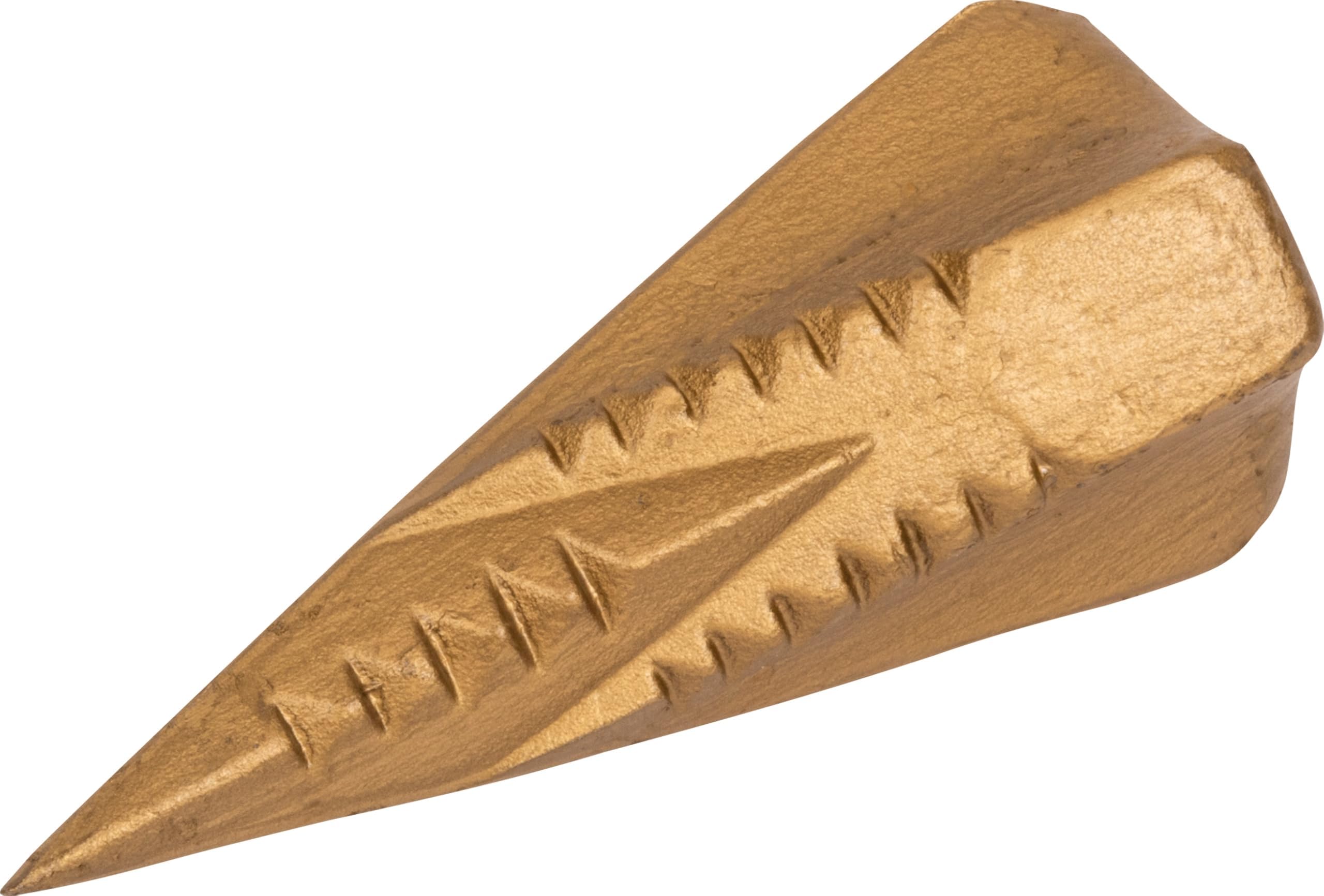
🪓 Split Smarter, Not Harder – Own the Backyard Firewood Game!
The Roughneck ROU65504 Wood Grenade Splitting Wedge features a diamond-shaped cross section and a spherical striking face designed for efficient, centered blows. Made from durable high-carbon steel with a sharp pointed tip and anti-pop notches, it delivers reliable, heavy-duty performance when used with a sledge hammer or splitting maul. Ideal for quick, clean splitting of small to medium logs, this wedge is a must-have for garden and firewood enthusiasts seeking professional-grade results.


| ASIN | B00002N801 |
| Best Sellers Rank | 19,111 in Garden ( See Top 100 in Garden ) 3 in Splitting Wedges |
| Blade Edge | Plain |
| Blade Material | High Carbon Steel |
| Brand Name | Roughneck |
| Colour | Gold |
| Country Of Origin | China |
| Customer Reviews | 4.3 4.3 out of 5 stars (1,471) |
| Global Trade Identification Number | 00025997655040, 05057902655048 |
| Handle Material | Wood |
| Head Type | splitting wedge |
| Included Components | 1x Roughneck ROU65504 Wood Grenade Splitting Wedge |
| Item Dimensions L x W | 17.8L x 5W centimetres |
| Item Type Name | Wood Grenade Splitting Wedge |
| Item Weight | 1.47 Kilograms |
| Manufacturer | Roughneck |
| Manufacturer Part Number | ROU65504 |
| Model Number | ROU65504 |
| Style Name | Modern |
| UPC | 025997655040 652175045401 644535980330 637262216674 637230525999 259976550402 |
| Unit Count | 1.0 count |
G**J
Great bit of kit.
I bought the Roughneck Wood Grenade Splitting Wedge for my son to help break up a stubborn tree stump in the garden, and it’s turned out to be a really solid bit of kit. The first thing you notice is how tough and well-made it feels. It’s got a good weight to it, which really helps when you’re driving it into the wood. The “grenade” style design does exactly what it’s meant to—once it bites, it forces the wood apart nicely rather than just getting stuck like some cheaper wedges can. My son was tackling an old, dense stump that had been sitting there for ages, and while it still took some effort (as you’d expect), this wedge made the job much more manageable. It held up well to repeated hammering with no signs of bending or chipping, which is always reassuring. It’s also fairly easy to position thanks to the pointed end, so you’re not constantly fighting to get it started. Once it’s in, it really gets to work. Overall, a very reliable and heavy-duty tool that does exactly what it says. If you’ve got logs or stumps to split and want something that will last, this is definitely worth having in your toolkit.
A**E
Does the job.
This makes to easy to split logs. Just need to tap it into place to start off before giving it heavy blows. Works best with recently cutting logs as the word splits easily. Requires a lot more hts with seasoned logs. It is made from solid metal and the tip hasn't deformed after many many uses.
R**C
Solid performer, but not a 4 way splitter
As I have discovered before (please see my review on the Fiskars splitting wedge), this item is markedly bigger and heavier than illustrations found on websites would suggest - it weighs in at 1.483KG (just over 3 1/4lb), is 175mm long, and 72mm approx across the four pointed, star like striking head. Having previously bought a 36" crow/wrecking bar by Roughneck, I knew what to expect - a solidly made, if basically finished tool, at a down to earth price, which should perform reliably for a DIY/home user. Other reviewers have stated that this splitter does not achieve the claims made for it - ie, split logs into four pieces on a regular basis. Having used the tool for a fair number of hours, I would agree with others that it does a) split logs in two: but b) consistently fails to split them into four, or even three pieces; and c) does sometimes get stuck in logs. When you examine the tool closely, it is not hard to understand why no user has recorded success in splitting logs into four. On two opposite sides of the striking area, straight, unbroken splitting blades taper to a point. On the other two, opposite sides, a squared and serrated face is intersected after 70mm by a second, pyramid section face, which is also serrated before it reaches the splitter's point. At the point where the two serrated areas meet on each side, the distance separating the straight "cutting" edges is 55mm; at the same intersection, the width between the opposite serrated sides is just 35mm. This means that the force applied to the log will never be equal on all four sides of the striking face, making it unlikely for a simultaneous four way split to be achievable. So is it that the manufacturer and/or distributor(s) are simply making cynical or exaggerated claims? Or is it possible that the item has been modified in production, without checking that the amended design is still effective? It certainly seems to me that the current production version is less sharply defined where the splitting faces approach the striking head. Whatever the truth of that or otherwise, if it's vital to you that this item does exactly what it claims to do, then DON'T BUY IT! If, on the other hand, you simply want an effective, low cost splitter, then at less than £10 delivered to your door, it really is competitively priced. (I have seen the same splitter offered in a bubble pack, priced at almost £15 from a garden centre outlet.) It is also, as at least one other reviewer pointed out, easy to hammer start into your object log, by virtue of it's long point. However, it is also perhaps more likely than a straight bladed wedge splitter to get stuck, either in the object log, or a wooden based work station beneath it. It is probably best to use the R/N on logs more than 6" deep - otherwise, the wedge spike will quite likely imbed itself into a timber (tree stump?) base beneath the object log, or worse still, damage itself on a metal one. For splitting shallower logs, I find the chisel bladed twister wedge works better. However, provided you have a club hammer, in my experience, a few taps with this either side of the wedge are enough to dislodge it safely from the tree stump work table. Did I find that the R/N was prone to jumping out on logs other than bone dry? No. If you use a club hammer to start your splitting (which is implied by the instructions taped to the striking surface), in my experience, the splitter does not tend to jump out. I can't help feeling that some of the negative comments on this wedge flow from a lack of experience in undertaking manual tasks. Whether it be car repairs, fitting wall boarding, erecting sheds, installing childrens' ball play areas, splitting logs etc, in my experience, very few manual tasks are accomplished without having to overcome some snag or difficulty. Even where a task might appear to be simple, simple does not necessarily mean easy. Hence my mother's comment many years ago "now you know why they charge so much!" For myself, I bought this item as an inexpensive back up, in case other methods failed, or to help extricate the Fiskars wedge, should it get stuck in a log. (In the West of Scotland, if the weather is good for outside work, you don't want to squander your weather window trying to acquire another, emergency tool.) How does it work in practice? Actually, quite well! Two or three gentle taps with a club hammer should be enough to start your wedge into the log you wish to split. If a 14lb sledge hammer is rather too heavy for you to use with accuracy, or for long periods, why not try a 7lb sledge hammer? I find it much easier to aim accurately than the 14lb hammer, and though it may require more blows, even thick, knotty logs tend to split after no more than 4 to five impacts. So far, all I have succeeded in doing to this wedge is obliterate the instructions taped to the striking face, and knock some of the gold paint off - not bad at all for an inexpensive splitter! Unlike another reviewer, whose tool cracked/split, in my experience, the R/N is durable beyond my expectations. I have to say, I have found it helpful to have both the Fiskars (twister type) splitting wedge AND the Roughneck grenade splitter - either of them can get stuck in logs on occasions, and in these situations, one can be of great assistance in freeing the other. Because of it's point, and it's dart-like profile, the R/N is especially easy to insert alongside a stuck wedge, and tap in, thus forcing open any nascent crack. Of course, when we're cutting logs/branches with the intention of splitting them, the ideal is to cut them straight across; however, that's not always possible. Where you need to split a log with a sloping surface, the point on the R/N makes it far easier to do this than with a chisel bladed splitter. So whether or not you decide on the Roughneck grenade splitter, is a matter of weighing up the pros and cons. I cannot award this splitter five stars, simply because it seems unable to split wood logs into four pieces as claimed. But as a low cost, solidly made splitter which consistently performs well, and is especially useful if you need to split logs through a sloping face, or need to free another wedge, I reckon it's hard to beat, and well worth considering. Bearing in mind some of the less favourable reviews of this item, I would repeat a lesson I learned many years ago, when carrying out car repairs - if you don't have all the necessary tools, the job you are attempting will be more difficult and time consuming at best; at worst, it may be impossible, or even dangerous. So don't attempt to split logs unless you have the protective equipment suggested by the manufacturer; have two wedges, one to free the other if necessary (preferably have both a chisel wedge and a pointed wedge); a club hammer to start your splitting and tap a stuck wedge free; and ideally, a choice of sledge hammers - 7lb/10lb/14lb, depending on your physical capability, and what YOU find easiest to use on your particular logs. Update 6th November 2012 A week ago I cut down to about 2' the remaining Leylandii tree trunks, several of which were 6' to 8' high, and well over a foot in diameter. Unfortunately, with daylight fading fast, the chain of my Bosch AKE 40 chainsaw derailed, and stuck fast some three quarters of the way across a stump. How to free the saw? Firstly, and most importantly, I UNPLUGGED THE SAW FROM THE MAINS! Then I released the chain tensioner and side cover, which allowed me to remove the saw to a safe, dry location. Next, I was able to remove the chain bar with a bit of pulling this way and that. However, the chain, worth £15 plus postage, remained firmly stuck in the saw cut. A trapped chainsaw chain is not the easiest thing to pull out of a stump, especially if it is new and sharp! Had I thought of it, I could have tried levering the chain out with a stout piece of wood (a crowbar could have damaged the chain). Instead, I used first a 7lb sledge hammer, and then a 10lb sledge, to hammer my Roughneck and Fiskars wedges (please see my separate review of the Fiskars) side by side into the saw cut. This allowed me to pull out the chain, and a couple of careful taps with a club hammer released the wedges. This wasn't quite the application I had in mind when I bought the wedges, but it does show an extra use if the need should arise. NOTE When lowering the height of stumps, it is best, and safest, to do this in stages. Even a piece of tree trunk just six inches deep can still be quite heavy, if it's a foot or more in diameter! Some tips from my experience: Always use a club hammer to start your splitting - two or three taps, and your splitter will be secure in the log, before you attempt to use the much heavier (and less controllable) sledge hammer. The club hammer is also very helpful to tap your wedge free when it gets stuck in a log, or your tree stump work base - trust me, sooner or later, your wedge WILL get stuck, however expensive it was, or whatever the design. If you want to split logs quickly, and deal with any hassles without losing much time, I reckon a club hammer is far easier to use than a carpenter's or engineer's hammer. Always use protective eye goggles - they really don't cost very much, and are easily obtainable from DIY stockists. Wear protective footwear, such as the steel toecap boots available in A--a at around £20. If your log splits unexpectedly, your ankle or foot can be suddenly (and painfully) hit by several pounds (or KG) of heavy, sharp splitting wedge! Normal shoes should be a no-no, heaven forbid sandals or flip flops! Having recently taken a glancing blow on my shin, I reckon that Riggers boots with toe protection might be an even better option than steel reinforced ankle boots. It isn't macho to take unnecessary risks with your personal safety - if you have dependants, it's especially selfish and irresponsible. If your logs have dried somewhat, they may show cracks in the grain. If you can tap your splitter into one of these, you may well find that your log will split on one impact, rather than three or four. Measured blows with the sledge hammer are better (and safer) than mighty ones. You are less likely to miss, and swing the sledge hammer back into your leg. You are also less likely to have the splitter fly free from your log, and strike you on the foot, shin or ankle. Be aware, the same thing could happen to anyone else standing nearby while you are working. Expect the unexpected! Logs are not manufactured items, they may fly apart on one blow, or may stubbornly resist. If you notice cracks starting to appear on either or both sides of the splitter, be especially wary of the log splitting suddenly - this is when the heavy wedge is more likely to exit your log, and strike your foot, shin or ankle. If you are not strongly built, a 7 or 10 pound weight sledge hammer is far easier to control and use than a massive 14lb one. Having tried all three, I much prefer the 7lb hammer (I am almost 63 years old, 5' 10" tall, and 12 stone 7lbs last time I weighed - not exactly Mr Universe!) I particularly like the JCB branded hammer I bought for £25 from another outlet. It cost me £5 more than the alternatives on offer, but I reckon it was worth it. It may be that the handle, a few inches longer than those on the other choices, gives it extra leverage/momentum for it's weight. The 10lb sledge I own is a compromise, almost exactly half way between the 7 and 14lb hammers; however, I personally still prefer the 7lb for sustained effort. Do have a second wedge available - I find that a combination of pointed splitter and chisel blade type complement one another well.
B**Y
It works
Recently I had to have a couple of large Ash trees taken down , sadly due to dieback . I was left with a huge amount of timber for the wood burner including about 40 rounds or drums of trunk about 18 inch diameter and 8-10 inches long. Unfortunately my trusty old 5 ton hydraulic log splitter wouldn’t touch them. I considered (but not for long) investing three or four hundred quid on an upgrade to a 12 ton machine but when I discovered it only had a maximum diameter capacity of 8 inch thought what’s the point. I then came across Iron Age (manganese steel actually) technology in the form of the Roughneck wood ‘Grenade’. Assuming that the log would most likely explode I set about the task well prepared, steel toe caps, leather gloves , goggles and just in case a pre booked taxi to A&E. However I needn’t have worried , after driving the grenade into the timber with the club hammer like a giant nail it was then sufficiently secured to then give a few carefully measured whacks with the sledge , the log split open and was then similarly dissected further pizza style into usable pieces. Once broken into smaller pieces you could easily split them further with the ‘grenade’ or machine if you have one. It’s probably best to buy two of these splitters and work them in tandem especially on the more stubborn sections and those containing knots as one splitter could get stuck or jammed in the log. The free splitter could then be used to rescue the one that is stuck. During use you will get more accustomed and develop your own technique . One thing that I discovered was that you do not necessarily have to bang the splitter into the centre of the log as this could lead to jamming and takes more force to break open. Sometimes it’s better to start nearer the edge and into existing shrinkage or crack lines. Either way it’s hard work but did the job well, it’s all done now and the ‘Grenade ‘ is now retired to a shelf in the garage ready for the next time -maybe!
M**.
Estoy súper contenta. Es una pieza robusta y muy practica. Aguanta bien los mazazos y cumple con su trabajo. El tronco se parte en dos cuando lo golpeas y va muy rápido. Lo a consejo a todos que lo quieran comprar es muy útil y fácil de usar. Yo como mujer lo estoy usando y funciona muy bien.
H**S
Der Spaltkeil wurde bisher in Kiefern-, Fichten-, Buchen-, und Eichenholz verwendet und ich kann mich über die Spaltwirkung in keinster Weise beschweren. Eine Spaltwirkung eines Stammes in vier Teile ist zwar seltenst erreichbar, aber mir reicht es schon, wenn der Keil sich nicht ständig verklemmt und dann ein zweiter oder gar dritter Keil gesetzt werden muß.
T**1
buon prodotto
J**T
Top qualité !
C**E
Encantado, nada que ver con otras cuñas. Fenomenal comportamiento con el pino. Lo recomiendo sin problemas, incluso se comporta bien, aunque esté todavía un poco resinosa la madera.
ترست بايلوت
منذ 3 أسابيع
منذ أسبوعين