We remain fully operational. Our teams are working around the clock to ensure your deliveries continue safely.

قم بتنزيل التطبيق


معلومات عنا
حقوق الطبع والنشر © 2024 Desertcart Holdings Limited
قم بتنزيل التطبيق

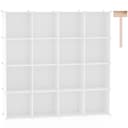
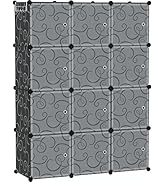
🖤 Transform clutter into curated style with modular ease!
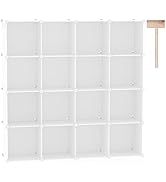
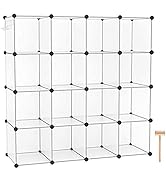
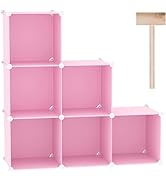
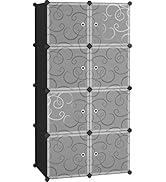
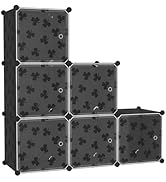
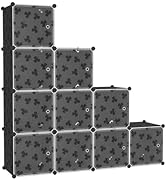
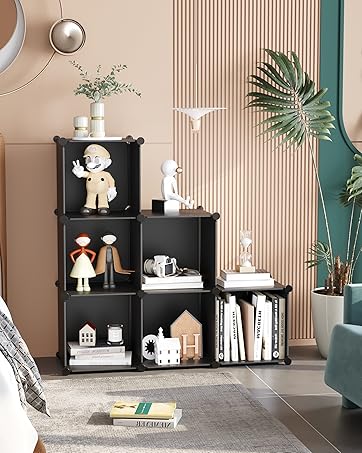
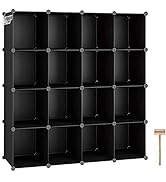
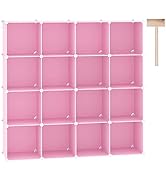
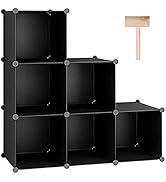
The C&AHOME 16-Cube Storage Organizer is a versatile, modular shelving unit crafted from durable PP plastic and metal. Each cube measures 11.8"³ and supports up to 11 lbs, perfect for organizing books, decor, toys, and more. Its sleek milky black finish complements modern interiors, while the DIY assembly allows you to customize layouts to fit any space. Ideal for home or office, it combines functionality with contemporary style to elevate your organization game.





| ASIN | B085ZG27N1 |
| Best Sellers Rank | 54,004 in Home & Kitchen ( See Top 100 in Home & Kitchen ) 9 in Cube Shelves |
| Brand | C&AHOME |
| Colour | Black |
| Customer Reviews | 4.4 4.4 out of 5 stars (4,170) |
| Date First Available | 19 Dec. 2019 |
| Item Weight | 5 kg |
| Maximum Weight Capacity | 11 Pounds |
| Model Number | B085ZG27N1 |
| Product Dimensions | 31.5 x 122.94 x 122.94 cm; 5 kg |
| Special Features | Rust Proof |
L**U
Easy to assemble
Arrived on time perfect for my sons cars and train collection
G**N
Had a lot better
Started building, first bag of shelves 90% ok second bag all shelves damaged, see pictures of example, the corner sections are also too loose shelves I had put in popped out, better brands out there ( Sing a song)
K**Y
Got for my girls closet! Easy to put together and holds up well!
R**E
Nachdem ich am ersten Würfel fast verzweifelt bin, habe ich festgestellt, dass es mit Anleitung besser geht. Ganz schnell hatte ich dann den Bogen raus und ich habe mit dem Set 2 ganz tolle Regale gebaut. Endlich habe ich auch wieder Platz für Deko, Bücher usw.
K**U
Super práctico! Se monta muy fácil y puedes hacer los bloques como quieras. No se puede poner mucho peso en cada balda pero para figuras y demás cosas como lo tengo yo va genial!
L**D
je recommande, déjà la 3 ème
G**R
You're buying the world's cheapest wire shelving, which is no doubt made from surplus pesticide by prison laborers in China. That said, these shelves are actually quite thoughtfully designed. In particular, the joiner blocks are nice and snug, and each slot has multiple detents for assembly. That's actually very helpful. The strength comes from the lattice structure. Individual panes are somewhat flexible. In fact, they are exactly as flexible as is optimal for assembly. After going through the assembly process, I'd make the following points: 1) All joiner blocks have one nice, plain, circular face. The face should face forward on the front joiners and backward on the rear joiners. No other orientation is needed, anywhere. It's tempting to make subassemblies and then put those together, but be sure you know exactly how subassemblies will fit into the larger structure. I think it's actually easier to do the whole thing at once. 2) I initially started by making sure every pane was fully inserted into its slot as I went. But this turns out to be counterproductive since it limits your flexibility to add adjoining panels and correct problems. Assemble the entire thing loosely, then snug it up. 3) Go in layers. The starting point for each layer is a fully-assembled mini-shelf. For each new layer, insert the back and vertical panes ONLY in the joiner blocks that are already there. The joiner blocks are strong enough to keep them roughly in place as you work. Then add joiner blocks along the REAR, free corners of those newly-added panels. Finally, add new top (flat) panels, then put in the front joiner blocks. This sequence keeps you from having to readjust and disassemble too much. 4) Back panels connect to the subsidiary slots in the joiner blocks, not one of the four main slots. Back panel = secondary slot. Everything else = main slots. Always. 5) Once everything is together, exert pressure along every horizontal, vertical, and front-to-back axis to fully seat all the panels. Go as wide as your arms will allow - it's helpful to tighten multiple joints at once. I'm not sure exactly why; it just seems to work better. After an initial tightening, repeat the whole procedure with more force. You'll feel multiple panels snapping into the fully-inserted position at once. 6) Inspect every joiner block to make sure that every panel connecting to it is fully inserted.
ترست بايلوت
منذ يوم واحد
منذ 3 أسابيع