
Buy anything from 5,000+ international stores. One checkout price. No surprise fees. Join 2M+ shoppers on Desertcart.
Desertcart purchases this item on your behalf and handles shipping, customs, and support to KUWAIT.
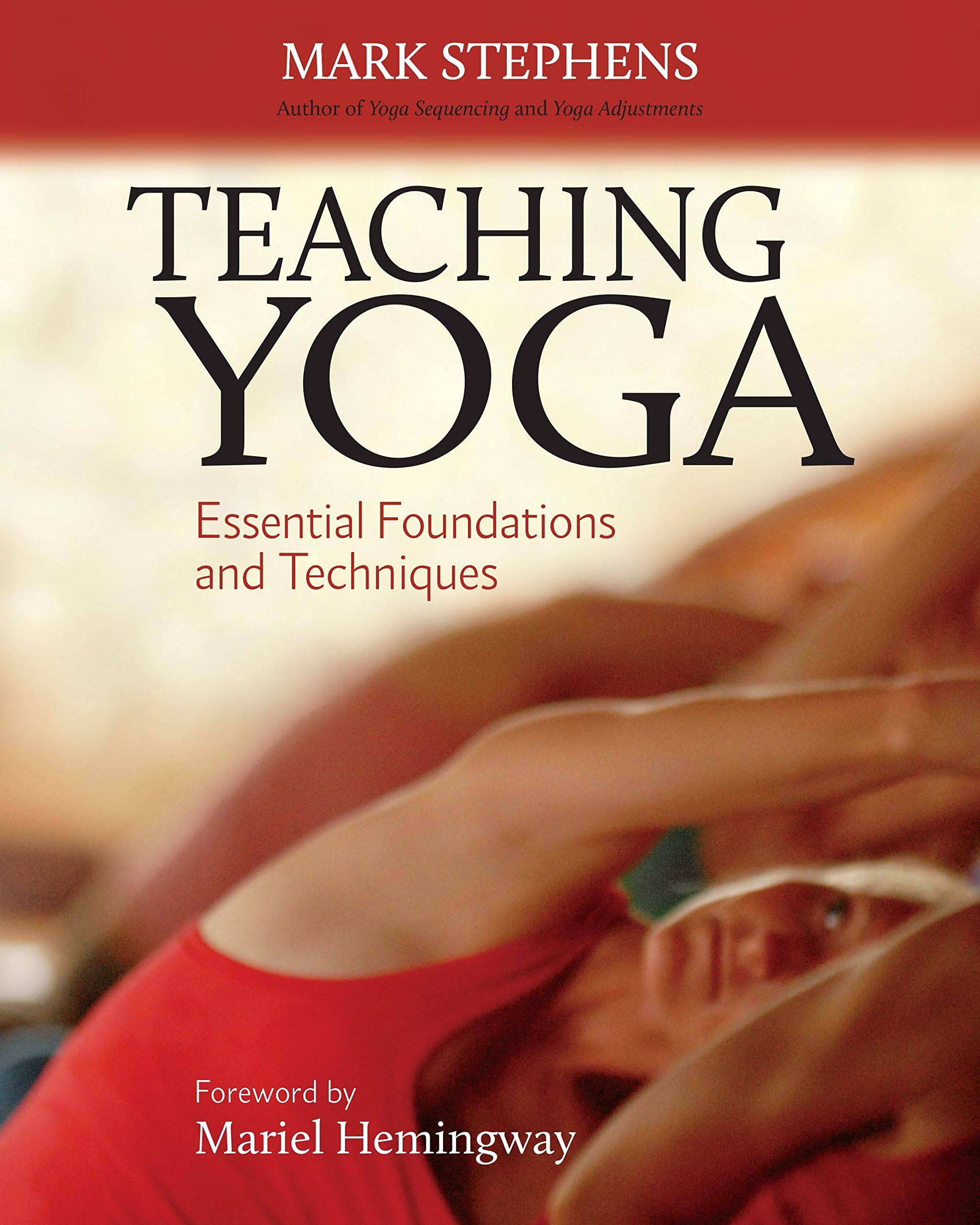
Teaching Yoga is an essential resource for new and experienced teachers as well as a guide for all yoga students interested in refining their skills and knowledge. Addressing 100% of the teacher training curriculum standards set by Yoga Alliance, the world's leading registry and accreditation source for yoga teachers and schools, Teaching Yoga is also ideal for use as a core textbook in yoga teacher training programs. Drawing on a wide spectrum of perspectives, and featuring more than 150 photographs and illustrations, the book covers fundamental topics of yoga philosophy and history, including a historical presentation of classical yoga literature: the Vedas, Upanishads, Bhagavad Gita, Yoga Sutras of Pataljali, and the main historical sources on tantra and early hatha yoga. Each of the eleven major styles of contemporary yoga is described, with a brief history of its development and the distinguishing elements of its teachings. Exploring traditional and modern aspects of anatomy and physiology, the book provides extensive support and tools for teaching 108 yoga poses ( asanas ), breathing techniques ( pranayama ), and meditation. Teaching Yoga offers practical advice for classroom setup, planning and sequencing classes, as well as the process involved in becoming a teacher and sustaining oneself in the profession. The book has over 200 bibliographic sources, a comprehensive index, and a useful appendix that lists associations, institutes, organizations, and professional resources for yoga teachers. Review: Great for Students, Too - This comprehensive guide to yoga instruction is also a boon for students. It complements your teacher’s directions by offering cues he or she may not include, thereby helping you refine your poses, and by explaining the poses with different phrasing. I’ve had great instructors, but still found that a substitute teacher might word things in a way that made more sense to me and helped me better execute the asanas. This book also can fill in any gaps that your class may have, such as the omission of certain types of poses, breathing, or meditation exercises. For the student whose practice is primarily home-based, this book is your instructor. Stephens discusses 92 different asanas, including preparatory poses, how to get into the pose, suggestions for refinement, and follow-up positions. His recommendations for sequencing a class will help you create more effective routines that will maximize the benefits of pose. For example, backbends tend to be energizing and are best placed early in your program. Follow up with twists and core work to neutralize the extreme positions of the backbends. Forward bends calm the nervous system and help the body wind down from your practice. Stephens offers basic templates for beginning, intermediate, and advanced classes if you prefer to follow a pre-set routine. He also offers suggestions on yoga poses and modifications for various injuries, stating clearly that this is not to take the place of advice from your health care provider. Other sections address the chakras, the menstrual cycle, and each trimester of pregnancy. The book covers more than just asanas. It also explores the history and development of yoga from its ancient sources to the varieties available today. Subtle energies affected by yoga are described--chakras, bandhas, nodi, prana, gunas, and doshas. Detailed anatomy, including musculature, joints, and movement, educates the reader about the interplay of the body and the asanas. A number of chapters focus on instructor concerns such as creating a welcoming and conducive class environment, running a class, how to give cues, and professional issues, which gives students an insight into teaching. Stephens ends with appendices which cover notes for each chapter, a glossary of terms, pronunciation and translation of asana names, teaching resources, and a useful table of 111 asana elements. While directed at the yoga instructor, this book also benefits the yoga student by providing information that the self-directed individual can use to enhance and further her or his practice. It’s a fabulous contribution to the yoga community. Review: Required reading for a yoga teacher - With the increasing number of training programs for yoga teachers and the proliferation of yoga studios, many people, and especially yoga students, are demanding higher standards from their yoga teachers. There have been many debates as to whether or not it is advisable to have the yoga profession, and particularly the training of teachers, regulated. In 2007, the Consumer Product Safety Commission reported that in the previous three years, around 13,000 Americans suffered yoga-related injuries as reported by doctors' offices and emergency rooms. Many injuries are the result of teaching practices from incompetent teachers. Many teachers have not received proper training or do not have any certification; it is estimated that among the 70,000 yoga teachers in the United States, only three quarters have any sort of certification. Furthermore, while there are strict training programs that demand a minimum of 200 hours of training, others provide a diploma after a few days of exposure, or just by e-mail. In the middle of such a situation, the arrival of Mark Stephens' book is more than a blessing. The author has trained more than 700 yoga teachers and is the Director of the Teacher Training Program at Santa Cruz Yoga (CA). He has studied various yoga styles (Iyengar, Ashtanga Vinyasa, yoga therapy, and Vinyasa Flow) and is well versed in yoga history and philosophy. The book includes various practical tables for easy consultation, numerous photographs, a rich bibliography, a very helpful list of yoga teaching resources (yoga websites, yoga associations, and institutes and research centers), a comprehensive list of yoga poses, and a summary of the yoga sequences followed by six major yoga schools. The first four chapters present the roots of modern yoga and the physiological and mental components of yoga practices. Other chapters deal with teaching yoga poses, breathing techniques and meditation. Three excellent chapters (5, 6 and 10) give useful guidelines and tips for yoga teaching, such as options in conducting a class, the teacher's language and voice, the relationship between teacher and student (including how to deal with feelings of attraction), the use of props and music, how to organize the sequencing of a class, and many other critical subjects. In these chapters, Stephens shares with the readers the lessons he learned as a seasoned teacher. He properly illustrates his instructions with the philosophical foundations of yoga, based mainly on Patanjali's almost two-thousand year old Yoga Sutras. Inspired by the idea that in yoga, like in travelling, what is important is the journey, not the destination, Stephens affirms, "Yoga is not a practice of attainment; it is an unending process of self-discovery and self-transformation," and teachers are just facilitators and guides. Through the entire book, he is guided by the idea that the role of the yoga teacher is to assist in the discovery of the inner teacher that all of us have inside ourselves; this is indeed the Socratic approach to teach. He also insists on the beneficial powers of adaptation and innovation in teaching yoga to better respond to the needs of every student. The last chapter is dedicated to the yoga profession; here, Stephens mentions some difficult topics such as regulations, teachers' fees, liability insurance, teacher's training and certification, how to start teaching as an apprentice, and other interesting subjects. Although he does not provide his personal views on many of these points, he raises them and alerts us to give proper consideration to them. This is an excellent book, full of wisdom and information for anyone interested in yoga practice or in teaching. Nevertheless, the book could be improved by taking care of some caveats. It is desirable that in a revised edition the index would incorporate all the authors, as well as the yoga poses mentioned in the text. The name of the poses should appear with both the Sanskrit and English names.
| Best Sellers Rank | #114,225 in Books ( See Top 100 in Books ) #133 in Exercise Injuries & Rehabilitation #196 in Yoga (Books) #770 in Education Theory (Books) |
| Customer Reviews | 4.8 out of 5 stars 2,752 Reviews |
T**Y
Great for Students, Too
This comprehensive guide to yoga instruction is also a boon for students. It complements your teacher’s directions by offering cues he or she may not include, thereby helping you refine your poses, and by explaining the poses with different phrasing. I’ve had great instructors, but still found that a substitute teacher might word things in a way that made more sense to me and helped me better execute the asanas. This book also can fill in any gaps that your class may have, such as the omission of certain types of poses, breathing, or meditation exercises. For the student whose practice is primarily home-based, this book is your instructor. Stephens discusses 92 different asanas, including preparatory poses, how to get into the pose, suggestions for refinement, and follow-up positions. His recommendations for sequencing a class will help you create more effective routines that will maximize the benefits of pose. For example, backbends tend to be energizing and are best placed early in your program. Follow up with twists and core work to neutralize the extreme positions of the backbends. Forward bends calm the nervous system and help the body wind down from your practice. Stephens offers basic templates for beginning, intermediate, and advanced classes if you prefer to follow a pre-set routine. He also offers suggestions on yoga poses and modifications for various injuries, stating clearly that this is not to take the place of advice from your health care provider. Other sections address the chakras, the menstrual cycle, and each trimester of pregnancy. The book covers more than just asanas. It also explores the history and development of yoga from its ancient sources to the varieties available today. Subtle energies affected by yoga are described--chakras, bandhas, nodi, prana, gunas, and doshas. Detailed anatomy, including musculature, joints, and movement, educates the reader about the interplay of the body and the asanas. A number of chapters focus on instructor concerns such as creating a welcoming and conducive class environment, running a class, how to give cues, and professional issues, which gives students an insight into teaching. Stephens ends with appendices which cover notes for each chapter, a glossary of terms, pronunciation and translation of asana names, teaching resources, and a useful table of 111 asana elements. While directed at the yoga instructor, this book also benefits the yoga student by providing information that the self-directed individual can use to enhance and further her or his practice. It’s a fabulous contribution to the yoga community.
G**S
Required reading for a yoga teacher
With the increasing number of training programs for yoga teachers and the proliferation of yoga studios, many people, and especially yoga students, are demanding higher standards from their yoga teachers. There have been many debates as to whether or not it is advisable to have the yoga profession, and particularly the training of teachers, regulated. In 2007, the Consumer Product Safety Commission reported that in the previous three years, around 13,000 Americans suffered yoga-related injuries as reported by doctors' offices and emergency rooms. Many injuries are the result of teaching practices from incompetent teachers. Many teachers have not received proper training or do not have any certification; it is estimated that among the 70,000 yoga teachers in the United States, only three quarters have any sort of certification. Furthermore, while there are strict training programs that demand a minimum of 200 hours of training, others provide a diploma after a few days of exposure, or just by e-mail. In the middle of such a situation, the arrival of Mark Stephens' book is more than a blessing. The author has trained more than 700 yoga teachers and is the Director of the Teacher Training Program at Santa Cruz Yoga (CA). He has studied various yoga styles (Iyengar, Ashtanga Vinyasa, yoga therapy, and Vinyasa Flow) and is well versed in yoga history and philosophy. The book includes various practical tables for easy consultation, numerous photographs, a rich bibliography, a very helpful list of yoga teaching resources (yoga websites, yoga associations, and institutes and research centers), a comprehensive list of yoga poses, and a summary of the yoga sequences followed by six major yoga schools. The first four chapters present the roots of modern yoga and the physiological and mental components of yoga practices. Other chapters deal with teaching yoga poses, breathing techniques and meditation. Three excellent chapters (5, 6 and 10) give useful guidelines and tips for yoga teaching, such as options in conducting a class, the teacher's language and voice, the relationship between teacher and student (including how to deal with feelings of attraction), the use of props and music, how to organize the sequencing of a class, and many other critical subjects. In these chapters, Stephens shares with the readers the lessons he learned as a seasoned teacher. He properly illustrates his instructions with the philosophical foundations of yoga, based mainly on Patanjali's almost two-thousand year old Yoga Sutras. Inspired by the idea that in yoga, like in travelling, what is important is the journey, not the destination, Stephens affirms, "Yoga is not a practice of attainment; it is an unending process of self-discovery and self-transformation," and teachers are just facilitators and guides. Through the entire book, he is guided by the idea that the role of the yoga teacher is to assist in the discovery of the inner teacher that all of us have inside ourselves; this is indeed the Socratic approach to teach. He also insists on the beneficial powers of adaptation and innovation in teaching yoga to better respond to the needs of every student. The last chapter is dedicated to the yoga profession; here, Stephens mentions some difficult topics such as regulations, teachers' fees, liability insurance, teacher's training and certification, how to start teaching as an apprentice, and other interesting subjects. Although he does not provide his personal views on many of these points, he raises them and alerts us to give proper consideration to them. This is an excellent book, full of wisdom and information for anyone interested in yoga practice or in teaching. Nevertheless, the book could be improved by taking care of some caveats. It is desirable that in a revised edition the index would incorporate all the authors, as well as the yoga poses mentioned in the text. The name of the poses should appear with both the Sanskrit and English names.
E**A
A Must-Have reference for all yoga teachers and practitioners
Mark Stephens' "Teaching Yoga" is a must-have book for all yoga teachers and practitioners. The book is well written and organized. It is easy to read (compared with some yoga classics) and is very informative. It is not only a good reference for many common poses (asanas) , it also covers many aspects that advanced students and teachers are interested in: history of yoga, pranayama, bandhas, sequencing, etc. Someone mentioned that Mark uses too many Sanskrit in his book. I must say I disagree! I actually appreciate Mark using Sanskrit name for the asanas as I already know the English names. I want to learn the Sanskrit names as well! As yoga originates from India, it is logical to use Sanskrit terms. Last but not least, Mark is a very detail-oriented and insightful teacher. I found myself re-reading sections of his book and picked up insights that would allow me to become a better, safer practitioner and teacher. I also found the Appendices (the list of asanas and the asana elements) extremely useful for planning a yoga class. I highly recommend this book to anyone who does yoga.
A**Z
Great Product for the Price.
Love this book. Great information for yoga teachers
S**M
Loads of useful info!
I am practicing yoga for health reasons, primarily for improving my posture and curing my back pain. I was also looking for some deeper knowledge of the physical and anathomical aspects of yoga, and TEACHING YOGA has a lot of 'in depth' material on that in it. Few months ago I've purchased BACK PAIN REMEDIES: MYTHS, HALF TRUTHS, FALSE CLAIMS, AND GENUINE CURES...: TREATING BACK PAIN: INFORMED DECISIONS (TREATING BACK PAIN: INFORMED DECISIONS) , and had a good read about what is available for back pain sufferers and how effective is it. Well, it was a great insight into the world of ineffective and 'semi-effective' back pain remedies that too many people are relying on! The conclusion was - I'm not doing yoga enough! TEACHING YOGA by Mark Stephens has a lot of material that I have found immediately useful for my back problems. Among other things, it even has a dedicated "Healthy Lower-Back Sequence" of 26 asanas to help with the spinal conditions, and a chapter on scoliosis, and that's besides the rest of the 392 pages packed with very useful info on practicing yoga! I suppose the book was intended for yoga teachers but I am using it a lot for my personal health and would suggest it to anyone who is interested in yoga and wants to improve their health. I'm sure anyone would benefit from carefully studying this publication, for teaching or personal practice - there is a lot to gain from it!
T**D
Solid instruction
Wonderful material. If you need a better understanding of yoga and the well thought out/ complex information behind it this is a great tool. There are quite a lot of words that are hard to pronounce, I would just do a quick google search and it will help with them.
J**I
well crafted instructor's manual
A really well structured guide to teaching hatha yoga and pranayama, some basic meditations, and detailed instructions on teaching yoga asanas. As a meditation instructor who began his own hatha yoga training with BKS Iyengar and several of his students, I find this a useful contemporary contribution to the field. While one could quibble with some details of the book's historical and philosophical sections, at least there is an overview of yoga philosophy, ethics, etc., which many similar books are lacking. The book's greatest strengths are its in-depth exploration of hatha yoga instruction, detailed notes on the asanas, and organization of classes, which are the author's areas of expertise. Highly recommended for hatha yoga instructors and advanced students.
J**E
Love This Book!! Rich in Content!! Unbelievably Priced for the Amount of Information!!
I am not training to be a teacher of yoga, as I enjoy being a student. I wanted to learn more about yoga and its benefits. This book is loaded with great information. It actually has more information than I thought it would have. If you are looking for a book that is mainly pictures of poses and little content, this may not be your book.You might want to pick up some yoga cards. Although, this book has pictures of all the poses that it list, this book is more of a textbook that is loaded with information about techniques, safety, anatomy, terminology, history.... I have been a student of yoga for many years. I typically take yoga to help reduce stress while I am in school working on my Masters degree in Social Work. So, while I am on winter break I thought this would be a good time to learn more about yoga, since it has been my saving grace while in school. It keeps me centered and grounded and relaxed!! I also picked up the Sequencing book so I could plan my own routine while on break. I could have just used this book for that purpose, but I ordered both books at the same time and I am glad I did, as both books are worth keeping for reference. All I can say is, Thanks Mark Stephens for making these wonderful books so affordable! Each one of these books are worth twice the price easily!
M**I
勉強するのが楽しみです !
キレイな本を、有り難うございました。 これから勉強するのが、楽しみです。
B**T
Very comprehensive summary of teaching tools for Yoga
For me Mark summarizes the most important ingredients to cook a good yoga class. I especially liked the detailed examples why sometimes using common instructions can be Counterproductive for the students. Not to forget the importance of grounding forces that should be mentioned all the time in order to find balance also in a challenging pose.
L**E
Excelente para instrutores de Yoga
Realmente foi uma ótima aquisição, está acrescentado muito nas minhas aulas e complementando os cursos que fiz. Como trás uma abordahem ampla e "pé no chão" sobre Yoga, filosofia, anatomia funcional, e outros... há um capítulo introdutório sobre Yoga especializado sobre gestantes, depressão, lesões, entre outros assuntos, muito bom e que me fez adquirir os demais livros deste autor também. É um livro para quem gosta de ler, de aprofundar seus conhecimentos.
A**R
EL libro de Yoga principal para maestros!
Mar Stephens es un genio y explica los temas de yoga in mucho detalle.fantastico! el libro llego a tiempo. buen servicio de parte del vendedor!
J**S
Teaching Yoga Will Change Your Life
'Teaching Yoga Will Change Your Life' - so begins Mark Stephens' book. Stephens set out, he says, to provide an essential resource for all yoga teachers and students interested in refining their skills and expanding their knowledge of yoga. To that end there are chapters on the ancient roots of modern yoga, yoga's journey to the west, subtle energies, body structure and movement, techniques and tools in teaching yoga, teaching asanas, teaching pranayma, teaching meditation, planning classes, specialised teaching and yoga as a profession. There are instructions on how to construct a basic practice 'arc' and sample plans based on all the major branches of yoga such as Iyengar, Bikram, Sivanada, etc. The aspects I liked best were his clear honest style of writing, his obvious experience and knowledge, his immaculate referencing of facts and figures and his obvious love of yoga. Suitable as a text book for new teachers and a reference work for the more experienced. I'm already virtually living with this book and I expect to do so for a long time to come. It's well set out and the illustrations are particularly clear - suitable for anyone with a visual disability.
Trustpilot
3 weeks ago
5 days ago