
قم بتنزيل التطبيق


معلومات عنا
حقوق الطبع والنشر © 2024 Desertcart Holdings Limited
قم بتنزيل التطبيق

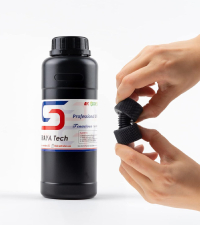
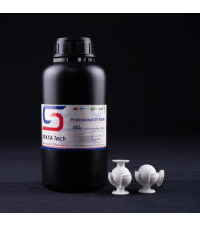
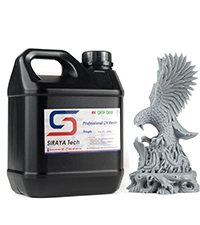
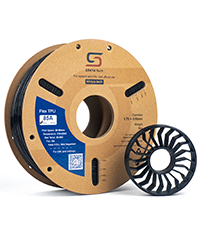
🖤 Flex your creativity with Siraya Tech’s toughest, fastest, and safest TPU filament yet!
Siraya Tech Flex TPU Filament 85A is a high-performance thermoplastic polyurethane designed for flexible, durable 3D prints. Tested to ISO 10993 standards for biocompatibility, it’s ideal for wearable and protective applications. Its high-flow formula enables faster printing speeds, while moisture-resistant packaging ensures long shelf life and consistent quality. Compatible with most 3D printers, this filament is perfect for professionals seeking reliable, skin-safe, and versatile material.


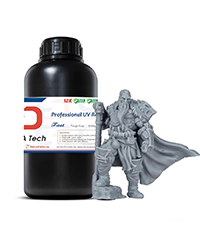
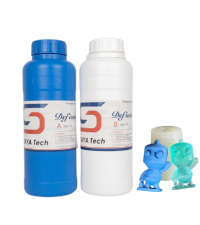
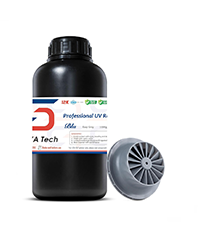
| ASIN | B0CP213ZMG |
| Best Sellers Rank | #1,471 in Industrial & Scientific ( See Top 100 in Industrial & Scientific ) #124 in 3D Printing Filament |
| Brand | Siraya Tech |
| Color | Tpu 85a Black |
| Customer Reviews | 4.4 4.4 out of 5 stars (548) |
| Date First Available | November 27, 2023 |
| Ink Color | TPU 85A Black |
| Item Weight | 2.2 pounds |
| Manufacturer | Siraya Tech |
| Manufacturer Part Number | Flex TPU 85A Black 1kg |
| Material Type | Thermoplastic Polyurethane |
| Number of Items | 1 |
| Package Dimensions | 10.79 x 8.31 x 2.95 inches |
R**S
This stuff is RAD!
I love this stuff. It works great and creates a neat foamy texture. I use it to make vibration dampers for motorcycle parts and knee pads! They offer print profiles, none for the printers I have, but its easy enough to peep the json and set the baseline for your printer assuming you use orca slicer. It will string no matter what, dont even bother with retraction. The filament foams so its going to spill out of the nozzle, you can see in the pictures. Just plan on some post processing. I will also say that the adhesion is very very strong. Much more than the regular tpu I have used. I ruined a smooth carbon-fiber look build plate with it. Printing over packing tape might be a good idea. I tried glue but that didnt help the bed ruining conditions. Depending on your printer it might also help to have a bearing roller for the spool. its very soft. Technically not supposed to go this low of durometer with my Kobra S1, but it works fine.
J**N
Seriously Great!
This is some genuinely great stuff. It took a bit to dial in the settings but after that it prints great. I recommend looking at the user guide for this on the Siraya Tech website. At max expansion, it’s less than half the density of regular TPU and really is fairly soft and super squishy. It also has a cool foam texture that hides layer lines. Doesn’t string at all and has great layer (and bed) adhesion. In fact, the bed adhesion is so good it peeled some of the PEI coating off 😅. It’s defintely weaker and less tear resistant at max expansion but it’s still super strong. The main problem is the fact it oozes constantly, which is due to it expanding. It’s honestly not much of a problem but it does effect the surface quality across gaps. Also, like every other TPU, it can’t do overhangs well bc the filament droops down.
E**L
Great for hard case tool inserts
I bought this to try making custom hard case inserts, similar to another reviewer. I was largely unsuccessful getting this to print at 270C on my 0.4mm nozzle (it immediately clogged), but after switching to 0.6mm I have had no issues at all. At the 270C settings, this material really can't do overhangs, but after doing some testing I found that it works fine at 15% infill with 4+ top layers. At lower infills or fewer top layers, the infill texture shows through and there can be gaps in the top layer. Because of the foaming aspect, prints seem to use less filament than if printed in regular TPU. The texture of the finished product is similar to EVA foam and looks very clean after cleaning up some errant strings. It is perfect for my use case, and it's so nice being able to print an exact fitting insert! In the past I used sheets of packing foam, and it always was a pain trying to cut an exact fit while maintaining a clean look. Since the surface comes out relatively smooth it's also easy to wipe clean. TLDR; this stuff is great!
J**E
Flexible and Tough, But Requires Careful Setup
I’ve been printing with Siraya Tech Flex TPU (85A Shore) and overall, it’s a solid choice for flexible parts. The filament delivers excellent elasticity and toughness—perfect for footwear prototypes, protective gear, and other functional prints. It flows well at higher speeds compared to many TPU brands, and the moisture-resistant packaging is a nice touch for storage. Print quality is great once you dial in the settings. Layer adhesion is strong, and the finished parts feel durable and smooth. However, TPU can be tricky, and this filament is no exception—you’ll need to fine-tune retraction and speed to avoid stringing. It’s not quite “plug and play,” but that’s expected for flexible materials. The ISO 10993 compliance is a big plus for projects requiring biocompatibility. Overall, this is a high-quality TPU filament that performs well if you’re willing to spend a little time on setup.
C**L
Such a cool tpu to print with
This took a little time to get the settings dialed in perfect (BambuLab X1c). This does not print like 95a tpu. It wants to ooze out the print noozle, with existing flow settings. So, I had to turn my flow way down. Just follow Siraya tech's print recommendations and you will get to a great starting point. I love how if you print this at 240c it is more dense (heavier), and if you print at 270c it is more squishy (lighter). It has a texture a lot like filaments that have carbon or glass fiber in them. This gives it a great texture. I've printed squishy balls, croc shoes, and flying discs. All have been a blast to print. All I want more out of this product, is more colors to choose from!! I will buy more when that is the case.
D**C
TPU that's actually useful and prints easy!
This stuff is awesome. Print things that need to take some abuse. Layer adhesion is nuts. Feeds through PTFE just like any other filament. Very little stringing. Glossy. Has trouble bridging like every other TPU, and it needs to be printed slowly. On my Qidi Q2 it looked best at 245C, and with 0.4mm nozzle I'm getting around 6mm3/s max volumetric, 60mm/s max speed, and using 30mm/s on outer layers. I will be buying a lot more of this.
W**J
Like EVA foam for 3d printers...
This Siraya Flex TPU Air white is basically like printing EVA foam. Amazing stuff for wearables, its strong and lightweight, and retains its shape even after extreme elongation... IMO it blows the OVERTURE and eSUN TPUs out of the water. Speed 30-50mm/s, set temp and flow ratio using the chart, set PEI bed to 40C, add a relase agent like elmers purple stick glue to the bed, and you'll be printing in no time. I use a 0.8 mm nozzle with 0.45mm layers on a Voron 2.4
納**ム
TPUよりも印刷しやすく、TPUより弾力性があり、TPUより柔らかい。バイクのエアクリーナージョイントをTPUで作ったらキャブを入れるのに苦労したが、PEBAで作り直したらとても作業性が良くなった。絶版ゴム系パーツのリプロに十分使えると思います。
P**.
Ho già il Filaflex 82A di Recreus, che la mia Qidi Q1 Pro gestisce senza difficoltà; dato che quello è un filamento di grande qualità ma anche costoso, ho voluto provare il Siraya Tech 85A per realizzare componenti più "economici", come ad esempio guarnizioni di grandi dimensioni. Con sorpresa devo dire che il materiale mi ha veramente sorpreso: ha una consistenza assolutamente inaspettata, molto simile a quella della gomma siliconica e quindi molto flessibile. Anzi, la morbidezza del materiale mi è parsa maggiore di quella del Filaflex, nonostante secondo le specifiche tecniche non dovrebbe essere così. Aggiungo altre due proprietà molto interessanti del materiale: se stampato su piano liscio, ha notevoli proprietà antiscivolo anche su superfici bagnate (è ottimo per suole o inserti anti-slittamento); se stampato su piano liscio e in lastra sottile aderisce a vetri ed altre superfici lisce (come il metallo lucido) rimanendo appeso anche in verticale. La stampa è agevolata dal fatto che il produttore consente di scarica dal proprio sito web i profili di stampa già pronti per diverse stampanti 3D: quello della Q1 Pro non era presente, ma ho scaricato quelli per Bambulab e Flashforge, adattandoli senza problemi. Il risultato sono state stampe perfette sin dal primo utilizzo e con una resa di inaspettata alta qualità, anche con ugello da 0.4 mm. Il filamento è estremamente igroscopico e se resta esposto anche per poche ore le stampe falliscono. Va asciugato molto bene e possibilmente anche protetto durante le stampe prolungate. Per ridurre il rischio di stampe problematiche è consigliabile utilizzare ugelli più ampi di quello standard, come ad esempio da 0.6 o 0.8 mm. Allego un brevissimo video che mostra una serie di guarnizioni che ho disegnato e stampato, con ugello da 0.8 mm, per l'utilizzo in esterno. Pur con le avvertenze relative all'igroscopicità, il filamento rimane molto convincente per le eccellenti proprietà fisiche.
S**X
This is the best material ever made! Can print faster than the normal TPU
F**M
Muy buena calidad
K**R
Ein sehr schön zu druckendes innovatives Material. Es ist kein TPU im klassischen Sinne. Die Oberfläche ist samtig und nicht glatt. Angenehm anzufassen und somit gut für tragbare Teile, wie Sohlen oder Schuhe geeignet. Durch den gingen Flow relativiert sich der Preis, kann man in der weichsten Stufe doch fast das dreifache Druckvolumen eines normalen TPU Drucks erzeugen. Genaueres bitte in der Tabelle nachsehen. Das Material lässt sich leicht drucken. Aufpassen muss man bei Druck, da das Material extrem gut an der Druckplatte haftet. Hier sollte ein Klebestift zum Einsatz kommen, um den fertigen Druck wieder von der Druckplatte lösen zu können. Insbesondere in den weicheren Einstellungen ist das Material nicht sehr reißfest und hat auch mehr die Eigenschaften eines Memory Foam, da es sich, nach Druckbelastung nicht immer ganz zurücksetzt. Da es für meinen Raise3D pro3 Draucker in Verbindung mit dem Slicer ideamaker keine Templates von Siraya gibt, poste ich hier einmal die von mir gefundenen Werte. Diese kann man sicher auch für andere Systeme, die nicht Bambulab heißen übernehmen. Dies leider als Screenshot, da ich nicht weiß wie man hier eine Tabelle einfügen kann.
ترست بايلوت
منذ شهر
منذ 3 أسابيع