We remain fully operational. Our teams are working around the clock to ensure your deliveries continue safely.

قم بتنزيل التطبيق


معلومات عنا
حقوق الطبع والنشر © 2024 Desertcart Holdings Limited
قم بتنزيل التطبيق
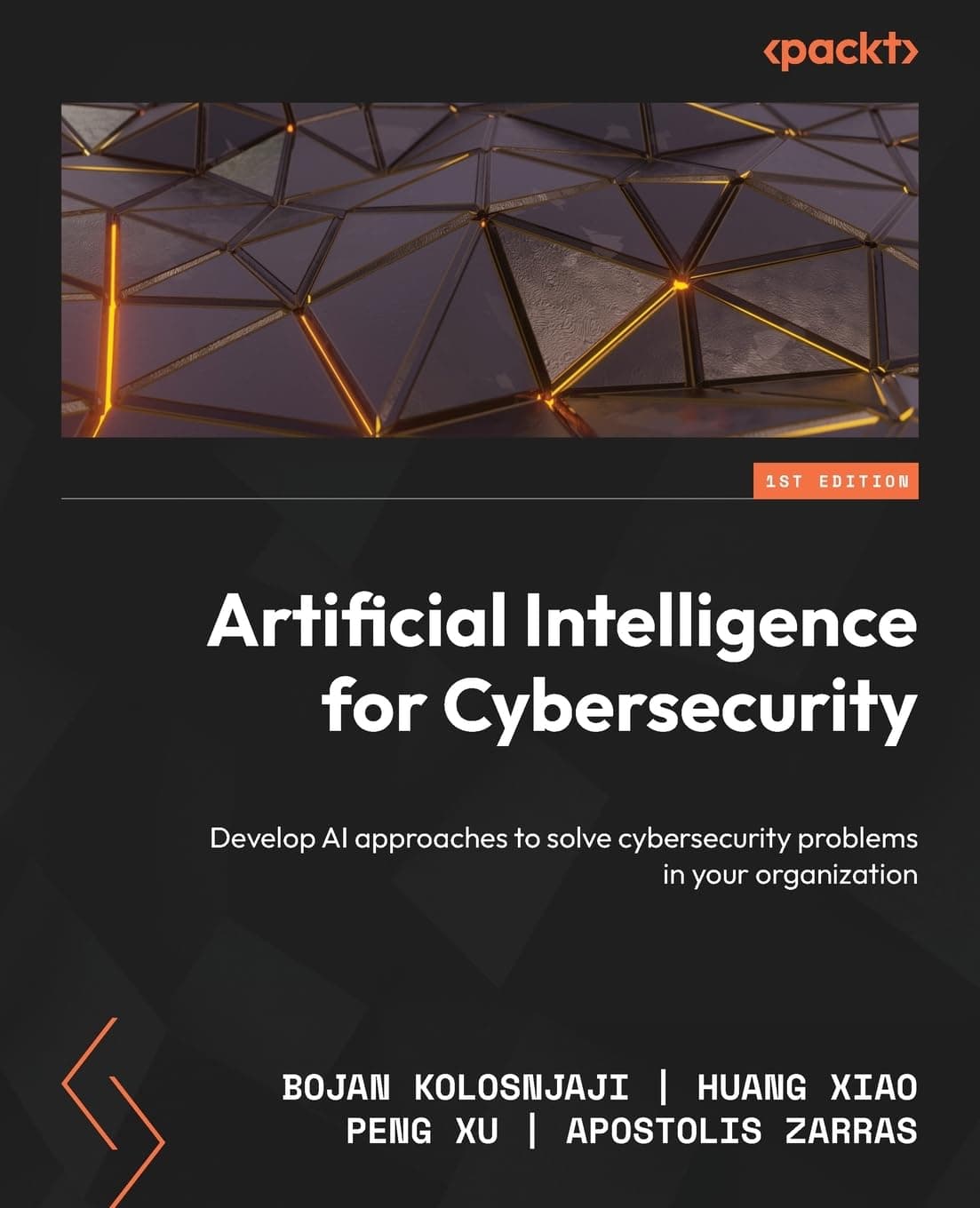
Review: Highly recommend - I got this book because I am looking to deepen my understanding of AI’s role in cybersecurity. I find the book especially useful because it gives some great examples how to apply AI techniques to solve real-world cybersecurity problems. I particularly enjoyed the introduction to LLMs and anomaly detection in industrial control systems chapters. It has up-to-date examples and plenty of hands-on code throughout the chapters that allow you to try out techniques as you go. Highly recommend for academic students and IT professionals! Review: Excellent topics to develop AI approaches to solve cybersecurity problems in your organization - Artificial Intelligence for Cybersecurity explores how AI techniques revolutionise threat detection and response in digital environments. The book covers core concepts like big data, machine learning, and automation in the context of cybersecurity. It provides real-world applications such as malware detection, phishing prevention, and user behavior analysis. It also addresses challenges like data quality, adversarial attacks, and ethical concerns in AI deployment. It offers a comprehensive guide for building intelligent and resilient cybersecurity systems. Part 1: Data-Driven Cybersecurity and AI This part lays a strong foundation by introducing the growing complexity of cybersecurity data and the need for automation and intelligent analytics. It begins with a deep dive into the challenges of big data in cybersecurity, including scale, speed, and data quality issues that organizations face. The discussion progresses into how automation is vital in improving efficiency, using tools like SIEM, SOAR, and EDR. Finally, it introduces the importance of AI-powered analytics, setting the stage for more advanced methods presented later in the book. The flow from data challenges to AI integration is logical and relevant, making this section particularly useful for readers new to AI in cybersecurity or those seeking to understand its practical value. Part 2: AI and Where It Fits In This section provides essential theoretical grounding for AI and machine learning, helping readers distinguish between related concepts like AI, machine learning, and statistical learning. It does a good job simplifying technical concepts for newcomers, while also offering sufficient depth for more experienced readers. The section covers various learning methods—supervised, unsupervised, and semi-supervised—and highlights challenges like bias, privacy leakage, and adversarial attacks. It also walks through the complete AI project workflow, from data collection to deployment, along with useful tools and libraries. This makes the part both educational and highly applicable, bridging theoretical knowledge with practical cybersecurity use cases. Part 3: Applications of AI in Cybersecurity This is the heart of the book, showcasing real-world applications of AI across various cybersecurity domains. It explores AI-driven solutions for malware detection, network intrusion, user behavior analysis, fraud detection, phishing, and access control. Each chapter focuses on a specific use case, detailing how AI improves detection, response, and decision-making. The inclusion of exercises makes the content interactive and actionable. Notably, this part also covers the rising influence of large language models (LLMs) like transformers in cybersecurity, reflecting the latest trends in the field. Overall, it’s a comprehensive and practical section that focuses on AI’s impact on cybersecurity. Part 4: Common Problems When Applying AI in Cybersecurity This part addresses critical challenges faced when deploying AI systems in cybersecurity environments. It begins with the importance of data quality and progresses into statistical issues such as correlation vs. causation and the bias-variance trade-off. These are essential for building trustworthy models. It also emphasizes the need for continuous monitoring, feedback loops, and the human-in-the-loop approach to maintain model reliability. The discussion around adversarial machine learning is especially important for cybersecurity, as it outlines methods to build resilient models in hostile environments. The final chapter on responsible AI touches on ethical concerns, privacy, and the need for transparency, making it a timely and essential read for anyone building AI systems in security-sensitive contexts. Part 5: Final Remarks and Takeaways The concluding part of the book effectively summarizes the key lessons from each section and helps readers connect the dots across various concepts and applications. It encourages deeper learning and exploration, offering future study and project work direction. Including open-source resources and external links is beneficial for self-learners and practitioners who want to go beyond theory. It’s a concise and well-structured wrap-up that leaves the reader with a clear understanding of where AI stands in cybersecurity today—and where it's headed. Overall … I can give this 5.0/5.0. Indeed, the authors' extraordinary effort is much appreciated. -Shanthababu Pandian AI and Data Architect | Scrum Master | National and International Speaker | Blogger | Author




| Best Sellers Rank | 212,879 in Books ( See Top 100 in Books ) 64 in Research & Development 968 in Web Administration 2,545 in Computer Science (Books) |
| Customer Reviews | 4.7 out of 5 stars 24 Reviews |
P**A
Highly recommend
I got this book because I am looking to deepen my understanding of AI’s role in cybersecurity. I find the book especially useful because it gives some great examples how to apply AI techniques to solve real-world cybersecurity problems. I particularly enjoyed the introduction to LLMs and anomaly detection in industrial control systems chapters. It has up-to-date examples and plenty of hands-on code throughout the chapters that allow you to try out techniques as you go. Highly recommend for academic students and IT professionals!
S**P
Excellent topics to develop AI approaches to solve cybersecurity problems in your organization
Artificial Intelligence for Cybersecurity explores how AI techniques revolutionise threat detection and response in digital environments. The book covers core concepts like big data, machine learning, and automation in the context of cybersecurity. It provides real-world applications such as malware detection, phishing prevention, and user behavior analysis. It also addresses challenges like data quality, adversarial attacks, and ethical concerns in AI deployment. It offers a comprehensive guide for building intelligent and resilient cybersecurity systems. Part 1: Data-Driven Cybersecurity and AI This part lays a strong foundation by introducing the growing complexity of cybersecurity data and the need for automation and intelligent analytics. It begins with a deep dive into the challenges of big data in cybersecurity, including scale, speed, and data quality issues that organizations face. The discussion progresses into how automation is vital in improving efficiency, using tools like SIEM, SOAR, and EDR. Finally, it introduces the importance of AI-powered analytics, setting the stage for more advanced methods presented later in the book. The flow from data challenges to AI integration is logical and relevant, making this section particularly useful for readers new to AI in cybersecurity or those seeking to understand its practical value. Part 2: AI and Where It Fits In This section provides essential theoretical grounding for AI and machine learning, helping readers distinguish between related concepts like AI, machine learning, and statistical learning. It does a good job simplifying technical concepts for newcomers, while also offering sufficient depth for more experienced readers. The section covers various learning methods—supervised, unsupervised, and semi-supervised—and highlights challenges like bias, privacy leakage, and adversarial attacks. It also walks through the complete AI project workflow, from data collection to deployment, along with useful tools and libraries. This makes the part both educational and highly applicable, bridging theoretical knowledge with practical cybersecurity use cases. Part 3: Applications of AI in Cybersecurity This is the heart of the book, showcasing real-world applications of AI across various cybersecurity domains. It explores AI-driven solutions for malware detection, network intrusion, user behavior analysis, fraud detection, phishing, and access control. Each chapter focuses on a specific use case, detailing how AI improves detection, response, and decision-making. The inclusion of exercises makes the content interactive and actionable. Notably, this part also covers the rising influence of large language models (LLMs) like transformers in cybersecurity, reflecting the latest trends in the field. Overall, it’s a comprehensive and practical section that focuses on AI’s impact on cybersecurity. Part 4: Common Problems When Applying AI in Cybersecurity This part addresses critical challenges faced when deploying AI systems in cybersecurity environments. It begins with the importance of data quality and progresses into statistical issues such as correlation vs. causation and the bias-variance trade-off. These are essential for building trustworthy models. It also emphasizes the need for continuous monitoring, feedback loops, and the human-in-the-loop approach to maintain model reliability. The discussion around adversarial machine learning is especially important for cybersecurity, as it outlines methods to build resilient models in hostile environments. The final chapter on responsible AI touches on ethical concerns, privacy, and the need for transparency, making it a timely and essential read for anyone building AI systems in security-sensitive contexts. Part 5: Final Remarks and Takeaways The concluding part of the book effectively summarizes the key lessons from each section and helps readers connect the dots across various concepts and applications. It encourages deeper learning and exploration, offering future study and project work direction. Including open-source resources and external links is beneficial for self-learners and practitioners who want to go beyond theory. It’s a concise and well-structured wrap-up that leaves the reader with a clear understanding of where AI stands in cybersecurity today—and where it's headed. Overall … I can give this 5.0/5.0. Indeed, the authors' extraordinary effort is much appreciated. -Shanthababu Pandian AI and Data Architect | Scrum Master | National and International Speaker | Blogger | Author
ترست بايلوت
منذ يوم واحد
منذ شهرين