We remain fully operational. Our teams are working around the clock to ensure your deliveries continue safely.

قم بتنزيل التطبيق


معلومات عنا
حقوق الطبع والنشر © 2024 Desertcart Holdings Limited
قم بتنزيل التطبيق
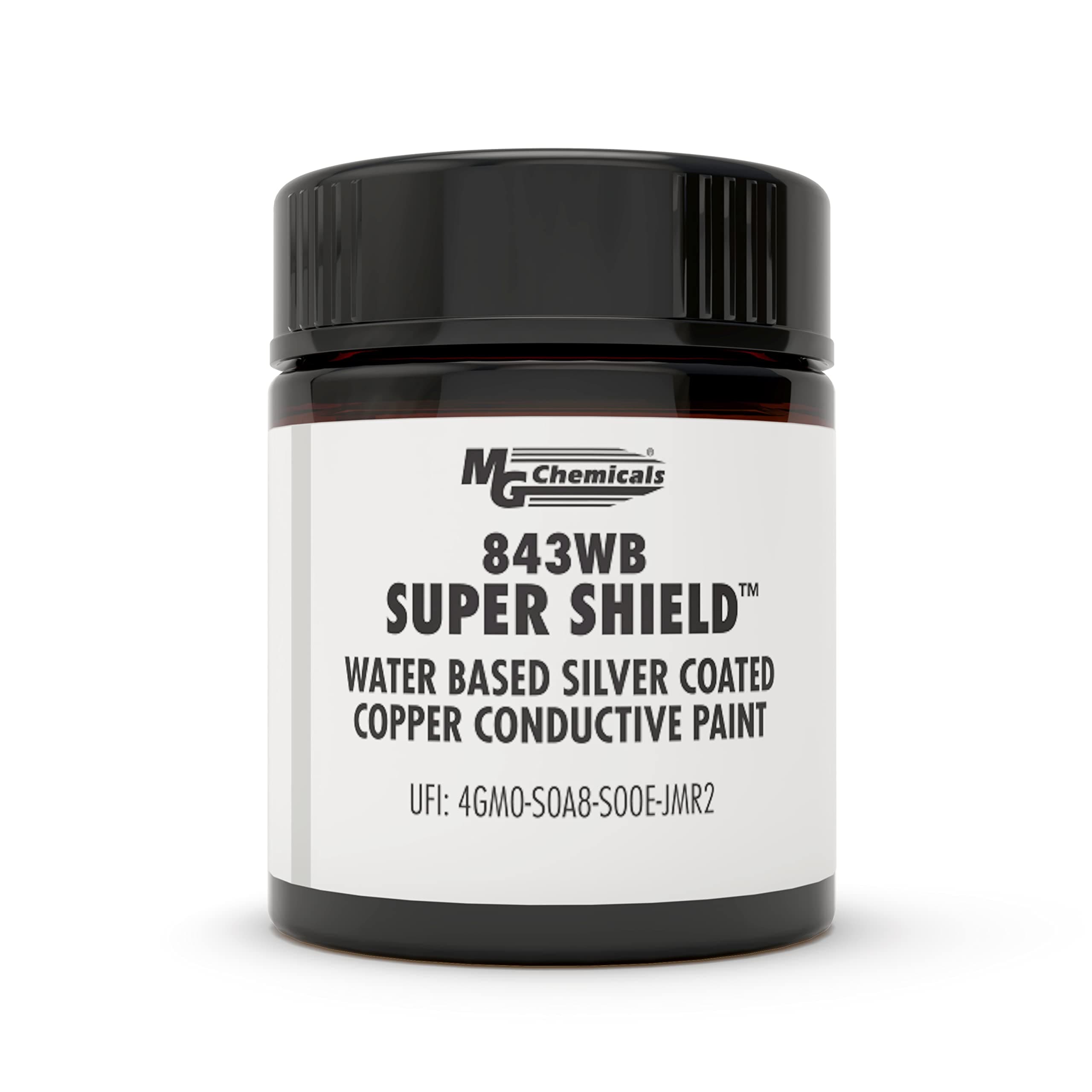
🛡️ Shield smarter, not harder — conduct your space into silence!
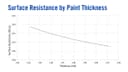
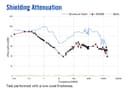
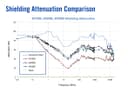
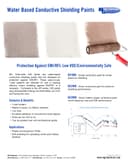
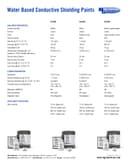
MG Chemicals 843WB-15ML is a premium water-based silver coated copper conductive paint offering exceptional EMI/RFI shielding with a volume resistivity of 6.82 x 10⁻⁴ Ω·cm. This ready-to-use, low VOC formula adheres to multiple surfaces including drywall and plastics, cures in 24 hours, and is safe for indoor/outdoor use. Ideal for architectural, electronic, and musical instrument applications, it delivers professional-grade noise reduction with eco-friendly credentials.


| ASIN | B071R4BGM6 |
| Age Range Description | Adult |
| Best Sellers Rank | #34,490 in Industrial & Scientific ( See Top 100 in Industrial & Scientific ) #56 in Industrial Coatings |
| Brand Name | MG Chemicals |
| Color | Silver Coated Copper |
| Container Type | Jar |
| Customer Reviews | 4.4 4.4 out of 5 stars (398) |
| Finish Type | Metallic |
| Full Cure Time | 24 Hours |
| Global Trade Identification Number | 00779008843000 |
| Indoor Outdoor Usage | Indoor, Outdoor |
| Is Waterproof | True |
| Item Form | Liquid |
| Item Volume | 12 Milliliters |
| Item Weight | 15.6 Grams |
| Manufacturer | MG Chemicals |
| Model Number | 843WB-15ML |
| Paint Type | Water-based |
| Part Number | 843WB-15ML |
| Size | 0.41 Fl Oz (Pack of 1) |
| Special Features | Low VOC, Water Based, EMI/RFI shielding |
| Specific Uses For Product | Architectural (Interior/Exterior), Electronic Enclosures, Musical Instruments, Sensors, Communication Devices |
| Surface Recommendation | Wood, Metal, Plastic |
| UPC | 779008843000 |
| Warranty Description | [email protected] |
| Water Resistance Level | Water Resistant |
M**D
works great! here's some tips!
I've never worked with shielding/conductive paint before, but did a fair amount of research and asking questions before jumping in. After looking at a few other brands of shielding paint, I went with this because it didn't seem cheap, but it didn't seem overpriced either. I am not recommending this as a better alternative to any brand or method. Just how this worked for me. I can speak a little to the process, but do your own research and be sure to practice safety precautions. Trust but verify anything I say here. The two project guitars are different enough, I think it's worth mentioning. Both had a spray finish applied, the mahogany body with nitrocellulose (purple), the ash body with polyurethane (red). Both also had some sort of either grain/pore filler or base coat applied as well. Inevitably, some of this would get into the cavities, so I got to see how this paint interacted with the different types of wood and also the types of finishes. If you just pop this open and start applying it, you're going to have a bad time. Get a respirator or heavy duty paint mask at least, gloves, and a good bit of lighting (I used a headlamp). Get your guitar ready to apply the conductive paint by making sure ANYTHING you don't want to get this stuff on is covered. Have a clean lint free cloth on hand to clean up splash and spills. Do not use a cloth to apply this by hand. Get some paint brushes, dip them deep in the mixture and kind of stir it up a bit each time. Then brush the tip against the inner rim of the jar to get off any excess that might drip. Apply it evenly to your guitar cavity. You can use the brush in an upward angle on the edges and just let it ever so slightly slide over the rim of the cavity (1mm or less). Let it dry 3 hours. Do 3 coats. Let it dry at least overnight, if not a whole 24 hours. I won't go into making sure everything is grounded properly - that's more nuanced than I have time for, but I hope this helps. Like all conductive paint, it does splash easily, although I've seen a couple of other brands in action that looked more prone to splatter. If you do spill some, dab and DO NOT wipe if you can help it. Wiping could scratch your guitar. If it's not fully dry, you can also scrape it away with even just a nail (but use gloves). Worked great, did the job really well and looks great. It's a dull, dark metallic gray. Wear that paint mask for your safety but also because this stuff smells pretty rotten until it dries.
M**N
Works great for guitar shielding!
I’ve got a first year of production MIJ 1997 ESP Viper, which I love dearly. We recently moved and when I got back around to setting up my home studio again, I was getting a horrendous amount of buzz from my guitar. I mean, it was so bad that it was interfering with notes as they sustained out. No amount of repositioning myself in relation to my desk, monitor, ANYTHING, helped. After double checking all of the guitar wiring and grounds, unplugging everything in the room one by one, unplugging my router, etc.; I still wanted to yank my hair out. Now, if you know ESP, then you know that they’re some fine craftsman. Again, this is an ESP handmade in the Japanese facility back in the 90s. It’s not an LTD. Not that there’s anything wrong with LTD. It’s just apples and oranges. But, there was zero shielding anywhere in the guitar, except for some foil tape on the backside of the control cavity cover. I ordered this out of desperation really. My Hail Mary. It’s a small 12ml bottle, but there was enough for me to do 3 thick coats in all 3 cavities = the 2 pickup cavities and the control cavity. When you mix it, use something like a popsicle stick. If there’s any clumps, smash them with the stick until they break up. Stir well. Wipe the areas that you’ll paint with some alcohol. I did scuff the cavities with some sandpaper as best as I could beforehand, then used some compressed air to blow them out. Then the alcohol. Then mixed the paint again. Paint color is like a charcoal silver. I thought that I would prefer black, but I actually like the charcoal color because it’s easier to see if you missed any spots IMHO. Everything cleans up easily with a wet rag. Dry time between coats is around 15 minutes or so, depending on how thick your coats are. I didn’t rush it. Over the course of a couple hours I took my time to paint coats until the bottle ran out. As mentioned, 3 thick coats in all cavities. Instructions state that it takes 24 hours to fully cure. After about 5-6 hours, everything was plenty dry for me to put my pickups and pots and wiring back in. Then restring and adjust everything. And of course I couldn’t wait. So… I was floored. 90% of the noise was gone. Not only that, but I could now actually reposition myself and get the electrical interference noise to go away 100%! But here’s the kicker. After the paint had fully cured after 24 hours or so? The guitar is now dead silent. No repositioning needed. It works!
A**R
Top quality paint. Check the specs
Top quality paint. Check the specs. Many brands and types out there. All with varying specs and performance. Just wish had a little more in the bottle. Just made do with multiple coats on a strat.
S**D
Ehh I am middle on this.
So this is quite watery so when you use it to get shielding effects you have to get to the bottom thats where the metal dust is. So make sure you do that.. best part is water based so the brushes clean up nicely. You have to do a few coats to actually get continuity and lower resistance.
D**.
Excellent shielding paint; easy to apply
I used this to paint the pickup cavity of a Stratocaster type guitar. The paint bottle was just enough to put two coats on the inside. I wasn't sure if one coat would have been enough because this is the first time I used it. Along with a pickup shield on the pick guard, there is no hum whatsoever. This is water based and has no lingering odor. easy to apply and clean up afterwards. I let the first layer dry over night.
R**D
Great product! Works very well.
If you think you'll work on multiple guitars, definitely get the larger containers of this shielding paint. While it goes on very easily, you'll want to make sure you use at least 2 coats. I found that 1 coat actually did a pretty decent job, but 2 coats was the sweet spot; as you'll find verified in the other reviews here. One small container is enough to adequately do 2 coats to all cavities (front/back) of a traditional strat-style body and still have a small amount left for touch-up (if needed). More affordable than the competitor and a much better product, from what I can tell.
H**D
great for guitar build
almost no smell. easy to use. works great. prep area good before using. will use again.
C**P
It's grey....
Doesn't work at all. Really disappointed in this stuff. Put 3 coats on mixed well and when I put the meter on it to do an AB test... Nothing. Went back to copper tape.
T**Y
Did three coats of the electronics pocket and pickup cutouts. Only took a little light sanding to knock the gloss down from the clearcoat and it stuck nicely. Excellent conductivity. As others have noted it does have an odour (I thought it akin to a tin of smoked mussels) but the odor goes away once dry. Make sure you spend time doing your surface prep and it's a breeze. Also, use a stir stick of some kind and spend a few minutes really mixing it well. It clumps at the bottom after only an hour of sitting, so you need to make sure you agitate it well before using.
M**K
Adheres well to PLA/ABS(+,+.) Flexible enough that it won't bend with minor lateral stress to ~0.4-0.8mm walls. Coating a few mils on surface (and ensuring it fills layer lines) makes for a very good EMI/RF shield for PCB casings, the reason I got the product. Cures/dries very fast, and being water-based means you can wash it off from tub (and thus don't waste an acid brush & plastic container, unlike with epoxy-based/solvent-based EMI/RF shielding composites.) Overall, very pleased- reduced the EMI/RF-induced noise on my sensitive mixed-signal PCBs massively- much more than MG's carbon-based coatings. Just be aware that a little goes a long way with this- and it's best to keep it refrigerated once you've opened it (it dries quite fast, and the seal on the bottle isn't special- it's just a regular twist cap.) You don't want to put it in the freezer as you can with some solvent-based applications- being water-based, it will gel up beneath 0C.
C**S
I used this to shield the pickup and control cavities of a superstrat-style guitar. It works very well. Two thin coats, and some attention paid to bridging the different cavities by using a q tip to paint inside the tunnels between them, provided perfect continuity throughout the instrument. When reassembled, the guitar was dead quiet. I used about half the 15ml container to do two coats on one guitar. let each coat dry, and make sure the whole thing is dry before you check the continuity with a multimeter. Pay attention to grounding, make sure the inside control covers are also shielded (I used adhesive copper sheet). It is quite odorless and cleans up with water. My only complaint is that the small bottle is quite expensive, and Amazon was sold out of the larger quantity.
N**L
Okay
C**N
I didn't like the fact how the viscosity is so thin and being water-based, it was difficult to apply a reasonable coating to the backside of a pickguard, especially considering how poorly it coats on plastic. I would also underline that given its viscosity, it is a little pricey.
ترست بايلوت
منذ شهرين
منذ أسبوعين