
Buy anything from 5,000+ international stores. One checkout price. No surprise fees. Join 2M+ shoppers on Desertcart.
Desertcart purchases this item on your behalf and handles shipping, customs, and support to KUWAIT.
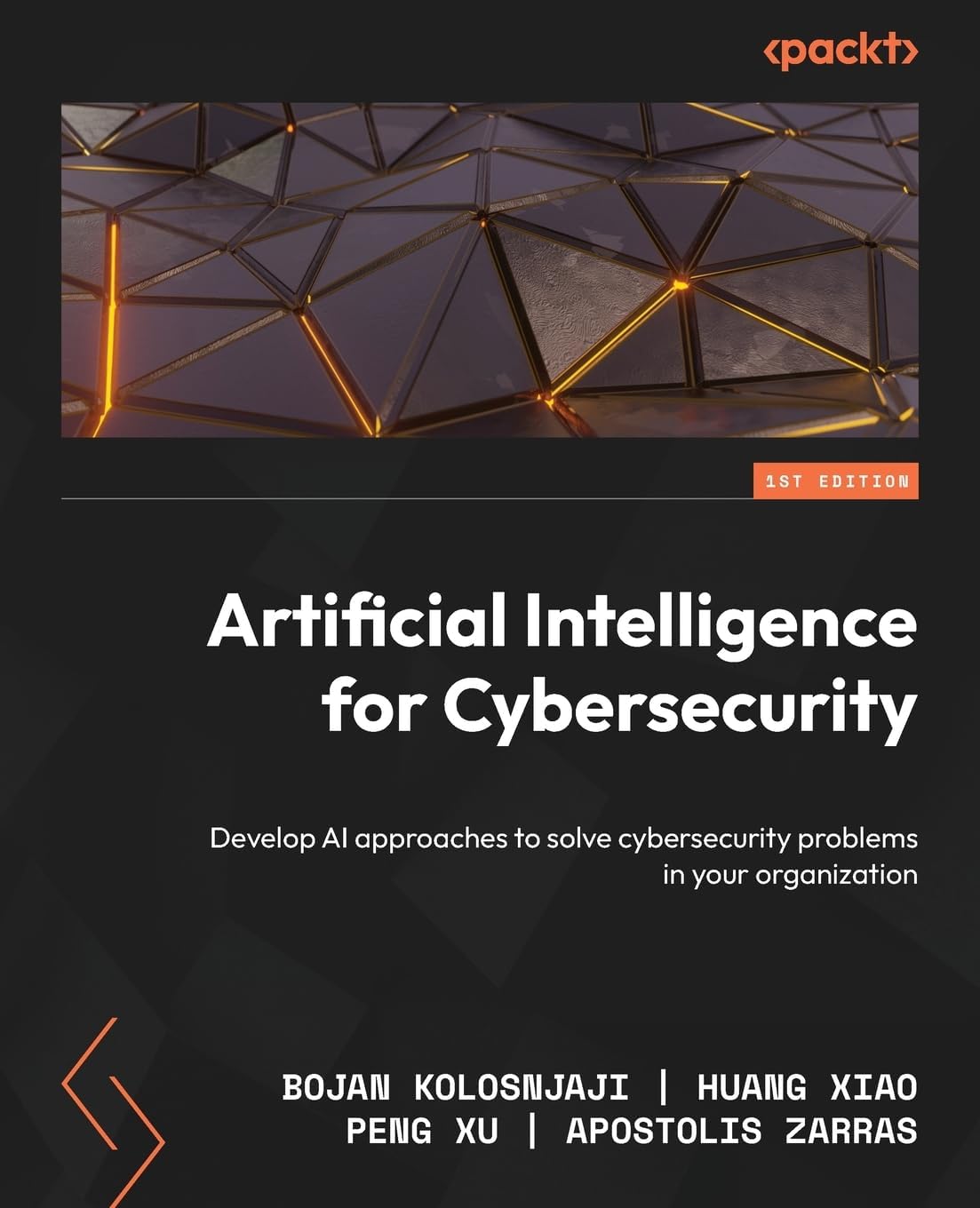
Gain well-rounded knowledge of AI methods in cybersecurity and obtain hands-on experience in implementing them to bring value to your organization Free with your book: DRM-free PDF version + access to Packt's next-gen Reader* Key Features Familiarize yourself with AI methods and approaches and see how they fit into cybersecurity Learn how to design solutions in cybersecurity that include AI as a key feature Acquire practical AI skills using step-by-step exercises and code examples Purchase of the print or Kindle book includes a free PDF eBook Book Description Artificial intelligence offers data analytics methods that enable us to efficiently recognize patterns in large-scale data. These methods can be applied to various cybersecurity problems, from authentication and the detection of various types of cyberattacks in computer networks to the analysis of malicious executables. Written by a machine learning expert, this book introduces you to the data analytics environment in cybersecurity and shows you where AI methods will fit in your cybersecurity projects. The chapters share an in-depth explanation of the AI methods along with tools that can be used to apply these methods, as well as design and implement AI solutions. You’ll also examine various cybersecurity scenarios where AI methods are applicable, including exercises and code examples that’ll help you effectively apply AI to work on cybersecurity challenges. The book also discusses common pitfalls from real-world applications of AI in cybersecurity issues and teaches you how to tackle them. By the end of this book, you’ll be able to not only recognize where AI methods can be applied, but also design and execute efficient solutions using AI methods. *Email sign-up and proof of purchase required What you will learn Recognize AI as a powerful tool for intelligence analysis of cybersecurity data Explore all the components and workflow of an AI solution Find out how to design an AI-based solution for cybersecurity Discover how to test various AI-based cybersecurity solutions Evaluate your AI solution and describe its advantages to your organization Avoid common pitfalls and difficulties when implementing AI solutions Who this book is for This book is for machine learning practitioners looking to apply their skills to overcome cybersecurity challenges. Cybersecurity workers who want to leverage machine learning methods will also find this book helpful. Fundamental concepts of machine learning and beginner-level knowledge of Python programming are needed to understand the concepts present in this book. Whether you’re a student or an experienced professional, this book offers a unique and valuable learning experience that will enable you to protect your network and data against the ever-evolving threat landscape. Table of Contents Big Data in Cybersecurity Automation in Cybersecurity Cybersecurity Data Analytics AI, Machine Learning, and Statistics - A Taxonomy AI Problems and Methods Workflow, Tools, and Libraries in AI Projects Malware and Network Intrusion Detection and Analysis User and Entity Behavior Analysis Fraud, Spam, and Phishing Detection User Authentication and Access Control Threat Intelligence Anomaly Detection in Industrial Control Systems Large Language Models and Cybersecurity Data Quality and Its Usage in the AI and LLM Era Correlation, Causation, Bias, and Variance Evaluation, Monitoring, and Feedback Loop (N.B. Please use the Read Sample option to see further chapters) Review: AI-Powered Security Made Simple - This book makes the world of cybersecurity feel both exciting and manageable. Right from the start it uses real examples, like spotting unusual network activity or catching malware before it spreads, to show why AI tools matter now more than ever. The writing is friendly and clear so even if you are new to machine learning or threat detection you are never left wondering what comes next. It feels like a conversation with a trusted colleague rather than a dry lecture. As you read on you learn by doing. The practical exercises guide you through setting up your own lab, running simple anomaly detection scripts, and crafting basic threat intelligence workflows. Rather than overwhelming you with jargon, the book breaks each concept into manageable steps and shows how it all fits into a real security team’s daily work. You will find yourself experimenting with classification models and fine-tuning them to spot suspicious behavior in logs while gaining confidence in your ability to make AI work for you. The most impressive part is how the book balances big ideas with down-to-earth advice. You still get up-to-date coverage of large language models and adversarial learning, but the discussion also covers ethical concerns like bias and model transparency. There is a strong focus on staying adaptable as attackers change their tactics and on making sure your AI pipelines include feedback loops that keep them sharp over time. By the end you feel ready to bring AI into your own cyber defense strategy, certain that you understand both the potential and the challenges. This is a five-star resource for anyone looking to blend artificial intelligence and security in a thoughtful and practical way. Review: the book is real - You sure can tell that the premise of this book is depth. still reading thou..


| Best Sellers Rank | #73,934 in Books ( See Top 100 in Books ) #21 in Privacy & Online Safety #49 in Internet & Telecommunications #169 in Artificial Intelligence & Semantics |
| Customer Reviews | 4.6 out of 5 stars 38 Reviews |
E**N
AI-Powered Security Made Simple
This book makes the world of cybersecurity feel both exciting and manageable. Right from the start it uses real examples, like spotting unusual network activity or catching malware before it spreads, to show why AI tools matter now more than ever. The writing is friendly and clear so even if you are new to machine learning or threat detection you are never left wondering what comes next. It feels like a conversation with a trusted colleague rather than a dry lecture. As you read on you learn by doing. The practical exercises guide you through setting up your own lab, running simple anomaly detection scripts, and crafting basic threat intelligence workflows. Rather than overwhelming you with jargon, the book breaks each concept into manageable steps and shows how it all fits into a real security team’s daily work. You will find yourself experimenting with classification models and fine-tuning them to spot suspicious behavior in logs while gaining confidence in your ability to make AI work for you. The most impressive part is how the book balances big ideas with down-to-earth advice. You still get up-to-date coverage of large language models and adversarial learning, but the discussion also covers ethical concerns like bias and model transparency. There is a strong focus on staying adaptable as attackers change their tactics and on making sure your AI pipelines include feedback loops that keep them sharp over time. By the end you feel ready to bring AI into your own cyber defense strategy, certain that you understand both the potential and the challenges. This is a five-star resource for anyone looking to blend artificial intelligence and security in a thoughtful and practical way.
J**C
the book is real
You sure can tell that the premise of this book is depth. still reading thou..
S**O
Automation in Cybersecurity
This book has clearly and explicitly explain the role automation plays in contemporary cybersecurity practices particularly in an industrial setup.
H**C
Practical AI for Cybersecurity: From Theory to Deployable Security Outcomes
This is a practical, execution-focused guide to applying AI in cybersecurity—not hype, not purely academic. It focuses on the real challenge: turning machine learning concepts into operational security capability. The strength of the book is its workflow-driven approach—data, feature engineering, model selection, evaluation, and feedback loops. That’s where most initiatives fail, and the author keeps the focus there. It effectively maps AI techniques to real use cases like: Intrusion detection Malware analysis UEBA Fraud and phishing More importantly, it addresses failure modes—data quality, bias, overfitting, and the gap between model accuracy and actual security outcomes. That adds credibility. The LLM coverage is relevant but balanced; the emphasis stays on foundational ML that drives most real deployments today. Where it’s lighter is enterprise-scale concerns—governance, adversarial ML, and integration into broader architectures like Zero Trust. Bottom line: A solid, technically grounded resource for engineers and architects looking to design and implement AI-driven security solutions—not just talk about them.
E**N
A perfectly OK book, best suited for beginners
(NOTE: I was provided a free ebook copy of this for the review) I have been working in cybersecurity for nearly my entire adult life and using AI/ML in cybersecurity contexts for nearly a decade, so this book speaks to topics on which I have a lot of experience. Overall, the book is decent, examining a number of areas in cybersecurity, data analytics, and artificial intelligence. One major positive is that Packt and the authors have done us the courtesy of putting a substantial amount of relevant code on GitHub so one is not merely grappling with words and theory. The book covers basic introductions to big data, machine learning, and other topics at about the level of a third year undergraduate class. Being aimed at cybersecurity practitioners with no background in these fields, one could get a much worse introduction. They then move into applications of AI/ML in cybersecurity, and it is hard to do all of these topics justice, as each could be (and some are) a book unto themselves. Chapters 13 and 14 cover large language model applications -- the hot new thing in tech. Unfortunately, I found these chapters a bit heavy on references and lean on details. That said, again, for beginners in the field, this is a good starting point, with many pointers to academic papers on which one could lean. Some parts of the book feel a bit disjointed, with sections on error correction, bias, and evaluation coming at the very back of the book -- parts that would likely have proven useful early on when discussing classifiers. Ultimately, if you are an early career security practitioner interested in security data science and applications of AI to cybersecurity, this is a decent, affordable book on the topic. If you are a seasoned security professional or data scientist looking to jump into the other field, you're likely better off digging into more hardcore texts in that particular area, as this may lack the depth one needs.
L**R
A significant contribution to the rapidly evolving intersection of AI and cybersecurity.
"Artificial Intelligence for Cyber Security" stands as a significant contribution to the rapidly evolving intersection of AI and cybersecurity. The authors have successfully created a comprehensive resource that provides an introduction to the gap between theoretical AI concepts and practical security implementations. The book's strength lies in its methodical approach to explaining complex considerations and their applications in security contexts, particularly in areas such as malware detection, network analysis, and threat intelligence. The technical content progresses logically, building from fundamental concepts to advanced applications, making it accessible to security professionals venturing into AI while remaining relevant for those with existing AI expertise. The inclusion of Python code examples and real-world security use cases adds practical value, though these could be more extensive. While the book excels in explaining traditional machine learning approaches to security problems, its coverage of emerging technologies like transformers and large language models is limited. The practical implementations, while useful, could benefit from more comprehensive end-to-end examples and detailed performance metrics. That stated, AI is an area that is in constant flux, so it is understandable in the approach in this first edition. Recommendations for Future Editions The next edition has significant potential for enhancement in several key areas. First, expanding the coverage of emerging AI technologies in security operations would increase its relevance to cybersecurity practitioners. This includes deeper exploration of large language models, AI-powered threat hunting, and zero-day vulnerability detection. The practical aspects could be strengthened through more comprehensive case studies of enterprise-scale deployments, including challenges and solutions encountered in real-world implementations. The book would benefit from additional content on AI model security itself, including protection against adversarial attacks, model poisoning, and privacy considerations. A discussion of AI/ML supply chain security and regulatory compliance would also be timely additions. From an educational perspective, incorporating more visual aids, specific step-by-step labs that allow the reader progress through the content within their own environment, detailed prerequisites for each chapter, and advanced exercises would enhance the learning experience. For example, the addition of an online companion portal with updated code examples and interactive tutorials would provide significant value to readers. Target Audience and Impact Currently, the book serves security professionals, data scientists, and others. However, with the suggested enhancements, it could expand its reach to include security analysts transitioning to AI roles, DevSecOps practitioners, and risk management professionals. The content remains technically rigorous while maintaining practicality, though some sections may challenge readers without strong mathematical backgrounds. Looking Forward As AI continues to reshape cybersecurity and other fields, future editions of this book have the opportunity to become an even more essential resource. By incorporating emerging technologies, expanding practical examples, and adding comprehensive case studies, the next edition could provide even greater value to professionals working at this critical intersection. The current edition earns a solid 4.5 out of 5 rating, with potential to reach 5 by implementing these suggestions. Despite its current limitations, it remains a valuable resource for understanding and implementing AI in security contexts. The authors have laid a strong foundation, and with these enhancements, future editions could further cement this book's position as a go-to reference for AI-driven security implementations. The key will be maintaining the current technical rigor with the rapid changes within the AI field while expanding coverage of emerging technologies and providing more comprehensive real-world applications.
H**E
A good jump-start into using Ai to solve Cybersecurity problems.
Artificial Intelligence for Cybersecurity covers a great deal of ground for Developers, Cybersecurity professionals, and AI Professionals operating at the intersection of AI and Cybersecurity. Part I of the book provides a good introductory overview of the technologies used in modern cybersecurity departments, including Big Data, and Data Analytics. (If you're coming from a heavy security background, you can skip ahead). Part II provided a great introduction into the basics of AI (If you are a developer with a year of experience in AI, you can skip this part). After getting all of the readers up to speed on both, Part III of the book then delves into practical examples, demonstrating how AI can assist in improving cybersecurity workflows for effectiveness, speed, and agility. The exercises provide instructions for MacOS, Ubuntu, and Windows. They leverage Python/Conda, using libraries such as Langchain, OpenAI, Tensorflow, Numpy, and others. Readers can delve into examples including Malware/Intrusion Detection; Behavior Analysis; Spam Detection; User Access Control; and Threat Intelligence. These practical examples, and hands-on exercises give the reader a strong feel for how AI might be applied to solve real cybersecurity problems. The last part of the book dives into common problems in implementing AI, including: Data Quality, Bias, How to Monitor AI Systems & Monitor Performance, AI Transparency, and Privacy. Overall, this book contains a well thought out curriculum to get people jumpstarted in Cybersecurity for AI, and a little hands-on experience with basic applications that will give them a feel for how problems can be tackled in the real world.
T**E
Poorly Written; AI generated?
This book is poorly written. Lots of long, run-on sentences filled with excessive commas and AI buzzwords. It almost reads like AI-generated slop. Not recommended.
P**A
Highly recommend
I got this book because I am looking to deepen my understanding of AI’s role in cybersecurity. I find the book especially useful because it gives some great examples how to apply AI techniques to solve real-world cybersecurity problems. I particularly enjoyed the introduction to LLMs and anomaly detection in industrial control systems chapters. It has up-to-date examples and plenty of hands-on code throughout the chapters that allow you to try out techniques as you go. Highly recommend for academic students and IT professionals!
Trustpilot
1 week ago
2 months ago