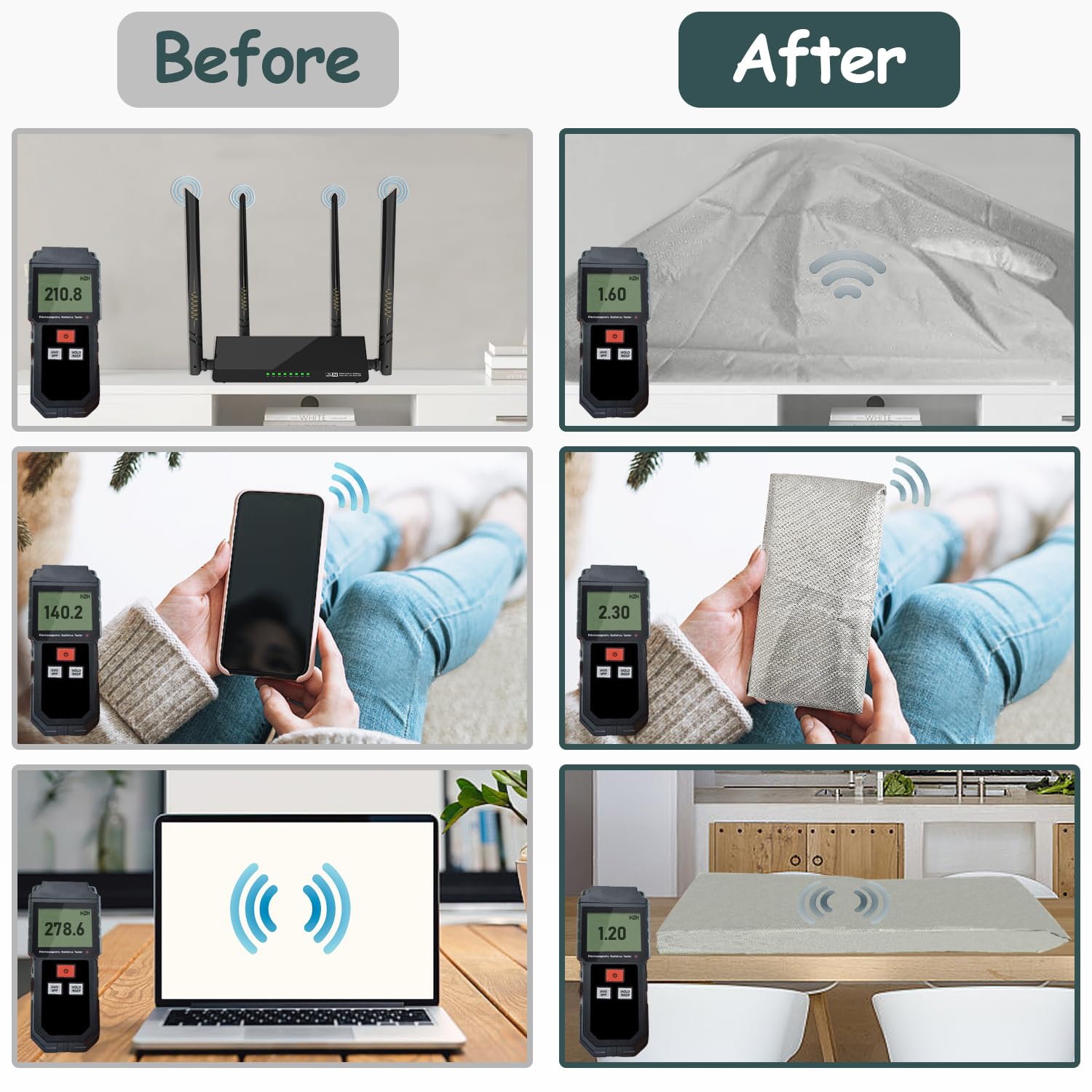
🛡️ Stay ahead of the signal game—shield your tech, shield your life!
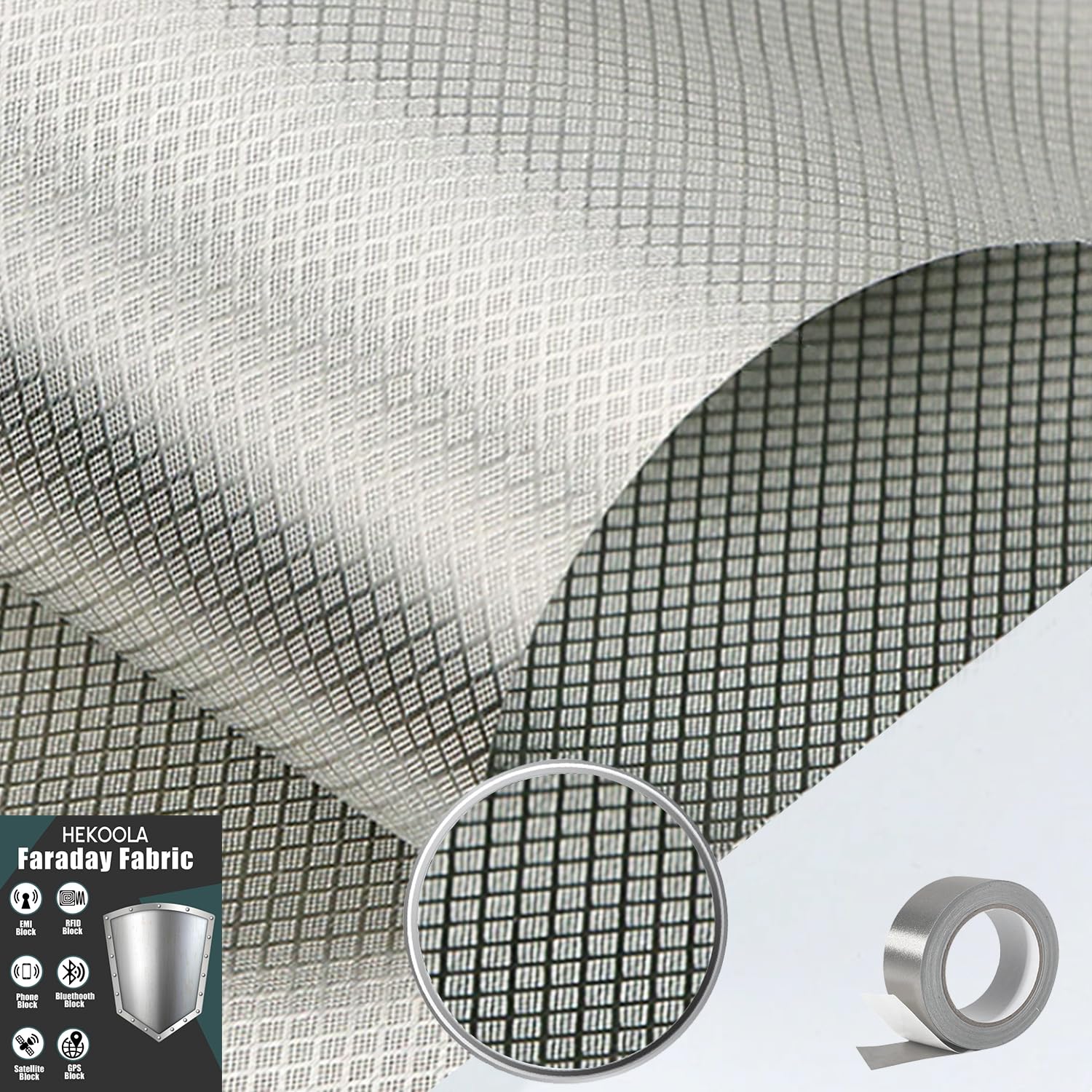
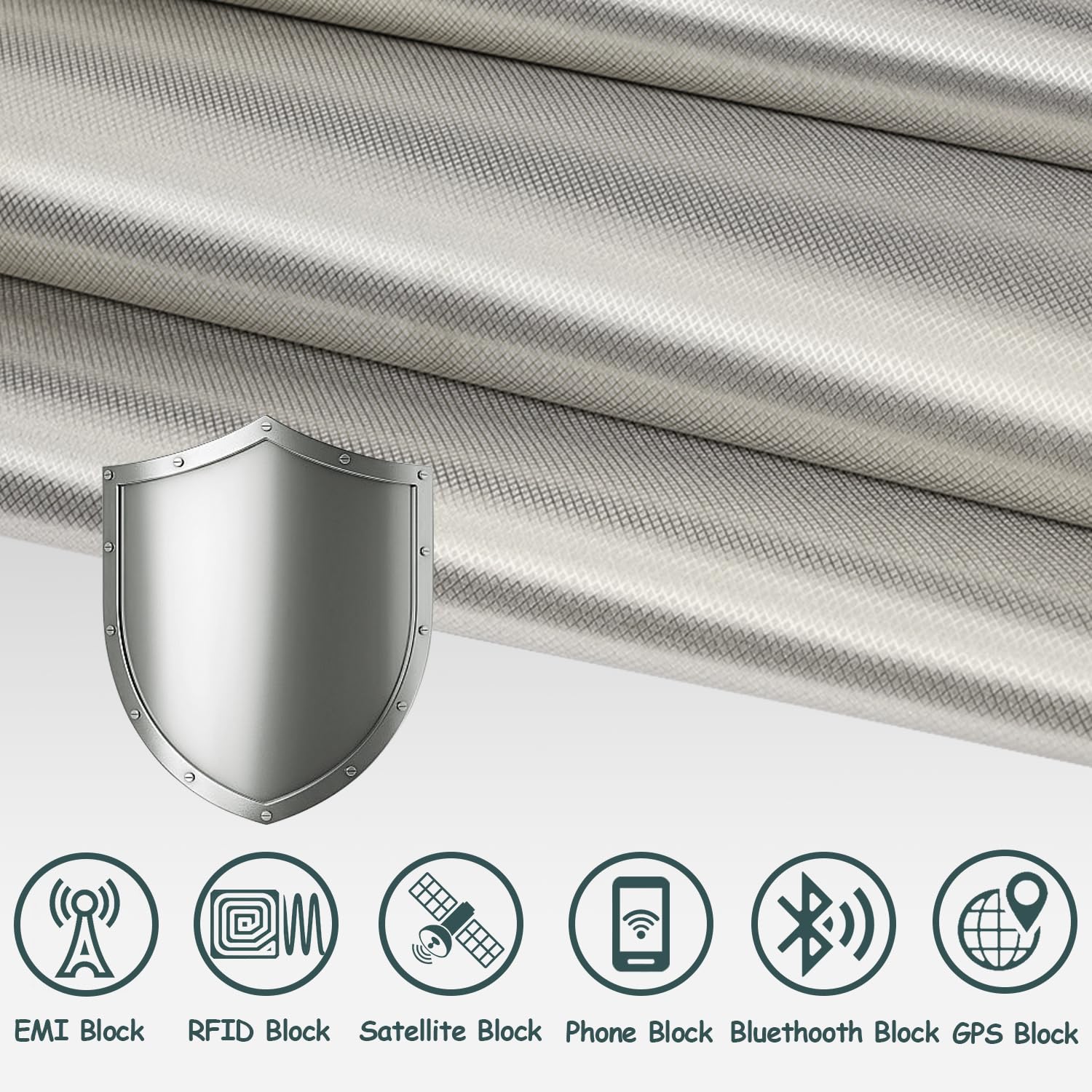
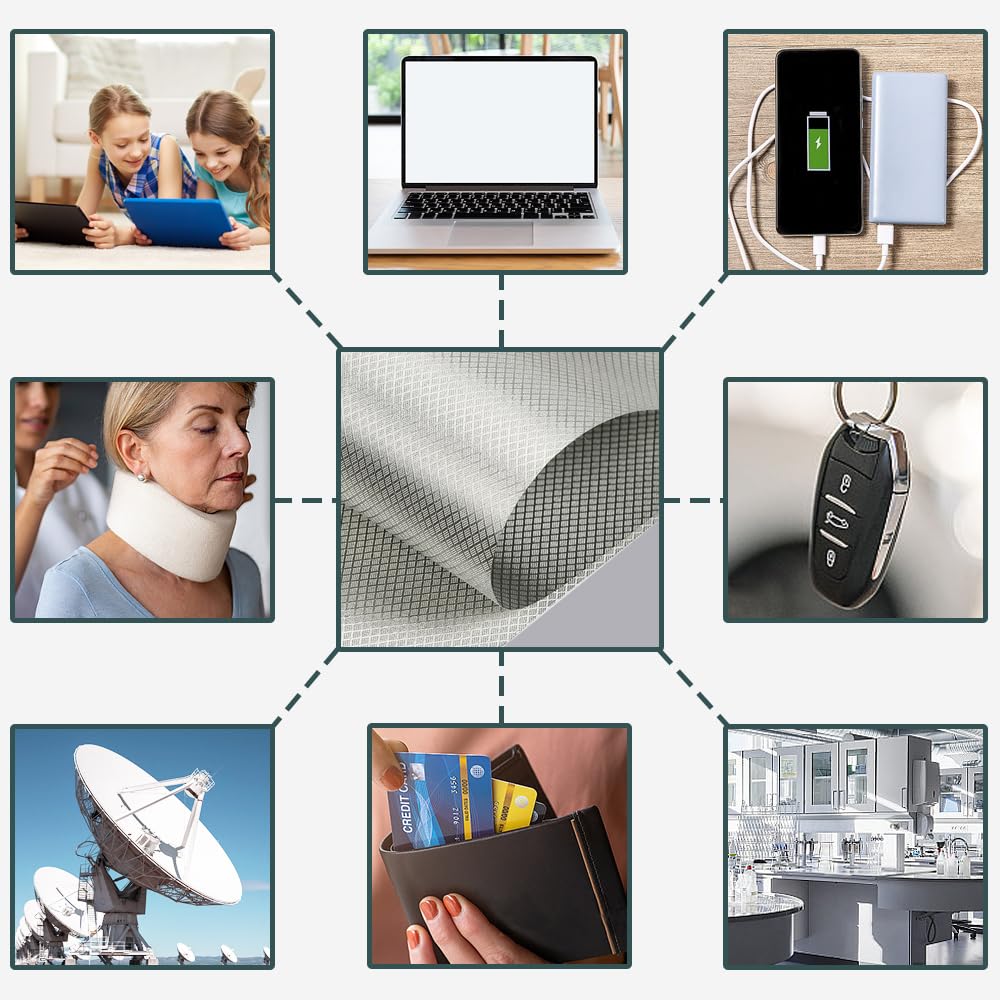
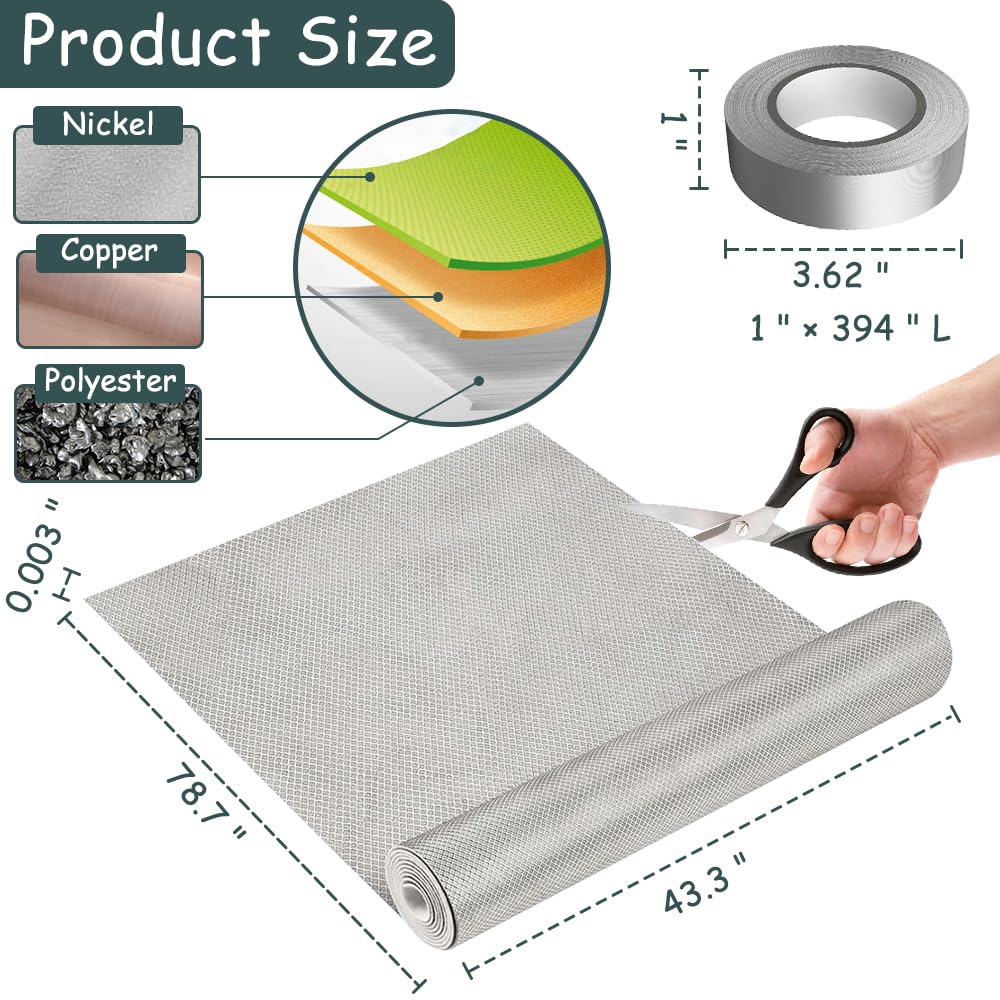
This 43.3" x 78.7" Faraday Fabric offers military-grade EMP and electromagnetic shielding with 70-90 dB effectiveness, crafted from a tri-layer blend of copper, nickel, and polyester. Perfect for DIY projects, it blocks WiFi, GPS, Bluetooth, RFID, and NFC signals, ensuring durable, customizable protection for your devices and health.


B**.
Works well as shield
Arrived as expected. Am very happy with the product.
P**X
Don't like commercial Faraday bags? Make your own. Also use as grounding cloth.
I got this Faraday cloth/fabric because I like to make things myself and customize my RIFD block/EMI block/phone blog/Bluetooth block/satellite blog/GPS block. I got the copper colored version.It comes as one large sheet of cloth 44 inches (111.76 cm) by approximately 40 inches (101.6 cm); one large sheet folded nicely into a 10" x 5.5" (25.4 cm x 14 cm) package. It is heavy, being made of copper, and as you might suppose, is bright copper color. It is very flexible and you can see a little light through one layer but hardly anything through two layers. As cloth it has a nice, smooth, supple "hand"; if you close your eyes you would think it's the kind of cloth a top grade men's suit would be made from. It does not easily take a crease. It does not stretch in either direction but it can be slightly distorted if pulled diagonally which is easily reversed by pulling in the opposite diagonal. For thickness it is 3.5 thousandth of an inch (0.0035 inch/0.0889 mm) measured by micrometer caliper (Amazon). It is woven of very fine copper wire in a subtle diamond pattern which is the same on both sides. The edges do not fray and are not rough. The cloth is very strong; you cannot tear it or pull it apart but is easily cut with ordinary scissors without damage to the scissors.This is electrically conductive material as shown by testing with a volt ohm meter (VOM) and continuity tester: it has negligible resistance between any two distant points on either side as well as from one side to the other. The Amazon description says it contains nickel and polyester fiber in addition to copper; but I don't see any evidence of nickel. To test for polyester fiber I put a flame to the corner of a small piece of the copper Faraday cloth and with little effort it did take flame and was burning but I blew it out. So somehow there is organic material, they say polyester, in the cloth but it does not affect the electrical conductivity. However the burned part is dark brown color, brittle, easily breaks off and does not have the same extremely low electrical resistance as before.Also provided is a generous length (the Amazon description says 394 inches (32.8 feet/10 m) of 1 inch wide copper tape but no instructions as to how to make anything; I'm sure the Internet has all the information you could possibly want about how to construct your own Faraday bags/devices. Of course you can also use the cloth and tape to line the inside of any number of commercially available credit card or computer related cases/backpacks etc.As far as protection from electromagnetic waves, a single layer (the Amazon description recommends two layers) wrapped around my cell phone totally blocked incoming signals.Since the cloth is electrically conductive, you can also make your own "grounding cloth" instead of buying a more expensive commercially available one and customize its size and shape. Naturally you have to read up on how to make the electrical connections (and avoid electrocuting yourself) and how to use it for its alleged health benefits.In Conclusion: highly recommend.
J**S
Seems to block wireless systems from reading my card when inside this fabric.
I got this faraday fabric to make my own covers for my credit cards, especially when I travel.I created a slip-in sleeve for my credit card using some of this fabric and the accompanying tape. I put my credit card inside the fabric sleeve and tested it at the grocery store’s TAP technology when paying. The Faraday fabric blocked the card from being read by the machine. Once I took the card out of the sleeve, it worked fine.I used regular scissors to cut this fabric and it was as easy to cut as a piece of cotton fabric. It held a finger-press well as I was preparing to tape the ends together. The tape felt like aluminum foil, but with a sticky backside. The tape sealed the end of the sleeve, but the product contains no information about sewing the fabric. Does sewing the fabric (making holes in it) decrease its ability to block wireless frequencies? Should I be applying the tape OVER any sewing stitches? These are the types of questions that I would have expected information about from the manufacturer, but there is no such info provided.My next step will be to sew a credit card holder that I will line in this Faraday fabric. I don’t know how well this will protect me from credit card scanner thieves and similar issues while traveling, but I’m hoping that using this fabric will at least decrease my risk.Overall, the fabric is easy to use but the manufacturer should provide more information on HOW it can be used and how it should NOT be used (or what will make its features less active).
M**D
Does nothing?
I got this one to shield my guitar from electric noise coming from the PC tower. Wrapped that blanket all around the tower and made sure it touches itself. Absolutely zero difference, noise is still there in full force. So I'm not sure what it's supposed to do, but I'm returning it.
C**L
Depends on Scenario How You Use This (From Someone Dealing With High Demand Situation)
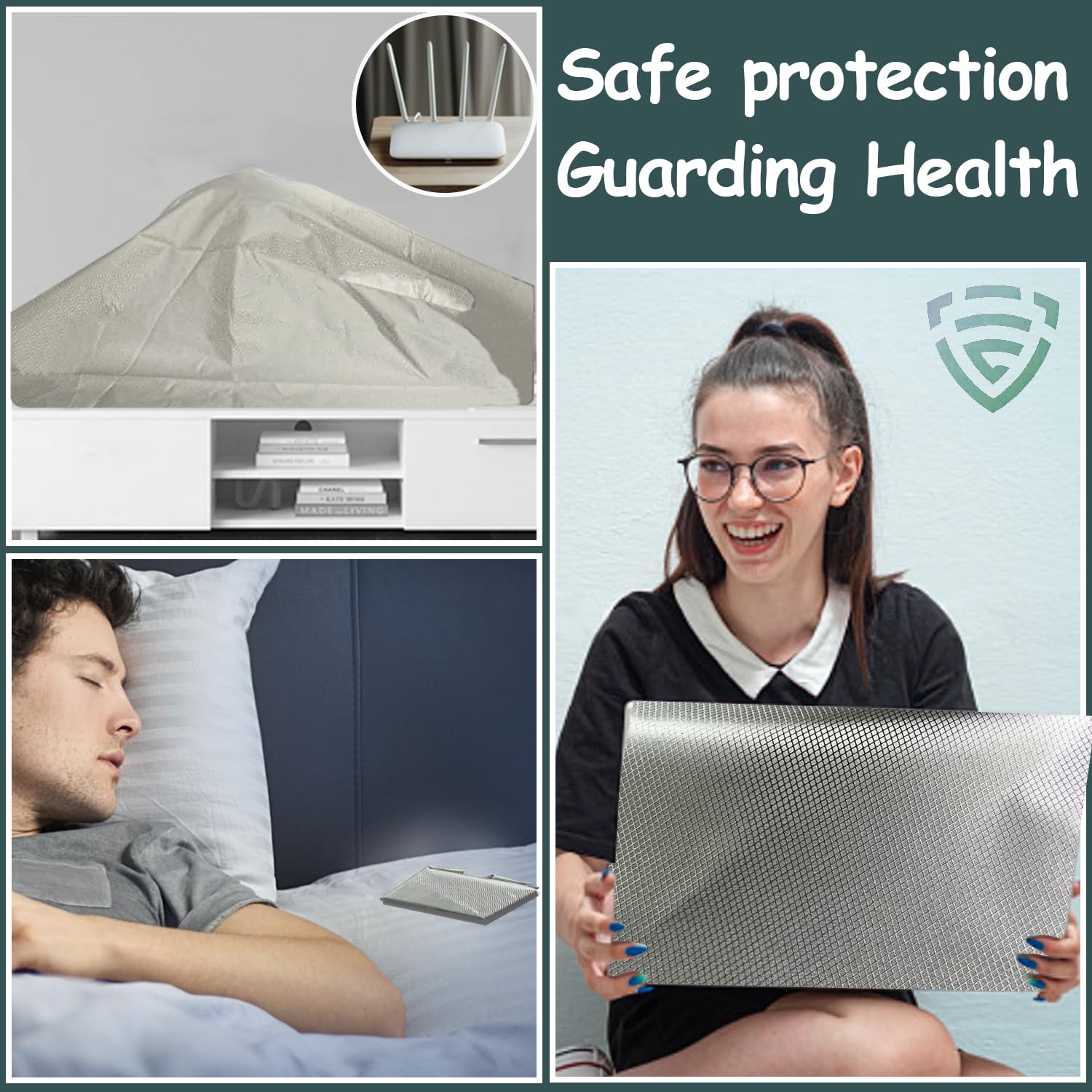
We have been going through hell in our area after the intense upgrades in emf towers started. That has left us increasingly in need of ways to cope with the damaging situation. I got this cloth to help.HOW THIS COMESThis comes with the fabric and the tape to seal the edges or seams in a plastic bag.HOW TO USE THISIn our situation, we used to have just 5g to cope with that that will be dealt with by one layer of faraday cloth like this. If you are dealing with higher level generation emf radiation, you might need more than one layer of this cloth.No matter how you use this, you will need to seal the edges. The threads are metallic. That means they will be picky as they unravel. Not only do you need to seal edges and seams with tape for that reason, but also to keep signal leaking.TAPEThe tape seems to stay put well so far. I will have to update for longevity in the future.SEWINGIf I am sewing this, I will use a serger and then fold the seam over, sealing it with the tape. So far, it stays put. Serging is not required, but I like to secure the seam so I don't have to worry about it coming apart. Just remember if sewing this, you need to remember this is METAL fabric. Needles and serger knives wear down quickly with metal fabric, so keep track of your needles and knives and sharpness.WHAT I USE THIS FOROne layer protects against 5g. In our situation, I need a couple of layers of this. I use it for a cap, as it protects against the damage to the head. I also use this to sleep under on really bad days. It will protect against high levels of surges. To cover devices and routers at night, it also will work- but of course, the things should be turned off in addition to that.THE BOTTOM LINEThis cloth works well and may have to be used in more than one layer depending on your situation. Edges need to be sealed.MY RATINGFIVE STARS. This is as advertised. Depending on your situation, you may need more than one layer for best protection.
ترست بايلوت
منذ يوم واحد
منذ شهرين