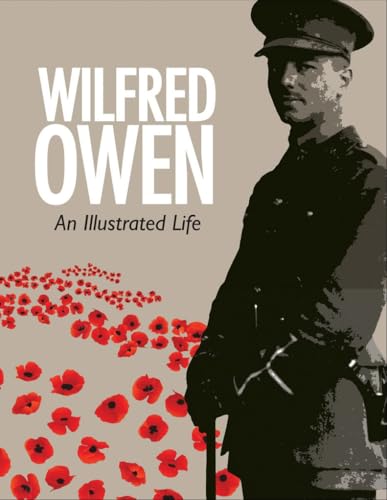
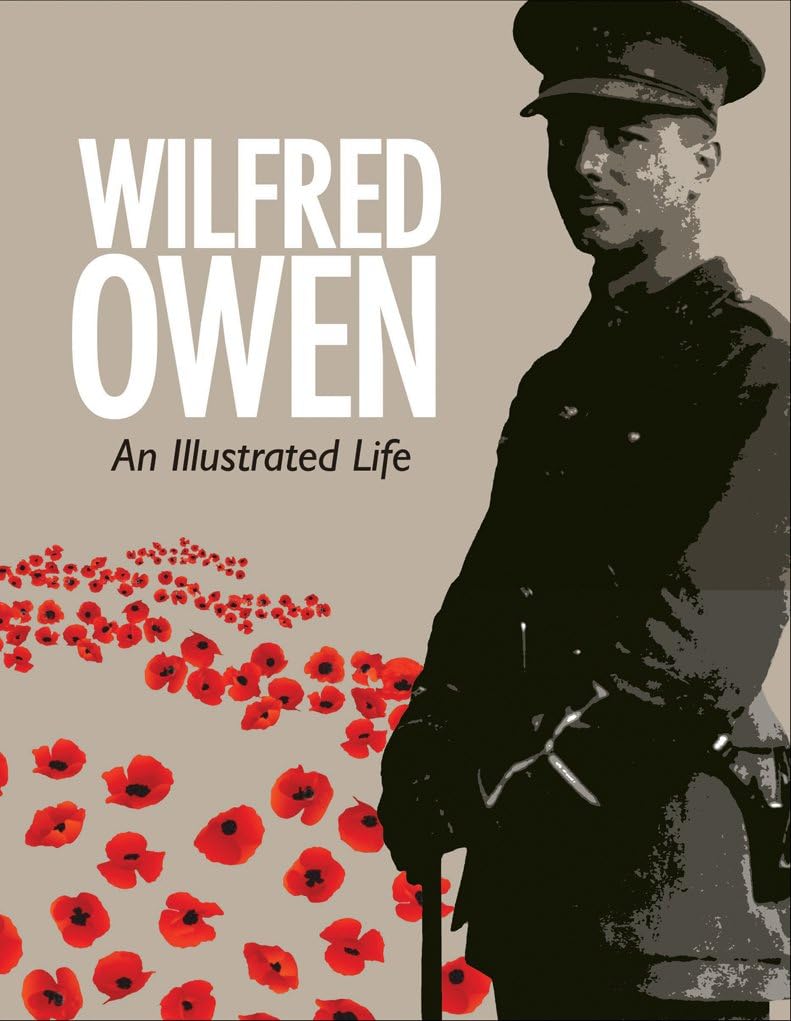
Wilfred Owen: An Illustrated Life [Potter, Janet] on desertcart.com. *FREE* shipping on qualifying offers. Wilfred Owen: An Illustrated Life Review: And bugles caling them from sad shires - In September, the Bodleian Library, Oxford published “Wilfred Owen: An Illustrated Life” by Jane Potter. Owen (1893-1918) has been the subject of `six recent biographies (not to mention others less recent). With Rupert Brooke, Owen is at the front of the line of the groups known collectively as the “World War I poets.” He is one of 16 World War I poets commemorated with a memorial stone in Westminster Abbey. Potter’s illustrated history of his life is deceptively simple looking, almost like the kind of biography you might find in a middle school library. But it is carefully crafted, extraordinarily well researched, and engagingly written, drawing upon the extensive correspondence he maintained with his mother, his poetry, and a considerable number of sources and photographs from the English Language Faculty at Oxford. The oldest of four children, he was the son of a railway clerk who had dreamed of settling in India and a mother who was decidedly evangelical. As he matured, he was undecided (or indecisive) about a profession or line of work, until the war intervened. He also had been writing poetry. Owen didn’t enlist in the British Army until 1915. In 1917, suffering from what was then called shell shock (and what we today call Post-Traumatic-Stress Disorder, or PTSD), he was sent to Craiglockhart, a hospital in Scotland specializing in shell shock cases. There he met Siegfried Sassoon, who had been sent to the hospital for a very different reason – to avoid a court-martial for a letter he wrote opposing the war (I posted an article on Sassoon’s The War Poems this week at Tweetspeak Poetry). The friendship with Sassoon was pivotal for Owen’s poetry. Manuscripts of his poems with Sassoon’s emendations still exist (one is on display at the Imperial War Museum). His poetry changed and grew. It began to be noticed, and published. Potter walks us through each phase of Owen’s short life, using pictures of childhood, family, friends and the military. Each section includes his poems at the end, adding a poignancy to the text. You look at the pictures of the young, the hope and expectancy in his face, and read his poems, and in a few short pages see a life of promise cut short. One of his best known poems is this one: Anthem for Doomed Youth What passing-bells for these who die as cattle? — Only the monstrous anger of the guns. Only the stuttering rifles' rapid rattle Can patter out their hasty orisons. No mockeries now for them; no prayers nor bells; Nor any voice of mourning save the choirs,— The shrill, demented choirs of wailing shells; And bugles calling for them from sad shires. What candles may be held to speed them all? Not in the hands of boys, but in their eyes Shall shine the holy glimmers of goodbyes. The pallor of girls' brows shall be their pall; Their flowers the tenderness of patient minds, And each slow dusk a drawing-down of blinds. Owen almost survived the war. On Nov. 4, 1918, he was shot and killed by enemy fire alongside a canal. A week later, on Armistice Day, his parents were informed of his death. And bugles calling for them from sad shires. Review: This biography of Wilfred Owen is informative, but the author fails to discuss Owen's homosexuality. - This illustrated biography of Wilfred Owen is fascinating, with many wonderful pictures. The author Jane Potter has done a great of research, but she is clearly very uncomfortable discussing the central role that Wilfred Owen's identity as a gay man played in his life and in his poetry. Like most scholars, she glosses over the subject of homosexuality. She seems clueless when it comes to interpreting the pervasive homoeroticism in Owen's poetry.
| Best Sellers Rank | #924,256 in Books ( See Top 100 in Books ) #189 in WWI Biographies #906 in British & Irish Poetry #937 in British & Irish Literary Criticism (Books) |
| Customer Reviews | 4.0 4.0 out of 5 stars (13) |
| Dimensions | 6 x 0.7 x 8 inches |
| Edition | First Edition |
| ISBN-10 | 1851243941 |
| ISBN-13 | 978-1851243945 |
| Item Weight | 2.31 pounds |
| Language | English |
| Print length | 144 pages |
| Publication date | September 15, 2014 |
| Publisher | Bodleian Library, University of Oxford |
G**G
And bugles caling them from sad shires
In September, the Bodleian Library, Oxford published “Wilfred Owen: An Illustrated Life” by Jane Potter. Owen (1893-1918) has been the subject of `six recent biographies (not to mention others less recent). With Rupert Brooke, Owen is at the front of the line of the groups known collectively as the “World War I poets.” He is one of 16 World War I poets commemorated with a memorial stone in Westminster Abbey. Potter’s illustrated history of his life is deceptively simple looking, almost like the kind of biography you might find in a middle school library. But it is carefully crafted, extraordinarily well researched, and engagingly written, drawing upon the extensive correspondence he maintained with his mother, his poetry, and a considerable number of sources and photographs from the English Language Faculty at Oxford. The oldest of four children, he was the son of a railway clerk who had dreamed of settling in India and a mother who was decidedly evangelical. As he matured, he was undecided (or indecisive) about a profession or line of work, until the war intervened. He also had been writing poetry. Owen didn’t enlist in the British Army until 1915. In 1917, suffering from what was then called shell shock (and what we today call Post-Traumatic-Stress Disorder, or PTSD), he was sent to Craiglockhart, a hospital in Scotland specializing in shell shock cases. There he met Siegfried Sassoon, who had been sent to the hospital for a very different reason – to avoid a court-martial for a letter he wrote opposing the war (I posted an article on Sassoon’s The War Poems this week at Tweetspeak Poetry). The friendship with Sassoon was pivotal for Owen’s poetry. Manuscripts of his poems with Sassoon’s emendations still exist (one is on display at the Imperial War Museum). His poetry changed and grew. It began to be noticed, and published. Potter walks us through each phase of Owen’s short life, using pictures of childhood, family, friends and the military. Each section includes his poems at the end, adding a poignancy to the text. You look at the pictures of the young, the hope and expectancy in his face, and read his poems, and in a few short pages see a life of promise cut short. One of his best known poems is this one: Anthem for Doomed Youth What passing-bells for these who die as cattle? — Only the monstrous anger of the guns. Only the stuttering rifles' rapid rattle Can patter out their hasty orisons. No mockeries now for them; no prayers nor bells; Nor any voice of mourning save the choirs,— The shrill, demented choirs of wailing shells; And bugles calling for them from sad shires. What candles may be held to speed them all? Not in the hands of boys, but in their eyes Shall shine the holy glimmers of goodbyes. The pallor of girls' brows shall be their pall; Their flowers the tenderness of patient minds, And each slow dusk a drawing-down of blinds. Owen almost survived the war. On Nov. 4, 1918, he was shot and killed by enemy fire alongside a canal. A week later, on Armistice Day, his parents were informed of his death. And bugles calling for them from sad shires.
D**E
This biography of Wilfred Owen is informative, but the author fails to discuss Owen's homosexuality.
This illustrated biography of Wilfred Owen is fascinating, with many wonderful pictures. The author Jane Potter has done a great of research, but she is clearly very uncomfortable discussing the central role that Wilfred Owen's identity as a gay man played in his life and in his poetry. Like most scholars, she glosses over the subject of homosexuality. She seems clueless when it comes to interpreting the pervasive homoeroticism in Owen's poetry.
B**E
Owen is my favorite WW1 poet - I have most of his books ...
Owen is my favorite WW1 poet - I have most of his books and was delighted when this was released. It s a beautiful little book - but the content is a real disappointment - a rehash -poorley written - his gayness totally ignored. Sorry….
G**N
A great read could not put the book down
J**T
Wonderful poet.
D**M
A pale little insubstantial book padded out with photographs. It reads like a precis of a 40 year old hagiography written by Jon Stallworthy. It is an exploitative piece of publishing not worth the money.
ترست بايلوت
منذ أسبوعين
منذ أسبوعين