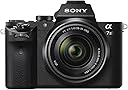
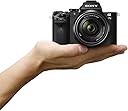
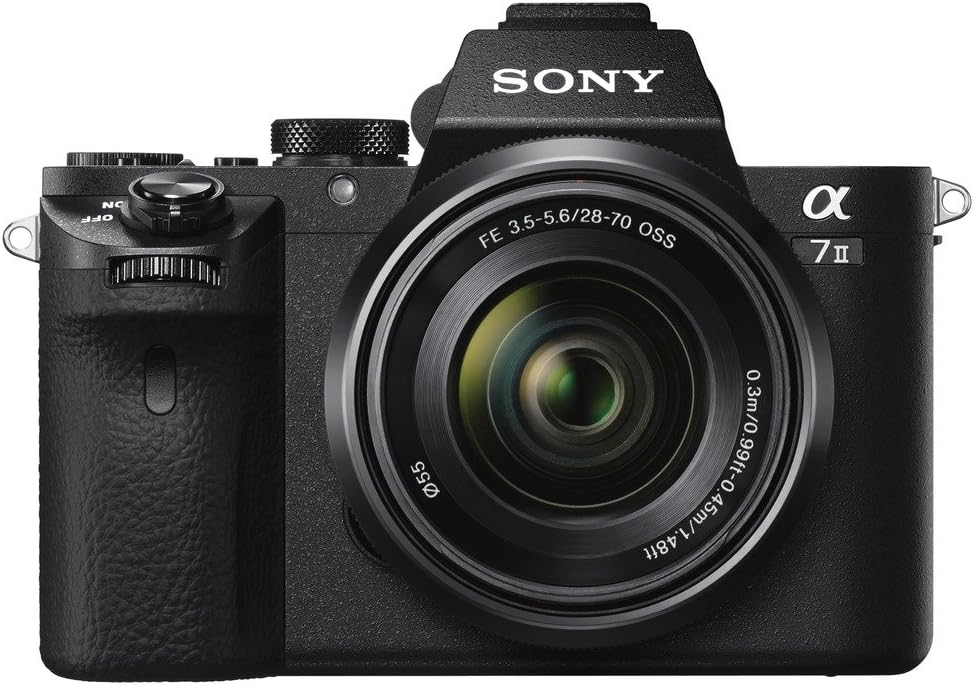
📷 Own the moment with Sony Alpha a7II — where innovation meets iconic imagery.
The Sony Alpha a7II is a groundbreaking full-frame mirrorless camera featuring a 24.3MP sensor and the world’s first 5-axis in-body image stabilization system. Designed for professionals and enthusiasts alike, it offers faster hybrid autofocus, versatile lens compatibility, and high-quality Full HD video recording at 50 Mbps. With improved ergonomics, a robust magnesium alloy body, and integrated WiFi/NFC, the a7II delivers exceptional image quality and creative flexibility in a compact, durable package.


| ASIN | B00PX8CNCM |
| Age Range Description | Adult |
| Aperture modes | F5.6-F22 |
| Are Batteries Included | Yes |
| Aspect Ratio | Unknown |
| Auto Focus Technology | Center, Continuous, Contrast Detection, Face Detection, Live View, Multi-area, Phase Detection, Selective single-point, Single |
| Autofocus | Yes |
| Autofocus Points | 117 |
| Best Sellers Rank | #49,503 in Electronics ( See Top 100 in Electronics ) #101 in Mirrorless Cameras |
| Bit Depth | 14 Bit |
| Brand | Sony |
| Built-In Media | Ac-Uud11 Ac Adaptor, Body Cap, Eyepiece Cup, Fe 28-70Mm F/3.5-5.6 Oss Lens, Limited 1-Year Warranty, Micro-Usb Cable, Multi-Interface Shoe Cover, Np-Fw50 Lithium-Ion Rechargeable Battery (1020Mah), Shoulder Strap, Sony Alpha A7 Ii Mirrorless Digital Camera With Fe 28-70Mm F/3.5-5.6 Oss Lens |
| Camera Flash | Hotshoe |
| Camera Lens | 28-70mm |
| Color | Black |
| Compatible Devices | Sony FE |
| Compatible Mountings | Sony FE |
| Connectivity Technology | HDMI, NFC, USB |
| Continuous Shooting | 5 |
| Crop Mode | Full-Frame |
| Customer Reviews | 4.4 out of 5 stars 1,036 Reviews |
| Data Transfer Rate | 50 Megabits Per Second |
| Digital Scene Transition | False |
| Digital Zoom | 4 |
| Digital-Still | Yes |
| Display Fixture Type | Tilting |
| Display Resolution Maximum | 1230000 |
| Display Type | LCD |
| Dots Per Screen | 2359296.0 dots |
| Effective Still Resolution | 24.3 |
| Expanded ISO Minimum | 50 |
| Exposure Control | Aperture Priority, Auto, Manual, Program, Shutter Priority |
| External-Memory Size | 16 GB |
| File Format | JPEG (DCF 2.0, EXIF 2.3), RAW (ARW 2.3) |
| Flash Memory Bus Interface Type | SD |
| Flash Memory Speed Class | UHS Speed Class 3 |
| Flash Memory Type | SD/SDHC/SDXC, Memory Stick Duo/Pro Duo/Pro-HG Duo |
| Flash Memory UHS Speed Class | 3 |
| Flash Memory Video Speed Class | UHS Speed Class 3 |
| Flash Modes | P-TTL |
| Flash Sync Speed | 1/250 sec |
| Focal Length Description | 28 to 70mm |
| Focus Features | Hybrid |
| Focus Mode | Continuous-Servo AF (AF-C), Direct Manual Focus (DMF), Manual Focus (MF), Single-Servo AF (AF-S) |
| Focus Type | Manual Focus |
| Form Factor | SLR-style mirrorless |
| Global Trade Identification Number | 00027242888739 |
| HDMI Type | Type D Micro HDMI |
| Hardware Interface | HDMI, Memory Stick, Memory Stick Duo, Memory Stick PRO Duo, Memory Stick PRO-HG Duo, S-Video, USB |
| Has Color Screen | Yes |
| Image Capture Type | Stills & Video |
| Image Stabilization | Sensor-shift |
| Image stabilization | Sensor-shift |
| Item Weight | 1.3 Pounds |
| JPEG Quality Level | Basic, Fine, Normal |
| Lens Construction | 9 Elements in 8 Groups |
| Lens Correction Type | Chromatic Aberration |
| Lens Type | interchangeable |
| Manufacturer | Sony |
| Maximum Aperture | 5.6 f |
| Maximum Focal Length | 70 Millimeters |
| Maximum Image Size | 6000 Pixels |
| Maximum Shutter Speed | 1/8000 Seconds |
| Memory Slots Available | 1 |
| Metering Methods | Multi, Center-weighted, Spot |
| Minimum Focal Length | 28 Millimeters |
| Minimum Shutter Speed | 30 seconds |
| Model Name | Sony Alpha a7II |
| Model Number | ILCE7M2K/B |
| Model Series | Alpha 7 |
| Movie Mode | Yes |
| Night vision | No |
| Number of Diaphragm Blades | 7 |
| Optical Zoom | 2 x |
| Photo Filter Size | 55 Millimeters |
| Photo Filter Thread Size | 55 Millimeters |
| Photo Sensor Resolution | 24.7 MP |
| Photo Sensor Size | APS-C |
| Photo Sensor Technology | CMOS |
| Real Angle Of View | 34.3 Degrees |
| Recording Capacity | 30 Minutes |
| Remote Included | No |
| Screen Size | 3 Inches |
| Self Timer | 10 Seconds, 2 Seconds |
| Sensor Type | CMOS |
| Series Number | 2 |
| Shooting Modes | AUTO, programmed AE, aperture priority, shutter-speed priority, manual, movie, sweep panorama and scene selection |
| Skill Level | Professional |
| Special Feature | Brightness Control |
| Specific Uses For Product | Photography and Videography |
| Supported File Format | JPEG (DCF 2.0, EXIF 2.3), RAW (ARW 2.3) |
| Supported Image Format | JPEG, RAW, Other |
| Total Still Resolution | 24.7 MP |
| Total USB 2.0 Ports | 1 |
| Total USB 3.0 Ports | 1 |
| Total USB Ports | 1 |
| UPC | 027242888739 |
| Video Output | Micro-HDMI |
| Video Resolution | FHD 1080p |
| Viewfinder | Electronic |
| Viewfinder Magnification | 0.71x |
| Warranty Description | 1 year coverage for labor, 1 year coverage for parts |
| White Balance Settings | Auto, Cloudy, Color Temperature, Custom, Daylight, Flash torch, Fluorescent, Incandescent, Shade, Underwater |
| Wireless Technology | BuiltIn, NFC |
| Write Speed | up to 104 MB/s |
| Zoom | optical |
L**N
The Loloho Review: Nothing Else Like It.
Sony is first and foremost a technology company, and they are doing things with the A7 series that are currently unequaled. This camera is unique in the marketplace. As of this writing, there's literally nothing else like it from Sony's direct competitors Nikon, Canon, Panasonic, Olympus, Fuji, & Pentax. If you want a full frame mirrorless cam (and don't want to trade your car for a Leica), you're getting an A7. The only question is which A7. (NOTE: For more detailed photos and video, check out the A7ii review on my website [...]-- also do a search for "Loloho Photo YouTube" to find my VIDEO channel with lots of photo great reviews!) The original A7 was named "camera of the year" for cramming a 24MP full frame sensor into a compact mirrorless body. How does Sony top it with the A7ii? By improving ergonomics, focus speed, video capabilities, and delivering a groundbreaking IN BODY image stabilization system - the world's first 5-Axis stabilized full frame sensor. This illustrates a couple of admirable characteristics about Sony's imaging division - they listen to customers, and they relentlessly innovate. When Sony updates a camera (which they do often), they deliver significant design changes that translate to real world improvement - not just megapixel boosts. A note about lenses: the lens situation is improving. At the time of this writing, the best native prime lenses for the A7ii are the brilliant Zeiss 55 f1.8 and the Zeiss 35. I've heard the Zeiss 16-35 is outstanding but have not tried it yet. At Photokina Sony announced a number of new E-mount lenses that are expected to hit the market in 2015. I feel the sub-100mm range will soon be pretty well covered, especially once these new lenses hit the market. Of course with an inexpensive adapter, you can use just about any lens you please with an A7, and that's what makes these cameras so wonderful. I bought my A7ii here on Amazon and got it the first day of release. In this review, I'm going to assume you know the basics about the A7 series, and go straight to the pros and cons of the new camera. For more files and video about the camera, check out my site. [...] PROS *In Body Steadyshot - This is the marquee feature and for good reason. Now ALL of your lenses have image stabilization - including those 40-year old Nikkors and Leicas. It's amazing and it works. Of course the stabilization is more helpful with lenses towards the telephoto end of the spectrum. I've tried it with my 105mm and 300mm Nikkor primes with impressive results. With native E-mount lenses that deliver focus distance information, you get full 5-Axis stabilization. If there's no electronic communication with the camera to transmit focus distance (as with older legacy lenses) you get 3-Axis stabilization. Note that for legacy lenses, you'll want to manually specify the focal length to ensure the best results. And yes, Steadyshot works a treat for handheld video too. Shortly after the A7ii hit the market, Sony released a firmware update (version 1.1) that improved the in camera Steadyshot and squashed an annoying bug - if you get an A7ii, MAKE CERTAIN that you are running the latest firmware! *Shutter release - The shutter release has been moved forward on the camera body to a more natural location. It's now right where your finger expects it to be. Alas, it's flat across the top like most DSLRs, so there's no possibility of a cable or soft shutter release. *Better Grip - The new hand grip is thicker and easier for my hand to grasp. The new grip extends about 10mm further from the body. The new grip contributes to the apparent size increase in the A7ii. *Improved Autofocus - Sony is claiming 30% better autofocus performance. While many were hoping for AF as fast as the a6000, unfortunately it's not there yet. But Sony has improved the focusing algorithms to elicit noticeably better performance. I've had good success with facial recognition, eye focus, and object tracking. A7ii autofocus is good; I have no major complaints, but it's not as fast as a DSLR or the a6000 (a camera I also own and enjoy). *Build quality - More magnesium is now used in the camera body, and it's obvious. The camera feels solid and reassuring in the hands, like it's been carved out of metal. Even the buttons and control dials add to the premium feel of the camera. *Video - The A7ii has several notable video improvements. High quality 50 Mbps XAVC S codec is now included. Built in stabilization is a HUGE help with nonstabilized lenses. Now ALL your fast primes are stabilized for video! And the camera includes a S-LOG picture profile with enhanced dynamic range that's useful for color grading. *Wifi - This is not a new feature, but Sony has done a nice job integrating wifi into the camera. The wifi integration really showcase Sony's prowess as a tech company (Nikon and Canon have badly lagged behind in this department, IMHO). We are already taking this stuff for granted, but it's really kind of incredible to remotely control your camera from your tablet or phone -- with a live image view, no less. If you want to quickly share photos from your full frame camera to social media, it's been made easy for you, no clunky adapters required. Sony needs to do a better job highlighting these features, because they are great. *Alpha menus - Sony has now standardized the Alpha menu system across several different camera bodies. It's a clean, logical user interface that works well. With a little practice, it's remarkably easy to access the features you need quickly. The upshot? You spend less time "menu diving" and more time taking photos. *EVF - The A7ii electronic viewfinder is essentially the same as the A7, but it should be noted that it's great. The EVF is what allows Sony to squeeze down the body size of the A7 series. Once you get used to having focus assist and peaking (and the results of your shot) available inside the EVF, you will love it. What once seemed like a drawback of mirrorless cameras is now a huge advantage. *Metal lens mount - The A7ii lens mount is more robust than that of the first gen cameras. No wiggle! Lenses mount nice and tight to the body. *More customizable buttons - There are now four customizable "C" buttons to which you can assign your favorite functions, like eye autofocus, focus assist, white balance. *Articulating LCD screen - The articulating LCD screen merits a mention because so many DSLRs still do not include the feature. Once you've shot with an articulating screen, you don;t want to go without one. The LCD screen provides a decent range of motion for high and low angle shots. *Startup time - Startup time of the camera has been improved, which means fewer missed shots. *Matte finish - This is a matter of taste, but I like the matte finish of the A7ii. CONS *Weight - Weight has increased over the original A7 by 146 grams or 5.15 ounces to 599 grams. This is no small increase (a 26% gain over the A7, to be precise). When packing camera gear, every ounce matters. If it gets much heavier, we're losing a key advantage of mirrorless. Yet to be fair, at 599 grams the A7ii is still lighter than the Nikon Df (760g), Canon 6D (760g), Canon 5D Mark III (950g) and Nikon D800 (980g). Of course none of those competing cameras offer in body image stabilization, or many of the other features of the A7ii. So the A7ii remains lighter than the competition while offering a uniquely powerful functionality. If the added weight is a deal killer for you, there's always the original A7. Personally, I decided that the extra features are worth the cost in weight. *Girth- The A7ii body is not quite as svelte as the original A7. Thickness of the body itself has increased by a couple of mm. It seems more pronounced because the new grip extends a good 10mm further than the old. The A7ii is (dare I say it?) a bit chunky. The body has become more like a blend of mirrorless and DSLR. I suspect that the average non-photographer would glance at this camera and assume it is a small DSLR. Note that for some people this minus will actually be a plus. Why? Because the camera handles larger/heavier lenses with better ergonomics. *Small control wheels - This is a nitpick, but the fore and aft control wheels are small and almost flush with the body. A larger size would provide better tactile feel. *No 4k video - Not a major omission to me, but the lack of 4k is a disappointment. I think it would have been easy for Sony to include 4k, but the marketing department must have other plans. If you must have 4k, you want the A7S. *No silent shutter - The shutter noise is improved over the original A7, but it's not the dead silent shutter of the A7S. *Antialiasing filter - The A7ii has a low pass filter. I'd prefer they omit it. *Poor Apps Implementation - The original idea of offering apps is a good one, but unfortunately the PlayMemories apps have been poorly implemented by Sony. The PlayMemories store has a few worthwhile offerings, but as of this writing one of the best (time lapse) isn't compatible with the A7ii. Sony needs to open up the app store to allow outside development to make the most of this functionality. (Imagine how lame iTunes or Android would be if Apple/Google provided all the apps! That's what we're getting now from Sony.) Please, Sony - either do a better job with the PlayMemories app store, or just go ahead and include the app features in our cameras from day one. *Battery charger not included - Battery life is not a strength of these cameras (rated at 350 shots per charge) so you will want extra batteries. If you want an external battery charger, you've got to buy your own. I have several batteries and prefer to charge the extras while still having my camera free to use. *Questionable flash options - There's no onboard flash, and Sony's flash offerings are disappointing. No sync speed higher than 1/250. I don't often do flash photography, but there are times when it is necessary. Personally I would appreciate an onboard bounceable flash like that of the a6000 (the a6000 flash works great in this respect) or even a small fill flash like the X100 series. CONCLUSION Whether you want an A7ii really boils down to two words : STEADYSHOT INSIDE. With the A7ii, it's all about image stabilization. The in body stabilization is actually a big deal. That's why you pay the premium for this camera over a first generation body. If you shoot with lenses that lack OSS (and that includes all legacy lenses) then it makes sense to get the A7ii. It's like getting a nice across-the-board upgrade to your lens collection. It's extremely cool to attach a 40-year old Nikkor 105mm and enjoy the benefits of stabilization. I have a host of Nikkors and some unstabilized E-mount (including the superb Zeiss FE55) that benefit. Of course the ergonomic improvements of the A7ii are welcome. I'm sure that many professionals will upgrade to the A7ii simply for the relocated shutter release button and improved grip. The 24MP sensor of the A7ii is basically the same as that used in the A7. If you want a high resolution mirrorless monster, you want the A7R. If you are heavily interested in VIDEO, your decision may come down to the A7ii versus the A7S. You might think of it this way: the A7S is a video camera that takes stills, while the A7ii is a stills camera that takes great video. While "steadyshot inside" certainly helps with handheld shooting of video on the A7ii, lowlight performance trails the A7S. If you must have the King of Lowlight Video, you still want the A7S. Because I shoot both video and stills I debated between the A7ii and the A7S. It was a difficult choice, but I ultimately decided that the superlative all around performance of the A7ii was best for me. I have owned (and in some cases still own) cameras from Nikon, Canon, Panasonic, Fuji, and Olympus. At the moment there's literally not an apples-for-apples competitor to this Sony camera. I buy the camera that is the best for my needs and am not loyal to one brand. Lately it seems that SONY is the company that's delivering innovation and excitement in this space. While Nikon and Canon have gingerly tested the waters of mirrorless camera design (no doubt to protect their existing DSLR product lines), Sony has been fearlessly pushing ahead with groundbreaking technology. Sony makes the sensors, and is hungry for market share; we photographers are reaping the benefits. Today, I find the A7ii the best general purpose full frame camera on the market. It's compact, solidly built but not too heavy, plays nice with a huge number of lenses, and is packed full of AMAZING technology. It just does everything (stills and video) very well. And by the way, the price is quite reasonable considering all it delivers. It's one of the most affordable full frame cameras you can buy. If you purchase one, I think you will enjoy it.
R**O
A Value Deal for Those Interested in Full Frame
To preface this review, I think the time for purchasing this particular camera is when it is being sold for under 1000 dollars. This tends to happen frequently throughout the year, especially around the holiday season. In fact, one could also find the body for ~900 new on black friday/cyber monday deals on amazon or other camera stores. If you already have invested in one system, say Canon or Nikon,or even already own a Sony APS-C camera, I would not recommend the a7II. The a7II is a gateway product that provides the most value to those who have not yet experienced the mirrorless movement of cameras, or even cameras in general. I will also not recommend this camera to those who are looking into seeking photography as a career. You would probably be better investing in a camera which is 'competitive' to offer top results to clients. So to begin, who is the Sony a7II perfect for? This camera is perfect for those who are interested in full frame photography and not so much interested in shooting video. This is the camera for the amateur or the casual shooter who want to reap the rewards that mirrorless designs offer. While the camera is fairly old, around 4 years as of 2019, do not mistake it as a bad camera. Even in 2019, the image quality and sensor performance is quite impressive. The IBIS, a feature seldom found on cameras of this price range, allows you to take very sharp images in low light situations. Auto focus on this camera is fairly quick and will get you sharp focus in most, if not all, situations. Just know, that high action or high movement subjects will not be easy to focus on using this body. Dynamic range on this camera is also very impressive. Aside from the built in features, the E-Mount system is the most mature mount system on the market. Since Sony adopted mirrorless designs early, there is a large selection of high quality lenses that can fit almost any budget. The current high value lenses to be looking out for are: - Tamron 28-75mm F/2.8 which runs for just under 900 dollars MSRP. It is the most bang for you buck zoom lens on the market for the E-Mount system and potentially a lens you will never take off. - Sigma Art Primes come in various focal lengths and sizes. Again, these lenses are razor sharp and don't break the bank. One could get the a7II kit for 1000 dollars and the Sigma Art 35mm F1.4 and that would still be cheaper than buying an a7III body. - Samyang/Rokinon lenses. For every Sony lens on the market, there is a Samyang/Rokinon of similar design at a small fraction of the Sony price. This glass is cheap, but quality for what you pay for. Some would even reckon that these lenses surpass some of the available Sony options. Of course many will be purchasing the a7II Kit which comes with the 28-70mm lens. This kit lens is about the epitome of the 'jack of all trades and master of none' title. It gives access to a pretty standard zoom range, the sharpness is pretty solid even at its wide open aperture of 3.5. It is small and light weight as well, meaning you could easily carry this lens around with you in a bag. But that's about it. You can take very good pictures with this lens, but you'll always be wanting for more in terms of sharpness and aperture options.
J**N
Amazing. Amazing. AMAZING.
This is a fantastic camera and I've been through plenty of cameras. This is the one I'll be keeping. A little history... My first DSLR (9ish years ago) was a Nikon D40. I quickly outgrew that and bought a D90. After I while I wanted more. I got myself a D700 and that was a fantastic camera. At some point I got sick of the weight of heavy cameras and lenses. I sold all of my Nikon gear and bought a Sony Nex7. I loved the light weight...but I was never happy with the image quality. Sooo...back to Nikon. Bought a D7100 and a bunch of lenses. I took a trip to Italy and midway through the trip decided that I needed to look at other options. Once again I was sick of carrying around all that weight. I planned to sell my Nikon stuff (again) and look back at the mirrorless options. I never got the chance because my camera bag was stolen on the way to Milan. Once I got home I started investigating my options. I tried an Olympus E-M1 but that didn't suit me. It's a nice camera but just wasn't up to the standard in image quality that I was used to. Next, I tried the Fuji X-T1. That is a beautiful machine. I would've been happy with it...If I hadn't also tried out the Sony a7. I was happier with the image quality from the Sony, but happier with the feel of the Fuji camera. In the end, image quality won and I kept the Sony. For my type of photography (landscapes, portraits) the Sony fit me very well. The autofocus was acceptable, but not great. But with my kind of work this isn't that big a deal. But I was never happy with the quality of the actual camera body. Just felt a little cheap. Then the a7ii was announced and I decided to trade up. While the camera is a bit heavier, the trade off of AMAZING handling makes it well worth it. The camera oozes quality and feels much nicer to hold than any other mirrorless camera I have tried. The in-body image stabilization is also great. I can handhold with the 55 1.8 at 1/4 second pretty consistently. I can get good images slower that that too, but they are more hit-or-miss. Still, the fact that I CAN get clear images at 1 second is insane. Autofocus is also noticeably better than on the a7. It's not in the same league as a Nikon DSLR like my old D7100, but for me that's not a big deal. If I were shooting sports then the Sony would be out...simple as that. For me, this is pretty much the perfect camera. I'm using it with the FE 55mm f1.8 and FE 16-35mm f4. I also have a Rokinon 85mm f1.4 (replaced my Nikon 85 1.4G that was stolen) and I just ordered a Canon FD 135mm f2.0 for portraits. That pretty much covers all my needs. Very very happy with this camera. Oh, I also got a Nissin i40 flash for Christmas and it is a great match with this camera when you need it. It's remarkably powerful for its size and doesn't look ridiculous on the a7ii.
J**C
Great camera, wouldn't have spent the extra $100 on kit lens though
I was very let down when I first used this camera out of the box but then I popped a prime lens on it and it was AMAZING! Normally I think kit lenses are underrated and take too much abuse but this camera's kit lens is just horrible. Once I put a $198 50mm lens on the camera is was incredible. So this is one of the few times I found recommend you go for the body without the kit lens and buy yourself a good prime instead. The menu on Sony is terrible and I can't get used to it. It's completely upside down to me coming from Nikon but all that said the camera is just amazing. It's fast and lightweight. It's smaller and lighter than my Nikon DX crop sensor. It's incredible to have what feels like a micro four thirds but is a full frame camera! The 50 and 85mm f1 8 lenses are super affordable and are incredible paired with this camera. I got a 35mm f2 Rokinon pancake lens ($200) to keep on this camera between shoots and with that tiny lens I can carry this camera with me everyday everywhere I go and have a full frame mirrorless on me all the time! Incredible that after all these years as a photographer I finally got a full frame digital camera and it was only $900! You can't beat the price. It's such a great deal. In body image stabalization is so valuable by itself. I remember when VR lenses were new and that seemed crazy but now any lens I out on this camera gets an extra 2 stops handheld! For video it makes everything looks so smooth. You can literally shoot at 3200 ISO if you have to and it works. At 1600 ISO it's not even something I have to worry about. I never used to go over 400 ISO on a digital camera, 800 for black and white street stuff but now I will shoot at 800 just to be able to stop down more because it's honestly not an issue. Oh BATTERY LIFE, not nearly as bad as what I exoected! I think that it's fine. It lasts me all day on one battery without a problem. Also the batteries are super cheap. I got 2 extra batteries and a double charger for them for $35 (in total) with that I have 3 batteries at all times if I need them. If you are really paranoid spent $30 more and get 6 batteries. I'd rather have a small battery and camera and be able to just swap in these cheap tiny batteries as needed. I found that a full day of regular life use can easily last on 1 charge. Amazing camera!
M**S
nice try.
I've long been shooting full frame and aps so, transition on doing still photo using this cam isn't too bad since it is very similar to the digital cam Minolta Dimage 7i about 20 years ago. Of course, a7ii does have many more features. Well, a7 ii has many more buttons, too, and can be confusing. Of the maze of buttons, I really like the Fn button. I wish the options in there can be user assigned, esp, when some of the choices are already built with actual dedicated buttons. For example, there is a dedicated ISO on the wheel, there is one from Fn, and one from the MENU. So how many different buttons do one really need to assign ISO? The play back zoom-in/out buttons are awkwardly placed. How come only the zoom in button is labelled? Couldn't the play back zooming be assigned to the control wheel. After all, there are 3 wheels on this camera? While focusing, display show highlight histogram, rather than all three RGB channels. It's making it hard to tell which channel may be clipping or not. Peaking level doesn't work well when the image is magnified for critical focusing. In magnified mode, the red showed as a few tiny dots when my aperture is set at F11 using a 50mmF1.8 lens focusing on newspaper laying on the floor about 3 feet away. When going for 2nd magn (11x), there is just no dots at all. What is more, the highlighting color doesn't show on some objects, i.e. a well lit street sign. Battery life is too short. A fully charged lasted for ~6 hr of use with the view finder, manual focus, airplane mode and clicked about 100 pictures. When using a non-Sony zoom lens, Steady Shot becomes less ideal. to get the optimal SS, one have to go into menu and change the focal length each time when the focal length on the zoom is changed. the doors hinges are flimsy; can be accidentally open and ... break. while the hand grip is better than earlier a7, it is hard to use the front dial. The dials are poorly place which is making the grip feel short unnecessary. I hope the next better release can comfortably hand held with 3 fingers while the index and thumb easily turning the dials. why is NFC so hard to pair? when I am on the road, I don't always count on WI-FI. easy paring is really my bare minimal. I understand the advantage of RAW and have use RAW since last century. :) I don't mind the camera can generate snappy JPG, so, I can spend time in Photoshop for something else. I wish the view finder can turn to 90 degree liked the 20 years old D7 and a build in flash would be a nice add-on. I am interested to know more about the next gen of this cam.
M**S
It's not perfect, but it is a fantastic camera.
I love this camera. Sold my a6000 when I got this and it's a massive upgrade. My first full frame digital. The difference is noticeable, but it's not a silver bullet - it doesn't make everything magically better. I am keeping my other crop cameras for both the reach and at least in the case of the a77ii, for its great AF system. The a7ii is primarily for using manual lenses, though the AF works great. Pros: * Image quality is great. * Improved high ISO\low-light performance (over my prior cameras) * I like the size\weight\handling. Many don't, but I've had 0 issues with it. * Customizability. Coming from another system it's probably confusing. No problems here, familiar. * AF system is good. Not the best, but for most it's perfectly fine. * I'm able to use all my old a-mount FF lenses w\AF on LAEA4 adapter * Focus peaking, magnification, zebra all very effective and useful for manual focusing * IBIS for the vintage lenses (as long as you set it properly each time) can be a huge advantage in low-light, especially in conjunction with all the other capabilities. Cons: * APSC mode is only 10MP. This is really the only sore point that has me second guessing whether I should have sprung for an a7RII instead. But realistically the price point was beyond my reach atm. * AF system isn't as good as the newest A7 models or the best DSLR's * AF on LAEA4 adapter is passable for static subjects, but it's too slow for any sort of action. * FE lenses can be expensive. I've had it for about 2 months now, and I really don't have a lot of complaints about this camera at this time. Some of the cons I listed are a bit of a stretch and not specific to the camera. What you get for what you pay is an outstanding value and I don't see that changing. Depending on your needs this may not be the best option for you, the a7 might be sufficient in a more stripped down and compact package, or maybe having the best AF possible is more important than the full frame, etc. There's all sorts of options across many systems. Just think carefully about what you need and avoid an expensive impulse buy.
S**Y
I utterly hate this camera. Don't waste your money. An expensive mistake! Can't focus!
I utterly hate this camera. Don't waste your money. Purchasing it was an expensive, frustrating mistake. Don't believe any of the good reviews. Get a Canon or a Nikon -- anything else but this. I labored over buying this camera. I looked at the Nikons and Canons, but took a risk buying this new type of camera from Sony. I regret it. Yes, it's lighter and smaller -- but those are the only pluses. I have used this camera a few times per week for the past year and a half. It is so difficult to focus! I get shots that are often acceptable and I almost never get shots that I think are great. I have been on hundreds of photo shoots, struggling to get this camera to focus on my subject (people, stationary objects, etc.). It's embarrassing when I can't get the camera to function! Several times I have simply whipped out my iPhone 6 and taken a few shots that I had to use for the publication that I write for... Really pathetic!!!!! I have friends who own Canons and Nikons, and the pictures they take are absolutely stunning, breathtaking and amazing. All they do, it seems, is press the button and they get AMAZING photos. Not so with this camera. It's a major dramatic struggle to take good pics with this camera, unless the light is absolutely FULL and BLAZING. (I bumped into someone who had the A7S, the supposedly legendary low-light miracle camera with a ridiculously high ISO of 496,000. I bumped the ISO up all way in a room with medium light, to see how much better it would be than my A7ii with an ISO of 25,000... The result was the SAME: grainy, noisy, useless photos.) The sensor is large and always needs to be cleaned. There is a limited line of lenses available for this camera, and getting an adaptor defeats the purpose of buying this camera for its smaller size. Good luck finding any replacement parts (lens covers, body caps, etc.). You're better off trying to place a phone call to Mars than get Sony to help you. The Send To ComputerSend To Smartphone function is useless, and is a pain in the ass to figure out... even the Sony rep told me not to bother with it. Don't buy anything from Gary Fong, either. His products are obscenely over-priced. I was talking to the Western Region Sony rep for a while, but when I told him my troubles with the camera, and that I was thinking of switching over to Canon or Nikon, he just stopped corresponding with me. Good bye, Sony!
E**A
Super camera for the price
Five stars because it's phenomenal for the price. Perhaps not the best camera ever made, but a truly great camera and a tremendous value. I'm a long-time Canon guy with a 5Dii and 7D, but after a couple of backpacking trips this summer carrying 10+ pounds of camera gear I decided to look for something that would give me at least decent images from a smaller and lighter package. I had never given a second thought to Sony cameras because, I guess, I'm a DSLR and Canon snob. But when I saw some great reviews and that I could use my Canon lenses with adapter on the a7ii I decided to give it a try. I'm really blown away by the images I've been getting from the a7ii. I must say they equal the quality of those from the 5Dii. The color tone of the Sony images is a little different than the Canon, but not in a bad way. I think I prefer the Canon color look, maybe because I'm used to it, The Sony images are very pleasing, and are very sharp with the couple of Zeiss lenses I've used. I never shoot with the 5Dii above 800 iso because of noise, but I was able to get noise free images at 3200 iso from the Sony. That makes the difference between getting a sharp hand-held shot inside a dimly lit church or not. I bought the 5Dii because many images I liked in photo magazines were taken with it. I did not expect the Sony to come close to its image quality, but it really does, in an affordable and nicely sized package. It's a great camera that will be used for much more than just backpacking trips. In fact, I'm seriously considering an a7Rii as my primary camera. No longer a Canon snob... p.s.: I wish people would stop whining about the battery life. It's a small camera and has a small battery. You need three to shoot all day, but you can buy 2 batteries and a charger for $25 so get over it. I would rather carry a couple of batteries in my pocket than add the weight around my neck.
ترست بايلوت
منذ يومين
منذ 5 أيام