Some deliveries may take a little longer than usual due to regional shipping conditions.

قم بتنزيل التطبيق


معلومات عنا
حقوق الطبع والنشر © 2024 Desertcart Holdings Limited
قم بتنزيل التطبيق
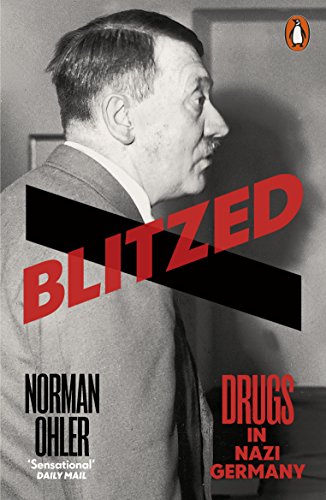
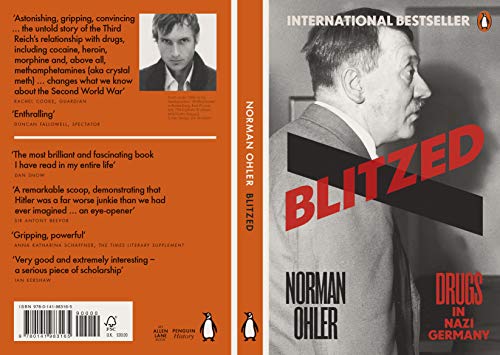


Blitzed: Drugs in Nazi Germany [Ohler, Norman] on desertcart.com. *FREE* shipping on qualifying offers. Blitzed: Drugs in Nazi Germany Review: Amazing revelations about World War II Germany - As one who survived nearly six years of Nazi occupation, I have a keen interest in World War II–why it started, how it was fought, reasons for the Holocaust, and so on. Before I discovered BLITZED, DRUGS IN NAZI GERMANY, a book by Norman Ohler, I thought I knew a great deal about the war that took the lives of 25 of my family members and shaped my own life. Before I describe its contents, let me emphasize that this book is a superb piece of scholarship, with 44 pages of references and substantiated research. It is NOT science fiction. The author documents, in great detail and in a style that reads like adventure fiction, how drugs fueled the Nazi war effort–from Hitler down to the Wehrmacht soldier in the field. During World War I, German scientists invented diamorphine, which was trademarked as Heroin. Used to treat wounded soldiers, it became a popular pain-relief and recreational drug in Germany between wars. Once the Nazis took power, the most widely used drug became Pervitin, a narcotic used by soldiers, workers in factories and offices, and nearly the entire German population to fight off depression and fatigue. Blitzkrieg, the miraculously rapid capture of France, could not have happened without Pervitin. Tank drivers and other soldiers were able to go for several days without sleep on the drug, thus surprising not only the French and British with the speed of their advance west, but even their own commanders, including Hitler. With sleep being the enemy of the soldier on the battlefield, the drugs were distributed to troops on a massive scale. Pervitin was widely used on the Eastern Front, but with disastrous results for the Nazis, who were eventually defeated by the Soviets and the weather. A major character in the book is Dr. Theodor Morell, a quack physician who became Hitler’s drug supplier. The author has uncovered detailed records kept by Morell, showing the types of drugs and specific doses and their frequency as administered to the Fuehrer. Toward the end of the war, Morell was constantly injecting Hitler with Eukodal, a powerful synthetic narcotic, and swabbing his gums with cocaine. It is a wonder that the dictator survived as long as he did. Today’s use of opiates and various other drugs pales in comparison to that which was taking place in Germany before and during World War II. Norman Ohler’s superb piece of scholarship and writing helps us understand how narcotics fueled demented German minds to commit such unspeakable deeds. Everyone interested in contemporary history should read this excellent book. [Blitzed, Drugs in Nazi Germany, by Norman Ohler and translated by Shaun Whiteside, Penguin Books, 2016] Review: Fascinating - a bit redundant but excellent - Some very interesting new bits pieced together from the archives, but the substantial new parts here, about the mass production, marketing and delivery of amphetamines for the public and Nazi officials could have been done in about 2/3rds of the volume. There's a lot of filler that's redundant or well circulated in previous work on Hitler. The basic premise - that the Nazis prototyped the weaponization and political mobilization of amphetamines is fascinating and defensible. Now if you just applied this to the current political situation and the mass pharmaceutical management of folks in the US, UK and the 'west' - that would be interesting. Well done.
| Best Sellers Rank | #478,873 in Books ( See Top 100 in Books ) #1,090 in World War II History (Books) #4,972 in World History (Books) |
| Customer Reviews | 4.4 4.4 out of 5 stars (2,268) |
| Dimensions | 5.06 x 0.84 x 7.74 inches |
| ISBN-10 | 0141983167 |
| ISBN-13 | 978-0141983165 |
| Item Weight | 9.4 ounces |
| Language | English |
| Print length | 368 pages |
| Publication date | September 26, 2017 |
| Publisher | Penguin Press |
C**R
Amazing revelations about World War II Germany
As one who survived nearly six years of Nazi occupation, I have a keen interest in World War II–why it started, how it was fought, reasons for the Holocaust, and so on. Before I discovered BLITZED, DRUGS IN NAZI GERMANY, a book by Norman Ohler, I thought I knew a great deal about the war that took the lives of 25 of my family members and shaped my own life. Before I describe its contents, let me emphasize that this book is a superb piece of scholarship, with 44 pages of references and substantiated research. It is NOT science fiction. The author documents, in great detail and in a style that reads like adventure fiction, how drugs fueled the Nazi war effort–from Hitler down to the Wehrmacht soldier in the field. During World War I, German scientists invented diamorphine, which was trademarked as Heroin. Used to treat wounded soldiers, it became a popular pain-relief and recreational drug in Germany between wars. Once the Nazis took power, the most widely used drug became Pervitin, a narcotic used by soldiers, workers in factories and offices, and nearly the entire German population to fight off depression and fatigue. Blitzkrieg, the miraculously rapid capture of France, could not have happened without Pervitin. Tank drivers and other soldiers were able to go for several days without sleep on the drug, thus surprising not only the French and British with the speed of their advance west, but even their own commanders, including Hitler. With sleep being the enemy of the soldier on the battlefield, the drugs were distributed to troops on a massive scale. Pervitin was widely used on the Eastern Front, but with disastrous results for the Nazis, who were eventually defeated by the Soviets and the weather. A major character in the book is Dr. Theodor Morell, a quack physician who became Hitler’s drug supplier. The author has uncovered detailed records kept by Morell, showing the types of drugs and specific doses and their frequency as administered to the Fuehrer. Toward the end of the war, Morell was constantly injecting Hitler with Eukodal, a powerful synthetic narcotic, and swabbing his gums with cocaine. It is a wonder that the dictator survived as long as he did. Today’s use of opiates and various other drugs pales in comparison to that which was taking place in Germany before and during World War II. Norman Ohler’s superb piece of scholarship and writing helps us understand how narcotics fueled demented German minds to commit such unspeakable deeds. Everyone interested in contemporary history should read this excellent book. [Blitzed, Drugs in Nazi Germany, by Norman Ohler and translated by Shaun Whiteside, Penguin Books, 2016]
A**L
Fascinating - a bit redundant but excellent
Some very interesting new bits pieced together from the archives, but the substantial new parts here, about the mass production, marketing and delivery of amphetamines for the public and Nazi officials could have been done in about 2/3rds of the volume. There's a lot of filler that's redundant or well circulated in previous work on Hitler. The basic premise - that the Nazis prototyped the weaponization and political mobilization of amphetamines is fascinating and defensible. Now if you just applied this to the current political situation and the mass pharmaceutical management of folks in the US, UK and the 'west' - that would be interesting. Well done.
A**S
Absolutely Incredible Jaw Dropper of a Book~!
This history book is an incredible eye-opener~! Most readers of WW-II and Nazi Germany histories are familiar with Hitler and his Dr. Morell's "vitamin" injections, (not to mention plenty of cocaine too), and perhaps even that Goring was a morphine addict. But how about the fact that almost all of the Reich's soldiers were tweakers~?! Yup, Nazi soldiers were en masse, high as a kite on meth-amphetamine~! It was widely marketed throughout Germany to the civilian and military populations alike in the form of easy to ingest capsules. The author's historical research, and the evidence he dredges up, are irrefutable. And this is only one of the countless shocking insights into the subject matter: as the title says, "drugs in Nazi Germany". The entire book was one jaw-dropping page turner after another. The print is quite large, btw, making reading the book easy for most people. There is a fascinating revelation of stuff that went on that one never imagined would be going on in a modern state, on practically every page. Then again, we shouldn't be surprised, I guess, that a regime that gassed and shot civilians in a systematic manner, would also systematically dope its own soldiers in order to extract from their bodies the maximum performance possible during critical periods of time on the battlefield. One photo in the book, (that speaks better than words), shows German troops asleep where they finally "crashed", after being high on crystal meth for the 17 days of the offensive against France in 1940. I strongly recommend this book to anyone who's at all interested in the role of drugs in Nazi Germany, both before and after the beginning of WW-II. .
V**Z
The author is not an historian and it shows. Though many sources are quoted, he assumes and 'decorates' some facts with a prose that can seem silly or exaggerated. Almost no mention of the drug use in concentration camps. Limited only to military campaigns and Hitler's drug use, it glamorizes addiction by using informal language, and diving into sensationalism. Not a history book but a well documented study that's ruined by novelized bits.
D**G
Worth a read , changes your perspective on Germany’s part in world war 2. A view from the evil mans inner circle
D**O
I thought I was fairly well informed about WWII, but time and again -thanks to books, documentaries and YouTube videos- I find that there is a lot more to learn. This book is a case in point. Although I was aware of the tendency of Dr Morell to feed Hitler way too many drugs, and of Göring's morphine addiction, I did not know how widespread drug (ab)use was throughout Nazi Germany and particularly its armed forces. It goes some way to explaining the amazing speed of the Blitzkrieg against France. The book is warmly recommended for those who take an interest in these matters. As a bonus, it also suggests a fairly plausible explanation for why Hitler ordered his troops to halt outside Dunkirk instead of pursuing the British and French forces amassed on its beaches.
M**N
This is a book that gives fascinating insight into how prevalent drug use was in Nazi Germany and how the armed forces were given Pervitin, an upper that was highly addictive and pretty dangerous if used unwisely. The main focus of the book is 'Patient A' who was Adolf Hitler. One photograph is entitled 'From teeetotaler to junkie' and shows Hitler looking very aged and a shadow of his former maniacal self. In Weimar Germany pre-1933 and Hitler's regime, drug use was widespread and drugs like cocaine should be found in cough mixture, all available over the counter. My copy of the book was signed by the author, Norman Ohler. This book can be read in chunks rather than all at once as the information is very detailed. The chapter entitled 'Sieg High' is particularly interesting as it describes how the use of drugs made the Nazi conquest of Europe very 'blitzed' and rapid.
Á**.
Es libro era un regalo de Navidad para mi hijo. A él le ha encantado y yo lo tengo para leer en cuanto termine el que ya tengo empezado.
ترست بايلوت
منذ 4 أيام
منذ أسبوعين