We remain fully operational. Our teams are working around the clock to ensure your deliveries continue safely.

DOWNLOAD THE APP


Customer Services
Copyright © 2025 Desertcart Holdings Limited
DOWNLOAD THE APP
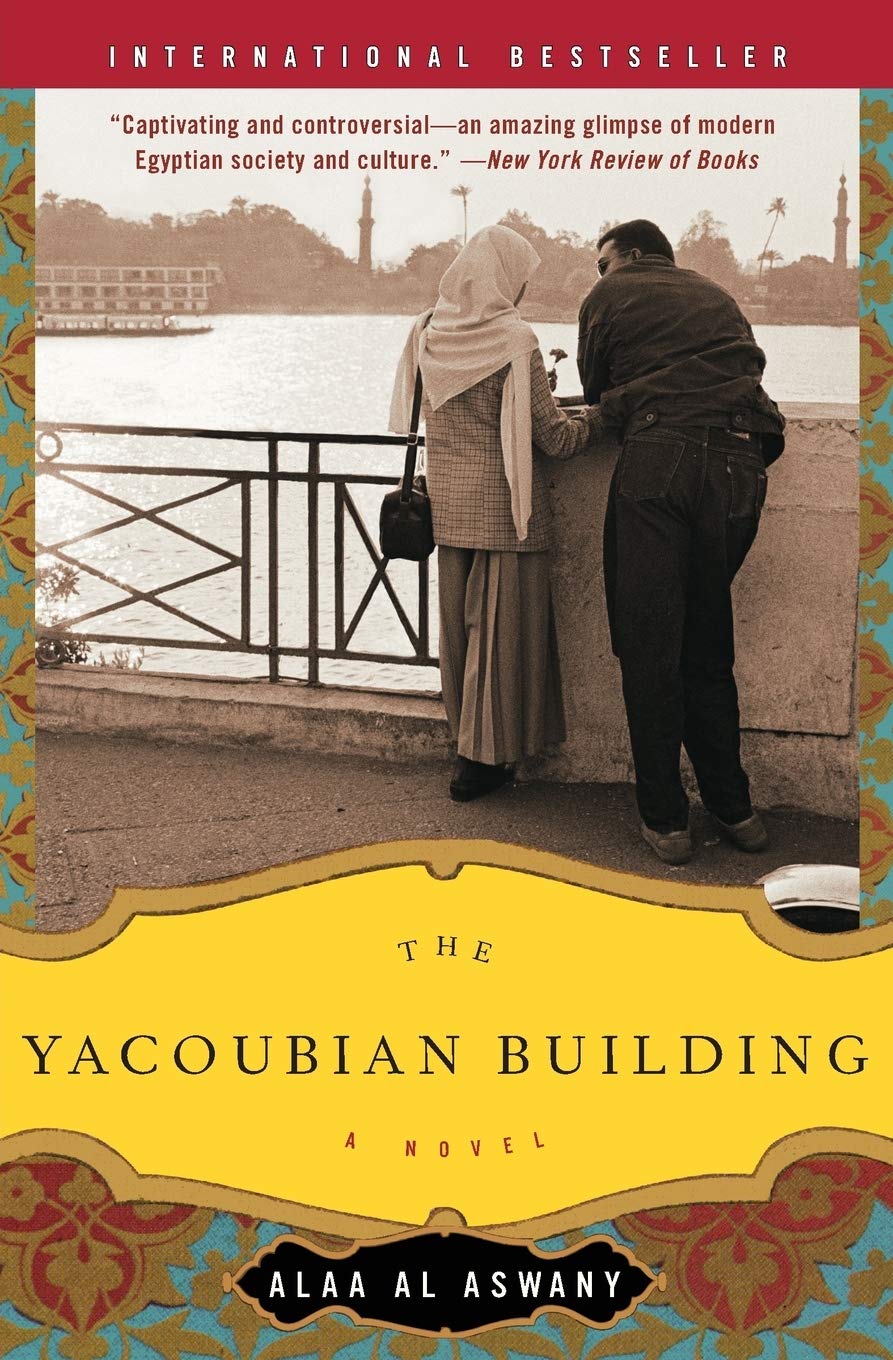
desertcart.com: The Yacoubian Building: The International Bestseller - A Political Novel of Love and Loss in Modern Egypt: 9780060878139: Al Aswany, Alaa: Books Review: A Raw Commentary on Egyptian Society Prior to The January 25th Revolution...and Beyond - This is Egypt. Its past of glorified and often lamented early 20th-Century grandeur as well as its present of turbulence and increasing desperation and repressiveness are artfully laid out for the reader to analyze, contemplate and invariably pity in this impressive literary work. This is Egypt that everyone knows well but rather not talk about. The book captures the collective moral and physical destitution of the post-1970s Egyptian society like no other book has; at least none that I have ever read. The countrywide air of angst and despair is so thick you could cut it with a knife. The characters are drawn so skillfully and so realistically their pain is so intense and palpable it makes you wonder why it took so long for a revolution to erupt. Speaking of characters, this book is rife with a diverse set of characters that are rich with complexity and alive with nuance. The author did an extraordinary job in taking the reader on an unforgettable journey through both the most inexplicable and most banal in Egyptian mores. Each character represents a distinct reflection of Egypt herself. Her defiance, innocence, bitterness, lightheartedness, fanaticism, tolerance, softness, austerity, corruption, venality, hypocrisy, cowardice and hope. Allegory definitely weighs heavily in this work of fiction. Zaki Bey el Dessouki is an aristocrat and a francophile now living a shadow of his pre-1952-revolution posh life. He drowns his disillusion with reality in the pleasures of the flesh. Zaki is a living reminder of an era that was once promising and hopeful, until Nasser came. Zaki recounts, "Abd el Nasser was the worst ruler in the whole history of Egypt. He ruined the country and brought us defeat and poverty. The damage he did to the Egyptian character will take years to repair. Abd el Nasser taught the Egyptians to be cowards, opportunists, and hypocrites." Zaki embodies Egypt's murdered past of carefree and happy days. "Cairo was like Europe." He laments thinking of that time. "It was clean and smart and the people were well mannered and respectable ... What times! Every night was filled with laughter and parties and drinking and singing. There were lots of foreigners in Cairo. Most of the people living downtown were foreigners, until Abd el Nasser threw them out in 1956." His sister, Dawlat, is the complete opposite. Her caustic and vitriolic bouts or rage defined her character since her children abandoned her and emigrated. Her goal in life was to make her brother's life a living hell, and she succeeds in doing so. Dawlat represents a generation angry at the circumstances that led to the demise of their social standing; a generation so bitter and unhinged at what happened to them they either leave and forget about the old country or stay and unleash their wrath on everyone around them, including their loved ones. Then there is Taha and Busayna. Two kindred spirits torn apart by reality. These pivotal characters tell the core story of Egypt. Their pure love tainted by poverty and their dreams drowned by a culture defiled by venality, nepotism, sexism, and classism. That is, in a nutshell, the story of Egypt. And then of course, there is Hagg Azzam, a pious Muslim and a rich man who decides to join the Egyptian Parliament. The Arab world is rife with the likes of Hagg Azzam. They are the kings of hypocrites, the heads of opportunists and the leaders of cowards. They are the embodiment of the culture that's held Egypt and the Arab world hostage to a faulty religion. Oppressing people and robbing them and killing them, all the while praising God in a sickening expression of sinister piety. In an exchange between Hagg Azzam and an influential member of Mubarak's National Democratic Party, the man says, "No Egyptian can go against his government. Some people are excitable and rebellious by nature, but the Egyptian keeps his head down his whole life long so he can eat. It says so in the history books. The Egyptians are the easiest people in the world to rule. The moment you take power, they submit to you and grovel to you and you can do what you want with them. Any party in Egypt, when it makes elections is in power, is bound to win, because the Egyptian is bound to support the government. It's the way God made them." Sadly, that was not a disillusioned perception of reality by the corrupt government. People did grovel. People did obey. The Egyptian psyche has been conditioned since Nasser took office to be subservient. This comes through in a correspondence between Taha and The President where Taha writes, imploring Mubarak to look into an injustice that has just befallen him. He goes on to say, "Your Excellency Mr. Presiden will see that your son ..." The submissive tone starts with the word "son." The use of "son" and "daughter" inherently suggests the fallibility and inferiority of the citizenry, like a child that's eager to please his parent. The government, in turn, uses the words "father of the people" to refer to the relationship between Mubarak and the Egyptian people. This sort of condescending rhetoric was used excessively by Mubarak prior to his ouster on February 11, 2011. Perhaps the most complicated character is that of Hatim Rasheed's, the token homosexual in this cast of "normal" people. Hatim is a successful, smart and good-natured man that lives in a society that considers him a pervert because of his sexuality. Hatim's lover, a simple rural man named Abduh, is a closeted homosexual with a wife and kid and illiteracy to boot. Hatim's tumultuous personal life offers the reader a glimpse of life for the educated liberals in Egypt. I can go on and on about every character in this book. They are definitely very rich and very well fleshed out, but I'll leave some of that for you to explore on your own. Reading this novel in the post-January-25th-revolution world makes me wonder about the fate of these characters in this "new" Egypt. Many of the the grievances expressed repeatedly by the author were what erupted the revolution. Will the likes of Hagg Azzam and his cohorts finally get thrown in jail once and for all? Will Taha's dreams be allowed to flourish? Will Hatim's too? Will Zaki be able to feel proud again? These are some of the questions you will be asking yourself as you're reading this book. It's very topical and extremely thought-provoking. The only gripe I have with this book is the the translation. It's at times awkward and almost inaccurate. Some nuances are lost, as it is with most translated works of literature. Being fluent in Arabic makes it easy for me to spot those errors, but they're probably a nonissue to the non-Arabic reader. Get this book and learn about the old Egypt, and when you're done, make a prayer that the new Egypt isn't anything like this. Review: An Interesting Look At Modern Day Cairo - Alaa Al Aswany's book The Yacoubian Buidling is an insightful look into modern day Cairo. It is not the most uplifting or happy book I have ever read, but I think Aswany was trying shed light on the city's less fortunate. The characters all suffer from the same troubles that humans have around world have, which makes it easier to identify with their plight. This book shows what it is like for the poor, working class, and those who used to be part of the upper class and how each is struggling to move up in society. Zaki Bey represents the upper class of Egypt before the 1952 Revolution. He studied to become an engineer in France, but once he returned his father had lost the majority of his wealth and political clout with the Revolution and the land reform. Thus, Zaki Bey spends his days drinking and pursuing women because he is not as motivated as his father. He misses the way Egypt used to be and one feels sorry for him right away and his character is similar to that of the building. He is beginning to fall apart and now he wishes he would have married and had a family when there was still an opportunity. The other characters in the story are also revealing. Hatim is a French newspaper editor, but he is also a homosexual who must be careful about revealing his identity. Aswany did a good job of building Hatim's persona, which shows what can happen to children who are neglected by their parents. Hatim is constantly striving for the love and approval he could never find when he was growing up with his lovers. He does not know what it means to let someone go if you love them, which may have dire consequence. I encourage you to read the book and see for youself. The only downside I would mention about this book is that the female characters are not as well developed as the male ones. It may be because Aswany is a man, but I have read novels about female characters that are very convincing and that written by men. Aswany give us a few insights into the females of Cairo, but there are only two major characters: Busayna and Souad. The others are only mentioned in a few passages or are not even given names at all. Overall this was a very informative and engaging book and I do recommend it.
| ASIN | 0060878134 |
| Best Sellers Rank | #100,570 in Books ( See Top 100 in Books ) #233 in Political Fiction (Books) #2,847 in Classic Literature & Fiction #3,698 in Literary Fiction (Books) |
| Customer Reviews | 4.2 4.2 out of 5 stars (1,008) |
| Dimensions | 5.31 x 0.61 x 8 inches |
| Edition | First Harper Perennial Edition |
| ISBN-10 | 9780060878139 |
| ISBN-13 | 978-0060878139 |
| Item Weight | 10.4 ounces |
| Language | English |
| Print length | 255 pages |
| Publication date | August 1, 2006 |
| Publisher | Harper Perennial |
I**F
A Raw Commentary on Egyptian Society Prior to The January 25th Revolution...and Beyond
This is Egypt. Its past of glorified and often lamented early 20th-Century grandeur as well as its present of turbulence and increasing desperation and repressiveness are artfully laid out for the reader to analyze, contemplate and invariably pity in this impressive literary work. This is Egypt that everyone knows well but rather not talk about. The book captures the collective moral and physical destitution of the post-1970s Egyptian society like no other book has; at least none that I have ever read. The countrywide air of angst and despair is so thick you could cut it with a knife. The characters are drawn so skillfully and so realistically their pain is so intense and palpable it makes you wonder why it took so long for a revolution to erupt. Speaking of characters, this book is rife with a diverse set of characters that are rich with complexity and alive with nuance. The author did an extraordinary job in taking the reader on an unforgettable journey through both the most inexplicable and most banal in Egyptian mores. Each character represents a distinct reflection of Egypt herself. Her defiance, innocence, bitterness, lightheartedness, fanaticism, tolerance, softness, austerity, corruption, venality, hypocrisy, cowardice and hope. Allegory definitely weighs heavily in this work of fiction. Zaki Bey el Dessouki is an aristocrat and a francophile now living a shadow of his pre-1952-revolution posh life. He drowns his disillusion with reality in the pleasures of the flesh. Zaki is a living reminder of an era that was once promising and hopeful, until Nasser came. Zaki recounts, "Abd el Nasser was the worst ruler in the whole history of Egypt. He ruined the country and brought us defeat and poverty. The damage he did to the Egyptian character will take years to repair. Abd el Nasser taught the Egyptians to be cowards, opportunists, and hypocrites." Zaki embodies Egypt's murdered past of carefree and happy days. "Cairo was like Europe." He laments thinking of that time. "It was clean and smart and the people were well mannered and respectable ... What times! Every night was filled with laughter and parties and drinking and singing. There were lots of foreigners in Cairo. Most of the people living downtown were foreigners, until Abd el Nasser threw them out in 1956." His sister, Dawlat, is the complete opposite. Her caustic and vitriolic bouts or rage defined her character since her children abandoned her and emigrated. Her goal in life was to make her brother's life a living hell, and she succeeds in doing so. Dawlat represents a generation angry at the circumstances that led to the demise of their social standing; a generation so bitter and unhinged at what happened to them they either leave and forget about the old country or stay and unleash their wrath on everyone around them, including their loved ones. Then there is Taha and Busayna. Two kindred spirits torn apart by reality. These pivotal characters tell the core story of Egypt. Their pure love tainted by poverty and their dreams drowned by a culture defiled by venality, nepotism, sexism, and classism. That is, in a nutshell, the story of Egypt. And then of course, there is Hagg Azzam, a pious Muslim and a rich man who decides to join the Egyptian Parliament. The Arab world is rife with the likes of Hagg Azzam. They are the kings of hypocrites, the heads of opportunists and the leaders of cowards. They are the embodiment of the culture that's held Egypt and the Arab world hostage to a faulty religion. Oppressing people and robbing them and killing them, all the while praising God in a sickening expression of sinister piety. In an exchange between Hagg Azzam and an influential member of Mubarak's National Democratic Party, the man says, "No Egyptian can go against his government. Some people are excitable and rebellious by nature, but the Egyptian keeps his head down his whole life long so he can eat. It says so in the history books. The Egyptians are the easiest people in the world to rule. The moment you take power, they submit to you and grovel to you and you can do what you want with them. Any party in Egypt, when it makes elections is in power, is bound to win, because the Egyptian is bound to support the government. It's the way God made them." Sadly, that was not a disillusioned perception of reality by the corrupt government. People did grovel. People did obey. The Egyptian psyche has been conditioned since Nasser took office to be subservient. This comes through in a correspondence between Taha and The President where Taha writes, imploring Mubarak to look into an injustice that has just befallen him. He goes on to say, "Your Excellency Mr. Presiden will see that your son ..." The submissive tone starts with the word "son." The use of "son" and "daughter" inherently suggests the fallibility and inferiority of the citizenry, like a child that's eager to please his parent. The government, in turn, uses the words "father of the people" to refer to the relationship between Mubarak and the Egyptian people. This sort of condescending rhetoric was used excessively by Mubarak prior to his ouster on February 11, 2011. Perhaps the most complicated character is that of Hatim Rasheed's, the token homosexual in this cast of "normal" people. Hatim is a successful, smart and good-natured man that lives in a society that considers him a pervert because of his sexuality. Hatim's lover, a simple rural man named Abduh, is a closeted homosexual with a wife and kid and illiteracy to boot. Hatim's tumultuous personal life offers the reader a glimpse of life for the educated liberals in Egypt. I can go on and on about every character in this book. They are definitely very rich and very well fleshed out, but I'll leave some of that for you to explore on your own. Reading this novel in the post-January-25th-revolution world makes me wonder about the fate of these characters in this "new" Egypt. Many of the the grievances expressed repeatedly by the author were what erupted the revolution. Will the likes of Hagg Azzam and his cohorts finally get thrown in jail once and for all? Will Taha's dreams be allowed to flourish? Will Hatim's too? Will Zaki be able to feel proud again? These are some of the questions you will be asking yourself as you're reading this book. It's very topical and extremely thought-provoking. The only gripe I have with this book is the the translation. It's at times awkward and almost inaccurate. Some nuances are lost, as it is with most translated works of literature. Being fluent in Arabic makes it easy for me to spot those errors, but they're probably a nonissue to the non-Arabic reader. Get this book and learn about the old Egypt, and when you're done, make a prayer that the new Egypt isn't anything like this.
J**Y
An Interesting Look At Modern Day Cairo
Alaa Al Aswany's book The Yacoubian Buidling is an insightful look into modern day Cairo. It is not the most uplifting or happy book I have ever read, but I think Aswany was trying shed light on the city's less fortunate. The characters all suffer from the same troubles that humans have around world have, which makes it easier to identify with their plight. This book shows what it is like for the poor, working class, and those who used to be part of the upper class and how each is struggling to move up in society. Zaki Bey represents the upper class of Egypt before the 1952 Revolution. He studied to become an engineer in France, but once he returned his father had lost the majority of his wealth and political clout with the Revolution and the land reform. Thus, Zaki Bey spends his days drinking and pursuing women because he is not as motivated as his father. He misses the way Egypt used to be and one feels sorry for him right away and his character is similar to that of the building. He is beginning to fall apart and now he wishes he would have married and had a family when there was still an opportunity. The other characters in the story are also revealing. Hatim is a French newspaper editor, but he is also a homosexual who must be careful about revealing his identity. Aswany did a good job of building Hatim's persona, which shows what can happen to children who are neglected by their parents. Hatim is constantly striving for the love and approval he could never find when he was growing up with his lovers. He does not know what it means to let someone go if you love them, which may have dire consequence. I encourage you to read the book and see for youself. The only downside I would mention about this book is that the female characters are not as well developed as the male ones. It may be because Aswany is a man, but I have read novels about female characters that are very convincing and that written by men. Aswany give us a few insights into the females of Cairo, but there are only two major characters: Busayna and Souad. The others are only mentioned in a few passages or are not even given names at all. Overall this was a very informative and engaging book and I do recommend it.
S**N
Understanding Egypt in turmoil
This book was recommended to me by a Moslem friend who is both religious and moderate. She said that she had never understood why someone would become a terrorist until she read this account of Egyptian society. Her comments were right on target. This is a remarkable book. I was in Egypt almost exactly one year ago and the picture that emerges in the book reflects the world I saw. It makes it quite clear why there has now been a revolution in the country and what conditions have existed to create fundamentalists as well as political opportunists. I think that reading this book could be extremely useful to anyone who is trying to understand what is now going on in the Middle East. It takes you into a cross section of the country detailing the idealism which has been crushed and then turned towards fundamentalism as well as the secularism that has been so strong and useful in the society. I cannot recommend the book highly enough espcially at this point in history. It is aslo interesting to note that for several years this was a best seller in the Arab world. SETM
M**S
Compelling characters that reveal the complexity of Cairo
A story of post revolution Cairo and how the complexities of colonialism, politics, wealth, corruption, and religion play out in the lives of the residents of the Yacoubian Building. Whether the poor residents of the roof or the rich residents of the tower all are trying to find a path to a better life - but each path has a price, and sometimes that price is a life. Great use of character narratives to create sense of place and time.
L**I
This iconic book portrays Egyptian society in its many facets. Corruption of government officials, rise of the Muslim brotherhood, the great divide between the rich and the poor, employment opportunities, the place of women's bodies and sexuality are some of the themes that run through it. Inspite of the strong content, the book does not live up to its fame. The translation is too simple and thus reduces the power of the work. Yet, the author's sense of irony lingers and leaves a bitter aftertaste. Overall, an easy and enriching read.
L**N
The Yacoubian Building caught me by surprise. It begins as a sexy, romantic novel, develops into an interesting character study, and ends as a frightening revelation of what makes a terrorist. The corruption and degradation of Egyptian society is frightening. Al Aswany knows his country; his translator is a good writer, and the book made a real impact on me.
A**H
The impression of the Arab world in much of the English-speaking world is pretty monolithic and very much at the extremes - the kind of world depicted in the opening scene of Aladdin. This has been fostered mostly by our impressions from movies and limited experience with Arabs outside of specific tourist destinations and perhaps some local kebab shops. When it comes to literature, I haven't met many people who have read the brilliant Cairo Trilogy and even then that's usually the only body of (relatively) modern Arabic literature people in English-speaking countries can cite. I heard an interview with Al Aswany recently on the BBC for 'The Automobile Club' of Egypt and upon further reading decided to give it a read and I'm so glad I did. It's a rich tapestry showcasing just how rich Arab culture and attitudes really are. There are no monolithic blocks, there are regular people trying to get by and choosing different paths. People who fall in love, have illicit affairs, are gay, take drugs, become violent, betray each-other, succumb to venality, are greedy, are sneaky, are beautiful and ugly, are kind: they're *just* *like* *us*. The plot itself is a series of interwoven fictional character stories forming a mosaic around a real building in Cairo - The Yacoubian Building. The plots are rich and developed but it is a rollercoaster ride of character-building and important events reflecting not only its decades-ago setting but the current problems Egypt has been facing since the Arab Spring. It's beautiful, wonderful and I gobbled it up. You should definitely read it.
A**S
It takes you back to Egypt of the 1940s, to the last years of the monarchy when Egypt was under the British occupation. You might find insinuation to the current Egypt and mentality of a kind of population accepting tyranny for the sake of security. Exciting and entertaining.
M**N
I finished reading it just after my one month trip to Egypt and I find that it describes so well the mentality and complexity of the society.
Trustpilot
3 weeks ago
3 days ago