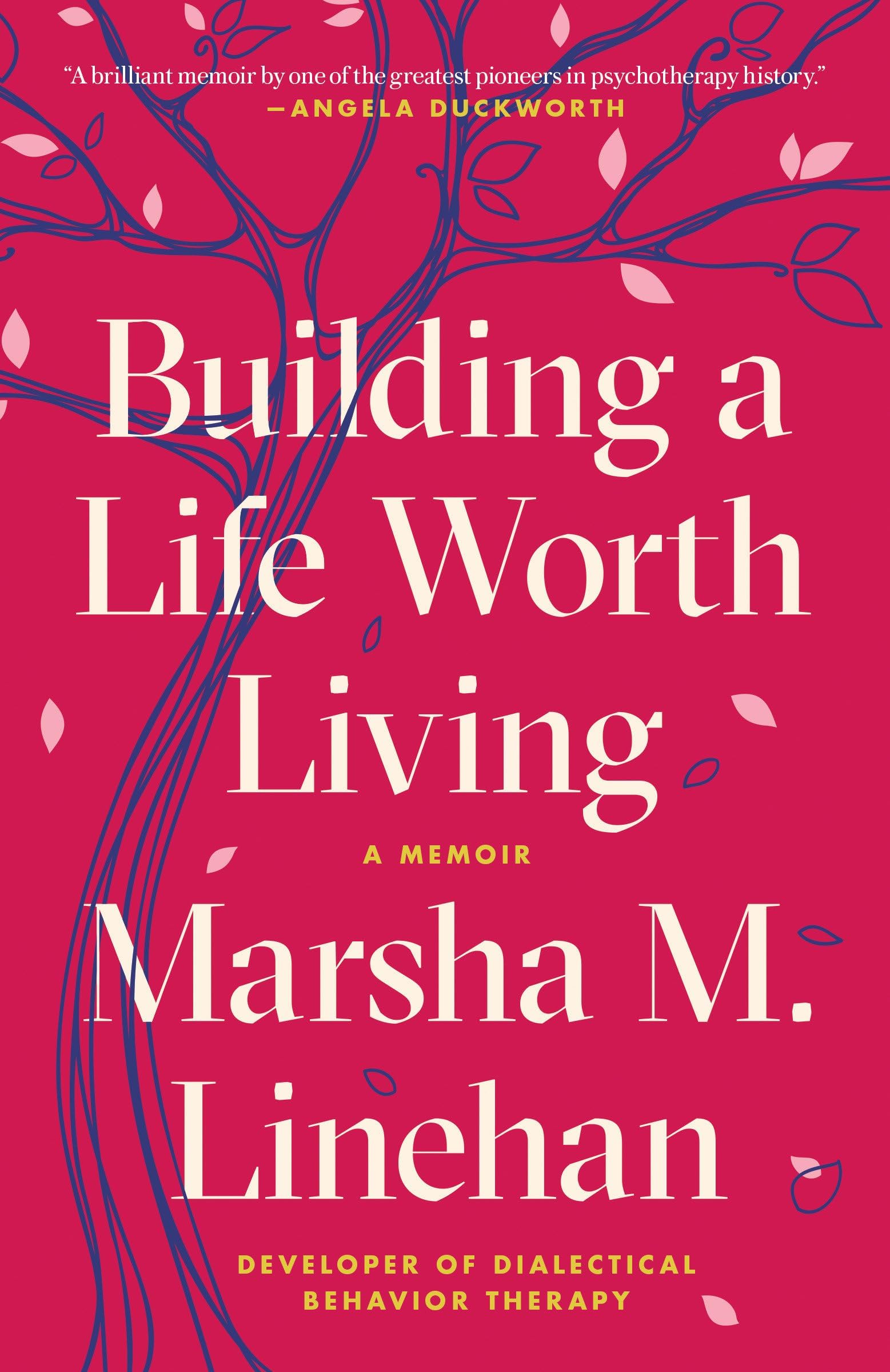
Building a Life Worth Living: A Memoir
Product ID: 267898262
Buy anything from 5,000+ international stores. One checkout price. No surprise fees. Join 2M+ shoppers on Desertcart.
Desertcart purchases this item on your behalf and handles shipping, customs, and support to KUWAIT.
Marsha Linehan tells the story of her journey from suicidal teenager to world-renowned developer of the life-saving behavioral therapy DBT, using her own struggle to develop life skills for others. “This book is a victory on both sides of the page.”—Gloria Steinem “Are you one of us?” a patient once asked Marsha Linehan, the world-renowned psychologist who developed Dialectical Behavior Therapy. “Because if you were, it would give all of us so much hope.” Over the years, DBT had saved the lives of countless people fighting depression and suicidal thoughts, but Linehan had never revealed that her pioneering work was inspired by her own desperate struggles as a young woman. Only when she received this question did she finally decide to tell her story. In this remarkable and inspiring memoir, Linehan describes how, when she was eighteen years old, she began an abrupt downward spiral from popular teenager to suicidal young woman. After several miserable years in a psychiatric institute, Linehan made a vow that if she could get out of emotional hell, she would try to find a way to help others get out of hell too, and to build a life worth living. She went on to put herself through night school and college, living at a YWCA and often scraping together spare change to buy food. She went on to get her PhD in psychology, specializing in behavior therapy. In the 1980s, she achieved a breakthrough when she developed Dialectical Behavioral Therapy, a therapeutic approach that combines acceptance of the self and ways to change. Linehan included mindfulness as a key component in therapy treatment, along with original and specific life-skill techniques. She says, "You can't think yourself into new ways of acting; you can only act yourself into new ways of thinking." Throughout her extraordinary scientific career, Marsha Linehan remained a woman of deep spirituality. Her powerful and moving story is one of faith and perseverance. Linehan shows, in Building a Life Worth Living , how the principles of DBT really work—and how, using her life skills and techniques, people can build lives worth living. Review: Marsha Linehan tells a harrowing story of what she had to survive to invent DBT - This is the story, the narrative, of a survivor, Marsha Linehan, an innovator in the treatment of borderline personality disorder (BPD) using a method she and her team invented called Dialectical Behavioral Treatment (DBT). Linehan has written a memoir, not a treatment manual (separately noted in the complete post). Her memoir contextualizes the diverse interventions used by DBT such as acceptance, distress tolerance, emotional regulation skills, self soothing skills, communication skills, limit setting skills, assertiveness training, and so on. She attempts and largely succeeds in connecting the dots between DBT and its skills and the key events in her life, many of which had not been publicly available. Linehan is on a tear – standard behavioral therapy doesn’t work with the most seriously distressed (suicidal) patients and cognitive behavioral therapy has serious issues, too. You have to get a person whose life and all-available-evidence “prove” that “all the good one’s are taken” or “life sucks” to be reasonable and admit that “some of the good ones are not taken” or “life does not have to suck at all times.” The thing about the iceberg [of life] is that it’s the iceberg “all the way down.” The visible part of the iceberg is not a different iceberg than the less visible part submerged beneath the water. The behavior is visible, but the biology is not visible, what the individual had to survive is not visible, how the community reacts to the individual of is not visible. But unlike – or perhaps just like – the iceberg, research treats these all as different siloes. It is true that we all – including Linehan – now speak of the bio-psycho-social individual and express authentic commitment to integration. But the effort required to integrate just shows how dis-integrated the entire phenomenon is. The tip of the iceberg does not regard itself as distinct from the iceberg. The “tip” is our abstraction. Likewise, with behavior. Linehan demonstrates this compelling as she takes the psychoanalytic distinction of “introject,” operationalizes it, and shows collects evidence that DBT improves measures of introject over against a stricter behavioral intervention. Amazing. How shall I put it delicately? Like every other individual, Linehan has a privileged access to her own first person experience – the golden light moment, the blue hydrangea moment. She also has many advantages in interpreting what that experience means, since, like every other individual, she knows a lot about her own history that others might or might not know. But as to what the experience “really means,” one individual has as good a chance of getting it right as another once the experience has been captured and reported. At first she says “The golden light means God loves me”; but then, since that experience was like [felt like] her love for Ed [a person who she actually loved deeply], she reinterprets the golden light to mean “I love God.” So she has to continue searching for God’s love for her, which brings us to the blue hydrangea by which time the meaning of God and of love have shifted. Hence, the title: Saint Linehan. But wait. Her Zen experience will eventually have taught her this is just another Zen koan – it is like the ambiguous Gestalt image the duck-rabbit where the rabbit’s ears and the duck’s bill and the figure spontaneously reverses – perhaps she got it right the first time – “God is God” and “love is love.” In short, Linehan is really slinging it here, and there is nothing wrong with that. It works. Her rhetoric is that of the beginner’s mind after long struggle. She is irreverent, assertive, disruptive within limits (and without), empathic, highly empathic, and contrary within limits (and without), innovative, all DBT skills, and we thank you, Marsha, for being Marsha. Review: This is a fantastic book of discovery. on both a personal and a professional level - The author's contribution to counseling by building the process of accepting where you are (so that you have solid ground to stand on) while learning to be a more capable person, is a major contribution to counseling. While Cognitive Behavioral Therapy is quite effective, some people need to go beyond that, meaning that they are so overwhelmed that their cognition is overtaken by fear and other emotions, kind of feeling like a toddler in meltdown in situations that do not overwhelm most of us. People who have these collections of psychological symptoms are said to have such personality syndromes as Obsessive-Compulsive behavior or Borderline Personality Disorder. These "syndromes," described in a manual (the DSM--you can look it up) that is used by counselors are intended to help counselors figure out the best way to counsel particular people. They are not intended to label people for life, just as a dyslexic can learn to read, but may need some extra help to do so. (lots of dyslexic people in my family) Linehan's insight was that such people first need to understand and be able to manage their emotions, using such skills as meditation, in order to be "still" enough inside to use the toolkit of habit-changing responses provided by CBT. Only later and gradually did the author realize that she herself would probably have been best diagnosed as having BPD, one of the harder syndromes to treat because such people are so fearful and defensive. The book is very well-written, and a bonus is having the story of Linehan's life, in which she made choices about how to live her life and build relationships of caring and trust.


| Best Sellers Rank | #7,450 in Books ( See Top 100 in Books ) #2 in Coping with Suicide Grief #12 in Personality Disorders (Books) #138 in Memoirs (Books) |
| Customer Reviews | 4.7 out of 5 stars 2,103 Reviews |
L**A
Marsha Linehan tells a harrowing story of what she had to survive to invent DBT
This is the story, the narrative, of a survivor, Marsha Linehan, an innovator in the treatment of borderline personality disorder (BPD) using a method she and her team invented called Dialectical Behavioral Treatment (DBT). Linehan has written a memoir, not a treatment manual (separately noted in the complete post). Her memoir contextualizes the diverse interventions used by DBT such as acceptance, distress tolerance, emotional regulation skills, self soothing skills, communication skills, limit setting skills, assertiveness training, and so on. She attempts and largely succeeds in connecting the dots between DBT and its skills and the key events in her life, many of which had not been publicly available. Linehan is on a tear – standard behavioral therapy doesn’t work with the most seriously distressed (suicidal) patients and cognitive behavioral therapy has serious issues, too. You have to get a person whose life and all-available-evidence “prove” that “all the good one’s are taken” or “life sucks” to be reasonable and admit that “some of the good ones are not taken” or “life does not have to suck at all times.” The thing about the iceberg [of life] is that it’s the iceberg “all the way down.” The visible part of the iceberg is not a different iceberg than the less visible part submerged beneath the water. The behavior is visible, but the biology is not visible, what the individual had to survive is not visible, how the community reacts to the individual of is not visible. But unlike – or perhaps just like – the iceberg, research treats these all as different siloes. It is true that we all – including Linehan – now speak of the bio-psycho-social individual and express authentic commitment to integration. But the effort required to integrate just shows how dis-integrated the entire phenomenon is. The tip of the iceberg does not regard itself as distinct from the iceberg. The “tip” is our abstraction. Likewise, with behavior. Linehan demonstrates this compelling as she takes the psychoanalytic distinction of “introject,” operationalizes it, and shows collects evidence that DBT improves measures of introject over against a stricter behavioral intervention. Amazing. How shall I put it delicately? Like every other individual, Linehan has a privileged access to her own first person experience – the golden light moment, the blue hydrangea moment. She also has many advantages in interpreting what that experience means, since, like every other individual, she knows a lot about her own history that others might or might not know. But as to what the experience “really means,” one individual has as good a chance of getting it right as another once the experience has been captured and reported. At first she says “The golden light means God loves me”; but then, since that experience was like [felt like] her love for Ed [a person who she actually loved deeply], she reinterprets the golden light to mean “I love God.” So she has to continue searching for God’s love for her, which brings us to the blue hydrangea by which time the meaning of God and of love have shifted. Hence, the title: Saint Linehan. But wait. Her Zen experience will eventually have taught her this is just another Zen koan – it is like the ambiguous Gestalt image the duck-rabbit where the rabbit’s ears and the duck’s bill and the figure spontaneously reverses – perhaps she got it right the first time – “God is God” and “love is love.” In short, Linehan is really slinging it here, and there is nothing wrong with that. It works. Her rhetoric is that of the beginner’s mind after long struggle. She is irreverent, assertive, disruptive within limits (and without), empathic, highly empathic, and contrary within limits (and without), innovative, all DBT skills, and we thank you, Marsha, for being Marsha.
J**S
This is a fantastic book of discovery. on both a personal and a professional level
The author's contribution to counseling by building the process of accepting where you are (so that you have solid ground to stand on) while learning to be a more capable person, is a major contribution to counseling. While Cognitive Behavioral Therapy is quite effective, some people need to go beyond that, meaning that they are so overwhelmed that their cognition is overtaken by fear and other emotions, kind of feeling like a toddler in meltdown in situations that do not overwhelm most of us. People who have these collections of psychological symptoms are said to have such personality syndromes as Obsessive-Compulsive behavior or Borderline Personality Disorder. These "syndromes," described in a manual (the DSM--you can look it up) that is used by counselors are intended to help counselors figure out the best way to counsel particular people. They are not intended to label people for life, just as a dyslexic can learn to read, but may need some extra help to do so. (lots of dyslexic people in my family) Linehan's insight was that such people first need to understand and be able to manage their emotions, using such skills as meditation, in order to be "still" enough inside to use the toolkit of habit-changing responses provided by CBT. Only later and gradually did the author realize that she herself would probably have been best diagnosed as having BPD, one of the harder syndromes to treat because such people are so fearful and defensive. The book is very well-written, and a bonus is having the story of Linehan's life, in which she made choices about how to live her life and build relationships of caring and trust.
M**N
Fascinating!
Marsha Linehan is the developer of Dialectical Behavior Therapy (DBT) which is a highly effective theraputic treatment for borderline personality disorder as well as other disorders like eating and substance abuse. When I found out recently that Linehan herself was highly suicidal when she was a teenager and was hospitalized in a psychiatric institution, I was intrigued and knew that I wanted to know more about her life. Reading her memoir I discovered that she made a promise to herself and God that she would help others stuck in hell when she got out of that awful hospital. That is precisely what she ends up doing. She lays out her journey to achieve that in her memoir. While at times the writing was disjointed, I didn't mind to so much. I was able to understand a lot about her. Her faith journey was also fascinating to me. She was raised Roman Catholic and she had a strong relationship with God. Through Catholic mysticism she eventually discovered mindfulness and studied under a Catholic priest who was also a Zen master. She incorporated mindfulness into DBT at a time when mindfulness was seen as a new age teaching and wasn't taken seriously. As such she was well ahead of her time. It was a very interesting read for me and I am glad I purchased the book on my kindle.
A**R
Solid Intro to DBT
This was the perfect book for me to be introduced to DTB. My therapist mentioned DTB as a form of treatment for my depression. She said to make sure I purchased a book written by Dr. Marsha Linehan as there were many books on the subject by various authors. I saw many text-book type books on DBT written by her, but then I saw "Building A Life Worth Living - A Memoir". First, the title drew me in right away, as I had been struggling for a happier life. Not that I didn't have a great life, I just had depression I needed to sort out. Second, it made sense that I should know something about this person if I was contemplating her brand of therapy. Reading that book was going be my starting point. It was such a pleasant surprise to learn about DTB and Marsha both at the same time! It made the introduction to DBT much more personal and not as dry as it would have been otherwise. It made me understand the "why" for every component in her treatment plan. It also allowed me to see a personal side of her that wasn't always pretty. I love how open she was to include her mistakes or blunders when she had a setback. She sure didn't have to be! I even cried I little when I finished. It was like saying good-bye to a friend after having a very loving, meaningful visit. I would recommend this book to anyone, not just those with mental health issues. These "life skills" as Dr. Linehan calls them can be used by every person in their daily life.
D**W
Wonderful book large print preferred
I should have purchased the audio book. Wonderful book but the print is too small for me.
J**O
Wow!
Amazing story Amazing women
L**A
Great Book on Development of DBT
This is a great book for anybody interested in learning about the background of the development of DBT. Marsha is very brave for sharing her story. The concepts of DBT can be helpful for anybody. It is based on accepting how life is in the moment and then learning tolerance skills. She built a life worth living by deciding she wanted to and that she wanted to help others do the same. She hit bottom and never wanted to go back. Bottom was her time at the Institute of Living. I admire Marsha for daring to come up with a treatment that is unconventional and doesn't rely on dispensing medication. She targeted behaviors. That is how it should be! So many people get misdiagnosed and mislabeled since mental health symptoms tend to overlap. I had been told that the average patient goes through 7 medications till the "right" one is found. I hope that someday a DBT skillset for parents to use with children is published. Many of the conventional parenting skills do not work well with kids that have trouble regulating their emotions. Marsha doesn't remember much of her life before her time at the Institute of Living. I am guessing there were things her family noticed and could have helped with had they known what skills to use.
K**E
Excellent
As a person just learning about DBT, I found the story of Marsha's life intriguing. Marsha sharing her journey through hell and the way she developed this therapy and a life worth living is inspirational. She has provided all of us with hope that we to can build a life worth living
S**B
Interesting for DBT understanding
Marsha Linehans's biographie, interesting reading to understand her innovative therapy DBT
K**E
Loved this book
I knew a little about DBT and even less about Marsha when I started reading this book. I absolutely loved it. Marsha is a force to be reckoned with. It is incredibly well-written and authentic. It is ultimately a story of hope from the deepest depair.
C**E
It changed my life
I have no knowledge about any of the topics of the book, just about the "suffering" (white ppl problems) of being me. I am very grateful for this piece of authenticity, courage, and generosity of sharing that this book is. I wish Marsha how I called her throughout the reading (and by the end, mentioned that this effect is a common one), to know in her wholesome, all the time, the immense difference she makes to the world with her own life. Thank you, Marsha.
E**R
The birth of DBT
When Marsha Linehan made a vow to get patients out of hell, not one form of therapy in the USA existed for suicidal patients. In the course of her life she searched for and discovered what these difficult patients needed and DBT was born. Thank you, for your perseverance. I'm sure God has a very special place for you in heaven.
D**Y
Highly recommend
Haven’t finished it yet but highly recommend for anyone diagnosed with BPD. This author is the creator of DBT therapy.
Trustpilot
1 week ago
2 weeks ago