🎧 Elevate your wired audio game—because quality never goes out of style.
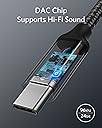
The Anker USB-C to 3.5mm Audio Adapter delivers premium, distortion-free sound by leveraging advanced DAC technology. Compatible with a wide range of USB-C devices including Samsung S20 series and Pixel 4/4XL, it offers plug-and-play convenience with full headphone control. Its durable nylon braided cable ensures longevity, while Anker’s trusted brand reputation and 18-month warranty provide peace of mind for professionals and audiophiles alike.


| ASIN | B08Z3B5QL3 |
| Best Sellers Rank | #10,110 in Electronics ( See Top 100 in Electronics ) #204 in Headphone Adapters |
| Brand | Anker |
| Color | Dark Gray |
| Compatible Devices | Headphone |
| Connector Type | USB Type C |
| Current Rating | 1 Amps |
| Customer Reviews | 4.6 out of 5 stars 5,778 Reviews |
| External Testing Certification | / |
| Finish | Nylon |
| Finish Type | Nylon |
| Input Voltage | 20 Volts |
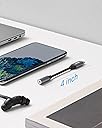
| Item Dimensions | 4.45 x 0.43 x 0.24 inches |
| Item Weight | 0.01 Pounds |
| Item dimensions L x W x H | 4.45 x 0.43 x 0.24 inches |
| Manufacturer | Anker |
| Mfr Part Number | A8195 |
| Model Number | A8195 |
| Number of Items | 1 |
| Number of Ports | 1 |
| Package Quantity | 1 |
| Power Plug Type | No Plug |
| Smart Home Compatibility | Not Smart Home Compatible |
| UPC | 194644066284 |
| Unit Count | 1 Count |
| Warranty Type | 18-month warranty |
P**S
Solid performance, good sound. Recommended.
Speaking as a musician, producer, and live sound engineer, this is a handy dongle to have. After looking at some other reviews, I saw that there can be a difference in quality of the DAC (digital to analog converter) chip in some brands of adapter. The Anker adapter reportedly uses a better chip so I decided to try one out, since the difference between USD 8 and 16 didn't bother me for something I only intend to buy once. I own a number of Anker cables and power banks and have had only 5-star experiences with their equipment, so this felt like an easy bet to place. I bought this for use with a Samsung Galaxy S24+ but it should work fine on any phone with a USB-C connector. The fit on the phone is secure and snug. Since the plug sticks straight out, it's possible an impact or drop could damage the unit or the phone's USB jack, but with ordinary care this shouldn't be an issue. I tried the adapter with two different headsets: (1) KZ ZS10 Pro in-ear monitors with a 30-ohm impedance (therefore fairly loud at even low volumes show off a lot of detail), and (2) Audio-Technica ATH-M50x studio headphones at 38-ohms, and having to be driven a little harder. In both cases the fit on the 3.5mm earphone jack side was secure as expected. The audio results were excellent, with punchy, full lows and detailed highs. The signature character of each set of earphones came through clearly -- both the slightly hyped bottom end and relative flatness of the ATH-M50x, and the customary "smile" or V-curve of the Chinese-made KZ ZS10 Pro. I was able to pick out details I usually miss when in the car or on Bluetooth speakers, but would expect to catch only in my home studio on expensive monitors. In a *very* quiet environment, when I stop or pause audio, after about 1 to 1.5 seconds I can hear a small "tap" sound as the DAC powers off, but it's easy to miss and certainly not disturbing in any way. It makes sense that this happens, so that the adapter isn't drawing power from the phone while I'm not playing any audio. (I imagine a cheaper unit potentially might not do the right thing here, causing excessive power drain.) When I resume playing music, the audio returns quickly, with a very short ramp up from zero to my chosen loudness. There doesn't seem to be any significant heat generation from the DAC. This adapter can also be used, with the right cable, to send the output of your phone to an outboard sound mixer or other stereo inputs. You may have to adjust the volume in that case to send audio at the expected volume level for the receiving unit. I can easily recommend this adapter to others looking to use their favorite wired headphones with their phone that only has a USB-C jack.
T**S
Good sound quality, capatibility and dependable
Works with my Samsung Android and IPhone, Windows laptop, and HP Chromebook. The sound quality is excellent. I have other more expensive USB DAC headphone amps, like the Creative Labs, but this one sounds good and does not drain my phone battery as fast as the others do. I use it to connect my phone to various audio in ports in my car and other older analog stereos in my shop and house. I also listen to wired Bose Quiet Comfort and Sennheiser headphones. It just sounds natural and nice. No noise. I have had one for a few years and it is still working fine after hundreds of hours of use. I just got 2 more to leave in the shop and car.
P**L
Works great with particular products
Highly recommend using this with IEM's, especially TRUTHEAR x Crinacle Zero: RED and the Bass+ adapter. It brings out so much more of the audio than just the 3.5mm alone. Would not recommend using this adapter with the Sony Inzone E9 as it only makes it louder volume wise and not frequency wise like the TRUTHEAR.
M**N
Incredible sound through this adapter!
I have bought and used several different Anker tech-related products in the past. In each case, I have always found items made by Anker to be extremely well-made, durable and of much better quality than other brands, whether the product is a backup battery for my phone or a charger or a USB to USB-C cord. I decided to run a test using a cheap $12.99 pair of earbuds I had used many times before. On those occasions, they had always been plugged directly into things that didn't require an adapter, like my laptop or my tablet. I therefore knew that, while not terrible, the earbud's themselves produced barely adequate sound quality. Ok for listening to stuff like TV or audiobooks, but I had never, ever used those $12.99 earbuds to listen to music, because the sound was way too muddy and unrefined. I then moved on to phase 2 of my test. I plugged the same $12.99 earbuds referenced above into this Anker adapter, then plugged the adapter into the USB-C port on my phone. I decided to give the adapter the ultimate test right away by choosing a music track from Amazon Music that had a wide range of octaves and many different instruments. When I put on the earbuds and the music came on, I was so shocked at the quality of the sound that was now emanating from those same "el cheapo" $12.99 earbuds I nearly fell over! Plugged in to this adapter, those cheap earbuds were suddenly doing a pretty fair impersonation of a pair of Beats by Dr. Dre or even potentially BOSE earbuds! Deep, rich bass, drums that truly "punch" the way they should, crystal clear highs with no "tiny" sound and well-defined midtones that didn't get "lost" as they so often do. No muddiness here, not even a speck. Zero distortion and no lapse in quality when turning up the volume, either. I'm not enough of a techno-geek to comment on this adapter's built-in DAC or other things like that that other reviewers have said is responsible for the incredible sound quality you get when this adapter is used as opposed to the sound you get if you use another brand. But I also tested this Anker adapter against a seemingly thinner and more flimsy one made by the #1 manufacturer of Android phones (yes, it starts with an "S"). The difference was truly profound, with that manufacturer's adapter producing far, far inferior sound quality that made those cheap, $12.99 earbuds sound like the fairly crappy earbuds they were. In short, I cannot recommend this product highly enough. One thing, make absolutely sure that your earbuds are plugged in securely, all the way into the adapter. It is a tight fit, which is another great feature. The fit is snug enough to absolutely ensure that your earbuds don't accidently fall out. You would also have to pull very purposefully and hard to accidently pull them out as well. I will come back and update this review sometime within the next 4-6 months to report on how the adapter holds up under moderately heavy use. For now, I give the adapter a well-earned 5 stars, with the top notch quality I have come to expect from Anker, which is light years above all or almost all products of this type!
B**K
Great sound, solid construction
I bought this in Sept. 2025 to connect my iPhone to my Sony MDR-7506 headphones. The sound and build quality are excellent. I have bought 2 more while I was in Europe for family members. The comparable Apple product has the same white plastic construction as their charging cords, which have always deteriorated within a couple of years for me. The braided cord on the Anker feels solid and unlikely to deteriorate in the same way, but I will update here if it does. This product seems unavailable from Amazon (at least, the US site) and other online sites at the moment (April 2026), which is a shame.
M**R
Anker A8195 USB-C to 3.5mm TRRS female headphone/headset adapter
The version I bought was model A8195 in case this listing changes in the future, or the model changes. The issue to solve was needing a conversion from USB-C to 3.5mm headphone/headset port, and I wanted an alternative to the internet-popular Apple dongle, and the Google dongle. Since cell phones have done away with 3.5mm headphone ports, audio enthusiasts have created a market for USB-C DAC/Amps to power their headphones and earbuds, in a portable manner. There's lots of choices in this market segment, with many being a few hundred dollars, that can drive higher-impedance headphones at high quality. Online, they say that these inexpensive USB-C adapters should be used with headphones of 60-ohms impedance or less, as anything more will be too much for an inexpensive USB-C adapter to drive, and the headphones won't sound good. But I just needed something simple and inexpensive. I'm happy to report that this Anker unit works with 3.5mm TRRS connector headsets as well; it can connect to a headset's mic. TRRS is the physical connector that includes left and right audio, along with a single mic, which is what typical headsets use that aren't USB themselves. Upon receiving the Anker, I ran my own audio quality tests with the limited audio knowledge and hardware I have, which is a phone with USB-C, and a computer with two 3.5mm ports (one for headphone, and one for microphone). Test Setup: 1x A8195 Anker USB-C to 3.5mm adapter (this item) 1x USB-C cell phone (set to utilize USB mic recording) 1x PC with two 3.5mm ports, one for headphones and one for mic 1x Sennheiser PC360 headset (50-ohm impedance) 1x Sennheiser PCV 05 Combo audio adapter (Converts headset's separate 3.5mm headphone connector and mic connector into one TRRS connector) 1x music app on the cell phone 1x music app on PC 1x Youtube video, playing mechanical sounds (for high and low frequencies) 1x test recording made on the cell phone, of my voice made with the Sennheiser PC360 headset's microphone (a decent headset mic, close in quality to typical streaming USB mics) Test Procedure: I connected the Sennheiser PC360's headset to the PCV 05 combo adapter, then the adapter's TRRS connector to the 3.5mm port on the Anker A8195. The Anker was the plugged into the cell phone to run audio tests. I tried a music app, and the audio sounded weighted to higher frequencies, with some sibilance on vocals. I also tried a Youtube video of a machine running. Then I disconnected the USB-C adapter, and the PCV 05 combo adapter (as my PC has seperate ports, one for headphones, and one for mic), connected the headset to PC, and ran some audio on PC. PC sounded better. But there are multiple factors to consider, and multiple parts of the audio chain. For example, what if the phone app's music streaming quality and compression differed from a desktop PC's? Highly likely, along with different audio chipsets in the Anker and PC. Trying audio using the same headset on the PC, PC sounded better. Though this still doesn't mean much, considering all the factors and differences per each audio chain. So I made a test recording of my own voice, to compare the same exact file. Testing my own voice recording made using the PC360's headset mic on the cell phone, with the cell phone set to USB recording (and confirming this setting actually sets using PC360's physical mute switch functionality while making noise), the recording quality is decent, but sounded more tinny. But it's still good enough for normal communication. I then transferred the recording file to PC. Using the same headphones, on PC the recorded file sounded much fuller, with more midtone. Therefore I come to the conclusion that it's the Anker's audio reproduction itself that is a bit weaker than whatever audio chipset I have on my PC. Is it bad? No, by no means is it bad. It's still a decent option for the price. It's definitely good enough for us audio plebians to listen to music, but I would say that audiophiles will want more than this Anker A8195 can offer. However, this Anker is also less than $20 at the time of this review, and quite small; I really can't complain. It would be great to compare this to the popular Apple and Google USB-C adapters, as they are in the same price class, however I couldn't find any online comparisons to this unit as of this review. I did have a concern that my 50-ohm headset would be too much for this adapter to drive, but that doesn't seem to be the case. EDIT August 2024: This adapter produces much fuller bass than my PC's integrated audio chip, at least when watching videos. When recording voice to test it, voice quality recording is still crystal clear. I think there are too many factors to account for, for me to accurately test and judge it. What we need is a lab test with audio graphs, and comparisons to other USB-C adapters. Build quality: It feels and looks higher-end than typical cheap USB equipment, and has a braided cable. Conclusion: Yeah it works. Audiophiles will want more, but this item is less than $20.
D**.
Perfect For Car
I have many Anker products in our home and vehicles and am a huge fan of the brand. This cord did not disappoint (while other brands I tried first, did). Having recently upgraded my phone from a Note 9 to a S24 Ultra, I have had to adjust to life without an auxiliary port (it sucks). My car does not have Bluetooth but has an auxiliary cable instead. I first purchased another brand's adaptor cable because they had one that I could also plug my charging cable into at the same time and Anker did not. I quickly discovered that the other brand's adapter did not allow people to hear me through my car on phone calls. I could hear them & I could listen to audiobooks but no mic support. I went straight to this adapter from Anker and BOOM BABY, I can hear and be heard on phone calls through my car again! This adapter is super short but that wasn't a problem for me. It allows for awesome sound through my car again and callers can hear me just fine (as they did with my old setup when my phone had an auxiliary port). If you have upgraded your phone and need an adapter so you can route phone calls through your car, and be heard, this is the perfect adapter!
C**E
Buy two.
Easy to use and convert headphones for phone use. Does not tangle. Perfect size. No static.
E**E
Best Adapter Ever
This is the best 3.5mm to USB C adapter that I have ever purchased. The ones from other brands can't even compare. Build quality is good and sound quality is amazing.
M**L
Cant go wrong with this one
A bit more expensive than but you got something that works well. Its a plug and play that works with windows and other devices right away with good audio. You cant go wrong with this one.
M**R
Best for hi quality audio with flagship phones
Im using this adapter for my samsung s25 ultra. The output quality is mesmerising. Even for hi res audio this adapter gives super audio output
D**S
Works great!
Works great! Seems to be good quality. I have tried several different brands and they have not worked with the microphone, but these do. A bit on the pricey side, and I could rant for hours on how it’s absolutely idiotic how most tech companies just decided one day that the headphone jack is obsolete, when it absolutely isn’t and is being used by enough people that a product like this is being sold. But that’s another discussion. So, anyway. I recommend it!
H**1
Guter Dongle DAC, mein Testsieger (siehe Text)
Ich hatte mir testweise 4 USB-C zu 3,5mm Klinke Adapter bzw. Dongle-DACs bestellt, um sie zu testen. Dieser hier ist einer davon. Ergebnis: Das Gerät selbst: Robuste Ausführung. Nicht ganz so gut, wie der Kiwibird, aber schon gut gemacht. Funktion: Funktioniert am PC und am Handy. Die höchste einstellbare Auflösung am PC war auch 24bit/96kHz. Hohe Verstärkungswirkung, kann also auch schwer anzutreibende Kopfhörer mit Musik versorgen (gestest mit Sennheiser HD-58X, 104dB, 150 Ohm: Bei 50% war der Kopfhörer so laut, wie am Handy ohne Dongle bei 100%. Da geht also noch was). Verstärkung gleich zum Kiwibird. Sound: Der Sound ist balancierter als der Kiwibird. Dadurch fällt die Betonung der Höhen weg, was etwas weniger "sparkle on top" bedeutet, aber auch weniger Probleme mit scharfen Höhen. Da ich auch gerne mal HR/HM höre sollte, ist mir der Sound des Anker lieber, weil er besser als Allrounder fungiert und der Sound auch bei schwierigen Aufnahmen angenehmer ist. Fazit: Für mich der Gesamtsieger, auch wenn der Kiwibird beim Preis (kostet die Hälfte) und beim Build (sehr robust) punkten kann. Bei der Verstärkung sind beide gleich, aber für mich ist der Sound sehr wichtig und der gefällt mir hier besser. Der grüne iMangoo hat zu viele Probleme und der Apple Dongle ist mir zu anfällig und praktisch ohne Verstärkung auch zu eingeschränkt in der Verwendung. Dafür ist er dann auch zu teuer (zweitteuerster mit dem iMangoo zusammen). P.S.: Auf Nutzeranfrage hin auch Mikro gestest (d.h. ein Kopfhörer / Headset mit einem 4-poligen Klinkenstecker) und auch das hat einwandfrei funktioniert. Die Audioqualität war gut, wobei das natürlich im wesentlichen von dem Mikro abhängt. Das es aber ein ins Kabel integriertes Mikro eines ca. €25 teuren KZ IEMs war (KZ ZS5, sprich: nix besonderes) war die Audio Qualität erstaunlich gut. Weitere Funktionen habe ich nicht getestet, das hängt aber auch immer sehr vom Mikro, der Anzahl der Tasten und der Kompatibilität mit dem Handy ab. Der Dongle scheint die Signale 1:1 weiterzureichen.
Trustpilot
5 days ago
4 days ago