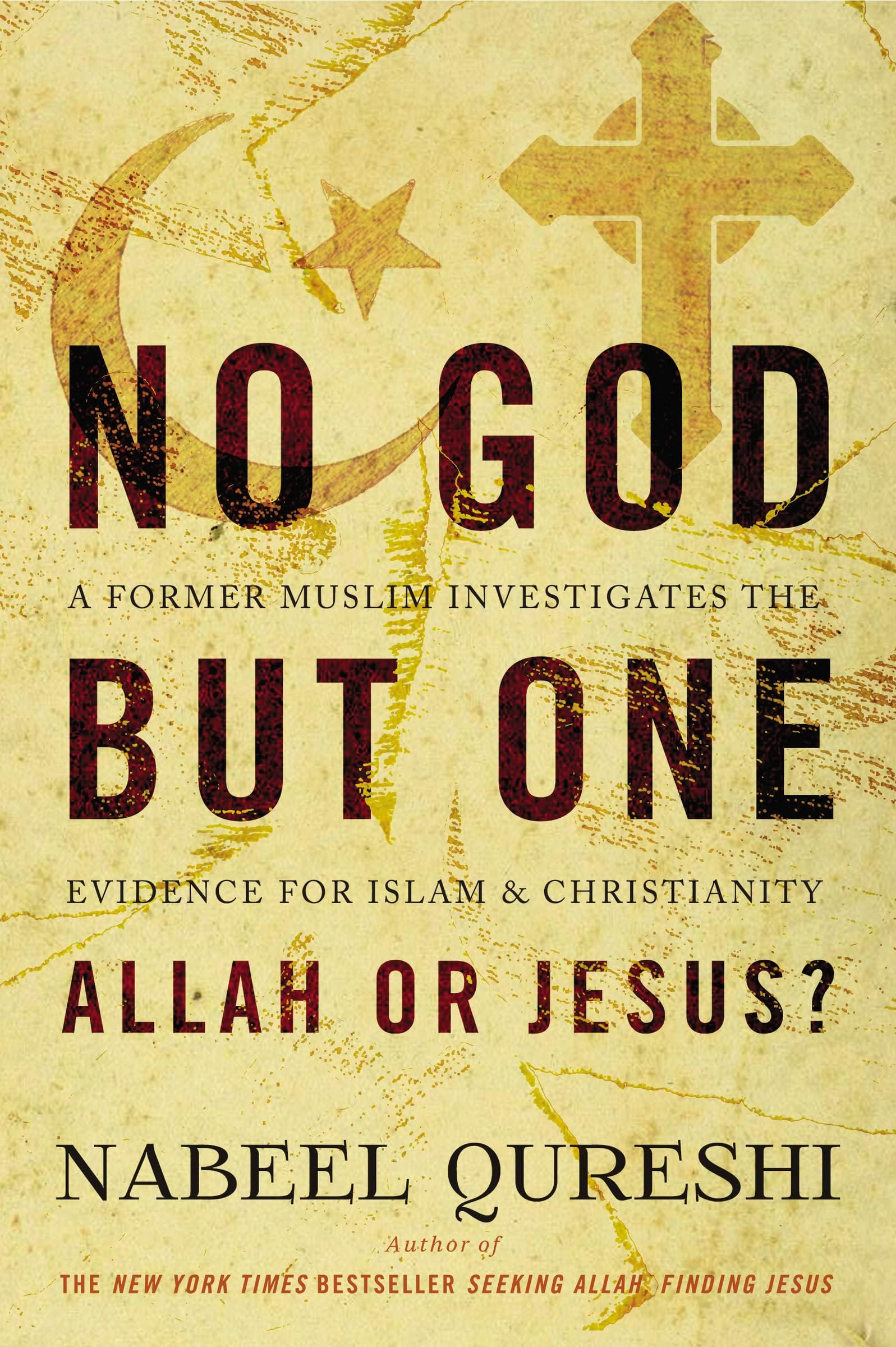
No God but One: Allah or Jesus?: A Former Muslim Investigates the Evidence for Islam and Christianity
Product ID: 32660185
Buy anything from 5,000+ international stores. One checkout price. No surprise fees. Join 2M+ shoppers on Desertcart.
Desertcart purchases this item on your behalf and handles shipping, customs, and support to KUWAIT.
Having shared his journey of faith in the New York Times bestselling Seeking Allah, Finding Jesus , Nabeel Qureshi now examines Islam and Christianity in detail, exploring areas of crucial conflict and unpacking the relevant evidence. In this anticipated follow-up book, Nabeel reveals what he discovered in the decade following his conversion, providing a thorough and careful comparison of the evidence for Islam and Christianity--evidence that wrenched his heart and transformed his life. In Seeking Allah, Finding Jesus , Nabeel Qureshi recounted his dramatic journey, describing his departure from Islam and his decision to follow Christ. In the years that followed, he realized that the world’s two largest religions are far more different than they initially appeared. No God but One: Allah or Jesus? addresses the most important questions at the interface of Islam and Christianity: How do the two religions differ? Are the differences significant? Can we be confident that either Christianity or Islam is true? And most important, is it worth sacrificing everything for the truth? Nabeel shares stories from his life and ministry, casts new light on current events, and explores pivotal incidents in the histories of both religions, providing a resource that is gripping and thought-provoking, respectful and challenging. Both Islam and Christianity teach that there is No God but One , but who deserves to be worshiped, Allah or Jesus ? Review: Worth a Second Read! - "No God But One: Allah or Jesus?" By Nabeel Qureshi I really enjoyed reading this book! It was written from a unique perspective and was extremely helpful laying out many similarities and differences between Islam and Christianity in an objective and loving way. Dr. Qureshi gives you enough in depth material to consider this subject from numerous angles. This is an excellent read for Muslims, Christians, and those just trying to understand the differences between the two. In Dr. Qureshi's first book, "Seeking Allah, Finding Jesus", you will find the story of a young man in college who was bold and outspoken about his Muslim faith. Through his four years of college he lived life and debated intensely about faith with his Christian friend, David. This conversion story is well worth a read! In his current book, Dr. Qureshi, investigates the evidence for Islam and Christianity. Dr. Qureshi has a unique perspective, having grown up as a Muslim but now a Christian, after four years of investigation regarding the truth claims of both Islam and Christianity. His research was deep and thorough and included the use of original documents. While he desperately wanted Islam to be true, the religion he devoted so much to and loved, he desired the truth more. His findings are fasciniating and relevant. In addition, this book is respectfully and intelligently written with love for both Muslims and Christians. While none of us can be truly 100% objective, I have great respect for Dr. Qureshi and his continued efforts throughout the book to act and think as an objective investigator and I feel he has been extremely successful. You will not find the angry rhetoric that is prevelant in our society today, but rather a love for all as image bearers of God with a realistic look at our sinful nature. The book is an in-depth look at the differences between Islam and Christianity and will certainly help you grow in your understanding of both Islam and Christianity. I was surprised at how much I learned, especially about Islam. The book answers questions many are seeking in today's world of 9-11 and suicide bombers. What is the difference between the Koran and the Bible, Mohammed and Jesus, Jihad and the crusades? He looks deeply into the issues of whether we can know if Islam is true and he uses the same analysis for Christianity. Is Islam a religion of peace? Do Christians and Muslims worship the same god? There is a lot of meat in this book, but Dr. Qureshi is well-educated and well-spoken enough to unpack it for us in an understandable way. While the book is very readable, it takes time to digest, unless you are very familiar with the material. This book took me longer to read than another book this same size, but I thoroughly enjoyed it because it didn't leave me asking lots of questions that were not addressed. In addition, as a Christian it helped me to examine my faith more thoroughly and grow more deeply through examining the truth claims of both Islam and Christianity. I would definitely recommend this book! I know I'll be re-reading it! Review: Oh what you'll learn! - As I finished this book, I felt I needed to go back and give this a second read to better grasp all there is in this book. As usual, Nabeel Qureshi is respectful and kind to all. He is also logical and thorough. This is the third of Qureshi's three books I have read. It is an excellent follow-on to his first book Seeking Allah Finding Jesus. All his books are intellectually deep, thoughtful and yet easily read. In reading this book, you will learn these important things - What Muslims believe and why they believe them -What Muslims are taught Christians believe - Christian core beliefs and the supporting evidence for those beliefs. The book is logically laid out. The first half covers the similarities and the differences between Islam and Christianity. Nabeel looks at the Quran and the Bible, Mohammed and Jesus, Allah and the God of the Bible (Yahweh). In the second half, he compares the cases for Islam and for Christianity. The author tackles a question such as “Did Jesus die on the cross?” He examines the evidence that supports the case that Jesus died on the cross. He examines the Islamic position that it was only made to appear so. He assesses the Islamic response for credibility. Focusing on one aspect at a time, he makes a point, finds support for point, presents the counter argument with evidence and examines the strengths and weaknesses of each position. A good teacher, he helps to keep everything sorted by topic and present them in orderly fashion. He does not tend to rabbit-trail. The book has little fluff and stuff. My biggest surprise was how much deeper of an understanding of Christian theology I gained. His explanation of the Trinity was one of the best I have ever heard. His apologetic arguments for the historical resurrection of Jesus were also top drawer, but I expected this because he as studied with the top apologetic scholars in the world. He does his homework and digs around in lengthy, scholarly, obscure sources I that I could never find or comprehend if I had the time to read them. He then distills the major points in an easily digested form. Because he grew up Muslim and learned how to defend the Muslim position very effectively, Nabeel knows the arguments for Islam, the supporting evidence, what Muslims believe. He knows these from the vantage point of one who has been inside, not from someone from the outside trying to understand. The reader quickly finds out that Muslims are taught very erroneous facts about Christian beliefs. (As an aside, this is partly explained by knowing Mohammed was exposed to Nestorian heresy and the Jewish Talmud rather than traditional orthodox Christian theology. This is evident when the Quran references the Gnostic gospel accounts.) Knowing this fact helps Christians understand the Muslim perspective and takes down a major obstacle to communication. Muslims base their perception of Christianity on what they think Christians believe, not on what Christians actually believe. Because he has been studying orthodox, traditional Christian theology in depth for the past decade, he understands doctrine and apologetics much better than the majority of pastors. Nabeel can walk you through Christian doctrine like an experienced tour guide can show you around town. The book is valuable just for the detailed tour through Christian doctrine. He keeps his doctrine very nondenominational and Scriptually based so that the reader will not find denominational bias. Understanding what Muslims are taught and how what is taught is decided enables the reader to understand why some Muslims are very peaceful and others are not. The majority of Muslims are taught a very filtered and selective account of a peaceful, kind, admirable Prophet and because they wish to emulate their Prophet, they live peaceful, kind lives. They are understandably shocked by early accounts that portray a harsher, less kind leader in many historical sources because they have never been exposed to these accounts before. This is something important to keep in mind too as Muslims struggle with the differing images of their leader now in circulation and understandably wish to reject the crueler accounts of Mohammed.


| Best Sellers Rank | #17,187 in Books ( See Top 100 in Books ) #2 in Islamic Theology (Books) #13 in Comparative Religion (Books) #43 in Christian Apologetics (Books) |
| Customer Reviews | 4.8 out of 5 stars 2,709 Reviews |
A**R
Worth a Second Read!
"No God But One: Allah or Jesus?" By Nabeel Qureshi I really enjoyed reading this book! It was written from a unique perspective and was extremely helpful laying out many similarities and differences between Islam and Christianity in an objective and loving way. Dr. Qureshi gives you enough in depth material to consider this subject from numerous angles. This is an excellent read for Muslims, Christians, and those just trying to understand the differences between the two. In Dr. Qureshi's first book, "Seeking Allah, Finding Jesus", you will find the story of a young man in college who was bold and outspoken about his Muslim faith. Through his four years of college he lived life and debated intensely about faith with his Christian friend, David. This conversion story is well worth a read! In his current book, Dr. Qureshi, investigates the evidence for Islam and Christianity. Dr. Qureshi has a unique perspective, having grown up as a Muslim but now a Christian, after four years of investigation regarding the truth claims of both Islam and Christianity. His research was deep and thorough and included the use of original documents. While he desperately wanted Islam to be true, the religion he devoted so much to and loved, he desired the truth more. His findings are fasciniating and relevant. In addition, this book is respectfully and intelligently written with love for both Muslims and Christians. While none of us can be truly 100% objective, I have great respect for Dr. Qureshi and his continued efforts throughout the book to act and think as an objective investigator and I feel he has been extremely successful. You will not find the angry rhetoric that is prevelant in our society today, but rather a love for all as image bearers of God with a realistic look at our sinful nature. The book is an in-depth look at the differences between Islam and Christianity and will certainly help you grow in your understanding of both Islam and Christianity. I was surprised at how much I learned, especially about Islam. The book answers questions many are seeking in today's world of 9-11 and suicide bombers. What is the difference between the Koran and the Bible, Mohammed and Jesus, Jihad and the crusades? He looks deeply into the issues of whether we can know if Islam is true and he uses the same analysis for Christianity. Is Islam a religion of peace? Do Christians and Muslims worship the same god? There is a lot of meat in this book, but Dr. Qureshi is well-educated and well-spoken enough to unpack it for us in an understandable way. While the book is very readable, it takes time to digest, unless you are very familiar with the material. This book took me longer to read than another book this same size, but I thoroughly enjoyed it because it didn't leave me asking lots of questions that were not addressed. In addition, as a Christian it helped me to examine my faith more thoroughly and grow more deeply through examining the truth claims of both Islam and Christianity. I would definitely recommend this book! I know I'll be re-reading it!
M**E
Oh what you'll learn!
As I finished this book, I felt I needed to go back and give this a second read to better grasp all there is in this book. As usual, Nabeel Qureshi is respectful and kind to all. He is also logical and thorough. This is the third of Qureshi's three books I have read. It is an excellent follow-on to his first book Seeking Allah Finding Jesus. All his books are intellectually deep, thoughtful and yet easily read. In reading this book, you will learn these important things - What Muslims believe and why they believe them -What Muslims are taught Christians believe - Christian core beliefs and the supporting evidence for those beliefs. The book is logically laid out. The first half covers the similarities and the differences between Islam and Christianity. Nabeel looks at the Quran and the Bible, Mohammed and Jesus, Allah and the God of the Bible (Yahweh). In the second half, he compares the cases for Islam and for Christianity. The author tackles a question such as “Did Jesus die on the cross?” He examines the evidence that supports the case that Jesus died on the cross. He examines the Islamic position that it was only made to appear so. He assesses the Islamic response for credibility. Focusing on one aspect at a time, he makes a point, finds support for point, presents the counter argument with evidence and examines the strengths and weaknesses of each position. A good teacher, he helps to keep everything sorted by topic and present them in orderly fashion. He does not tend to rabbit-trail. The book has little fluff and stuff. My biggest surprise was how much deeper of an understanding of Christian theology I gained. His explanation of the Trinity was one of the best I have ever heard. His apologetic arguments for the historical resurrection of Jesus were also top drawer, but I expected this because he as studied with the top apologetic scholars in the world. He does his homework and digs around in lengthy, scholarly, obscure sources I that I could never find or comprehend if I had the time to read them. He then distills the major points in an easily digested form. Because he grew up Muslim and learned how to defend the Muslim position very effectively, Nabeel knows the arguments for Islam, the supporting evidence, what Muslims believe. He knows these from the vantage point of one who has been inside, not from someone from the outside trying to understand. The reader quickly finds out that Muslims are taught very erroneous facts about Christian beliefs. (As an aside, this is partly explained by knowing Mohammed was exposed to Nestorian heresy and the Jewish Talmud rather than traditional orthodox Christian theology. This is evident when the Quran references the Gnostic gospel accounts.) Knowing this fact helps Christians understand the Muslim perspective and takes down a major obstacle to communication. Muslims base their perception of Christianity on what they think Christians believe, not on what Christians actually believe. Because he has been studying orthodox, traditional Christian theology in depth for the past decade, he understands doctrine and apologetics much better than the majority of pastors. Nabeel can walk you through Christian doctrine like an experienced tour guide can show you around town. The book is valuable just for the detailed tour through Christian doctrine. He keeps his doctrine very nondenominational and Scriptually based so that the reader will not find denominational bias. Understanding what Muslims are taught and how what is taught is decided enables the reader to understand why some Muslims are very peaceful and others are not. The majority of Muslims are taught a very filtered and selective account of a peaceful, kind, admirable Prophet and because they wish to emulate their Prophet, they live peaceful, kind lives. They are understandably shocked by early accounts that portray a harsher, less kind leader in many historical sources because they have never been exposed to these accounts before. This is something important to keep in mind too as Muslims struggle with the differing images of their leader now in circulation and understandably wish to reject the crueler accounts of Mohammed.
R**E
An invaluable resource — in both information and in tone
No God but One: Allah or Jesus? is Nabeel Qureshi's third and most satisfying book — especially for those looking for a bit more in depth theological discussion. Like the others, it is well written and very easy to read even as it delves into deep topics. No God but One builds on his first book, Seeking Allah Finding Jesus, by delving into many of the questions about Islam and Christianity that Nabeel himself raised before ultimately abandoning Islam for Christianity. The book is divided into 2 basic "Big Questions": Are Islam and Christianity basically the same and Can we know whether one of them is true? He then begins the process of, as objectively as possible, laying out the answers to each. In exploring these questions, Nabeel boils down what are the essentials required to be a Muslim and Christian. He then takes the theologicial arguments — From sharia vs. Gospel to the strict monotheism of tawhid vs the Trinity — and plays them out to their logical conclusions, including the ethical implications of these doctrinal points. Are they logically consistent? How do their claims line up with what we see in the world? Do they actually alleviate the problems we encounter? Do they actually offer hope? Nabeel then tackles the historical reliability of Islam and Christianity. From the death and resurrection of Jesus to of evidence for Muhammad's claim as prophet and the Quran as the Word of God. How do each of these line up with what we know about historical events and facts, and what does it mean to those seeking to follow these religious leaders faithfully? No God but One is an outstanding resource for those seeking answers. It is wonderful for Christians who are seeking reach out to their Muslim neighbor. But it is so much more than that. No God but One is also a fantastic resource for Christians who may never encounter a Muslim. Nabeel's work tying together historical doctrinal and theological points of Christianity into the ethical behavior that should flow out of them is invaluable to a Christian disciple. The section on the Trinity alone is worth the price of the book.
M**I
One of my favorite books! So much evidence summarized into one small book
AMAZING work! Not just for muslims but even for atheists as well! I love that Nabeel examined every question a non Christian has from a non biased, non religious viewpoint, especially when it comes to studying religious figures and religious events as historical figures and historical events. Islam collapses on itself immediately. RIP to a very inspiring Christian!
K**F
Qureshi misunderstands Islam
Qureshi is obviously a very intelligent gentleman and has done a wonderful job at explaining the central tenets of Christianity. However, it surprises me that a man of this caliber was so ill-equipped and ill-prepared to defend his Muslim faith. It was also surprising to witness someone (who was born into Islam) who misunderstood his own religion to such a degree. Considering his lack of a deeper understanding of Islam, it does not surprise me that he made the conversion to Christianity. What shocks me is that he did not dig beyond the surface to educate himself further with regard to the central theology of Islam. I want to clarify the salvation message according to Islam as I do not believe Qureshi explains it correctly. Islam is the journey of lovingly serving God for the blessing of the life we were given, but could do nothing to ever earn. It is not a path about obtaining God’s love or favor; it is a path that teaches you to strive, persevere, and unveil what you have already been given. In Islam, God does hold us accountable for each of our actions and what is in our hearts; we will all have to answer to Him for our deeds and no one will be able to intercede on our behalf. However, in Islam, God is repeatedly described in the Quran as being the most merciful and the most forgiving. Since God is sovereign over all, it is up to him on a case by case basis who he forgives and grants access to heaven and who he denies. As Muslims, we believe that if we sincerely repent for our sins, God will show us his infinite mercy. However, technically in Islam, salvation is guaranteed to no one. (Also, Christians and Jews can be saved, even when they are not Muslims.) Aside from my criticism above, I highly enjoyed both of his books! I actually credit him as being the catalyst in my conversion from Christianity to Islam. (Probably was not his intention.) 😁 Perhaps I am biased, but I always had a very difficult time digesting and accepting the Christian conception of God and Jesus’ role. There was always something deeply non-intuitive about Christianity, and for years I could not articulate well my struggles. I left Christianity and became an atheist for several years before eventually returning to the religion again. Since 2014, I poured a lot of energy into learning and understanding Islam and the Islamic conception of God. (We believe God to be an absolute unity, a monad like in Judaism.) Fast forward to 2020, and the moment I realized that I was Muslim occurred while I was reading my Bible, the gospel according to Mark. In Mark 12:28, a scribe asks Jesus which is the greatest commandment of them all? Jesus replies, “The first of all the commandments is: hear, O Israel, the Lord our God, the Lord is one.” In that moment, it hit me like a brick in the face and I soon after became a Muslim. I must admit that the Islamic conception of God and the Islamic message of salvation is far more intuitive and natural than in Christianity. (My opinion.) As a Christian, I was in anguish. As a Muslim, I have been able to answer my most pressing questions about God and the universe. I couldn’t be happier. 10/10 no regrets, except that I wish I had converted to Islam sooner. 😊
M**J
A Rational, Personal & Timely Read
Even if I had no interest in understanding Islam, I would love this book for the inspired, fresh and uncluttered manner in which Qureshi explains Christian beliefs. He begins by describing his first book, Seeking Allah Finding Jesus, as the heart of his story; while No God But One is the mind of his story, tracing his critical examination of both Christian and Islamic teachings from the standpoint of an objective observer while still a Muslim believer. He states his conclusions from the outset: that the differences have great implications and that the evidence of history strongly supports Christian claims. The series of questions which he covers can be easily viewed in the Contents or at [...], so I will not repeat that information. I have a profound respect and appreciation for the author for many reasons. But foremost, God has chosen and gifted him as part of a broader work of the Holy Spirit to bring revelation and life to Muslims. It is clear that God has a heart for Muslims. He is doing something new and different when we hear of Jesus appearing to Muslims around the world through dreams and visions, as well as many testimonies of miracles. What God is doing -- and how we can share his heart and partner in what he is doing -- are things that compel me to hunger for resources like this book. I learned a great deal and was astonished in some respects. It had never before struck me how often we hear of Muslims (at times violently) acting to defend the honor of Mohammad, but one never hears of Muslims defending the honor of Allah. Qureshi offers his take on why this is so. Also, I did not know about the lack of reference to Mohammad or Islam in any historical records of that time period. But this is much more than a book comparing two religions and their historical roots. The discussion is insightful and helpful to understand not just the two different sets of beliefs, but the deeper meanings and implications behind those beliefs. While Qureshi draws heavily on historical sources to put both Islam and Christianity to the test, he intertwines the discussion with his own experiences, interactions, and more contemporary events. The overall effect is a very rational, very personal, a very timely and contemporary journey with the author, a journey which I highly recommend.
F**R
Brilliant and beautiful
Such an amazing writer whose passion for the gospel is authentic and true. If you read one book a year, this should be the one.
A**R
A former Muslim examines Islam and Christianity
Most books on the subject of Islam vs Christianity are written either by loyal Muslims seeking to discredit Christianity, or committed Christians determined to undermine Islam. Few come from authors with real understanding of the nuances of the two religions, and fewer still from those with experience as believers of both faiths. Nabeel Qureshi is a rarity among those who write about Islam and Christianity -- a former Islam apologist who, through an intense spiritual struggle, became a Christian apologist. Though there is no such thing as a completely objective author, Qureshi is better equipped than most to analyze the history and doctrines of both of Islam and Christianity. In his own words “I do not claim to be unbiased, but I have been on both sides of the debate.” The book compares the worldviews and foundational beliefs of the two religions, including their founding, the character and lives of Muhammad and Jesus, origin and reliability of the respective scriptures, teachings regarding the nature of God and man, and the respective doctrines of paradise/heaven. The sequence of topics is both logical and follows the order in which the author reluctantly abandoned his lifelong belief in Islam. For each topic, Qureshi presents the teaching of Islam and evidence offered as proof, the comparable teaching and evidence of Christianity, then conclusions deemed reasonable to an objective observer. Although this volume covers many points familiar to those who have studied Islam, or Islam vs Christianity, it also contains some specifics not usually found in mid-length (300 pages) works on this subject. Examples include these assertions: - The status of the Quran in Islam is more similar to the status of Jesus than to that of the Bible in Christianity. - The doctrine of tawhid (oneness of Allah) is not found in the Quran, but was developed over centuries. Divergent opinions regarding this key doctrine were suppressed during an Islamic period of inquisition, but still persist today. - The canonical Quran was defined long after Muhammad’s death and without universal agreement, including still existent debate regarding its correct content and its eternality. This book is recommended for those interested in comparative religions, particularly Islam vs Christianity. However, as the author states “I often come across two kinds of people: Christians who enjoy criticizing Islam, and Muslims who want to argue but do not want to learn. I am not writing this book for either of them.” Written by a former Muslim out of love for those who follow Islam, this book will prove most valuable to those who are open to or seeking a well-reasoned examination of the key issues that confront both faiths.
A**E
Must read
Highly recommend - great read and worth it for all Christian’s to read and get this perspective.
C**S
Excellent book!
Praise God to the life of Nabeel. His legacy lives on thru his books! More power!
J**S
very good book to know the difference between christianity and islam wihout bias
The author has dealt with the topic as an objective person who looks in the matter would do based on the historical evidences and the the related nuances
E**R
Un libro para ministrar
Este libro, no solo para comprender el islam, da nueva luz para entender nuestra religión (cristianismo) desde una perspectiva comparativa con otras doctrinas. Excelente lectura.
M**Z
Great, 10 out 10
The author presents his work as the sincere outcome of convictions shaped over a long intellectual and spiritual journey that gradually led him from Islam to Christianity, stating in direct and unequivocal terms that his conclusions do not arise from any impulsive rupture, but from a sustained and methodologically rigorous inquiry. Throughout his exposition, he develops a broad historical analysis in which he demonstrates that certain beliefs frequently repeated within Islam do not withstand careful documentary and comparative examination, especially when confronted with primary sources and established academic research, while applying the same standard of rigor to Christianity, thus avoiding any form of prior favoritism or premature judgment. The argumentative path, though dense, reveals internal coherence and logical progression, ultimately leading the reader to the conclusion that Jesus is, in light of converging evidence and testimony, truly “God with us,” and that Christianity, by virtue of its revelatory structure and the centrality of Christ, stands as “the way, the truth, and the life.”
Trustpilot
1 month ago
2 weeks ago