Buy anything from 5,000+ international stores. One checkout price. No surprise fees. Join 2M+ shoppers on Desertcart.
Desertcart purchases this item on your behalf and handles shipping, customs, and support to KUWAIT.
🔥 Elevate your stir-fry game with the wok that means business!
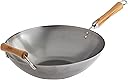
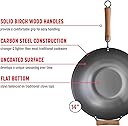
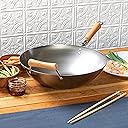
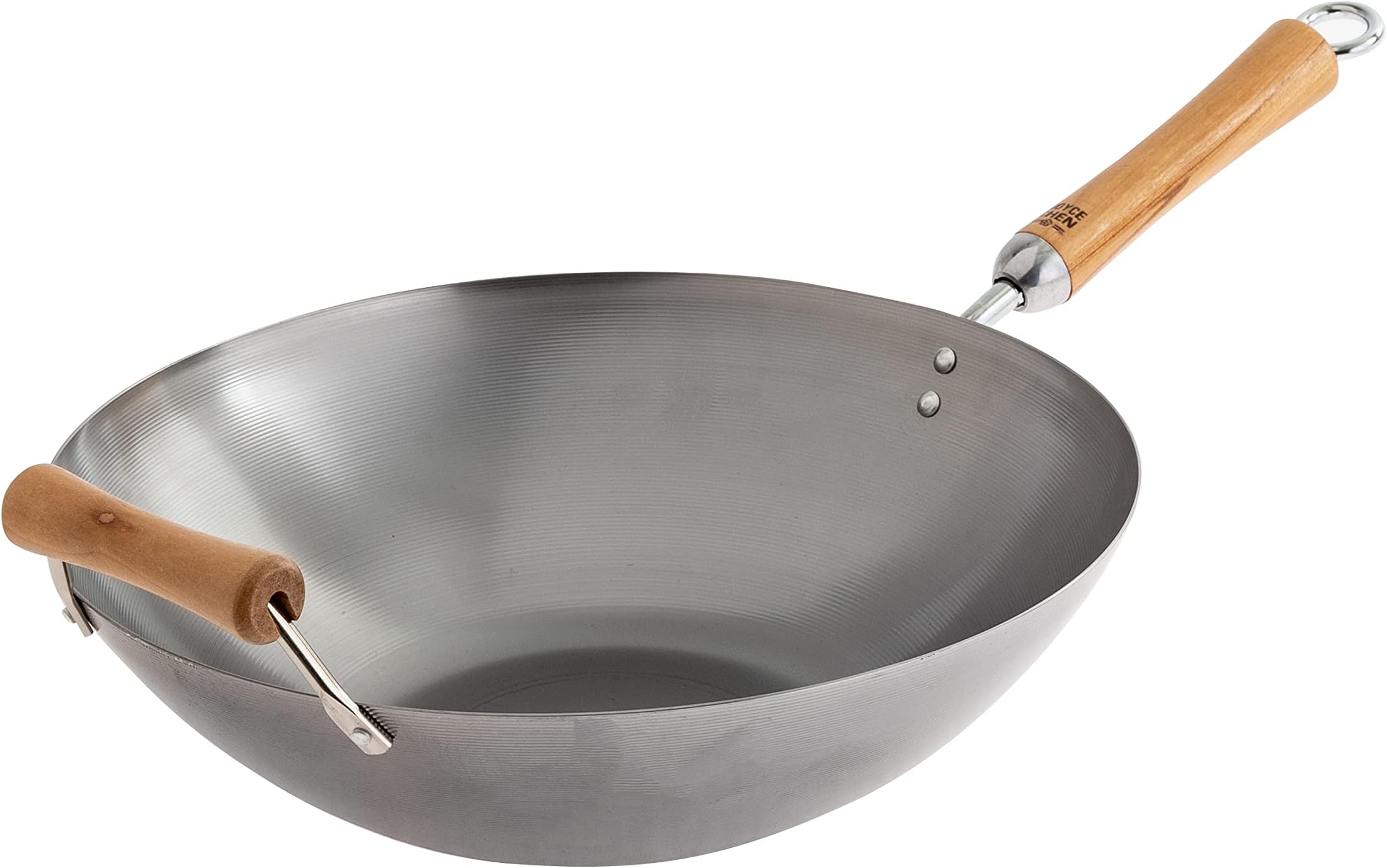
The Joyce Chen Classic Series 14-Inch Carbon Steel Wok combines professional-grade 1.5mm carbon steel construction with lightweight agility and ergonomic birch handles. Designed for high-heat cooking, it delivers superior browning and stir-fry performance while its flat bottom ensures stability on all stovetops. Regular seasoning builds a rich patina, enhancing non-stick properties and longevity. Perfect for millennials who crave both style and substance in their kitchen arsenal.


| ASIN | B002AQSWMU |
| Additional Features | Manual |
| Best Sellers Rank | #34,628 in Kitchen & Dining ( See Top 100 in Kitchen & Dining ) #40 in Woks & Stir-Fry Pans |
| Brand | JOYCE CHEN |
| Brand Name | JOYCE CHEN |
| Capacity | 3 Liters |
| Coating Description | Uncoated, requires regular seasoning |
| Color | 14" Uncoated Wok |
| Compatible Devices | Electric Coil, Gas, Smooth Surface Induction, Smooth Surface Non Induction |
| Customer Reviews | 3.9 out of 5 stars 2,729 Reviews |
| Global Trade Identification Number | 00048002219785 |
| Handle Material | Wood |
| Has Nonstick Coating | No |
| Included Components | Joyce Chen Classic Series 14-Inch Carbon Steel Wok with Birch Handles |
| Is Oven Safe | No |
| Is the item dishwasher safe? | No |
| Item Type Name | Joyce Chen Classic Series 14-Inch Carbon Steel Wok with Birch Handles |
| Item Weight | 3.24 Pounds |
| Manufacturer | Honey-Can-Do |
| Manufacturer Part Number | J21-9978 |
| Manufacturer Warranty Description | Honey-Can-Do International, LLC (HCD) warrants its products will be free from defects in materials and workmanship when used for normal personal or household use, except as provided below. Within 60 days of purchase, and with proof of purchase, HCD, at its option, may offer a comparable product or offer a replacement part or request that the item be returned to the place of purchase. This warranty… |
| Material | Steel |
| Material Type | Steel |
| Metal Type | Steel |
| Model Name | Joyce Chen Classic Series Carbon Steel |
| Model Number | J21-9978 |
| Product Care Instructions | Hand Wash Only |
| Recommended Uses For Product | Stir-frying, cooking |
| Shape | cylinder with hemispherical bottom |
| Special Feature | Manual |
| Specific Uses For Product | Cooking |
| UPC | 793842015416 048002219785 885252097721 885175268123 735343470417 885168127734 795468979226 718472472866 |
| Unit Count | 1.0 Count |
S**R
No reason to take stars off
It's a round solid bottom carbon steel wok. The handles are solid and well made so far. I love the price and prime delivery. It came all the way from Taiwan. So it keeps all the stars. I had an non-typical sized 13-inch Chinese cast iron wok for 2 years. 14 inch makes a lot of difference in the volume but still fit reasonably into my twin kitchen sink. My typical wok ring is for 14 inches and above. It was slightly too large for my old wok. Carbonized food residue can integrate with the cast iron or come off in trunks. I think carbon steel should be better. I would have got the small steel loop handles if they are not more expensive including shipping. For seasoning I can put the whole wok in the oven or the gas barbecue. Also, wood will break down sooner than metal, right? Without the wood handles, it could fit better in the sink. However, the wood handles are much more convenient than without. I can happily live with it. The wok comes with a clear protective lacquer. The boiling, hot soapy water, and abrasive pad helps to remove most or all of it. I don't know if there's something special about my hand dish detergent - Palmolive pure & clear ultra. When the undiluted detergent make contact with the wok surface, the surrounding area seems to have lacquer still on it. And before the lacquer comes off completely, wiping the wok with kitchen paper towel will result in greenish color on the paper. And when the wok seems to be very clean, it seems to rust on one side (slightly brownish spots) as soon as you are washing the other side. The seasoning instructions are a bit brief. I would dry the wok first completely before adding oil for example. And they should say what to expect after you season the wok. Peanut oil has a higher smoke point so I wonder if that would make the kitchen less smokey. I would say the idea of seasoning is to get a least a brown color on the shiny carbon steel surface, black doesn't hurt as long as it is even (see my pic). If you don't do that during seasoning, a proper stir fry will do that for you (unevenly though). The sturdy wood handle is great to manoeuvre the wok to get some brown color on the side. The area near the rim doesn't matter much as it is not hot enough during cooking and food don't get there to be carbonized. For after use care you don't actually need to put oil on it, as long as you don't use detergent. I dry it by flame because when it is wet, any normal rust will stain the sink. I don't know why I didn't season the bottom of the wok. I didn't remember if it is in the instructions. The whole bottom rust after use. For the oven seasoning method I used to put oil on both sides. For this one I just smear oil on the bottom and put it under the stove, normal side up.
R**M
PERFECT wok!!!
This is probably the best wok I've ever bought. First, I like the wider than usual bottom for sauteeing, and the 12" size is PERFECT for one to two people, and can easily prepare meals for up to four. I would only buy the 14" if you have an entire family to feed. Many thanks to "The Fred," the customer who left detailed instructions on how to prepare the wok before using, the second review from the top. I would like to only add one more suggestion for CLEANING it... NEVER USE SOAP AND WATER ON A WOK!!! Just use hot water and stainless steel scouring pad to clean it, then just add a thin layer of oil to keep the surface rust-free.
D**A
Good Wok, Horrible Construction
Before I begin I just wanted to give a little insight, I am a culinary arts student who recently found a huge respect for the art of Wok Hei. Upon extensive research, I found that the only way to even closely resemble authentic Asian cookery at home would be through the use of a properly seasoned carbon steel wok. $30 for a simple bowl of carbon steel is not cheap, our school uses 12" woks that cost a mere $15 a piece and we had them for about 4 years; thus I assumed this would be a quality wok. I received the wok and I was actually surprised at the thickness of the material, its thicker than a standard Cantonese style wok. This material is perfect for standard western home kitchens as it helps retain some heat when you add fresh product for cooking, minimizing recovery time. So I received the wok and seasoned it until it was perfectly black, after the seasoning process concluded (about an hour of a smoke filled house) I noticed the handle got worryingly loose. The cheap little ALUMINUM (are you kidding) rivets began working their way out. I thought this was a fluke, so I contacted amazon and they quickly sent me a replacement. The second wok handle felt secure and in-place, so I proceeded with another hour of seasoning, and once again the handle got ridiculously loose, even more than the first. Woks are supposed to last a lifetime, and the value of the wok comes from the quality of the patina you buildup over years of cooking. What good is a wok if you have to replace it all the time because the handle falls off? In the end its a good wok, but its NOT WORTH THE HASSLE. The two cheap aluminum rivets ruin everything. Next wok I buy I will head to Chinatown and buy an authentic, quality wok. __________________________________________________________________________________ For those leaving one star reviews because of rusting issues, you need to understand that a carbon steel needs to be properly seasoned. These types of high carbon alloys will rust from the sheer moisture in the air, thus the reason you are advised to scrub the wok before seasoning, as its coated in a oily wax to prevent this issue. The directions aren't very clear as to how to properly season it, but here is my method I use and it work's perfectly. [Note: If you don't have a gas stove with a burner with at-least 10,000 BTU, this wont work that well. If you have an electric stove, don't even bother with this method, do it at a friends home.] 1. Scrub the wok with hot (as hot as you can stand) soapy water. Use a stainless steel scrubbing pad, note that scotch pads or abrasive sponges wont work, you really need to scrub the surface with a metallic sponge. Scrub the inside and outside very thoroughly, you will smell a metallic chemical smell, this is the coating coming off. Place the wok onto high heat, and add about 2/3 full of a wok of hot water and boil for 5 minutes. Drain and scrub/ clean again. 2. immediately dry the wok and place it on a high, emphasis on high here, gas burner. The wok will turn black near the burner, keep turning the wok so it gets black on all sides, cover the helper handle with a soaking wet paper towel to prevent the wood from burning. 3. After the wok is completely black, you might see some areas with a sticky residue, these areas you did not remove the factory wax well enough. Scrub these areas again. If your wok looks perfectly black in a single toned sheen, proceed to the next step. 4. Add a touch of oil to a small bowl & dip in a folded paper towel, using a paper towel held with a pair of tongs, carefully spread the oil onto the hot wok, outside and inside. It should begin to smoke upon contact with the oil. Your oil shouldn't drip and pool, just enough to cover and give a nice sheen. Return to flame, turning to heat evenly. 5. After the wok stops smoking add another sheen of oil as in step 4. Repeat about 5 times. 6. Your wok should now be completely black and almost ready for use. After the wok cools a bit, take a medium onion with about a 1/2 cup of oil and sir fry until the onions get a very, very deep brown, (est 10 min on medium high) making sure you spread the oil to all the sides. Now just drain and discard the oil and onion. Wipe with a paper towel & your ready to WOK!
T**K
My mom stole mine.
I'm on my second on of these (for reasons explained below). All in all this is a good wok with a couple of silly flaws that increase the learning curve for people new to carbon steel cookware. The good: + Over time and with frequent use the seasoning on the pan will build and form a natural nonstick layer. It's important to note that this takes 1) time and 2) frequent use. I think manufacturers' (all manufacturers) instructions are misleading because seasoning the pan is not a one-time thing. My first pan I did not enjoy cooking with until after a few months of sparse use, and during that time I treated it more like I treat my stainless steel pans. After that the bottom of the wok had turned black and I found that if I cooked more like I was using a well seasoned cast iron pan it performed very well. After 5 years it was so nicely seasoned that my mom preferred it to her new calphalon non stick and stole it from me. Hence, I bought a new one. + The handle is so much more ergonomic than the cheaper carbon steel pans you can get elsewhere. Some might say this is a dumb point, but having the width and length for grip and leverage as well as the wood for insulation makes holding the wok to tip food out with one hand so much easier than doing so with the small ring handle you find on so many cheaper woks. + I find the 12in size a little more convenient. The bad: - Another reviewer noted this but for some reason the Joyce Chen wok ships with some layer of lacquer/resin. I am guessing that this is to prevent any oxidation while shipping and storage and some cast iron cookware also ships this way. The problem is that the resin needs to come off before use, either by extensive scrubbing or by heat. I'm guessing some of the difficulties others are having with sticking and funny flavors have to do with this resin. - It can rust. This is true though of almost any pan that needs seasoning, and the one star review complaining about this is someone who just didn't do their homework. However there is an easy way to avoid this: dry the pan after washing. For me, rather than toweling it off, I put it back on the range I just used so that as the range cools it helps to cook off any moisture on the pan.
T**D
Getting the factory anti-rust coating off is job one and the most important.
Just got this wok today. This is the first stovetop wok I've owned. My previous was an electric, non-stick wok whose non-stick finish finally wore out after many years. This one seems to be good quality and hopefully it's the last one I'll ever buy. I read many of the reviews, and it seems many people are having a problem removing the factory anti-rust coating and getting it seasoned properly. I was able to get it done and seasoned, at least to my satisfaction. Here's what I did: 1) The most important step is to completely remove the factory coating. I followed the instructions on the cardboard label as to boiling water for in the wok for 5-10 minutes. I did 10. To remove the coating, use a steel wool soap pad (Brillo) and LOTS of elbow grease. Don't be afraid to scrub hard, inside and out, adding a little water to keep things flowing. When you think you have it, rinse and check for any places where the water seems to bead up and scrub that area some more. When you're satisfied, dry it with paper towels and heat it on the stove to dry thoroughly. 2) Now "Blue" the wok. This is a step that's not in the enclosed instructions, but it's important according to what I read on Youtube. Turn the burner up high and heat the pan until it turns blue. Tilt and rotate to hold different parts over the flame until each part, bottom and all sides, turn approximately the same shade of blue. 3) Time to season the wok. While it's still hot, coat the inside and outside with a high temperature oil. I used Canola oil cooking spray. Use a paper towel pad held in tongs to remove ALLthe oil, leaving a very thin, even coating. Repeat the same heating routine you used to blue the wok, heating each area, bottom and sides, until it no longer smokes (Open the windows and use an exhaust fan if you have it). Repeat the seasoning step twice more. If you did it properly it should look about like the attached photo. If it comes out mottled a lot , you didn't scrub the factory finish off thoroughly enough. Start again with the Brillo pad. I have a gas range. If you have electric, you may be able to get the same results; no guarantees.
S**S
Super fast heating on induction range
This is a carbon steel pan. It ships with a lacquer coating that MUST be removed before any cooking is done and the pan WILL rust if it isn't seasoned before using. That's an absolute. I'm a big fan of carbon steel pans, favoring them over cast iron because of their lighter weight and quick heating on my GE induction range. As with all proper steel woks, this pan is very thin and lightweight. This really cuts down on heating and recovery time. Practically speaking, this translates to a much faster recovery when a load of veggies or handful of cold meat is tossed into it. That means food can sear instead of steaming in a too-cold pan. This is necessary for a proper stir fry, and this pan succeeds here. Sadly, this pan works against itself. The thin steel that makes it great for stir fry makes it prone to warping. Mine did, as others have noted theirs did, too. I think it's because of the relatively wide base of this pan. Most woks have really high sides compared to their bases and I think this makes it harder for them to warp. At 7", it's much wider than normal for a 12" wok, with walls that are almost normal for a wok. I can fit more food into it without crowding, which is why I purchased it for my new induction range. I was hoping for two pans in one, a hybrid between a traditional wok and fry pan, for use on my new induction range. Even though it is very badly warped, it still works, heating lightning quick, all over. it's just become a little more awkward to use. It would be fine on a gas range. I use it frequently, for stir fries and for general veggie sautés. Eventually I'll replace it, but for now, it's ok, and as I said, it still works just fine. If you like the wide base, consider instead the similar Joyce Chen Pro Chef Peking Pan, in uncoated steel. It is made of slightly heavier steel and seems to not be prone to warping. No one's complained of it anyway, in 19 reviews. It won't be as easy to toss food, but if you mostly stir your stir fries, it should work very well. EDIT - Wanting to make better use of this pan (popcorn) I purchased the Nordic Ware Restaurant12 inch Brushed Stainless-Steel Lid for the pan. I'm happy to say it's a perfect fit for this pan and a Calphalon 12" skillet, too.
M**N
a great addition to your kitchen
I just received this wok/fry pan today and used it this evening, with excellent results. I wanted a 12 inch pan because the 14 inch normal size was too large for a single person. The 12 inch pan is perfect for one or two people. My choice was between this pan and Joyce Chen's 12 inch Peking pan. The differences are the Peking pan is somewhat thicker and has a narrower base which was the deciding factor for me. A wider base allows food to be spread out over a greater heat area to cook evenly - I like to roast red peppers and the wider bottom allows them to be spread out and blacken more evenly. As for seasoning the pan and removing the coating used to protect it in transit, that turned out to be quite easy. There is a reviewer/expert on Chinese cooking who produced a YouTube video on just those tasks. Her first step was to scrub off the lacquer coating. I started doing that but it looked like too much work. I found a commenter on Amazon who shared his technique which worked quite well: First of all, I did this outside to prevent inside heat and smoke. I used an induction cooktop that worked out very well. The technique for cleaning the lacquer was to boil water with about 10 black teabags for about 20 min. I left it on for about 30 min. and saw the loosened lacquer float to the top which I skimmed off. After that I let it cool and washed the pan in the sink with a little soap and water. For any spots that appeared to still be present I just ran some steel wool over the area with moderate pressure. The next step was to season the pan. That too was very easy. Again, I did this out of doors to prevent smoke indoors. I first heated the pan up at a high temperature, at which point the pan started changing colors and darkening. This is normal. After the pan was heating for a few minutes I poured some oil into the pan and using wadded paper towels and a tong to hold the towels, I spread the oil over the inside of the wok. I lowered the heat and let the oil cook in for about 15 min. then let the pan cool down. I then washed the pan again with little soap and for any residual spots including some residual oil that turned sticky, I lightly ran some steel wool over the area. I could have stopped there but, perfectionist that I am, I repeated the heating process once more. The pan was then "seasoned" well enough to start cooking on it. After I completed that process I noticed that the wok would fit into my toaster oven (with the handle hanging outside and the door partially open). So, again, I moved my toaster oven outside, put a little oil in the wok, and then turned on the broil function for about 15 min. This was to take care of the sides of the wok which were not really affected by my first steps. Because the handle hung out of the toaster oven, I shifted it from one side to the other and again ran the broiler for another 15 min. The final result was a seasoned wok on which I cooked my first meal that evening, with excellent results. The steps may sound somewhat complicated but they are well suited to quickly seasoning a wok with a minimal of time and effort. I didn't have to stand over a sink and with great effort remove the lacquer since it easily came off just by boiling. And the seasoning was actually very easy and required little effort. I had previously purchased a nonstick wok. I liked it but there is no comparison to a seasoned carbon steel wok. I always had the fear, with a nonstick wok, of emissions and I found the coating did not last much more than a year or so. I got better results on my new, seasoned wok. As for cleaning, I found this works very well: when you finish cooking, while the pan is still hot, pour a little water into the pan and you can then easily scrape off any residual stuck food. Then quickly rinse the pan in hot water, put a little oil on it, and you are done. This takes about 30 seconds. I usually dry the wok with a little paper toweling and about 15 or so seconds on the range. Make sure you rub a little cooking oil into the wok when done, to prevent rusting. Edit: occasionally there will be some burnt spots. These are very easy to get rid of. First, try adding a little water to the hot wok and scrape using whatever utensil you have. If that doesn't clear everything up then try briefly scrubbing with a soft scrubber under hot water. If that doesn't work then use a copper or steel scouring pad. There is no need to press hard and just use whatever pressure it takes to clear up the spot. Don't worry about the "patina" since it will take care of itself as you continue cooking. Another hint, is to occasionally use a drop or two of liquid dishwasher soap. There is nothing wrong with this and it will do no harm whatsoever to the wok. What it does is remove excess carbon that could discolor food the next time you use the wok (try rubbing a paper towel with a little oil in the wok and you will see what I mean). Always remember, after washing and drying the wok, to put a little oil in it.
J**S
It's a wok . . . and a good one
Bought this one after several decades of using a thrift shop, second-hand round bottom wok . . . on an electric stove. Who knew this didn't work? It actually produced good dinners for us, but when I read more on using a wok, I realized that a flat bottom, carbon-steel wok would likely work better for most uses. So, I ordered this one. I followed instructions for cleaning (stainless steel scouring pad and dishwashing soap) and seasoning (stir fry scallions and ginger in peanut oil for 15 minutes, allow to cool, then wash with water -- no soap! -- and warm on stovetop to dry; and then just used as normal for cooking) and it works great. Initial seasoning went fine, and it continues to season up just like the old one did. No big deal, so long as you follow the basic procedure, which starts with a good wash and scour (which is never repeated unless you want to begin the process all over again). And don't treat this like your non-stick aluminum fancy cookware. Respect it like a good iron pan, and it'll treat you well. Toss it in the dishwasher and you'll have earned your punishment. (Please. Just. Don't.) I'm quite happy with this one. Love the wood handles. Cooked a great Kung Pao chicken tonight on it. The flat bottom does help with getting a higher temperature from a flat-top electric stove. Treat it nice and it'll treat you nice.
R**7
Don’t buy this
This is one of the worst products I have bought from Amazon. Seasoning instructions obeyed to the letter caused uneven black with ridges. Smoked so badly I had to throw it into the garden.
J**Y
Por menos de 400 pesos es una ganga. Calidad precio.
La calidad es muy buena, se siente pesado y aunque es delgado esta bien, se calienta muy rápido, no recomiendo los que traen antiadherentes ya que los woks son para usarse a fuego alto y eso echa a perder el antiadherente. Ahí vienen las instrucción es mas o menos lo que hice y creo que si funcionó. El video lo dejé hasta la mitad porque si se lleva su tiempo pero se ve como va cambiando de color a azul. En las imagenes se ve como esta nuevo y como quedó al final, después de varios usos se deberá ir quedando negro completamente. Parece que esta sucio pero así es, al tocarlo no se siente pegajoso, se siente liso y resbaladizo. Primero hay que lavar bien el wok con agua caliente, jabón y estropajo verde o lana de acero. Secar, calentar a fuego medio a que se empiece a quemar o agarrar un tono azulado. Dejar enfriar y luego poner una capa de aceite en todo el wok y poner al fuego a que humee. Así varias veces 2 o 3. Cocinar unas cebollas, papas o jengibre hasta quemar y ya estará listo para usar. Se puede lavar solo con agua, secar, poner a calentar a fuego bajo y volver a poner una capa de aceite, dejar enfriar y guardar. Si lo consiguen a un precio similar comprenlo, si lo recomiendo bastante.
R**S
Works w
Strong and works well.
S**E
Excellent
Good
M**R
Excelente artículo.
Se tiene que curar el sartén, una vez haciendo eso cocinas padrísimo los platillos especiales.
Trustpilot
1 month ago
2 months ago