We remain fully operational. Our teams are working around the clock to ensure your deliveries continue safely.

DOWNLOAD THE APP


Copyright © 2025 Desertcart Holdings Limited
DOWNLOAD THE APP

Buy anything from 5,000+ international stores. One checkout price. No surprise fees. Join 2M+ shoppers on Desertcart.
Desertcart purchases this item on your behalf and handles shipping, customs, and support to KUWAIT.
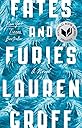
Fates and Furies: A Novel [Groff, Lauren] on desertcart.com. *FREE* shipping on qualifying offers. Fates and Furies: A Novel Review: Fates and Furies by Lauren Groff: A review - Lauren Groff was born in Cooperstown, New York and grew up near the Baseball Hall of Fame. I thought about that as I was considering how I would sum up my thoughts about her latest book. I think she has written the story of a man who was born on third base and thinks he's hit a home run, and his wife, a woman who knows that you have to learn to bunt and run out those bunts, then steal second base, third base, and be prepared to go home when the flustered pitcher makes a wild pitch. This is a remarkable story of a marriage, but the marriage is just a vehicle for getting into the nature of human existence, a way to explore philosophical truths as revealed by mundane events. Baseball is sometimes seen as a metaphor for life; here, marriage is the metaphor for life. The book is divided into two parts, as the title might suggest. The first part, the Fates, is Lancelot (Lotto) Satterwhite's story. Is it coincidental that Lancelot is familiarly known as Lotto, evincing thoughts of lotteries and luck? I think not. Nothing is coincidental about this book. Lotto was born into a family that had made its fortune from bottled water. His father, Gawain, whom Lotto worshiped, had recognized the value of the water on his family land and, almost casually, he made his fortune from bottling and selling it. One could almost say that it was fate. From his birth, Lotto was seen by the three adults in his family - his father, his mother, Antoinette, and his Aunt Sallie - as a golden child meant for greatness. Lotto never questioned that fate or his luck in having been born rich. In fact, he never questions much of anything. He is essentially a narcissist who goes through life simply accepting that all the good things that accrue to him are the way things are meant to be. It is the will of the universe. In his teenage years and early twenties, Lotto is known for being notoriously licentious, casually bedding scores of women and girls. It is because of this behavior that his mother (his beloved father has died by now - the tragedy of young Lotto's life) sends her teenage son away to boarding school in order to get him out of the community. This presages a rift with his mother that is never healed. At the age of 22, at Vassar, Lotto meets Mathilde Yoder at a party and immediately asks her to marry him. She is a tall (6 feet), willowy blonde, the perfect accompaniment to his well over six foot athletic frame. They are fated to be together, he thinks. A couple of weeks after meeting, they do marry and Lotto embarks on his chosen profession of acting. Trouble is, he really isn't very good at it and, through several years of trying, he never manages to break through and truly gain any financial stability. Through all those years, Mathilde is the breadwinner with her work at an art gallery and with an online company. Finally, one night, in despair over his lack of success, Lotto sits down and, in a white hot fever, he writes a play. The next morning when Mathilde gets up, she finds the play on his laptop and proceeds to edit it and clean it up. She molds it into a product that can be presented to backers and eventually the play is performed to great success. Lotto's true profession is found. He becomes a successful playwright and Mathilde continues to work in the background to smooth the way for him and to edit and sharpen his writing. Theirs is a successful marital partnership. They are considered by all who know them as the golden couple. Their partnership lasts until Lotto's death. In the second part of the book, the Furies, we get Mathilde's take on their life together. Lotto's story had, in a sense, been the public view of their marriage, the way things looked from the outside. From Mathilde's perspective, we learn the private view; we see all the hidden gears and pulleys working to create that smooth public image. The first thing that we learn is that Mathilde is not the pure, uncomplicated spirit that Lotto had always imagined her to be. There was an early tragedy in her life, but it was not necessarily or entirely the workings of fate. There was some fury involved, even there. She was born in an idyllic section of France and spent her early years there, but when tragedy struck, her golden childhood ended and she was banished from her family, eventually ending up with an uncle in the United States where she grew up. Through a convoluted series of events, she came to attend college at Vassar where she met Lotto, but we learn that the meeting was not at all fated. It was, in fact, meticulously planned and choreographed by Mathilde. For the rest of their lives together, her planning and choreography will guide their existence and ensure the success of their creative partnership. This is truly a remarkable book by a wonderfully talented writer. I had read Groff's previous book Arcadia in December 2012 and enjoyed it immensely. (Read my review here.) If possible, I liked this one even better. As I read Fates and Furies, It occurred to me that there are parallels with a couple of blockbuster novels of recent years, Gone Girl and The Girl on the Train, in that all three owe something to the mystery genre and have the structure of seeing the story unfold through different perspectives. But this is much the richer blend, combining concepts and ideas from Greek drama, from Shakespeare, from Nabokov - Groff only borrows from the best. A delicious read! Review: Fire and Frost - Lauren Groff's book is a very well written book. Im afraid this sort of thing has been done before (Gone Girl by Gillian Flynn), though I have heard Ms Groff complain that this book was completed before that best seller, and perhaps it was. It is much better, exponentially so, in my mind, than Gone Girl. The character development is strong, particularly in the hero Lotto, and the brittle and wrecked wife Mathilde, seems held together with some narrative integrity. Jane Gardam's back to back books,Old Filth, and The Man with the Wooden Hat, each tell the same sort of marital drama, from opposite sides of a long marriage, that holds secrets, too. Ms. Gardam is given credit for her contribution in Groff's acknowledgments. I have to say I liked Gardam's two works much better than Groff's. It's kind of a shame that her idea has been poached and hijacked, not once by Groff, but twice, by Flynn. Particulalry when Gardam's writing is so superior. Lotto and Mathilde are charming, the book bounces with sexual thronging, and its jammed full of classical and mythological references. It just tries too hard to be sophisticated. It's glib, and ultimately nothing is sacred when the cast is full of narcissists. Unlike a lot of readers, i enjoyed Lotto's section better than Mathilde's. Groff tries to give each a distinct voice, and Lotto's generosity and warmth shine through, whereas Mathilde is cool company. Ms. Groff's writing is quite good. There are moments when we see an astonishing display of virtuosity.I wish authors with this ability were content to let the words, and their poetical usage be elevated over slick sex scenes and intrusive plot devices (Antigone) High points for me: Mathilde's memories of her brother's accident and aftermath, very haunting and sad. Lotto's experience in prep school, as he emerged from his depression and found a place. Lotto hearing the aria from Leo for the first time. Ah! Its only Mathilde who can collaborate with him, understand him. This was great bit of writing. Low points: Mathilde eating sushi off the floor as a precursor to sex. (Badly drawn, big yuck factor) Gratuitous lesbian sex with her P.I., gratuitous sex with Land. More yuck factors.Now that I mention it, there was just way too much gratuitous sex in the whole thing. Lotto's youthful conquests read like a shouts and murmurs parody in the New Yorker. In summary, Id love to see the same sensational wordsmithing with less attempts at being so self consciously sensational.


| Best Sellers Rank | #42,834 in Books ( See Top 100 in Books ) #290 in Coming of Age Fiction (Books) #1,490 in Contemporary Women Fiction #1,867 in Literary Fiction (Books) |
| Customer Reviews | 3.9 3.9 out of 5 stars (21,571) |
| Dimensions | 5.08 x 1.02 x 7.87 inches |
| Edition | Reprint |
| ISBN-10 | 1594634483 |
| ISBN-13 | 978-1594634482 |
| Item Weight | 10.4 ounces |
| Language | English |
| Print length | 400 pages |
| Publication date | September 13, 2016 |
| Publisher | Riverhead Books |
P**N
Fates and Furies by Lauren Groff: A review
Lauren Groff was born in Cooperstown, New York and grew up near the Baseball Hall of Fame. I thought about that as I was considering how I would sum up my thoughts about her latest book. I think she has written the story of a man who was born on third base and thinks he's hit a home run, and his wife, a woman who knows that you have to learn to bunt and run out those bunts, then steal second base, third base, and be prepared to go home when the flustered pitcher makes a wild pitch. This is a remarkable story of a marriage, but the marriage is just a vehicle for getting into the nature of human existence, a way to explore philosophical truths as revealed by mundane events. Baseball is sometimes seen as a metaphor for life; here, marriage is the metaphor for life. The book is divided into two parts, as the title might suggest. The first part, the Fates, is Lancelot (Lotto) Satterwhite's story. Is it coincidental that Lancelot is familiarly known as Lotto, evincing thoughts of lotteries and luck? I think not. Nothing is coincidental about this book. Lotto was born into a family that had made its fortune from bottled water. His father, Gawain, whom Lotto worshiped, had recognized the value of the water on his family land and, almost casually, he made his fortune from bottling and selling it. One could almost say that it was fate. From his birth, Lotto was seen by the three adults in his family - his father, his mother, Antoinette, and his Aunt Sallie - as a golden child meant for greatness. Lotto never questioned that fate or his luck in having been born rich. In fact, he never questions much of anything. He is essentially a narcissist who goes through life simply accepting that all the good things that accrue to him are the way things are meant to be. It is the will of the universe. In his teenage years and early twenties, Lotto is known for being notoriously licentious, casually bedding scores of women and girls. It is because of this behavior that his mother (his beloved father has died by now - the tragedy of young Lotto's life) sends her teenage son away to boarding school in order to get him out of the community. This presages a rift with his mother that is never healed. At the age of 22, at Vassar, Lotto meets Mathilde Yoder at a party and immediately asks her to marry him. She is a tall (6 feet), willowy blonde, the perfect accompaniment to his well over six foot athletic frame. They are fated to be together, he thinks. A couple of weeks after meeting, they do marry and Lotto embarks on his chosen profession of acting. Trouble is, he really isn't very good at it and, through several years of trying, he never manages to break through and truly gain any financial stability. Through all those years, Mathilde is the breadwinner with her work at an art gallery and with an online company. Finally, one night, in despair over his lack of success, Lotto sits down and, in a white hot fever, he writes a play. The next morning when Mathilde gets up, she finds the play on his laptop and proceeds to edit it and clean it up. She molds it into a product that can be presented to backers and eventually the play is performed to great success. Lotto's true profession is found. He becomes a successful playwright and Mathilde continues to work in the background to smooth the way for him and to edit and sharpen his writing. Theirs is a successful marital partnership. They are considered by all who know them as the golden couple. Their partnership lasts until Lotto's death. In the second part of the book, the Furies, we get Mathilde's take on their life together. Lotto's story had, in a sense, been the public view of their marriage, the way things looked from the outside. From Mathilde's perspective, we learn the private view; we see all the hidden gears and pulleys working to create that smooth public image. The first thing that we learn is that Mathilde is not the pure, uncomplicated spirit that Lotto had always imagined her to be. There was an early tragedy in her life, but it was not necessarily or entirely the workings of fate. There was some fury involved, even there. She was born in an idyllic section of France and spent her early years there, but when tragedy struck, her golden childhood ended and she was banished from her family, eventually ending up with an uncle in the United States where she grew up. Through a convoluted series of events, she came to attend college at Vassar where she met Lotto, but we learn that the meeting was not at all fated. It was, in fact, meticulously planned and choreographed by Mathilde. For the rest of their lives together, her planning and choreography will guide their existence and ensure the success of their creative partnership. This is truly a remarkable book by a wonderfully talented writer. I had read Groff's previous book Arcadia in December 2012 and enjoyed it immensely. (Read my review here.) If possible, I liked this one even better. As I read Fates and Furies, It occurred to me that there are parallels with a couple of blockbuster novels of recent years, Gone Girl and The Girl on the Train, in that all three owe something to the mystery genre and have the structure of seeing the story unfold through different perspectives. But this is much the richer blend, combining concepts and ideas from Greek drama, from Shakespeare, from Nabokov - Groff only borrows from the best. A delicious read!
A**T
Fire and Frost
Lauren Groff's book is a very well written book. Im afraid this sort of thing has been done before (Gone Girl by Gillian Flynn), though I have heard Ms Groff complain that this book was completed before that best seller, and perhaps it was. It is much better, exponentially so, in my mind, than Gone Girl. The character development is strong, particularly in the hero Lotto, and the brittle and wrecked wife Mathilde, seems held together with some narrative integrity. Jane Gardam's back to back books,Old Filth, and The Man with the Wooden Hat, each tell the same sort of marital drama, from opposite sides of a long marriage, that holds secrets, too. Ms. Gardam is given credit for her contribution in Groff's acknowledgments. I have to say I liked Gardam's two works much better than Groff's. It's kind of a shame that her idea has been poached and hijacked, not once by Groff, but twice, by Flynn. Particulalry when Gardam's writing is so superior. Lotto and Mathilde are charming, the book bounces with sexual thronging, and its jammed full of classical and mythological references. It just tries too hard to be sophisticated. It's glib, and ultimately nothing is sacred when the cast is full of narcissists. Unlike a lot of readers, i enjoyed Lotto's section better than Mathilde's. Groff tries to give each a distinct voice, and Lotto's generosity and warmth shine through, whereas Mathilde is cool company. Ms. Groff's writing is quite good. There are moments when we see an astonishing display of virtuosity.I wish authors with this ability were content to let the words, and their poetical usage be elevated over slick sex scenes and intrusive plot devices (Antigone) High points for me: Mathilde's memories of her brother's accident and aftermath, very haunting and sad. Lotto's experience in prep school, as he emerged from his depression and found a place. Lotto hearing the aria from Leo for the first time. Ah! Its only Mathilde who can collaborate with him, understand him. This was great bit of writing. Low points: Mathilde eating sushi off the floor as a precursor to sex. (Badly drawn, big yuck factor) Gratuitous lesbian sex with her P.I., gratuitous sex with Land. More yuck factors.Now that I mention it, there was just way too much gratuitous sex in the whole thing. Lotto's youthful conquests read like a shouts and murmurs parody in the New Yorker. In summary, Id love to see the same sensational wordsmithing with less attempts at being so self consciously sensational.
S**A
I’ve just discovered Lauren Groff. I loved her voice. If Lotto’s story is good,Mathilde is electrifying. Keep reading to “Furies”. I was totally engaged. Love, loss, passions, revenge, betrayal, all with plot twists and exquisite language.
K**D
La primera parte esta aceptable, pero la segunda es realmente mala, pretenciosa, los personajes principales realmente molestos, no me gustó. Una verdadera desilusión.
S**A
Nunca había leído un libro con una prosa tan cuidada y cautivadora. Hay muchas metáforas, es algo complicado pero al final merece la pena. Es normal que tenga tan buenas críticas por parte de los expertos.
V**N
Ci si innamora dei personaggi, dell'amore infinito che lega i due protagonisti, anche dei loro segreti e dei loro difetti. Scritto molto bene. Lo consiglio vivamente
J**A
I adored reading this book! It surprised me and it enchanted me with its language, the way the story is told, the way it breaks down a marriage and captures what happens between the lines. I can’t recommend it enough!
Trustpilot
1 month ago
2 weeks ago