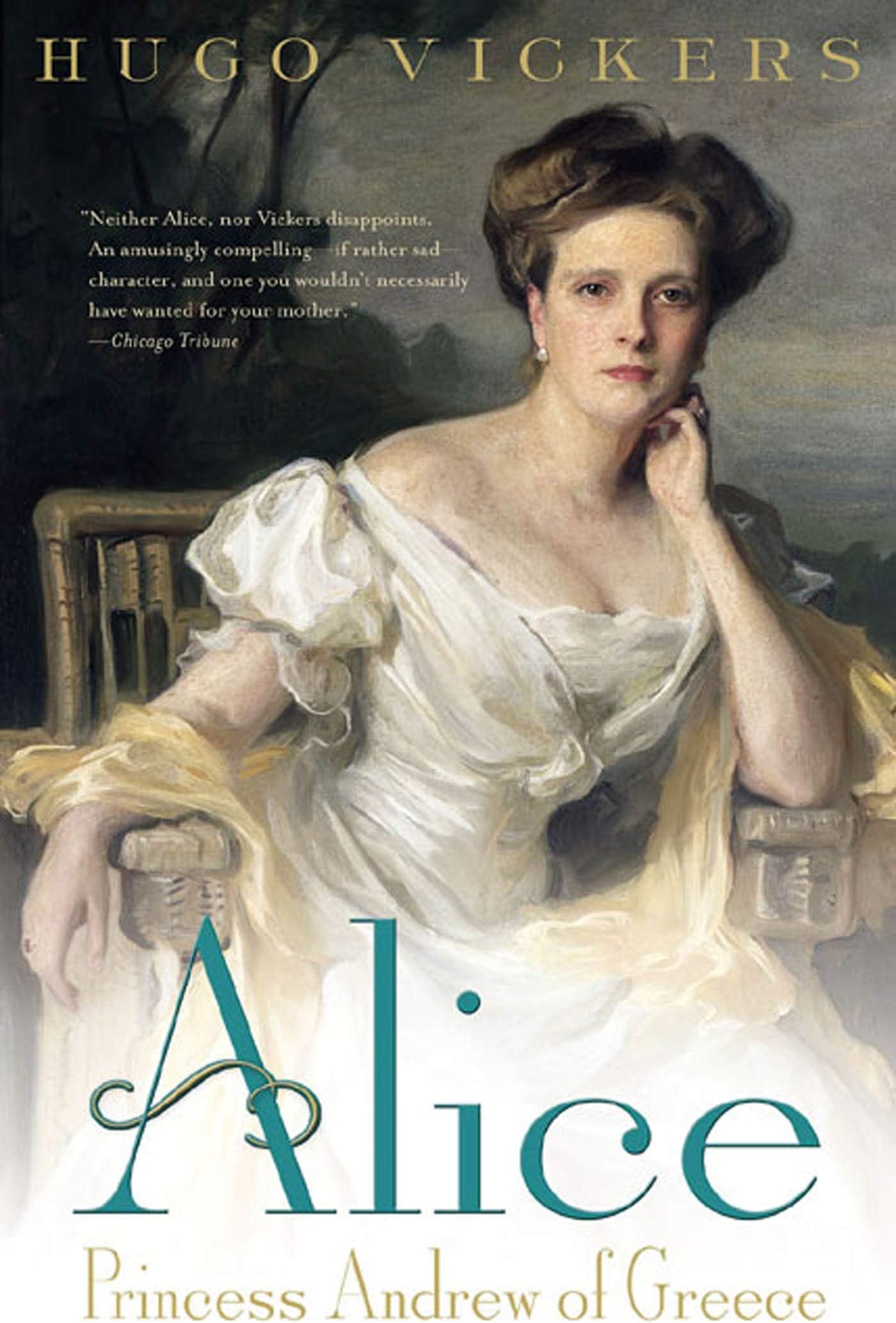
Alice: Princess Andrew of Greece
Product ID: 4127435
Buy anything from 5,000+ international stores. One checkout price. No surprise fees. Join 2M+ shoppers on Desertcart.
Desertcart purchases this item on your behalf and handles shipping, customs, and support to KUWAIT.
Alice: Princess Andrew of Greece [Vickers, Hugo] on desertcart.com. *FREE* shipping on qualifying offers. Alice: Princess Andrew of Greece Review: Excellent read for all - Beautifully written, with an incredible amount of detail on a very special person. This is an excellent read for all people. It has history, biographical details, intrigue, insight to the European royal families and stories of the wars and lots more. Review: Interesting look at the mother of Prince Phillip - Found this to be a good read. It's supposed to be a book about Princess Alice the mother of Prince Phillip, but it seems more like a book about the broader family the was both born into as well as the one she married into. She was born in Windsor Castle the great granddaughter of Queen Victoria. She met and married Prince Andrew of Greece when she was a teenager and they made a life in Greece. They had four girls in quick succession but things were not so easy. They were forced to go into exile more than once and Andrew was almost killed. In the 1930s Alice and Andrew effectively separated and he went on to live in Monte Carlo. While he might not have been the womanizer that he's painted as he did have a long time love love with him. Alice bounced from country to country, visiting various relatives in england, sweeden, Germany and Greece. She spent a lot of time in england after her son Prince Phillip married the future Queen Elizabeth II and they had their children. She spent her last year's living in Windsor.
| ASIN | 0312302398 |
| Best Sellers Rank | #38,204 in Books ( See Top 100 in Books ) #4 in Historical Greece Biographies #14 in Historical British Biographies #26 in Royalty Biographies |
| Customer Reviews | 4.4 4.4 out of 5 stars (822) |
| Dimensions | 6.26 x 1.28 x 9.25 inches |
| Edition | First Edition |
| ISBN-10 | 9780312302399 |
| ISBN-13 | 978-0312302399 |
| Item Weight | 1.25 pounds |
| Language | English |
| Print length | 512 pages |
| Publication date | June 16, 2003 |
| Publisher | St. Martin's Griffin |
P**S
Excellent read for all
Beautifully written, with an incredible amount of detail on a very special person. This is an excellent read for all people. It has history, biographical details, intrigue, insight to the European royal families and stories of the wars and lots more.
C**U
Interesting look at the mother of Prince Phillip
Found this to be a good read. It's supposed to be a book about Princess Alice the mother of Prince Phillip, but it seems more like a book about the broader family the was both born into as well as the one she married into. She was born in Windsor Castle the great granddaughter of Queen Victoria. She met and married Prince Andrew of Greece when she was a teenager and they made a life in Greece. They had four girls in quick succession but things were not so easy. They were forced to go into exile more than once and Andrew was almost killed. In the 1930s Alice and Andrew effectively separated and he went on to live in Monte Carlo. While he might not have been the womanizer that he's painted as he did have a long time love love with him. Alice bounced from country to country, visiting various relatives in england, sweeden, Germany and Greece. She spent a lot of time in england after her son Prince Phillip married the future Queen Elizabeth II and they had their children. She spent her last year's living in Windsor.
T**E
A resilient and interestingly eccentric woman
“Alice, Princess Andrew of Greece” brought home to me how widespread and tenacious the various European royal families are. There are so many of them – princesses, princes, kings, queens, and other people of supposedly noble birth. They have descended from the dictators of Europe and it is a marvelous achievement of modern democracy that they are no long able to wield their tyrannical powers but have to smile and smile and smile to keep us convinced to keep them on the pay roll. However it is still puzzling as to why we do so. They have various survival tricks, some of which are displayed in this book. One is that they will adapt and change. All the royal families are very interrelated but during the World Wars, it became clear to the British royal family that their German surname was a public relations problem so they simply renamed themselves “Windsor”. Problem solved! There was another issue in that some of Europe’s royalty included SS soldiers in Germany and others were fighting for Britain but they seemed to be able to live this down after the war. Another survival mechanism is that they somehow manage to convince us that they are entitled to their wealth and privilege. The combination of ritual and glamour seems to intoxicate the crowds. The royals apparently have an extraordinary existence that is different from our everyday hum drum lives and people seem willing to observe this largely without envy or resentment. Occasionally a “commoner” breaks into their exclusive world and this creates particular interest – an interest which became an obsession in the case of Princess Diana. And on a slightly more worrying note, there is the fact that they are captives. Few of them dare to escape the world that they are familiar with. They belong to us and, at any time, we can lift the roofs off the dolls’ houses in which they live and peer at them, discussing their lives and exclaiming at their stress over their lack of privacy. It could be argued that their lives resemble those of wealthy slaves in that we don’t recognize their basic human rights to freedom of religion and freedom as to where they live or what career they will choose etc. Johann Hari has written about this very convincingly in his book, “God save the Queen?” This book shows an aspect of this situation. The Greeks were very ambivalent about their royalty and eventually kicked out Princess Alice and her husband, Prince Andrew (Andrea), after first chewing over the idea of killing him. Both Alice and Andrew were extremely traumatized by this, a clear demonstration of how much loss of identity there may be for royals who lose that role in life. Their marriage moved into difficulties as evidenced by the fact that Alice fell very in love with someone else. They largely abandoned their son, Philip, who was cared for by various English relatives. Andrea drifted aimlessly through the rest of his life without doing being able to find a new direction. Alice showed her stress by having a breakdown. The delusions that she instinctively chose showed what was lacking in her life. She saw herself as the only woman that Jesus really loved – thus replacing her former marital happiness and also giving herself a strong sense of identity to replace the one smashed by her loss of role within Greece. It shows her remarkable inner strength and also the loyalty of her mother and other family members that she eventually recovered most of her mental health. She then found a new sense of identity by committing herself to help those who were suffering dreadful poverty as a result of World War II. Her son married Princess Elizabeth, soon to become the Queen of Britain, and Alice was able to find a place within that new arrangement but still maintain her independence of it though her new found work.
J**D
A Little Known but Admirable Princess
I would imagine that most people outside the ranks of royalty enthusiasts have never heard of Princess Alice of Battenberg, Princess Andrew of Greece. If anything, they know her as Prince Philip's mother. And that's a pity, because Hugo Vicker's new biography reveals that Alice Battenberg was a truly remarkable individual.Alice was a great-granddaughter of Queen Victoria, which must have seemed her only interesting point at the time of her birth. Her father was morganatic (half-royal) and her mother a princess from a minor German state. Her first years were spent among her multitudinous family (Vickers provides footnotes and trees to help sort everyone out), in the background and unnoticed. Alice's marriage was hardly a glamorous match. Prince Andrew was a younger son of the King of Greece and while charming, not all that interesting. Alice lived quietly until the 1920s, when a revolution in Greece and her own personal troubles caused her a certain notoriety. Vickers does a good job of covering Alice's physical and emotional ailments and is most successful in describing her growing religious faith. In this Alice is similar to her two Russian Aunts, Tsarina Alexandra and Grand Duchess Elizabeth. During World War II Alice protected a Jewish family at grave risk to herself, so that she was later declared Righteous Among the Gentiles by Israel.After World War II Alice continued to live in the background, now overshadowed by her only son, Prince Philip, who became the consort of Queen Elizabeth II. She remained a loving and wise part of the Royal Family however, as memories of her from her grandchildren and other relations attest.Alice, Princess Andrew of Greece deserves a place in the library of anyone interested in royalty as well as anyone who cares to read about honorable and decent people.
W**W
This story should be made into a movie !
M**C
Une biographie très complète de la belle-mère d'Elisabeth II. L'écriture est agréable (pour qui lit l'anglais), les sources sont ombreuses et de qualité et la vie d'Alice est retracée sans flagornerie. Merci à Hugo Vickers pour cet ouvrage !
R**Y
Il libro era in buone condizioni, e, arrivato in anticipo rispetto alle previsioni e per chi e, interessato alle biografie e, un buon libro inesistdnte nella versione italiana
B**F
Hugo Vickers did a fantastic job of writing this book. it is very complicated to read as there is so much going on and he had to work from so many different sources, letters and medical reports as most of Alices papers were destroyed. her life spanned so much of early 20th century history. granddaughter of Queen Victoria so connected to most of the European families.married into the Greek royal family. born deaf could lip read in several languages. had a major breakdown in mid life was sectioned for many years. she said she was the true wife of Christ. she set up hospitals in the 1st war and worked tirelessly with the wounded soldiers. stayed in Greece to help the poor and shelter Jews in the 2nd, while Greece was under German occupation. was in a difficult situation as her daughters were married to SS men and her son was in the Royal navy. because of her illness missed most of Philips growing up. her 3rd daughter and family were killed in a plane crash. her relations the Romanov's were all killed. she was definitely Bi Polar, but had a fantastic mind she suggested to her brother Dickie Mountbatton that there should be a united Europe (like we have now) well before the 2 war. no one would listen to her. she finally set up her own religious sect and continued to do good. a lady to be admired as well as pitied.
H**R
Very interesting book. Well written. Easy to read.
Trustpilot
4 days ago
1 month ago