We remain fully operational. Our teams are working around the clock to ensure your deliveries continue safely.

DOWNLOAD THE APP


Copyright © 2025 Desertcart Holdings Limited
DOWNLOAD THE APP
Buy anything from 5,000+ international stores. One checkout price. No surprise fees. Join 2M+ shoppers on Desertcart.
Desertcart purchases this item on your behalf and handles shipping, customs, and support to KUWAIT.
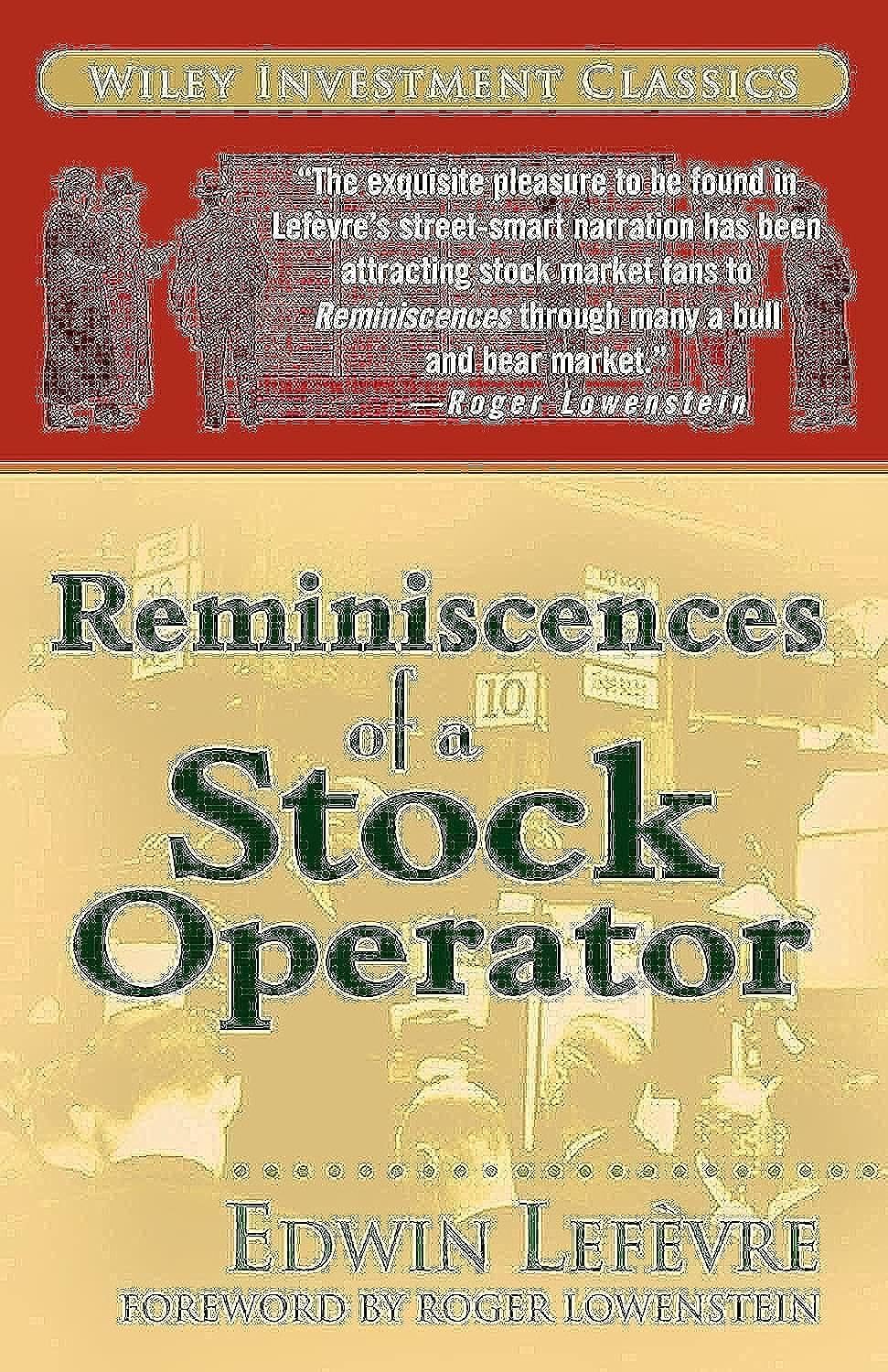
Reminiscences of a Stock Operator [Lefèvre, Edwin, Lowenstein, Roger] on desertcart.com. *FREE* shipping on qualifying offers. Reminiscences of a Stock Operator Review: A timeless masterpiece filled with wisdom still applicable today - Edwin Lefèvre does a fantastic job bringing the experiences of Jesse Livermore (disguised in the pages as Larry Livingston) to life in this fantastic book. This work is written as a novel and almost as a biography, in which Livermore describes his career as a stock operator. He starts from his childhood days in bucket shops (which earned him the title of "boy plunger"), continues with his experiences on Wall Street - where he made and lost millions of dollars over and over again, and finishes with intriguing stories on price manipulation and speculation back in the earlier half of the 20th century. All throughout the book, amidst the inspiring stories and witty humor, the reader will find numerous pieces of advice - on anything from human psychology and public behavior to insider trading and investing/speculation strategies. I completely agree with other reviewers who state that this book needs to be read more than once. You simply won't absorb all the useful information the first time. Maybe not even the first two times. Or three. Some of the book's advice is very obvious, as it is repeated many times over. Livermore makes his basic strategy clear - incremental or "probe" approach, where he would slowly build his position in a certain stock/commodity by buying (or selling) blocks of securities until he reached his target - if the ticker tape confirmed his outlook. For example, assume Livermore wanted to go long on A with an investment target of $10,000. He'd first buy $1,000 and wait. If the price moved up, his assessment seemed to be correct - so he'd buy another $2,000 of A at the slightly higher price. If the price kept going up, he'd then increase his position to $6,000 - and eventually up to $10,000 - his original target. If, of course, the price reacted differently, his market "probe" would tell him that his assessment may not have been correct. Other "obvious" advice in the book is equally important - history repeats itself (he describes 2 amazing cases - Stratton's corner on corn and insider boosting of Tropical Trading - where he used the same technique to turn a commodity or stock bearish), don't ever follow tips from anyone (trust in yourself only), and don't cash out quickly for a small profit - but rather ride your investment out (go long in a bull market, short in a bear market). Amidst examples and stories in which the above pieces of advice appear to shine over and over again, other small and hidden tid-bits pop up throughout the entire book. Livermore is unafraid to talk about his mistakes, and he makes it clear that it's not his wish to brag about his successes - but to simply inform the reader why he did what he did. And he does a fantastic job in that. The book is very well written. It feels like a novel, where every chapter follows the main story arc but talks about something different each time, with great insight on yet another topic. The stories are very engaging, often witty and humorous. I read through more than half of the book carefree, simply enjoying the great prose and Lefèvre's literary skill - before I realized that Livermore has been giving me timelessly precious advice all throughout, and that I need to pay more attention. I will read this book again. I will take notes again. I don't want to miss anything. In conclusion, I highly recommend this book to anyone who is interested in the stock or commodities markets. It is enjoyable and entertaining, and it is eye-opening and insightful. It can be read simply as a collection of intriguing stories, or as an "investment bible" with much advice that is still applicable today. While the rules of the exchanges and the amount of money that flows through them have changed, the people trying to beat the market haven't. Pros: + beautiful literary prose + intriguing, engaging, witty stories + lots and lots of investment advice that still holds true today (80+ years later!) + many examples of historical events that have and will continue to repeat themselves + great as either a low-key bed-time book or as a serious stock/commodity investment and speculation guide + each chapter talks about something new, making it easy to read the book over time without losing track of the main story Cons: - first published in 1923 - so keep in mind that, of course, some things are outdated (i.e. certain rules and practices are in place now that weren't then, the amount of money has increased to a point where stock price manipulation is not as easy, etc.) - but treat this as a history lesson - probably needs to be read more than once (but is that really a con?) for the investment advice Review: Cited by Many Professionals Among Their Top 10 Investment Books - This is a great book and an investment classic. Likely you are reading this review because someone you know and trust recommended the book to you. It is, after all, possibly the most famous investment book ever among professional investors. Reminiscences of a Stock Operator is a work of historical fiction, a roman à clef, originally published in 1923. At the time of publication, people who read about the key character, Larry Livingston, believed that to be a pseudonym for a famous securities trader of the day, Jesse Lauriston Livermore. The wisdom and knowledge of events portrayed could only come from one deeply engaged in the stock and commodity markets from late 19th to early 20th century. You can buy several modern versions of this entertaining and educational investment classic these days. There are already hundreds of reviews of this book in its various versions posted on desertcart. I have purchased and read the top three versions over the years. Rather than tread over ground that has already been thoroughly covered by others, this review focuses on the differences among versions to hopefully assist you in deciding which one to purchase. The main three print versions are these. Included are links to the desertcart page for each book. - The Wiley Investment Classic Version with Foreword by Jack Schwager, author of the Market Wizards series. Reminiscences of a Stock Operator (Wiley Investment Classics) - The MarketPlace Book with Foreword by Market Wizard William J. O'Neil, Founder of Investor's Business Daily. Reminiscences of a Stock Operator (A Marketplace Book) - The Annotated Edition by Jon D. Markman with Foreword by Market Wizard Paul Tudor Jones, Founder of Tudor Investment Corporation. Reminiscences of a Stock Operator: With New Commentary and Insights on the Life and Times of Jesse Livermore (Annotated Edition) There is also a PDF Version available online via search engines. Here are brief summaries of the differences among versions. The Wiley Investment Classic Version. This is the original book without embellishment. There are no illustrations. There is no table of contents. This version includes a short Foreword by Jack Schwager. This is the one to buy if you want the original work but cannot afford the gilded price tag of a very rare original edition. The MarketPlace Book. This book reproduces a series of 12 articles by Edwin LeFevre published in The Saturday Evening Post in 1922. It includes one installment, the first, that does not appear in the Reminiscences book. This version is richly illustrated with black and white cartoons in the Saturday Evening Post style, that is, humorous and wickedly ironic. In his Foreword William J. O'Neil says that of his thousands of investment books, Reminiscences is "one of the top 10 or 12" in his library. This is the one to buy if your objective is to see the markets as did the public in the years before the 1929 stock market crash. The Annotated Edition. This is the best of the lot in my opinion. The commentary by Jon D. Markman and the Foreword by Paul Tudor Jones, one of the most successful investors operating today and perhaps in history, make this the one to buy if your objective is investment education. The PDF Version. This is a typewritten copy of the original text of the book. You get the whole story. Personally, I find Reminiscences so valuable a reference that I want a hard copy in hand to mark up and re-read from time to time, in part or in all. You may want to read it first in PDF and then decide. This is a five star book and a must-read for every investor. Enjoy!
| Best Sellers Rank | #21,844 in Books ( See Top 100 in Books ) #30 in Stock Market Investing (Books) #48 in Biographies of Business & Industrial Professionals #60 in Introduction to Investing |
| Customer Reviews | 4.5 out of 5 stars 5,048 Reviews |
V**N
A timeless masterpiece filled with wisdom still applicable today
Edwin Lefèvre does a fantastic job bringing the experiences of Jesse Livermore (disguised in the pages as Larry Livingston) to life in this fantastic book. This work is written as a novel and almost as a biography, in which Livermore describes his career as a stock operator. He starts from his childhood days in bucket shops (which earned him the title of "boy plunger"), continues with his experiences on Wall Street - where he made and lost millions of dollars over and over again, and finishes with intriguing stories on price manipulation and speculation back in the earlier half of the 20th century. All throughout the book, amidst the inspiring stories and witty humor, the reader will find numerous pieces of advice - on anything from human psychology and public behavior to insider trading and investing/speculation strategies. I completely agree with other reviewers who state that this book needs to be read more than once. You simply won't absorb all the useful information the first time. Maybe not even the first two times. Or three. Some of the book's advice is very obvious, as it is repeated many times over. Livermore makes his basic strategy clear - incremental or "probe" approach, where he would slowly build his position in a certain stock/commodity by buying (or selling) blocks of securities until he reached his target - if the ticker tape confirmed his outlook. For example, assume Livermore wanted to go long on A with an investment target of $10,000. He'd first buy $1,000 and wait. If the price moved up, his assessment seemed to be correct - so he'd buy another $2,000 of A at the slightly higher price. If the price kept going up, he'd then increase his position to $6,000 - and eventually up to $10,000 - his original target. If, of course, the price reacted differently, his market "probe" would tell him that his assessment may not have been correct. Other "obvious" advice in the book is equally important - history repeats itself (he describes 2 amazing cases - Stratton's corner on corn and insider boosting of Tropical Trading - where he used the same technique to turn a commodity or stock bearish), don't ever follow tips from anyone (trust in yourself only), and don't cash out quickly for a small profit - but rather ride your investment out (go long in a bull market, short in a bear market). Amidst examples and stories in which the above pieces of advice appear to shine over and over again, other small and hidden tid-bits pop up throughout the entire book. Livermore is unafraid to talk about his mistakes, and he makes it clear that it's not his wish to brag about his successes - but to simply inform the reader why he did what he did. And he does a fantastic job in that. The book is very well written. It feels like a novel, where every chapter follows the main story arc but talks about something different each time, with great insight on yet another topic. The stories are very engaging, often witty and humorous. I read through more than half of the book carefree, simply enjoying the great prose and Lefèvre's literary skill - before I realized that Livermore has been giving me timelessly precious advice all throughout, and that I need to pay more attention. I will read this book again. I will take notes again. I don't want to miss anything. In conclusion, I highly recommend this book to anyone who is interested in the stock or commodities markets. It is enjoyable and entertaining, and it is eye-opening and insightful. It can be read simply as a collection of intriguing stories, or as an "investment bible" with much advice that is still applicable today. While the rules of the exchanges and the amount of money that flows through them have changed, the people trying to beat the market haven't. Pros: + beautiful literary prose + intriguing, engaging, witty stories + lots and lots of investment advice that still holds true today (80+ years later!) + many examples of historical events that have and will continue to repeat themselves + great as either a low-key bed-time book or as a serious stock/commodity investment and speculation guide + each chapter talks about something new, making it easy to read the book over time without losing track of the main story Cons: - first published in 1923 - so keep in mind that, of course, some things are outdated (i.e. certain rules and practices are in place now that weren't then, the amount of money has increased to a point where stock price manipulation is not as easy, etc.) - but treat this as a history lesson - probably needs to be read more than once (but is that really a con?) for the investment advice
V**.
Cited by Many Professionals Among Their Top 10 Investment Books
This is a great book and an investment classic. Likely you are reading this review because someone you know and trust recommended the book to you. It is, after all, possibly the most famous investment book ever among professional investors. Reminiscences of a Stock Operator is a work of historical fiction, a roman à clef, originally published in 1923. At the time of publication, people who read about the key character, Larry Livingston, believed that to be a pseudonym for a famous securities trader of the day, Jesse Lauriston Livermore. The wisdom and knowledge of events portrayed could only come from one deeply engaged in the stock and commodity markets from late 19th to early 20th century. You can buy several modern versions of this entertaining and educational investment classic these days. There are already hundreds of reviews of this book in its various versions posted on Amazon. I have purchased and read the top three versions over the years. Rather than tread over ground that has already been thoroughly covered by others, this review focuses on the differences among versions to hopefully assist you in deciding which one to purchase. The main three print versions are these. Included are links to the Amazon page for each book. - The Wiley Investment Classic Version with Foreword by Jack Schwager, author of the Market Wizards series. Reminiscences of a Stock Operator (Wiley Investment Classics) - The MarketPlace Book with Foreword by Market Wizard William J. O'Neil, Founder of Investor's Business Daily. Reminiscences of a Stock Operator (A Marketplace Book) - The Annotated Edition by Jon D. Markman with Foreword by Market Wizard Paul Tudor Jones, Founder of Tudor Investment Corporation. Reminiscences of a Stock Operator: With New Commentary and Insights on the Life and Times of Jesse Livermore (Annotated Edition) There is also a PDF Version available online via search engines. Here are brief summaries of the differences among versions. The Wiley Investment Classic Version. This is the original book without embellishment. There are no illustrations. There is no table of contents. This version includes a short Foreword by Jack Schwager. This is the one to buy if you want the original work but cannot afford the gilded price tag of a very rare original edition. The MarketPlace Book. This book reproduces a series of 12 articles by Edwin LeFevre published in The Saturday Evening Post in 1922. It includes one installment, the first, that does not appear in the Reminiscences book. This version is richly illustrated with black and white cartoons in the Saturday Evening Post style, that is, humorous and wickedly ironic. In his Foreword William J. O'Neil says that of his thousands of investment books, Reminiscences is "one of the top 10 or 12" in his library. This is the one to buy if your objective is to see the markets as did the public in the years before the 1929 stock market crash. The Annotated Edition. This is the best of the lot in my opinion. The commentary by Jon D. Markman and the Foreword by Paul Tudor Jones, one of the most successful investors operating today and perhaps in history, make this the one to buy if your objective is investment education. The PDF Version. This is a typewritten copy of the original text of the book. You get the whole story. Personally, I find Reminiscences so valuable a reference that I want a hard copy in hand to mark up and re-read from time to time, in part or in all. You may want to read it first in PDF and then decide. This is a five star book and a must-read for every investor. Enjoy!
B**.
Puzzling format
I haven't read the story yet, but I've heard it's good, especially if you're into investing. My complaint is with this edition's format itself. The font looks like 8 point--very small--especially when you compare it to another book, and the margins are very wide. It's like they're trying to skimp on printing costs by printing less pages. Also it says it's illustrated, but there are no illustrations. There's one page in the back with a collection of thumbnail sized photos, but no illustrations.
N**Y
The Classic, Defining Investment Book - Absolute Best
Widely regarded as the best classic investment book ever written. I have the book, kindle book (Updated, annotated version) and audiobook. I have listened to the audiobook at least 3 times and am in process of going through annotated kindle book. Aside from the Market Wizards series, I cannot recommend this book any higher, as a book on investment principles, and as a peek into the life of a legendary stock speculator who had so much to teach us. This book caused me to buy pretty much everything I could find on Livermore for my collection. The style, interactions with other speculators and individuals, time in bucket shops, rise and fall, and other remarkable aspects of his journey draw you in to his time in the early 1900s and offer a great deal of laughs, as well as opportunities to learn. Can't say enough about how great this book is, and be sure to check out the many other books, some of which I included below, about the late and great JL: Reminiscences of a Stock Operator: With New Commentary and Insights on the Life and Times of Jesse Livermore (Annotated Edition) (I read original and bought this to read and to add to my collection. I skimmed commentary and that alone makes it worth price of book) How to Trade In Stocks (LOVED this book as well, as it includes the original book by JL himself, as well as commentary, pictures and lovely anecdotes) Jesse Livermore - Boy Plunger: The Man Who Sold America Short in 1929 (Bought, skimmed through and this is another must have for a collector, I will review in full after I get through it) Jesse Livermore's Methods of Trading in Stocks (Read this several times and it is an excellent summary of JL's trading methodology, get the audiobook too, very very cheap!) Jesse Livermore: World's Greatest Stock Trader (I include this because I just bought it as it is recognized as being the most complete bio of JL. A must if you are a collector, but this is not so much of an investing book, it is more of a historical examination of JL's life, which is certainly appealing to me) Considering the price, if you are an investor or love market history or both, start here and you will not be disappointed. The Audiobook production of this book is also out of this world, and the performance of the voice actor is one of the greatest I have listened to, and adds so much color to an incredible story. Quite inexpensive too!
H**T
The more things change
Although this book was written in 1923, much of what it contains is ageless advice for investors. As the protaganist Livermore himself says in the book, nothing has ever really changed in the stock market. As evidence, he cites anecdotes from as early as 1867! There is nothing specific in here for anyone, and little of fundamentals, but for those interested in the human or psychological side of the market, this book will prove invaluable. Livermore was one of the greatest traders of the early part of this century...mostly known as a short trader. He was a kind of momentum trader before that term even existed. The book consists of series of observations and stories by Livermore related to his friend LeFevre, the author. You will feel as if you are sitting across the table from Livermore drinking coffee or beer, enjoying many tales of how to trade in the market. Although short on specifics, the book is chock full of advice on how to govern oneself and anticipate movements in stocks. Some examples....Livermore never took tips from anyone else, and never trusted them. He states many times that each investor should develop their own system, and stick to it. The sticking to it is the most important part...as evidence he cites a colleague with a system radically different from his, who was also successful, who went away from his own system at a critical time and lost millions. He also gives the readers a great exposition of his own system, which started out strictly as what we might call day trading on technical indicators (what he calls "watching the tape") but was greatly strengthened when he also learned to factor in fundamentals (what he calls "the big picture"). This is a very good, well-written read with many amusing anecdotes as well, such as the time his wife tried to trade without his knowledge or the tale of caution regarding two traders who insisted on believing "inside tips" to their great harm. Livermore at the end of the day was more speculator than investor (as he freely admits), and he never could seem to quit. He made millions and lost them over and over again...although when he died he was worth $5 million, we learn from this book that this was only because he put a few million in trust funds that he was not allowed to touch under any circumstances! Although he suffered from a "gambling fever" approach that he never could quite escape, he did in fact "know himself" well enough to make millions, over and over again repeatedly. For those wanting well-written insight into the human side of the market sprinkled with interesting and often amusing anecdotes, this is a MUST READ.
C**R
This Book Made Me Money
In the awkward and werid markets we've had in the last year and half or so, I decided i would start investing in stock markets after doing it for awhile when I was in high school and stopping for three years in high school. I was no amateur, but I was no professional either. I started off with 2 thousand dollars and got killed in the market, buying long and selling it after a point or two, holding onto a stock as it took a nose dive, consolidating, all the stuff I'd trained myself not to do when I was working with a professional trader "a friend of my mother's," after school on my senior year. I picked up this book, it was always in my collection, but I wasn't paying attention to it, and hadn't read it. I read it straight through. All the happening advice, all the small anecdotes, eventually built up my ability to understand the market. One statement in particular came striking back at me, with the stock STEC which I got into at 23, watched it spring up to 43 (mind you, 8 other stocks had failed by this point, but I'd learned to cut my losses short) and sold it at 38. I knew there was something wrong about it, it's moves jerky, it's actions wrong. It was unhealthy, something was up, the owners had dumped their stocks a month before, and I remembered what Jesse Livermore said, "If I shouldn't be long in it, I should be short in it," or something to that extent, and I bought puts in the stock at twenty four, after it broke it's 28 low, and I watched it drop in a very short time to 14 dollars amidst scandal and then inch down to 11. It was a great day for me and it was all because i read this book and remembered those little ideas (though lucky for me the trade turned out better than his, when he was taking someone elses advice). I made enough money to pay for my last year of college. A few other books I read: Stan Weinstein's Secrets for Profiting in Bull and bear Markets Martin Zweig's Winning on wall Street. Van Tharp Trade Your Way to Financial Freedom Gerald Loeb The Battle For Investment Survival All of William O'Neil All of Nicolas Darvas Michael Covel Trend Following The Five Rules of Successful Stock Investing Benjamin Graham The Intelligent Investor and Security Analysis Philip A. Fisher Common Stock and Uncommon Profits These books helped me develop a winning strategy that I hope will make me a good deal of money.
P**Y
Absolutely the Best Book on Stock Market Trading Ever Written.
Absolutely the best book on stock market trading ever written. Although the book is a memoir of stock trading in the early years of the 20th century, it addresses the basic psychology and principles of trading that are directly applicable to 21 century stock trading. Get it, read it once or twice and you really need little else to learn effective and profitable trading. A most helpful addition would be a basic 21 day, 50 day, 200 day moving price average and fundamentals system such as the basic Investor's Business Daily system.
B**C
Interesting but long winded
While this is considered a classic and has some aspects to support that view, it is quite long winded, disjointed, and even rambling at times. It reads somewhat like the braggadocio of Wall Street salesmen having a drink in a pub, for those familiar with that ritual. Parts of the book were contradictory in the insights and lectures given to the reader. Despite these shortcomings, it provides an interesting historical perspective, with a real Wall Street flavor that is captivating much of the time. The ending was mediocre, missing an opportunity to wrap a cohesive perspective around a ticker tape of short stories and Wall Street experiences.
Trustpilot
1 week ago
2 months ago