






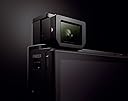
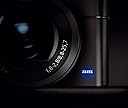
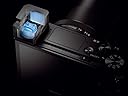

DSCRX100M3
Product ID: 47877985
Details
- Aspect ratio16:9
- BrandSony
- Compatible mountingsSony
- Image stabilisationyes
- Maximum aperture2.8 f
- Maximum focal length70 Millimeters
🎥4K video capture
📸20.1MP 1.0-type sensor
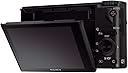
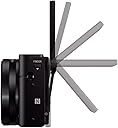
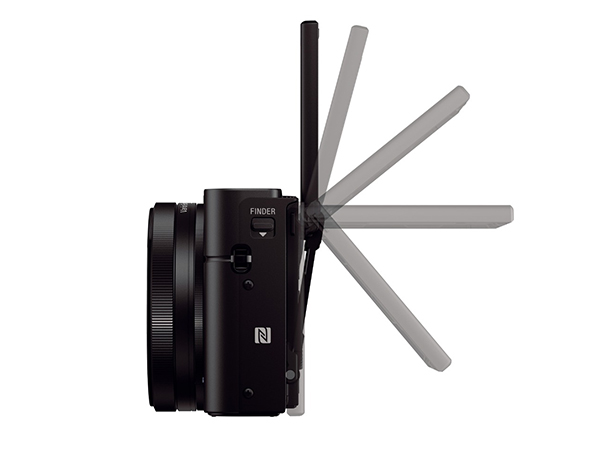
🔄180° tiltable flip screen
Buy anything from 5,000+ international stores. One checkout price. No surprise fees. Join 2M+ shoppers on Desertcart.
Desertcart purchases this item on your behalf and handles shipping, customs, and support to KUWAIT.
📸 Elevate your storytelling with Sony RX100 III — where pro power meets pocket-sized freedom!
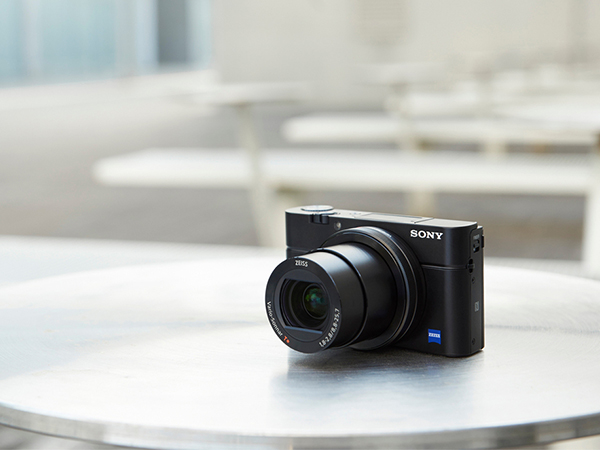
The Sony RX100 III is a premium compact camera featuring a large 1.0-type 20.1MP back-illuminated sensor, a versatile 24-70mm F1.8-2.8 Zeiss lens, and a 180° tiltable LCD screen ideal for vlogging. It offers advanced image stabilization, an electronic viewfinder for precise framing, and 4K video capture capabilities. With Wi-Fi connectivity and the Imaging Edge Mobile app, sharing your high-quality photos and videos is effortless, making it the perfect tool for professional photographers and content creators on the move.





| ASIN | B00KW3BJ1Y |
| Aperture modes | Aperture Priority |
| Are Batteries Included? | Yes |
| Aspect Ratio | 16:9 |
| Aspect ratio | 16:9 |
| Auto Focus Technology | Hybrid |
| Autofocus | Yes |
| Autofocus Points | 101 |
| Available Memory Slots | 1 |
| Battery Cell Type | Lithium Ion |
| Battery Types | Lithium Ion |
| Battery Weight | 12 Grams |
| Best Sellers Rank | 62,066 in Electronics & Photo ( See Top 100 in Electronics & Photo ) 899 in All-in-One Digital Cameras |
| Bit Depth | 14 Bit |
| Box Contents | Sony DSCRX100M3 advanced digital compact premium camera (Wi-Fi, NFC, 180 degrees tiltable LCD screen) - Black. |
| Brand Name | Sony |
| Camera Flash Type | Built-In |
| Camera Lens | 70 mm |
| Colour | black |
| Compatible Devices | [Sony] |
| Compatible Flash Memory Type | SD |
| Compatible Mountings | Sony |
| Compatible mountings | Sony |
| Continuous Shooting Speed | 10 FPS |
| Customer Reviews | 4.5 out of 5 stars 219 Reviews |
| Digital Scene Transition | True |
| Digital Zoom | 11 x |
| Digital-Still | Yes |
| Display Fixture Type | Tilting |
| Display Maximum Resolution | 1920 x 1080 pixels |
| Display Type | LCD |
| Dots Per Screen | Approximately 921,600 dots (640 x 480 pixels) |
| Effective Still Resolution | 20.1 |
| Expanded ISO Maximum | 25600 |
| Exposure Control | Automatic |
| File Format | JPEG or RAW or MP4 |
| Flash Memory Type | SD |
| Flash Modes Description | Auto, On, Off, Slow Synch, Rear Curtain Synch |
| Focus Features | Autofocus |
| Focus Mode | Automatic AF (AF-A) |
| Focus Type | Auto Focus |
| Form Factor | Compact |
| Generation | 3 |
| Global Trade Identification Number | 04905524986419 |
| Has Color Screen | Yes |
| Image Capture Type | Stills & Video |
| Image Stabilization Type | yes |
| Image stabilisation | yes |
| Item Weight | 263 Grams |
| JPEG Quality Level | Fine |
| Lens Type | 24 millimeters |
| Manufacturer | Sony |
| Manufacturer Part Number | DSCRX100M3.CEH |
| Maximum Aperture | 2.8 f |
| Maximum Display Resolution | 1080p Full HD |
| Maximum Focal Length | 70 Millimeters |
| Maximum Image Size | 20.1 MP |
| Maximum focal length | 70 Millimeters |
| Minimum Focal Length | 24 Millimeters |
| Model Name | DSCRX100M3.CEH |
| Model Number | DSCRX100M3.CEH |
| Model Series | RX100III |
| Movie Mode | Yes |
| Network Connectivity Technology | Yes |
| Night vision | No |
| Number of Diaphragm Blades | 9 |
| Optical Zoom | 3 x |
| Photo Sensor Size | 2/3-inch |
| Photo sensor technology | CMOS |
| Product Features | Serial Shot Mode^Shutter Priority^Aperture Priority |
| Real Angle Of View | 22.3 Degrees |
| Rear Webcam Resolution | 20.1 MP |
| Remote Included | No |
| Screen Size | 3 Inches |
| Sensor Type | CMOS |
| Series Number | 3 |
| Shooting Modes | [Multiple] |
| Skill Level | Professional |
| Specific Uses For Product | Photography, Videography |
| Supported Image Format | JPEG |
| Supported file format | JPEG or RAW or MP4 |
| Total Still Resolution | 20.1 MP |
| Total USB 2.0 Ports | 1 |
| Total USB Ports | 1 |
| Total Video Out Ports | 1 |
| Touch Screen Type | Capacitive |
| Video Capture Format | MP4 |
| Video Capture Resolution | 3840 x 2160 (4K) |
| Video Output | HDMI |
| Viewfinder Type | Electronic |
| White Balance Settings | Auto |
| Wireless Technology Type | Wi-Fi |
| Zoom | Optical Zoom, Digital Zoom |
G**P
Excellent low light, speed, weight, compactness and functions
I often go into dimly lit areas of museums and galleries to photograph artefacts and exhibits and hate using a flash because of the reflections from glass. Also its great to take photos that don't need a long exposure in such conditions without needing a tripod to steady the camera. Its also easy to get arty with this camera altering depth of field etc etc, and the data saved with each photo does allow you to easily determine what settings you used (or if in auto/semi auto mode, what settings the camera used). Plenty of great functionality (I can either transfer photos over USB - I'm pretty sure the SD card shows up as an external disk when the camera is plugged into a mac, or I can use the program downloaded from the Sony website - or I can use a wifi connection to transfer photos to my Android tablet (again need a free app from Sony, available from the google store) I've not used or stored the camera in hazardous or challenging environments, or abused it (I put a 3rd party screen protector on it, and carry it in a case when not using it) but it has stood up to use well. The M3 does have a different lens to the M2, I think the difference is that the M2 has more zoom range (gets closer to far away objects). If I try and photograph the moon for instance, its a tiny circle on the M3 (and don't actually have an M2 to compare the results against, but I'm guess it might not be quite as small an image) Truthfully if I want to photograph the moon I probably need to mount it on a telescope, or get an SLR with a big zoom lens. Because the lens automatically retracts behind shutters on standby or shut down, I wouldn't go looking for any after market screw on adapter to extend the lens range (or add a filter, or a mount for a telescope) Probably amongst its best features are the reposition-able display, which allows you to compose selfies (rather than take about a hundred of them blind), and for days when you are outside and the sun is shining in a way that would obliterate an image on the screen, an electronic popup viewfinder that can focus the image at infinity (I think) so even people with bad eyesight can use it without glasses (or with glasses probably) As a point and shoot camera its very functional and high specification. Excellent images in all the conditions I've tried it. Light enough for me to carry around all day, fits in my jacket pocket when I want to carry it there.
D**E
Problems with EVF but otherwise flawless
I have been an enthusiast photographer for years with a major brand in the DSLR market and I am so pleased that I bought this. I cannot speak highly enough of it as a camera but the EVF which was the main USP for me is flawed slightly. So lets get the negative out of the way: Sometimes the EVF just does not work. I sent the first one back to Amazon (great place to buy from) but the second unit also fails in the same way so clearly this is a Sony issue. If I pop up the EVF the camera turns on but the EVF stays blank. I have to turn the camera on and then pop up the EVF to get it to work. This is not correct as the first one did not do this. The first one worked fine as long as it was warm but in the cold of autumn night the EVF failed completely until it was put somewhere warm for a while. This is all a real shame as apart from this niggle, the camera is totally flawless. Its a bit bigger than the Canon S100 that it replaced but still fits in my jacket pocket (but not my jeans). The low light ability is second to none and with the 20mp sensor, the lack of a powerful zoom is rarely an issue. Its not just about pixels either but the quality of the image is so good that even a tightly cropped image still looks good. There are so many options too that you never get bored messing with the menus and the programmable silent and smooth front ring around the lens is really useful. The wifi is good but too slow for a large download given the size of the images yet very handy for remote control or viewing straight to a phone or tablet. If I was to try hard to find any other fault with the design it would be the inclusion of USB 2.0 rather than 3.0 for connectivity but I generally take the card out and put it in the computer anyway but this may bother you particularly if you do not have a card reader in your computer. I am seriously thinking of getting rid of my DSLR now on account of this small camera. The DSLR does some things better and has options (on account of changeable lenses) but with good low light glass being so expensive on a DSLR, this Sony camera's abilities are making me use the DSLR less and less. One very good point to make about this Sony camera is that you can tilt the flash up whilst shooting allowing you to bounce off the ceiling. Thats a feature that I have not seen on any other compact camera. The flash recharge time is also excellent.
J**K
The best things in life are rarely cheap.
I've never been a fan of the big and bulky DLSR, and as a result have a Sony A6000 with a selection of lenses which covers my "proper" photography needs. As small as the A6000 is however, it's not pocketable, even with the Pancake lens. I craved for something that could deliver similar quality to a DSLR/A6000 but something that is truly pocketable. The RX100 III meets to requirement perfectly. I have been watching the price, and was all over it when it reached the £550 mark. This may seem alot of money for a point and shoot, but this isn't a point and shoot in performance terms, it's a grown up camera (with a fixed lense, admittedly) in a point and shoot body. The picture quality from the camera is simply stunning. You won't find anything that currently even comes remotely close to it, not in a compact form. Build quality is also very impressive, but then it should be at this price. Feature-wise, it's all here, Wifi, NFC, Built in ND filter, electronic lens cap, all the modes you can possibly ever want, including 2 memories. If you have an A6000/A5100/A7x then the menu system will be instantly familiar to you, all very intuitive. The battery life is very good, the battery can charge "in-camera", so no lugging around anything other than a MicroUSB lead and somewhere to plug it in (wallwart, USB cigarette socket charger etc). One of the really nice features, is the XAVCS video mode, this is very high bitrate, high quality video mode, that is also capable of high framerates. The RX100M3 supports 100FPS (PAL) and 120FPS (NTSC), in other words 4x the regular framerate, the reason you would want to do this, is to slow the video down for "slo-mo" arty video. It's really important to get the right SD card if you plan on using this feature. It NEEDS to be 64GB or greater, and class 10. Even then, I hear it's a little hit and miss what works and what doesn't. I can say for sure that Transcend 64GB Ultimate SDXC works, so if you are in any doubt, I would recommend this one. Something else of note, I, like many have never been a fan of Sony software (it's what usually lets down their products), Thankfully you can totally ignore their PlayMemories desktop software, the camera is perfectly usable without it. Better still, I think Sony are recognising this as they have any arrangement with Capture One to produce a free Sony specific version of their rather expensive (and Lightroom beating) workflow software. For Sony owners, this is a free download of the very well featured standard version, with an upgrade to the fully featured Pro version for 20Euros (usually is is over 300 Euros for the version that supports all camera models). This is definitely worth checking out. Many comparisons with Lightroom show that CaptureOne has a far better RAW processor. As mentioned, the camera has Wifi, and transferring the displayed image t your phone, is as simple as tapping the NFC logo with the NFC point on your phone (if you have an Android NFC phone, if you don't, or have an iPhone) then you have setup wifi pairing, but it's more time consuming), if you tap your phone/tablet during live shooting (rather than playback), then it launches and connects the SmartRemote app on the camera, and PlayMemories on your device. You can control zoom, touch to focus, aperture, shutter, ISO and exposure comp. It worked flawlessly on my Google Nexus 5 (Android 5.1) and my Sony Xperia Tablet Z3 (Android 5.02) I was also very impressed with the on-board, automatic ND filter, really opening up the capabilities of some great creative long exposure pictures. I didn't notice any IQ impact using this feature, so very pleased. This is one of the very few products I have ever reviewed where I have struggled to find ANYTHING negative to say about it. if I had to pick a negative, it would be lack of printed manuals (but then that's environmentally good, so even that's not really a negative), and I guess the price, but it's down from the dizzy heights of £700 to the more manageable £550 now. This really is a superbly engineered product, that you can take anywhere and it will deliver time and time again. If you are wondering if a point and shoot could ever be worth five hundred quid, take a look at the selection of RX100 pictures on FLICKR https://www.flickr.com/cameras/sony/dsc-rx100m3 Yes, this camera isn't cheap, but then the best things in life aren't cheap.
A**O
A huge upgrade from my Mark I and a remarkable pocket camera in its own right
'TEN MONTHS ON' UPDATE: If anything I'm more enthusiastic about this camera now I've used it for nearly a year. I've become very comfortable using it and only remain annoyed by the histogram disappearing when you change exposure compensation. Everything else is great. What always strikes me is that no matter what I photograph, in no matter what conditions, this camera just nails it. I took a series of photos in a dark, underground building development recently, all at f/1.8 and ISO 1600 and the results were incredibly sharp and noise free. And a day at a sunny seaside resort was equally up this camera's street, the auto ND filter kicking in when the light was too bright, and colours looking superbly saturated. Focus and startup is so quick, and the viewfinder and tilt screen just essential... I'm taking so many more photos now I have this because it's just so much fun. ORIGINAL REVIEW: I had a Mark I Sony RX100 and grew to love and rely on its combination of size and quality. Now I've upgraded to the Mark III. This is pretty rare for me because I usually flit about and try different brands since I have no 'brand loyalty'. So the new camera has to stand on its own merits (which it does) and be significantly more useful than the original (which it is). This is a fantastic camera. Three obvious new things stand out. The new lens, the hinged LCD, and in particular the pop-up viewfinder. Look deeper and you find a heck of a lot of other changes too (wi-fi, zebra striping and a handy ND filter, with auto mode, among the highlights), many of them very useful, but it's the three main physical changes that made me upgrade. Of these the lens is a mixed bag. I appreciate the extra 4mm of wide angle, which I think gives you more than the loss of 30mm at the other end takes away. So now it's equivalent to a 'classic' 24–70 like the pros use, but they usually have a 70–200 in their bag too... On the whole I'm happy about the change because I shoot more wide angle than anything, but think carefully about that zoom range. The sweetener is that the new aperture range of f/1.8 to 2.8 means at least it's a pretty bright lens no matter what the focal length, although it doesn't mean extra 'depth of field' possibilities like you might think, because of the change in focal lengths. Still, you can get quite pleasing subject isolation for portraits at 70mm and f/2.8. And the new lens is sharp at 70mm. That's unusual: most lenses are a bit soft at the end of the zoom range. This one is very sharp 'wide open' at 24mm too, but only in the centre. Edges are a little soft at 24mm, even if you close down the aperture, but things are generally very sharp in the corners at just slightly more than 24mm, especially if you up the aperture a bit to f/4 (f/5.6 guarantees sharp corners except at 24mm). Overall, the new lens seems a bit sharper than the old one, which itself was no slouch. After much experimentation, I seem to get the nicest results by using f/4 in Aperture Priority mode for general shots. The hinged LCD is a wonderful thing, and if you don't think it's something you'll use much, you've probably never used one. I've had it on cameras in the past and the lack of it in the original RX100 was a constant bugbear for me. It's so much more of a pleasure to use the Mark III because of it. The screen still attracts ugly fingermarks that are hard to wipe off. And it's a shame (quite a big shame) it's not a touch screen, especially when there's no instant way to change the focus point.And it's still relatively hard to see in bright light. But that's where the Mark III's killer feature comes in – the pop-up electronic viewfinder. If there's one thing that made me upgrade, it's this. The good news is that it's bright, sharp and fluid, and totally usable to frame shots and make changes to settings in the menus. There's a nice little diopter adjuster (with a wide range) so you'll be fine no matter what your eyesight is like. I did notice a tiny bit of judder when panning in some directions though, and in bright light you have to cup your fingers around the top to keep stray sunshine out – even so, the green confirmation on the level indicator is near impossible to see through the EVF in bright light. It's also a bit fiddly to close because you have to push it in, then down, but this soon becomes second nature. More annoying is how it switches the camera on when you pop it up, and especially how it always switches the camera OFF when you push it down. That's an infuriating decision that should be an option, because sometimes you want it to work this way and sometimes you don't. But none of this matters really because having even a slightly flawed viewfinder is way, way better than not having one at all. I use it a lot. I've been trying the wi-fi functions and they seem to work fine. You can buy (yes, 'buy') apps for the camera to add new functions like timelapse and 'star trails', but the built in tethering app lets you control the camera from your phone or tablet. It works fine but only has basic controls for zoom and exposure compensation. You can send photos pretty quickly to a mobile device or connected TV, but not video. There's a new sensor too, and while it's not obviously 'that' much better than the old one, it's obviously very good, producing very clean, incredibly detailed images with low noise. Dynamic range is good too – this is where the larger sensor really comes into its own. If you shoot raw, you can get back a surprising amount from blown-out highlights (I processed some old raw images in Lightroom from my Canon 400D SLR and was surprised to find them not only noisier but with rather less leeway for recover highlights and shadows than the RX100). I've found raw images to be very 'malleable' in Lightroom. I've set auto ISO to use up to ISO1600 (you can set a minimum too) and it really is very usable at that sensitivity, so much so that without really closely examining photos, you don't really notice an ISO1600 shot when you come across one. Impressive. What else have I noticed compared with the original RX100? Focusing seems a tad faster, which means for a compact it's really fast and responsive. Only my Olympus OM-D is faster. Sony have simplified the menus a bit, and especially the Fn menu, which is nicer to use. They've got rid of the pointless '?' button and replaced it with a much more useful customisable 'C' button that I've assigned to 'AEL toggle'. Very nice. Like before, you can change the function of just about every button if you want. And you can now 'lock' the rear control wheel so you don't change settings with it by accident. Video, a strong point before, is now even better, though you'll need at least a 64GB SDXC card (that's right, even a fast 32GB won't work) to use the new high quality setting. The new camera feels quite a bit heavier and somewhat chunkier than before, but it's still just as portable and pocket-able really. The relocated flash is still 'bounce-able' if you tilt it with your finger, but it seems even more fragile and on the verge of breaking when you push it back in place. The LCD hinges feel rather fragile too – the price you pay for thinness. A couple of things that haven't changed (and should have) are the very slow zoom-in in playback mode that takes a full second and zooms all the way in whether you want it to or not. Also *infuriating* is that the histogram disappears when you change exposure compensation, and bafflingly, you still can't use the self timer with bracketing – just when you'd want to use it... The camera still makes a hash of yellows, which is a shame when colour is generally very natural. And it's still a complex little beast, with a gazillion functions and options that you may never get your head around. But make no mistake – this is a major upgrade if you have a Mark I (the more I use it the more I think this). Less so if you have a Mark II. And if you're not upgrading, it has to be the best really compact camera with a built in electronic viewfinder AND a tilting LCD that you can buy right now. Except there's now the Mark IV, but that's so much more expensive for now that it's a whole different proposition.
M**S
An awesome camera, but think if you need the Mark 1 or 3
Let's make no mistake, if you are looking for a small, easily pocketable, take everywhere camera, that does just about everything, and does it really well, then the Sony RX100 is the one to go for. No other manufacturer comes close. The image quality is truly superb. The RX100 are built solidly, easy to use, and can be as simple or complex as you wish. Stick it on full auto and it will produce magnificent images. Start using some of its extra facilities, like the ND filter, zebra, and focus peaking and you can take images that will stand up to scrutiny in a show. The new viewfinder works very well, seems tiny but there is no shimmering, no lag and has the dioptre adjustment so you can adjust it to your eyesight. We had the Mark 1 for several months and loved it, but the drawback for us was the lack of a viewfinder. Thats ok for a few snaps now and then but for a days photography it just becomes wearing to compose and a little hit and miss. So we upgraded to this Mark 3 model with the viewfinder, tilting screen and wider angle lens. Its absolutely brilliant, with one glitch, the lens closure blades keep sticking, so if they dont free up we will have to return it for a replacement. The thing you should ask yourself is do you want/need the Mark 1 or Mark 3. At the time of writing this the M1 is a bit over £300 and the M3 a bit over £600, effectively double in price, yet ostensibly the same camera. Ignore the M2 as it is a waste of time, more expensive than the M1 and has a flippy screen (nice) and a hot shoe which you will never use. My advice is if you want a terrific point and shoot camera you can even fit into a jeans pocket go for the M1, at just over £300 its one of the few bargains in the camera world. If you really do want/need the viewfinder then go for the M3, the flippy screen and wider angle lens on the M3 are bonuses, its the viewfinder you are paying for really. Is that worth an extra £300? For us it is, but I urge you to think seriously about it. I like Sony cameras. They do have their quirks, but they are leading the way. I use a Sony RX10 and a Leica, yet if I only had the RX100 M3, I wouldnt be inhibited really, in fact it often goes through my mind to sell the others and just use the RX100. The Sony RX100 is a 5 star product but I have no choice than to reduce it a star due to the sticking lens cover blades.
J**N
Possibly my best ever purchase....
In the 15 or so years that I have been purchasing over the internet I have never felt obliged to write a review of anything. However, this camera has changed that. It may well be the best single item I have ever bought and I feel compelled to write down how good it is. Having previously owned an SLR I decided it was time to update. I decided to go for a small top of the range camera on the grounds that I found I was not using the SLR enough because it was too much hassle carrying it around while the camera on my smartphone is just not good enough to rely on. I toyed with the similar Canon small camera that came out in the early summer (having previously owned Canon SLRs). However, I heard about the Sony mark III version of the RX 100 was due to be released so decided to wait. The wait was worth it - the picture quality is spectacular - I show the pictures on a 42 inch Sony TV and they look amazing. Movies work well also. It is exceptionally easy to use, with good intuitive settings. Plus it can fit very easily in a pocket or in a bag. Yes, there are a few minor niggles that others have referred to. The fact that the camera switches off when the viewfinders is put away is a little annoying and I have not really got the wifi to work properly (I stick to old wire connectivity which is fine for my purposes). Overall, it is a wonderful camera. The combination of size, quality of picture and ease of use makes it the ideal piece of equipment to capture the moment in a way that no other camera I have ever owned does.
C**E
STEP UP FROM A CANON G12
Bought as a replacement for my trusty G12 which, while it has not packed up completely, certainly has problems i.e. screen only works if opened to the side, it won’t format cards and in general the shutter reaction to the button being pressed seems to have got a lot slower and it was never that fast to begin with! Did lots of research, looked hard at the G17 but as I liked the flexibility of a moving screen I settled on the Sony. Very impressed, as others here have said this is one hell of a camera! Very easy to personalise, has a viewfinder - admittedly electronic which worried me somewhat before I tried it, but it is excellent, and takes first class photos. The quality of the photos and the speed of response to depressing the shutter button when compared to the G12 are at least a couple or more steps up. I find battery life not as good as the G12 but nowhere near as bad as some have said though I don’t take many video’s and I have bought a spare battery :-). I would have liked integrated GPS but that can be sorted via a smartphone, but it’s an extra step one could live happily without and a touch screen would have also been nice. But, they are both minor gripes. The menu system is also as easy, if not easier than the G12 and in several areas more flexible. While I enjoyed using my G12 over the years I did find the slow response from the shutter an occasional pain no matter what the ISO was set at, this issue banished by the Sony. Overall it’s a responsive, quality camera that I am very pleased I bought and I don’t regret not waiting for the MK4 version.
J**E
Great camera, if a little expensive - The other half loves it
This is not a cheap camera but managed to get on a Prime Day special offer price with a further cashback from Sony, so picked it up at a very good price. It is still not the cheapest of cameras, but the big test is whether the other half liked it. She is not easy to please when it comes to tech, but she loves it. Pros - Stunning photos with great detail and colour balance Lots of shooting modes including extensive manual controls Great option if you want DSLR like photos without the extra bulk and price Ease of use 2 points to mount a wrist or neck strap Easy to switch in and out memory card and battery Wireless connectivity - easy to connect to smartphone and share photos Cons - Quite heavy - Weighs more than you might think but loads of good tech inside Bulkier than you might think, if you have not handled one before Screen mechanism - Feels a bit fragile but time will tell if it will stand the test of time No mic in - No way to connect or mount an external microphone Viewfinder - Can't imagine ever using this, right fiddle
Trustpilot
4 days ago
1 month ago