We remain fully operational. Our teams are working around the clock to ensure your deliveries continue safely.

DOWNLOAD THE APP


Copyright © 2025 Desertcart Holdings Limited
DOWNLOAD THE APP
Buy anything from 5,000+ international stores. One checkout price. No surprise fees. Join 2M+ shoppers on Desertcart.
Desertcart purchases this item on your behalf and handles shipping, customs, and support to KUWAIT.
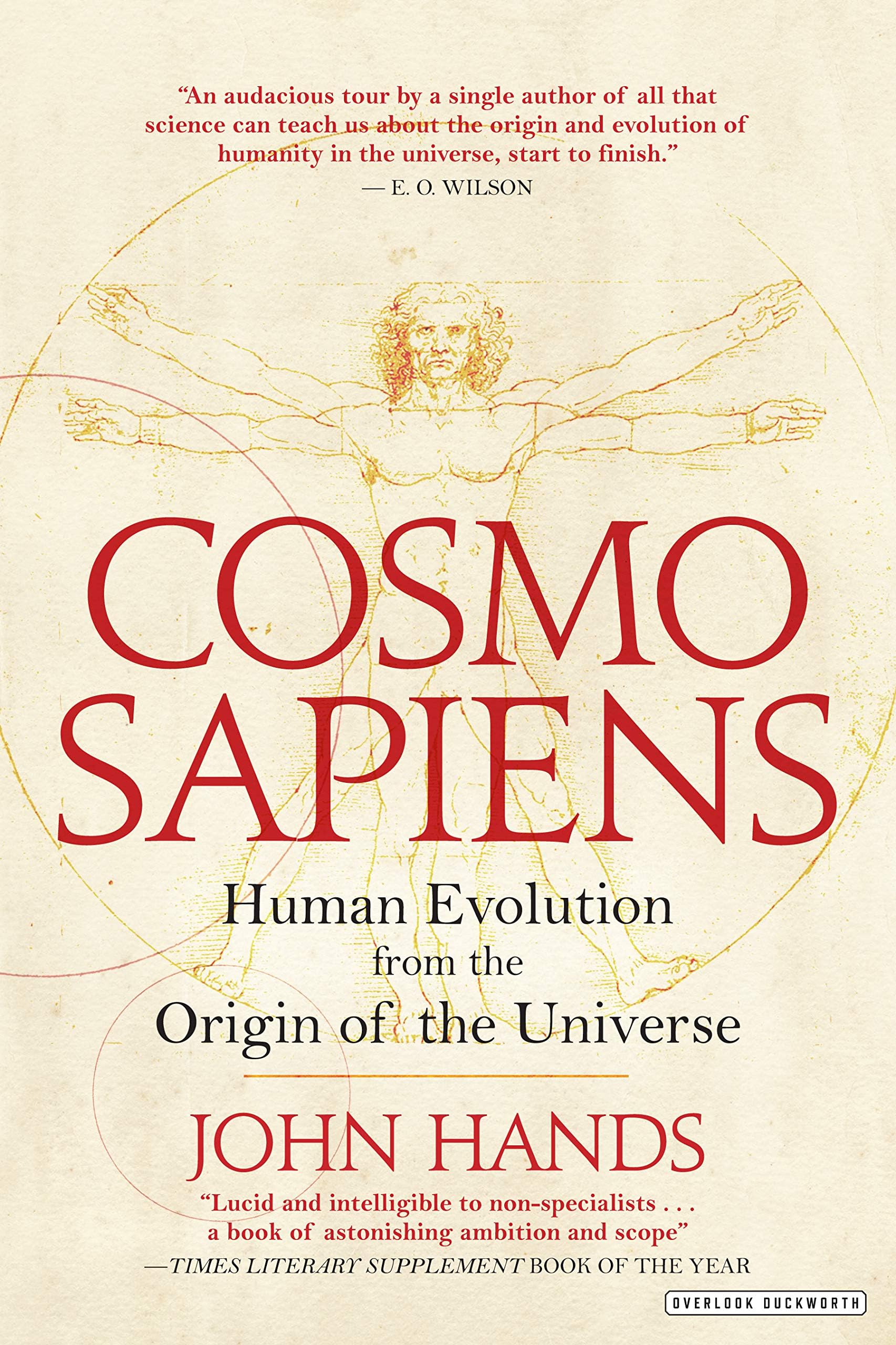
Buy Cosmosapiens: Human Evolution from the Origin of the Universe on desertcart.com ✓ FREE SHIPPING on qualified orders Review: A Powerful Argument for a New Scientific Paradigm - In 1956, Thomas Kuhn published one of the most influential science books of all time, The Structure of Scientific Revolutions. This book introduced the concept of paradigms and how they change. In essence, when an existing scientific paradigm (or theoretical structure) begins to fail at explaining observations and those failures add up, the existing paradigm eventually collapses, and a new one rises to take its place. For a time, the advocates of the existing paradigm marshal their forces to defend and protect it; after all, the paradigm underpins the science curriculum and defines what it means to be a scientist. Cosmosapiens is a significant contribution to a new era in scientific writing. The shelves are filled with books that trumpet the advances of science, the wonders of cosmology, the mysteries of quantum theory, and the power of Darwinian evolution. These books make it appear as if the current theories of science, from the Big Bang to the origin of life and Darwinian evolution, are now engraved in stone, forever to form part of the Scientific Curriculum. But it turns out that when the power of critical thinking is used not to defend dutifully the existing scientific paradigm, but is instead used to challenge the assumptions and logical consistency of these theories, something remarkable happens: the old theories start falling apart. John Hands is an outsider to the orthodox scientific community but possesses a sharp, critical mind, a clear writing style and unparalleled thoroughness. Some of the most mind-opening passages in the book concern his interaction with scientists he consulted for peer review. In one section he writes about an preeminent scientist (an evolutionary biologist) who he asked to review a draft chapter on evolution. The reviewer was so put off by the first sentence of the chapter that he read no farther, thereby managing to prejudge a rigorous and original analysis of evolution filled with thought-provoking insights. Cosmosapiens, like Lee Smolin's, The Trouble with Physics and Rupert Sheldrake's, Science Set Free, (and I hope my own book, The Collapse of Materialism), clearly and unequivocally shows that many of today’s leading scientists are not practicing science, if by that term we mean the open-minded search for truth. Instead, they are defending and protecting a belief system that they call a scientific paradigm. A paradigm, riddled with flaws and deep mysteries, including the gross assumptions of the Big Bang, the wild speculations of inflationary theory and the multiverse, and the unknown forces making up most of the universe that theorists have given names “dark matter” and “dark energy” but cannot explain. When scientists stop criticizing their own theories, when they are not candid in revealing their assumptions, when they do not tell us what they don’t know, disclose the gaps in their theories, or reveal their uncertainties, they do a disservice to both science and the world at large. People depend on scientists to not only find the truth, but to tell the truth. Cosmosapians should form part of a new curriculum in science classes as it is written in the true spirit of science: critical review of assumptions, rigorous reliance on logic and authority, and open-mindedness. Scientific truth cannot be reached by the stubborn insistence that any new theory will only be discovered through computer modeling or by the use of a multi-billion dollar scientific instrument. Nor is the search advanced by fooling ourselves that only in a particle will we find God. It is time the leaders of modern science woke up and realized that the end is near for the existing paradigm. They can choose to hang on and go down with the ship, or take a few minutes and consider whether alternate viewpoints, which give mind, not matter, a predominant role in the formation of the cosmos, make more sense and do something their existing theories do not, which is to explain the world we live in. Cosmosapiens is necessary reading for anyone who doubts that the existing paradigm is nearing the point of collapse. Review: Cosmosapiens - A wide-ranging book that deserves to be read by anyone interested in the state of knowledge today. While you may disagree with some of the author’s conclusions, the survey of current knowledge is lucid and informative. For example, the evidence for the Big Bang appears much stronger to me than that for any competing theory. And in the early stages of development of some theories, especially those with mathematical form, there may not seem to be sufficient physical confirmation. As in string theory. Or the multiverse hypothesis. To conjure up an entire set of universes, based on the double-slit experiment seems the opposite of parsimony. And yet… these types of early beginnings sometimes lead to great discoveries. Also, I do not think the origins of the universe or man will remain completely shrouded in mystery forever. Modern technology seems to find a way of digging up information that had been considered lost. Witness the recent confirmation of gravitational waves, which should lead to further discoveries about the early universe and increase knowledge in that area. But a book like this is bound to provoke thought and some disagreement. A stunning and encyclopedic piece of work that is unafraid to mention some of the ways that the social and political aspects of scientific work might not serve the best interests of the pursuit of knowledge. Update 12/14/16 While I continue to consider the Big Bang Theory the strongest model we currently have of the origins and development of the universe, after further study of John Hands' work here and numerous other sources, I have come to the conclusion that he is correct and our current model contains many ambiguities and unknowns, and would not be surprised to see that model change drastically in the near future. In fact, I expect it. But this is the wonder and glory of science: it eventually self-corrects, but only due to the diligence of those who question and search. I do applaud his tremendously thorough research and efforts in this area. Bravo!


















| Best Sellers Rank | #667,149 in Books ( See Top 100 in Books ) #475 in Cosmology (Books) #1,329 in Evolution (Books) #1,985 in History & Philosophy of Science (Books) |
| Customer Reviews | 4.4 4.4 out of 5 stars (162) |
| Dimensions | 6.1 x 1.6 x 9 inches |
| Edition | 1st |
| ISBN-10 | 1468314246 |
| ISBN-13 | 978-1468314243 |
| Item Weight | 1.78 pounds |
| Language | English |
| Print length | 704 pages |
| Publication date | October 31, 2017 |
| Publisher | Abrams Press |
P**A
A Powerful Argument for a New Scientific Paradigm
In 1956, Thomas Kuhn published one of the most influential science books of all time, The Structure of Scientific Revolutions. This book introduced the concept of paradigms and how they change. In essence, when an existing scientific paradigm (or theoretical structure) begins to fail at explaining observations and those failures add up, the existing paradigm eventually collapses, and a new one rises to take its place. For a time, the advocates of the existing paradigm marshal their forces to defend and protect it; after all, the paradigm underpins the science curriculum and defines what it means to be a scientist. Cosmosapiens is a significant contribution to a new era in scientific writing. The shelves are filled with books that trumpet the advances of science, the wonders of cosmology, the mysteries of quantum theory, and the power of Darwinian evolution. These books make it appear as if the current theories of science, from the Big Bang to the origin of life and Darwinian evolution, are now engraved in stone, forever to form part of the Scientific Curriculum. But it turns out that when the power of critical thinking is used not to defend dutifully the existing scientific paradigm, but is instead used to challenge the assumptions and logical consistency of these theories, something remarkable happens: the old theories start falling apart. John Hands is an outsider to the orthodox scientific community but possesses a sharp, critical mind, a clear writing style and unparalleled thoroughness. Some of the most mind-opening passages in the book concern his interaction with scientists he consulted for peer review. In one section he writes about an preeminent scientist (an evolutionary biologist) who he asked to review a draft chapter on evolution. The reviewer was so put off by the first sentence of the chapter that he read no farther, thereby managing to prejudge a rigorous and original analysis of evolution filled with thought-provoking insights. Cosmosapiens, like Lee Smolin's, The Trouble with Physics and Rupert Sheldrake's, Science Set Free, (and I hope my own book, The Collapse of Materialism), clearly and unequivocally shows that many of today’s leading scientists are not practicing science, if by that term we mean the open-minded search for truth. Instead, they are defending and protecting a belief system that they call a scientific paradigm. A paradigm, riddled with flaws and deep mysteries, including the gross assumptions of the Big Bang, the wild speculations of inflationary theory and the multiverse, and the unknown forces making up most of the universe that theorists have given names “dark matter” and “dark energy” but cannot explain. When scientists stop criticizing their own theories, when they are not candid in revealing their assumptions, when they do not tell us what they don’t know, disclose the gaps in their theories, or reveal their uncertainties, they do a disservice to both science and the world at large. People depend on scientists to not only find the truth, but to tell the truth. Cosmosapians should form part of a new curriculum in science classes as it is written in the true spirit of science: critical review of assumptions, rigorous reliance on logic and authority, and open-mindedness. Scientific truth cannot be reached by the stubborn insistence that any new theory will only be discovered through computer modeling or by the use of a multi-billion dollar scientific instrument. Nor is the search advanced by fooling ourselves that only in a particle will we find God. It is time the leaders of modern science woke up and realized that the end is near for the existing paradigm. They can choose to hang on and go down with the ship, or take a few minutes and consider whether alternate viewpoints, which give mind, not matter, a predominant role in the formation of the cosmos, make more sense and do something their existing theories do not, which is to explain the world we live in. Cosmosapiens is necessary reading for anyone who doubts that the existing paradigm is nearing the point of collapse.
P**N
Cosmosapiens
A wide-ranging book that deserves to be read by anyone interested in the state of knowledge today. While you may disagree with some of the author’s conclusions, the survey of current knowledge is lucid and informative. For example, the evidence for the Big Bang appears much stronger to me than that for any competing theory. And in the early stages of development of some theories, especially those with mathematical form, there may not seem to be sufficient physical confirmation. As in string theory. Or the multiverse hypothesis. To conjure up an entire set of universes, based on the double-slit experiment seems the opposite of parsimony. And yet… these types of early beginnings sometimes lead to great discoveries. Also, I do not think the origins of the universe or man will remain completely shrouded in mystery forever. Modern technology seems to find a way of digging up information that had been considered lost. Witness the recent confirmation of gravitational waves, which should lead to further discoveries about the early universe and increase knowledge in that area. But a book like this is bound to provoke thought and some disagreement. A stunning and encyclopedic piece of work that is unafraid to mention some of the ways that the social and political aspects of scientific work might not serve the best interests of the pursuit of knowledge. Update 12/14/16 While I continue to consider the Big Bang Theory the strongest model we currently have of the origins and development of the universe, after further study of John Hands' work here and numerous other sources, I have come to the conclusion that he is correct and our current model contains many ambiguities and unknowns, and would not be surprised to see that model change drastically in the near future. In fact, I expect it. But this is the wonder and glory of science: it eventually self-corrects, but only due to the diligence of those who question and search. I do applaud his tremendously thorough research and efforts in this area. Bravo!
A**R
Excellent Philosophy of Science, yet incomplete
A rather standard philosophy of science, which destroys our current paradigm but just doesn't go far enough to include cutting edge research by scholars like Rupert Shelldrake or Nassim Harrimein. Hands leaves us hanging with no possible explanations--only hints at mystical possibilities. This was a meticulous explanation, rather repetitive in places, also rather technical, and has much to offer those who are unfamiliar with science. If you are looking for advanced thinkers or cutting edge theories, keep looking.
F**E
Superbly written, rational, and enlightening. He stands above those who merely "stand on the shoulders of giants".
John Hands is one of the few rational and knowledgeable science writers. Too often, science follows the herd, with the result that innovation and inspiration are adopted (or even considered) slowly if at all. Acceptance of relativity, quantum mechanics, evolutionary theory, and a host of other new paradigms have moved too slowly not because of a lack of insight or data, but simply because entrenched views rely on unexamined assumptions and cast a blind eye on data that contradicts accepted (but erroneous) theory. John Hands looks carefully and dispassionately at our current understandings of what we are and the universe in which we live, pointing out where "the emperor has no clothes", citing contradictory observations, and looking carefully at how our current theories align with reality. Not surprisingly, many people find this disturbing, as it undercuts our "faith" in theories that we have accepted without critique of rational consideration. Well done: it's a landmark book, well-written and well-thought-out. It will be a delight to anyone who has both an open mind and a hunger to actually understand what we know of our world -- and what we merely think we do.
D**S
The book is awesome. I listened to the audio version, later got a print copy. The author really done his homework. He goes ham to separate theory and dogma from facts. It turns out humans don't know nearly as much as an average person would think we do.
T**S
Item Reviewed: Duckworth Overlook hardback, 2015 OVERVIEW. The author reviews the current state of the science covering the origins of the Universe, matter, life and Homo Sapiens. He comes to the conclusion that much of the science is poorly founded. The book is surprisingly readable. DETAIL. The author, a generalist with a degree in chemistry from a long time ago, spent over ten years reviewing the science, as well as creation myths and other mythology for comparison, around cosmology, abiogenesis, and archaeology/anthropology. He evaluates their rationality, reasonableness and coherence. The book contains no maths and it does not read like a book by a scientist. This is an example of the author's style, on page 31 talking about the Big Bang theory: "A theory based on a mystery in which the underpinning theories break down and on simplifying assumptions, one of which cannot be tested while the others are contradicted by astronomical observations, falls somewhat short of total reliability." The book is divided into four parts. -- Part 1, The Emergence and Evolution of Matter (155 pages). The author concludes that the theory of creation of matter is reasonable and supported, but cosmology isn't. The conclusion about cosmology is not unreasonable - Sir Roger Penrose reviews the theory much more rigorously in his book Fashion, Faith and Fantasy, in a chapter called Fantasy. In fact, Hands says on page 96 that the Big Bang theory is no more reasonable than creation myths. This is hyperbolic - the Big Bang may possibly have occurred. -- Part 2, The Emergence and Evolution of Life (263 pages). The author concludes that science may never be able to explain the emergence of the first life on Earth. Biological evolution is strongly supported, but the current Neo-Darwinist paradigm is criticised for failing to engage with (inter alia) the complexification of organisms and occasional periods of stasis in development, and for ignoring advantages of collaboration over competition in social animals. The widespread story of the evolution of light and dark peppered moths is shown to be less well supported than is advertised. However, biologists become very defensive on this, for fear of providing ammunition to creationists. -- Part 3, The Emergence and Evolution of Humans (133 pages). After a quick review of evidence the author concludes that Homo Sapiens was the only species to develop reflective consciousness, between 10,000 and 40,000 years ago. This determines the rest of this part, with the period of reflective consciousness successively divided into Primeval (superstitious), Philosophical (non-supernatural thinking), and Scientific. The author has no time for claims that humans are no different from other animals. Also he detects, in the modern world, trends towards increasing complexification, altruism, and co-operation. -- Part 4, A Cosmic Process (29 pages). This consists of two chapters, one on the many limitations of science, and the other a summary of the other parts. The author concludes that humanity is the unfinished product of an accelerating cosmic evolutionary process, and we are the self-reflective agents of our future evolution. ----- As being apparently the writing of one person, the book is impressive. Unfortunately with this kind of book, it is the number and obviousness of blunders that will help to make or break a reputation. I only found one very obvious mistake (on page 578 it says that Britain declared war on Germany in 1945, when the last time was in fact in 1939). There were a number of doubtful statements in the book, and it is tedious to investigate all. I took the trouble to investigate two such statements. The minor blunder was on page 512, where the author says that it is not clear whether the concept of rotation of the Earth was first proposed by Islamic astronomers or by Copernicus. In fact, it was first proposed by certain Greek philosophers. For example, Heraclitus of Pontus, who taught at Plato's Academy (see Weinberg S, "To Explain the World", Penguin 2015, page 85). The other blunder is a very loud clanger. The author misunderstands the physical concept of entropy on page 124 and again on pages 147-149, and thinks the Big Bang was a state of very high entropy. He goes so far as to chide Roger Penrose for getting it wrong. This makes nonsense of part of chapter 10. It is a good idea for the sciences to be assessed periodically, to help politicians and laypeople to see the advances, but more importantly to prevent any part of the scientific consensus from ossifying into dogma. Unfortunately it is likely that few scientists will pay overmuch attention to this book, which is a shame. They will count against it that it does not read like a book by a scientist, that there are too many mistakes, and that it appears too negative, unlike Penrose who says that fashion, faith and fantasy have their place in science. The book is very readable, and written in good English. The dust-jacket is handsome. There are fairly full references and a long index, although I have found some omissions as might be expected for a project of this size.
J**E
Una obra exhaustiva, tanto en las fuentes bibliográficas, como en el rigor que ha puesto el autor en exponer las diversas corrientes (a veces contradictorias) que se enfrenta la ciencia a las cuestiones esenciales. El autor repasa lo que la ciencia ha aportado desde las teorías cosmológicas, físicas, geológicas, biológicas, paleontológicas,.. etc para entender como este universo ha podido crear al homo sapiens. No es una obra concluyente; es una fuente de reflexión, un ejercicio de crítica y de información: merece la pena una segunda lectura por la cantidad de datos e información que se aporta. El autor no pretende dar respuestas dogmáticas; se limita a pone delante del lector la gran odisea que es la evolución de la materia inanimada hasta llegar al ser humano. ¡Bravo! La recomiendo tanto para iniciados como eruditos en ciencias Un consejo: leer en inglés original
F**C
Plusieurs angles sont proposés; la race humaine, technologie, science, et même la philosophie. Je le recommande fortement pour quiconque aime avoir une vu globale sur plusieurs thèmes, mais plus particulièrement sur l'évolution humaine.
P**G
Cosmo Sapiens; Human Evolution from the Origin of the Universe is a very ambitious book, written in 3 major parts: the origin of matter and the Universe; the origin and evolution of life on Earth; and the emergence and evolution of humans. John Hands is a very critical scholar in that he continually challenges scientific orthodoxy without being anti-science and gives historical examples of where scientific orthodoxy has stymied scientific progress in the past. He is an advocate of Thomas Khun’s proposition that science progresses in revolutions rather than gradual steps, because evidence and advances in knowledge eventually overturns accepted scientific norms, resulting in ‘paradigm-shifts’ (a term coined by Khun). At all levels of his inquiry, Hands challenges long accepted orthodoxies, like the Big Bang and inflationary theory of cosmology, the current theories on the origin of life and the neo-Darwin theory of evolution by natural selection. Regarding the origin of life, I would recommend people read Nick Lane’s book, Life Ascending; The Ten Great Inventions of Evolution. Lane, like Hands, gives accounts of many dead-ends in the search for scientific ‘truths’, but unlike Hands, he has a better grasp and understanding of how life may have actually got started on Earth. In other words, after reading Lane, I would challenge some of Hands’ dismissive scepticism in this area. In particular, Hands consistently implies, even states, that the ‘primordial pond’ is the orthodox ‘theory’ for the origin of life, but, according to Lane, our knowledge, hypotheses and ideas have moved well beyond that ‘paradigm’. In discussing entropy in the evolution of the Universe, he accuses Roger Penrose of a circular argument which makes it invalid. Penrose simply assumes that the second law of thermodynamics applies to the Universe as a whole and therefore the entropy in the ‘beginning’ must have been extraordinarily, and, to date, inexplicably small. The logical conclusion to Hands calling this a circular argument is to propose that the second law of thermodynamics doesn’t apply to the Universe as a whole. Hands may be right, but it is arguably a far more radical assumption than to say that Penrose’s contrary assumption gives a circular argument, therefore is invalid. In fact, in one of his conclusions towards the end of the book, Hands effectively contends that entropy doesn’t apply to the Universe has a whole, because it’s an evolution of increasing complexity at virtually all scales. Hands briefly discusses the anthropic principle, both the weak and strong versions specified by Brandon Carter, plus the more elaborate discussions by John Barrow and Frank Tipler in their lengthy and comprehensive book on the subject. He rightfully points out that the weak principle (that we exist in a universe that allows intelligent entities to evolve because we are here) is a tautology – a point I’ve made myself. The strong principle, which says that the Universe specifically allowed intelligent entities to evolve, leans towards teleology and, some might argue, religious reasoning. Both the weak and strong anthropic principles are philosophical, even metaphysical considerations, not scientific principles per se, and that distinction should be noted. However, given the theme of Hands’ book, the anthropic principles (both of them) can’t be ignored. In fact, on completing the entire book, I believe Hands all but argues for the strong anthropic principle, without specifically saying so. The largest section of the book is devoted to evolution and this is where Hands is probably most critical. I’ve long believed that evolution is not as well understood as some proponents claim. Prime examples: evidence suggests that speciation is abrupt rather than gradual (in fact, it’s mathematically chaotic); collaboration plays as much of a role as competition within species; how genes are switched on and determine specific morphologies is little understood; and the role of environment apparently plays a greater role in gene expression than orthodox neo-Darwinism permits. Hands discusses all these issues at length and none of them surprise me. It’s important to appreciate, as Hands does, that one of the reasons that evolutionary biologists are reluctant to admit these unexplained phenomena is because it provides grist for creationists and ID proponents. The truth is, as Hands expounds more than once, that replacing an incomplete scientific theory with mythological and inconsistent stories from the Bible does not expand our knowledge or provide testable scientific explanations. The falsifiability of a theory, a la Popper, is fundamental to progressing it as scientifically valid and viable. Despite my criticisms, I think it’s a very erudite read, and I think Hands’ skepticism is largely justified. He gives a number of accounts where he believes researchers have been given short shrift because their findings don’t agree with orthodoxy. Also, as he rightly points out, a cosmological theory that can’t account for 90% of the Universe has a credibility problem. One of the major themes, if not THE major theme, is that co-operation trumps competition and conflict when it comes to both biological evolution and cultural evolution as it applies to humanity.
Trustpilot
3 days ago
1 week ago