
Desertcart purchases this item on your behalf and handles shipping, customs, and support to KUWAIT.
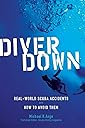
One diver, after a seemingly brief period below the surface, discovers that his gas supply has run perilously low. Another, paralyzed, bobs helplessly on the surface, and when a poorly trained divemaster attempts rescue, things go from bad to worse. Two other divers, fascinated by the bountiful undersea life of the Caribbean, fail to notice that a powerful current is sweeping them rapidly away from their unattended boat. These are just a few of the true stories you’ll find in Diver Down , most of them involving diver error and resulting in serious injury or death. Each of these tales is accompanied by an in-depth analysis of what went wrong and how you can recognize, avoid, and respond to similar underwater calamities. This unique survival guide explores the gamut of diving situations, including cave and wreck diving, deep-water dives, river and drift diving, decompression sickness, and much more. It shows you how to prevent tragic mishaps through: Inspection and maintenance of primary and secondary diving gear Learning and following established safety protocols Confirming the training and credentials of diving professionals Practicing emergency responses under real-world conditions Review: SHOULD BE REQUIRED READING - If you already are, or hope to be a certified scuba diver -- or for that matter -- are just a snorkeler, this book could save your life. Michael Ange's Diver Down, Real-World Scuba Accidents How to Avoid Them should be required reading for ALL divers and divers-to-be. No diver among us is so proficient that this book won't make him more aware of the many mishaps that can befall divers in ways beyond our imagination. Take the dive master who ducked under the dive boat in heaving seas to cut heavy tangled monofilament from the boat's propeller. Simple enough, right? Yup, until a flailing hook on that line goes through his hand and he can't cut the wire leader and finds himself minutes away from death because his air is running out. Or what about the 35-year-old women on a shallow water river drift dive who are so exhuberant that they let the currents pull them downstream far from their group with their dive flag and end up under a pontoon boat who's churning propeller could instantly do them in. Or how about the two pro cave divers with a novice on the end of the cave dive line and when they turn the dive he leads them back the way they came but being untrained he gets himself off into a side tunnel because he didn't know what a gapped life line meant, while the others go out only to find him missing....permanently. Ange shows us one fatal or near fatal accident after another and analyzes the often small but fatally critical mistakes divers make. Read these lessons and remember them. They could save you or your dive buddy from serious troubles. I have made over 5,000 dives in my lifetime and know the value of this book. I wrote the book The Cave Divers back in 1976 long before any training program to save divers from killing themselves in caves. Such simple things as taking the wrong lifeline in with them was sufficient to kill them two at a time. Yellow ski ropes as a lifeline we now know are neutral buoyancy and entangle divers at depth in dark caves. Or how about exhaled bubbles scraping sediment off the cave roof and obliterating any hope of seeing one's way out. In those days few knew the causes because victims never survived to tell the tales. Consequently, divers made the same fatal mistakes one after another. Ange does us a much needed service with his analysis of these easily made mistakes. If we don't pay attention to the lessons they teach, we can very easily relive those mistakes and become yet another dive statistic. This book will help you avoid that. Believe me. Robert F. Burgess Review: It's like a horror story of Murphy's Laws in action. - PRO: The stories and lessons learned are very good motivators to do things right and not to take unnecessary risks. After reading this book I am no longer going to dive as I am too scared that one of a million things will go wrong at the worst possible time. Diver down reads more like a horror movie of Murphy’s Laws. Great book and worth the money and time spent. I plan to share it with my dive buddy so he too can stop diving and risking his life for the amazing sights of the sea. CON: An otherwise informative and interesting book was totally ruined by the author’s attempts to be politically and social correct. His continuous use of the pronoun “her” instead of “his” or even better “their” is annoying and detracts heavily from the readability of the book. Not all divers are female. Why not say something like: “A diver should route the strap over their right shoulder.” Instead of using “her shoulder” or “his shoulder”, if you want to be socially correct.


| Best Sellers Rank | #646,618 in Books ( See Top 100 in Books ) #116 in Scuba Diving #1,317 in Ecology (Books) |
| Customer Reviews | 4.6 out of 5 stars 718 Reviews |
A**S
SHOULD BE REQUIRED READING
If you already are, or hope to be a certified scuba diver -- or for that matter -- are just a snorkeler, this book could save your life. Michael Ange's Diver Down, Real-World Scuba Accidents How to Avoid Them should be required reading for ALL divers and divers-to-be. No diver among us is so proficient that this book won't make him more aware of the many mishaps that can befall divers in ways beyond our imagination. Take the dive master who ducked under the dive boat in heaving seas to cut heavy tangled monofilament from the boat's propeller. Simple enough, right? Yup, until a flailing hook on that line goes through his hand and he can't cut the wire leader and finds himself minutes away from death because his air is running out. Or what about the 35-year-old women on a shallow water river drift dive who are so exhuberant that they let the currents pull them downstream far from their group with their dive flag and end up under a pontoon boat who's churning propeller could instantly do them in. Or how about the two pro cave divers with a novice on the end of the cave dive line and when they turn the dive he leads them back the way they came but being untrained he gets himself off into a side tunnel because he didn't know what a gapped life line meant, while the others go out only to find him missing....permanently. Ange shows us one fatal or near fatal accident after another and analyzes the often small but fatally critical mistakes divers make. Read these lessons and remember them. They could save you or your dive buddy from serious troubles. I have made over 5,000 dives in my lifetime and know the value of this book. I wrote the book The Cave Divers back in 1976 long before any training program to save divers from killing themselves in caves. Such simple things as taking the wrong lifeline in with them was sufficient to kill them two at a time. Yellow ski ropes as a lifeline we now know are neutral buoyancy and entangle divers at depth in dark caves. Or how about exhaled bubbles scraping sediment off the cave roof and obliterating any hope of seeing one's way out. In those days few knew the causes because victims never survived to tell the tales. Consequently, divers made the same fatal mistakes one after another. Ange does us a much needed service with his analysis of these easily made mistakes. If we don't pay attention to the lessons they teach, we can very easily relive those mistakes and become yet another dive statistic. This book will help you avoid that. Believe me. Robert F. Burgess
B**B
It's like a horror story of Murphy's Laws in action.
PRO: The stories and lessons learned are very good motivators to do things right and not to take unnecessary risks. After reading this book I am no longer going to dive as I am too scared that one of a million things will go wrong at the worst possible time. Diver down reads more like a horror movie of Murphy’s Laws. Great book and worth the money and time spent. I plan to share it with my dive buddy so he too can stop diving and risking his life for the amazing sights of the sea. CON: An otherwise informative and interesting book was totally ruined by the author’s attempts to be politically and social correct. His continuous use of the pronoun “her” instead of “his” or even better “their” is annoying and detracts heavily from the readability of the book. Not all divers are female. Why not say something like: “A diver should route the strap over their right shoulder.” Instead of using “her shoulder” or “his shoulder”, if you want to be socially correct.
E**D
Interesting and instructive
Solid selection of stories describing a range of dive fails. At times exciting, at times frightening, and always instructive. Good news for divers is that the accidents were preventable with preparation, staying within limits, and leaving ego on the boat. For the novice diver, the book is a great survey of advancing techniques from recreational open water, to a broad array of technical dives including deep water, cave, commercial and public safety diving. Rather than creating fear of diving, the author leaves the reader confident that through proper incremental training and experience, a vast world of diving opportunities is imminently accessible. Why not 5 stars? I wanted the next story.
A**A
Great book to learn from the experiences of others
I picked up this book before a recent trip to Bonaire where my wife and I spent a week boat diving with groups and shore diving by ourselves. I am a fairly experienced diver with over 150 dives logged in locations including warm and cold water dives all over the world. The primary reason that I decided to read Diver Down is that no matter how many dives one has taken, you can still learn from the experiences and mistakes of others, and any incremental increase of knowledge, no matter how small, makes for safer diving. I appreciated the author's writing style. The stories he includes are engaging and include all of the pertinent details without becoming too drawn-out. Each story provides clear cause and effect for what resulted in the accidents, and all in all I think the lessons settled into the back of my mind. While I think this book might be a little scary for those new to or considering SCUBA diving, it does provide some very valuable insights and lessons.
K**Y
A must read
Every diver MUST read this. It is a real eye opener to what can go wrong and how to avoid it. I could not put it down. It is easy to read, not too technical or boring. I was on the edge of my seat the whole first read. It starts a story and goes to where disaster hits. He talks about what should and should not have happened and what we can all learn. Then, he finishes the story. Some end well and some don't. I learned so much from this book. I think every diver should be required to read this. Diving is a fun and relaxing sport, but it can also be very dangerous if the rules are not respected. I have been diving for seven years and am at the Dive Master level now. I learned great rescue tips and first aid ideas. I plan to read this again and again and get a copy for all my dive friends for Christmas! I can not recommend this book highly enough!
R**N
thorough analysis, clear relation to diving rules
If I had the time i would have read this book in one session. However, I would have re-read it case by case again to pick the points in the dive story where I thought the diver or divers should have acted differently. Sort of a test of my own ability to recognise unsafe practices. After 37 years of diving without incidents I consider this book essential reading for someone with at least an advanced diver rating and certainly a must read for anyone contemplating taking their amateur sport into a professional domain. It is a book for the reading list of dive instructors. The story of a competitive 16 year old, who died, as a result of a deliberate subterfuge for his instructor is at once gripping, and an example of the principle that ultimately we are all responsible for our own life.
F**S
The perfect complement to rescuer course
This short read is packed with a dozen case studies about real-life scuba accidents. The author has carefully described, analyzed, and dissected these cases, and often giving additional info about the specific context or piece of equipment used in that particular story. At the end of each short story there is a little checkup list - the morale - of the story, that summarizes the mistakes of the protagonists. It's an excellent complement for anyone doing dive rescue courses (which I am currently doing) as it illustrates the concepts in the book with example and concrete use cases. I gave only 4 stars because it's a nice little book to read, but nothing "essential", given that all the rules and knowledge it offers are already included in any decent rescue or advanced diving manual you can find. In short, worth a read for people that want to improve their confidence and skills to be ready when s* hits the fan, but essential read for open water divers and beginners that don't plan to continue education ever and just want to do a few dives per year in sunny Caribbeans.
K**L
1. Read This 2. Dive
I think of myself as an experienced (> 400 dives), skilled, and mostly pretty careful scuba diver. This book made me seriously reevaluate my diving practices. It contains a number of accident descriptions with scenarios ranging from novice divers running out of air, divers taking unnecessary risks to poorly maintained equipment causing serious accidents. In some of the accidents, the protagonists survive with a serious scare and some hypothermia, in others they get seriously injured or pay with their lives. The book is written in a clear, sober and non-sensationalist style, but nevertheless the fact that the accidents are described with a focus on the individual human beings involved sent chills down my spine. It is psychologically so much more powerful to read "Jason tried to breathe from his regulator, but his tank was empty. He could not see his buddy." than to read the general advice to regularly monitor your air consumption and stay close to your dive partner. After each accident report, there is a section detailing the lessons learned from the mishap, and often a box adding information about a relevant topic (caves, wrecks, rebreathers, safety devices). The accidents range from absolutely reckless behavior (a teenager attempts a solo bounce dive to 125 ft while his friend distracts the instructor during a safety stop) to cases where seemingly well-prepared divers all of a sudden find themselves in trouble (in a strong current). I found it useful to ask myself after each chapter: Could this happen to me? If yes, what should I change in my diving procedures? When was the last time I checked my safety equipment? Am I sure that I am not pushing the limits in this or that respect? An extremely useful book, both for the actual diving knowledge it contains as well as a reminder how things can go wrong and how catastrophic that can be.
A**R
Fantastic!
Amazing amazing read! Couldn’t put it down!
M**O
"Vuoto" è la descrizione che mi in mente.
E' formato da una serie di incidenti subacquei con commento su cosa si sarebbe dovuto fare e avrebbe potuto fare. La realtà è però che gli argomenti sono trattati con grande superficialità.
B**A
Every Diver Should Read This Book
We hear about the near accidents and fatalities from our scuba pals and instructors and we often talk about what should or should not have been done prior to the dive. The author, Michael Ange, takes 20 real-world scuba accidents and retells what happened in detail from beginning to end. The most important part of the book though is the analysis. After describing the incident there is a breakdown of where it started to go wrong and what should or should not have been done to prevent it - called Strategies for Survival. Some of the accidents are ones you would expect to hear about but others are more unusual and are good to store away in the old memory banks as a possible scenario to watch for and avoid. I heard from one instructor that most divers are found dead on the bottom still wearing their weights. I found this hard to believe, especially since as part of our training we learn how to ditch our weights. Sure enough, most of the stories in the book end up with a diver with their weights still on - some of them survive and some do not. Many factors were involved, usually in a domino effect, to bring about the incident. The weights may not have been what did them in but what I have really gotten from this book is that when a person gets to a low or no air situation and panics, they forget to do important things like ditch those weights. This tells me that divers need to be constantly practising their skills so that they become automatic. Before diving in open water each season, my buddy and I practice our skills, but after reading this book we'll especially be doing drills on dropping our weight belts. In addition to the two traditional scuba rules, the author has written 10 rules that he has developed after all his experience and research with diving. These rules were created as a direct result of the analysis of the dive accidents written about in the book. Also included in the book are about 35 special topic contents on dive related things such as Regulators, Wreck Diving, Trimix Dives, Dive Briefings, etc., etc. I just could not put the book down and found each story riveting, mostly because each story is an actual event retold using information gathered from people that were involved, family members, accident reports, etc., and I could only imagine what was going through their minds while it happened. I believe every diver should read this book. After all, forewarned is forearmed! Michael Ange also writes Lessons for Life articles covering diving accidents in Scuba Diving magazine.
K**R
Interesting and easy to understand
I am not a diver but I do find stories about diving interesting so I throughly enjoyed this book. Each story is long enough to give you the details but short enough that they don’t drag on. There are many lessons in safety and common sense in this book that are not only interesting to non-divers, buy potentially life-saving for drivers of any level.
K**S
A must-read book for scuba divers
A must-read book for (recreational) scuba divers who want to expand their diving knowledge and dive safely. Real-life examples of dives that went wrong with a discussion on how accidents could have been avoided (manage your gas, stow the ego, gain experience, don't push your luck, service your equipment, avoid the 'trust-me-buddy cowboys' that will put you at risk, etc.). "The vast majority of accidents are the direct result of diver error. (...) This book's primary goal is to take the process of accident analysis from the technical conferences and back rooms of training agencies and place it in front of everyone with an interest." A recommended book for those that want to minimise the chances of becoming a statistic.
Trustpilot
2 weeks ago
1 month ago